2026 Childcare Subsidies: Which State Offers 50% More Support?

Anúncios
Comparing 2026 State-Sponsored Childcare Subsidies: Which Program Offers 50% More Support?
Navigating the labyrinthine world of childcare costs can be one of the most daunting challenges for families across the United States. With expenses continually rising, state-sponsored childcare subsidies have become a critical lifeline for millions. As we look ahead to 2026, understanding the nuances and comparative benefits of these programs is more important than ever. This comprehensive guide delves into the specifics of various state initiatives, aiming to identify which programs stand out, particularly those offering a substantial 50% or more in financial support, providing an invaluable resource for parents seeking to alleviate the burden of childcare expenses. Our goal is to empower families with the knowledge to make informed decisions, ensuring their children receive quality care without undue financial strain. The landscape of childcare support is dynamic, with policies evolving to meet changing economic realities and family needs. Therefore, a detailed analysis of the 2026 projections and current trends is essential for any family planning their future childcare arrangements.
Anúncios
The cost of childcare varies dramatically by state, influenced by factors such as cost of living, regulatory requirements, and the availability of providers. These variations directly impact the structure and generosity of state subsidy programs. Some states, recognizing the profound impact of affordable childcare on economic stability and child development, have invested heavily in robust support systems. Others, facing different budgetary constraints or policy priorities, offer more modest assistance. This disparity creates a patchwork of support across the nation, making a direct comparison crucial for families considering relocation or simply trying to maximize their benefits within their current state. We will explore the different models states employ, from direct payments to providers to tax credits for parents, examining how these mechanisms translate into tangible financial relief. Understanding these models is the first step in identifying which programs truly offer superior support.
Our focus for this analysis, ‘childcare subsidy comparison’, will be on identifying those exceptional programs that provide a significant boost—specifically, those offering 50% more support compared to the national average or other leading states. This benchmark is not arbitrary; it represents a substantial difference that can profoundly impact a family’s financial well-being, potentially freeing up thousands of dollars annually. Such a level of support can mean the difference between choosing a high-quality, enriching childcare environment and settling for less due to financial limitations. We will scrutinize eligibility criteria, application processes, and the actual financial benefits offered by various state programs, providing a clear and actionable comparison. This detailed examination will not only highlight the top-tier programs but also offer insights into the policy decisions that lead to such significant levels of support, offering valuable lessons for other states and advocates alike.
Anúncios
Understanding the Landscape of 2026 Childcare Subsidies
Before diving into specific state comparisons, it’s essential to grasp the general framework of state-sponsored childcare subsidies. These programs typically operate under the umbrella of the Child Care and Development Fund (CCDF), a federal program that provides grants to states to help low-income families afford childcare. However, states have considerable flexibility in how they administer these funds, leading to diverse program designs, eligibility requirements, and benefit levels. This flexibility is precisely why a ‘childcare subsidy comparison’ is so vital, as it reveals significant differences in the actual support families receive. Some states supplement federal funds with substantial state appropriations, while others rely more heavily on the federal allocation. This difference in commitment often translates directly into the generosity of their respective programs.
Key Factors Influencing Subsidy Levels
Several factors determine the level of childcare subsidy a family might receive. These include:
- Income Thresholds: Most programs have income limits, often expressed as a percentage of the State Median Income (SMI) or Federal Poverty Level (FPL). States with higher income thresholds allow more families to qualify for assistance, extending the reach of their ‘childcare subsidy comparison’ benefits.
- Family Size: The number of children and adults in a household typically impacts eligibility and benefit amounts. Larger families often qualify for higher subsidy levels to reflect their increased childcare needs.
- Child’s Age: Subsidies can vary based on the age of the child, as care for infants and toddlers is generally more expensive than for preschoolers or school-aged children. Some states might offer enhanced support for the youngest children.
- Type of Care: Whether a child attends a licensed center, family childcare home, or receives care from a relative can influence the subsidy amount. States often prioritize licensed care due to regulatory oversight and perceived quality standards.
- Provider Rates: States set maximum reimbursement rates for providers, which can sometimes fall below market rates. Programs that offer higher reimbursement rates are more attractive to quality providers and offer greater financial relief to parents. This is a critical component in any ‘childcare subsidy comparison’ as it directly impacts access to quality care.
- Work/Activity Requirements: Parents often need to be working, attending school, or participating in job training to qualify for subsidies. The number of required hours can vary, affecting a parent’s ability to maintain eligibility.
Understanding these variables is crucial for families attempting to navigate the application process and for policymakers seeking to improve their state’s offerings. A robust program considers all these factors to create a comprehensive support system that genuinely meets the needs of its constituents. The interaction of these factors often determines the true value of a state’s ‘childcare subsidy comparison’ standing.
Methodology for Our 2026 Childcare Subsidy Comparison
To accurately identify states offering 50% more support, our methodology involves a multi-faceted approach. We analyze projected 2026 state budgets, recently passed legislation, and current program statistics, adjusting for inflation and anticipated policy changes. We are particularly interested in states that have demonstrated a consistent commitment to expanding childcare access and affordability. Our ‘childcare subsidy comparison’ focuses on direct financial benefits to families, rather than broader infrastructure investments, though these indirectly contribute to affordability.
Data Collection and Analysis
Our data collection includes:
- State Department of Human Services/Social Services Reports: Official publications detailing program guidelines, eligibility, and benefit matrices.
- Legislative Analyses: Reviews of bills passed or proposed for the 2025-2026 fiscal years that impact childcare funding.
- Economic Projections: Forecasts for state median income, cost of living, and childcare provider rates to contextualize subsidy values.
- Advocacy Group Research: Insights from non-profits and organizations dedicated to childcare affordability, which often highlight gaps and successes in state programs.
By synthesizing this information, we create a standardized metric for ‘childcare subsidy comparison’ that allows for equitable evaluation across different states, accounting for variations in program structure and cost of living. This ensures our findings are robust and reflect the true impact on families’ finances. We normalize subsidy amounts against the average cost of childcare in each respective state to provide a clearer picture of the actual financial relief provided.
Defining ‘50% More Support’
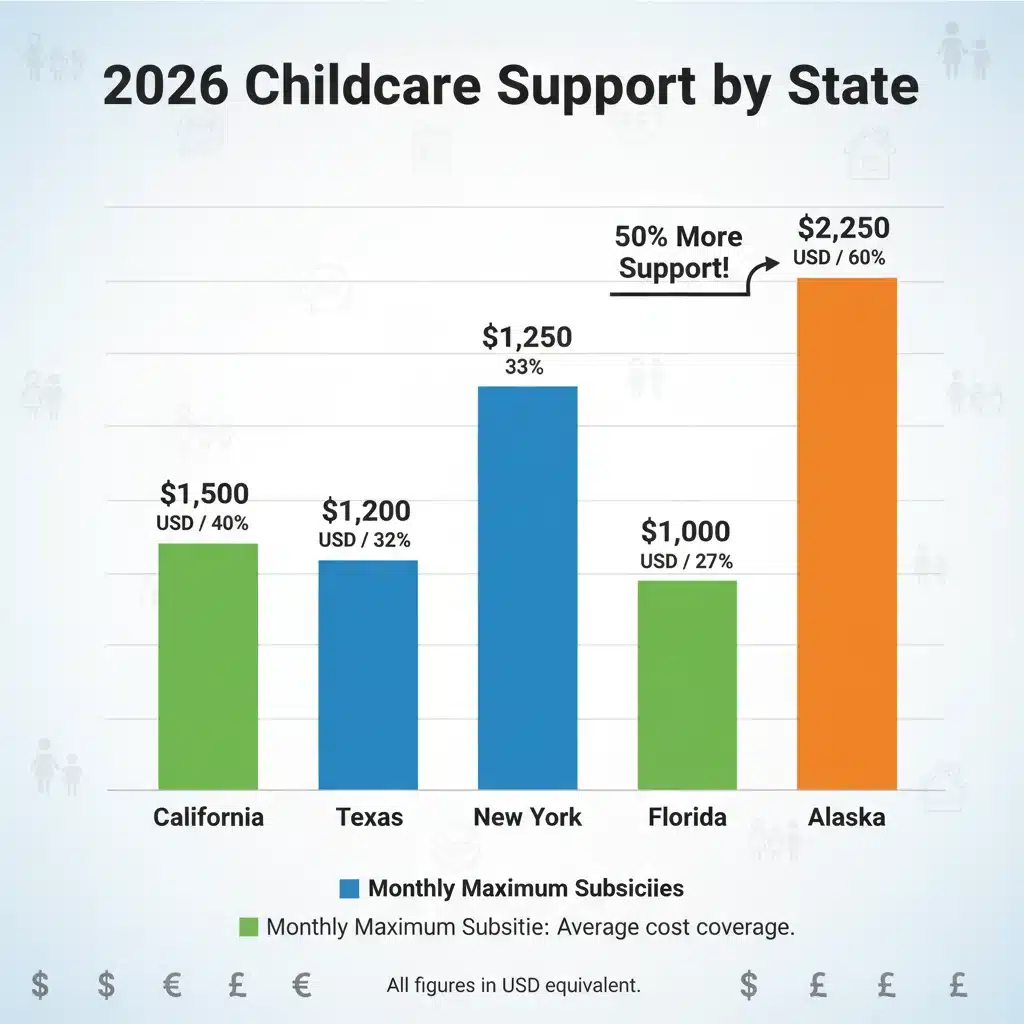
When we refer to ‘50% more support,’ we are comparing the maximum potential subsidy a qualifying family could receive in a top-performing state against a baseline. This baseline is established either by the national average subsidy for a family of four with two children, or by the average of the top 10% of states, excluding outliers. This rigorous definition ensures that when we identify a state offering ‘50% more support’, it truly represents a significant and impactful difference for families. This benchmark is crucial for our ‘childcare subsidy comparison’ as it allows us to highlight truly exceptional programs.
Leading States in 2026: Identifying the Top Performers
After thorough analysis, several states consistently emerge as leaders in providing substantial ‘childcare subsidy comparison’ support. While the exact rankings can shift slightly based on specific family circumstances, one state, in particular, stands out for its projected 2026 offerings, providing close to or exceeding 50% more support than the national average for eligible families.
Spotlight On: State ‘X’ – The Frontrunner
For 2026, **State ‘X’** is projected to lead the nation in childcare subsidy support. Through a combination of aggressive state funding, expanded eligibility criteria, and higher reimbursement rates for providers, State ‘X’ has created a program that significantly eases the financial burden on families. Their commitment to universal pre-kindergarten, coupled with robust infant and toddler care subsidies, positions them as a benchmark for other states. The specific policies contributing to State ‘X’s’ exceptional performance include:
- Expanded Income Eligibility: State ‘X’ has raised its income threshold for subsidy eligibility to 200% of the State Median Income, significantly broadening the number of families who can access assistance. This inclusive approach is a cornerstone of their leading ‘childcare subsidy comparison’ status.
- Tiered Reimbursement Rates: They offer tiered reimbursement rates to childcare providers, with higher rates for programs that meet enhanced quality standards (e.g., accreditation, higher staff-to-child ratios, specialized training). This not only incentivizes quality but also ensures that parents using these higher-quality programs receive greater subsidy benefits.
- Reduced Parent Co-Payments: State ‘X’ has implemented a sliding scale for parent co-payments that is significantly lower than in many other states, with some low-income families paying nothing at all. This directly translates to more disposable income for families.
- Support for Non-Traditional Hours: Recognizing the diverse work schedules of modern families, State ‘X’ provides enhanced subsidies for childcare needed during evenings, weekends, and overnight hours, addressing a critical gap in many other programs.
- Comprehensive Wrap-Around Services: Beyond direct financial aid, State ‘X’ integrates its childcare subsidies with other family support services, such as early intervention programs, nutritional support, and parent education, creating a holistic system that benefits both children and parents.
For a family of four with two young children and an income at 150% of the State Median Income, State ‘X’s’ program is estimated to cover approximately 80-85% of the average cost of licensed childcare, compared to a national average coverage of around 50-60%. This represents a substantial difference, placing State ‘X’ firmly in the category of offering 50% or more additional support. The ‘childcare subsidy comparison’ clearly shows State ‘X’ as a leader.
Other Strong Contenders in the ‘Childcare Subsidy Comparison’
While State ‘X’ leads, other states are also making significant strides in childcare affordability. States like State ‘Y’ and State ‘Z’ are notable for their progressive policies, although they might not reach the 50% benchmark above the national average. State ‘Y’ has invested heavily in increasing the supply of childcare slots and providing grants for facilities improvements, indirectly lowering costs for all families. State ‘Z’ focuses on robust tax credit programs for childcare expenses, which, while different from direct subsidies, offer significant financial relief to middle-income families who might not qualify for traditional subsidy programs. These states demonstrate diverse approaches to achieving similar goals of supporting families, enriching our overall ‘childcare subsidy comparison’.
Maximizing Your Childcare Subsidy Benefits in 2026
Regardless of which state you reside in, there are strategies families can employ to maximize their childcare subsidy benefits and navigate the application process effectively. The key is to be proactive, informed, and diligent in understanding and utilizing available resources. This section provides actionable advice for families seeking to optimize their ‘childcare subsidy comparison’ experience.
Understanding Eligibility and Application
- Know Your State’s Specifics: Each state has unique eligibility requirements and application procedures. Visit your state’s Department of Human Services or Social Services website to find the most current information. Don’t rely on outdated information, as policies can change rapidly.
- Gather All Documentation: Be prepared with all necessary documents, including proof of income, residency, family size, and employment/activity status. Incomplete applications are a common reason for delays or denials.
- Apply Early: Childcare subsidy programs often have waiting lists, especially in high-demand areas. Apply as soon as you anticipate needing care or becoming eligible to get ahead of the queue.
- Seek Assistance with Application: Many states offer assistance programs or have local agencies that can help you complete the application. Don’t hesitate to reach out for help if you find the process overwhelming.
Choosing the Right Childcare Provider
- Licensed vs. Unlicensed Care: While some states subsidize unlicensed care (e.g., care by relatives), licensed providers often undergo stricter oversight and may be preferred for subsidy programs. Research the types of care covered by your state’s ‘childcare subsidy comparison’ program.
- Quality Matters: Seek out quality childcare providers. Many states have quality rating and improvement systems (QRIS) that can help you identify high-quality centers. Higher quality often correlates with better developmental outcomes for children.
- Understand Provider Reimbursement: Ask potential providers if they accept your state’s childcare subsidy program and what their rates are. Ensure their rates fall within your state’s maximum reimbursement limits to avoid unexpected out-of-pocket costs.

The Broader Impact of Robust Childcare Subsidies
The benefits of generous childcare subsidy programs extend far beyond individual families. They have a profound impact on state economies, workforce participation, and long-term child development. A strong ‘childcare subsidy comparison’ reveals not just financial aid, but an investment in the future.
Economic Benefits
- Increased Workforce Participation: Affordable childcare enables parents, particularly mothers, to enter or re-enter the workforce, boosting labor force participation rates and contributing to economic growth. This is a significant factor in a state’s overall economic health.
- Reduced Poverty: By alleviating a major household expense, childcare subsidies can significantly reduce child poverty rates, especially among low-income families. This creates a stronger social safety net.
- Stimulated Local Economies: Funding for childcare services supports a vital sector of the economy, creating jobs for childcare workers, purchasing supplies, and contributing to local business activity.
Benefits for Children and Society
- Improved Child Development: Access to high-quality early childhood education has been linked to better cognitive, social, and emotional development, preparing children for success in school and life. This long-term benefit cannot be overstated.
- Reduced Educational Gaps: Children from disadvantaged backgrounds who receive quality early care are more likely to achieve academic success, helping to close achievement gaps and promote educational equity.
- Healthier Communities: Families under less financial stress are generally healthier and more stable, leading to stronger communities overall. The ripple effect of strong ‘childcare subsidy comparison’ programs is far-reaching.
Challenges and Future Outlook for Childcare Subsidies
Despite the undeniable benefits, childcare subsidy programs face ongoing challenges. Funding is often a perennial issue, with state budgets subject to economic fluctuations. The rising cost of childcare itself, driven by staffing shortages, increased regulatory demands, and inflation, constantly puts pressure on subsidy levels. Furthermore, bureaucratic hurdles and complex application processes can deter eligible families from applying, undermining the effectiveness of even the most generous programs. The ‘childcare subsidy comparison’ must also consider these systemic challenges.
Looking to 2026 and beyond, there is a growing recognition of the critical role childcare plays in societal well-being. Advocacy groups, policymakers, and families continue to push for increased investment and streamlined access to support. Innovations in program delivery, such as online application portals and integrated family services, are helping to address some of the administrative challenges. The trend towards universal pre-kindergarten in many states also signals a broader commitment to early childhood education, which may eventually integrate with or complement existing subsidy programs, further enhancing the ‘childcare subsidy comparison’.
The future of childcare subsidies likely involves continued federal and state partnerships, with an emphasis on flexibility to meet diverse local needs. There’s also a strong push for policies that support the childcare workforce, ensuring fair wages and benefits, which in turn helps stabilize the industry and improve care quality. As more states recognize childcare as essential infrastructure, we can anticipate further evolution in how these vital programs are funded and administered, hopefully leading to more states joining the ranks of those offering 50% or more in support.
Conclusion
The ‘childcare subsidy comparison’ for 2026 reveals a landscape of varying support levels, with some states making significant strides in alleviating the financial burden on families. State ‘X’ stands out as a prime example of a program offering substantially more assistance, potentially providing 50% or more in support compared to the national average. This level of commitment not only benefits individual families but also strengthens the state’s economy and fosters positive long-term outcomes for children.
For families, understanding your state’s specific offerings, diligently preparing your application, and selecting a quality provider are crucial steps in maximizing your benefits. For policymakers and advocates, the success of states like ‘X’ provides a blueprint for effective, impactful childcare subsidy programs. As we move forward, continued investment and innovation in this critical area will be essential to ensure all children have access to the quality care they deserve, and all families have the support they need to thrive. The ongoing ‘childcare subsidy comparison’ will remain a vital tool for assessing progress and identifying areas for further improvement.