2026 Federal Minimum Wage Hike: US Business Compliance Guide

Anúncios
Navigating the 2026 Federal Minimum Wage Hike: What US Businesses Need to Know Now for Compliance
Anúncios
The economic landscape for businesses in the United States is constantly evolving, and one of the most significant changes on the horizon is the projected federal minimum wage 2026 increase. This isn’t just a number change; it’s a fundamental shift that will ripple through every aspect of business operations, from payroll and budgeting to pricing strategies and competitive positioning. For US businesses, understanding and preparing for this impending change is not merely advisable – it’s absolutely critical for sustained success and compliance.
The concept of a minimum wage is rooted in ensuring a baseline standard of living for workers, providing a safety net that prevents exploitation and supports economic stability. While the debate around its economic impact is ongoing, the reality for business owners is that these changes become law, and compliance is non-negotiable. The 2026 hike represents a substantial adjustment, and proactive planning is the only way to mitigate potential disruptions and even turn challenges into opportunities.
This comprehensive guide aims to equip US businesses with the knowledge and strategies necessary to navigate the federal minimum wage 2026 increase effectively. We’ll delve into the specifics of the expected changes, explore their multi-faceted impact on various business sectors, and provide actionable steps for financial planning, operational adjustments, and legal compliance. By the end of this article, you will have a clearer roadmap to ensure your business not only survives but thrives amidst these new economic realities.
Anúncios
Understanding the Impending Federal Minimum Wage 2026 Changes
To prepare effectively, businesses must first grasp the specifics of the upcoming federal minimum wage 2026 adjustments. While the exact figures are subject to legislative processes and economic indicators, current discussions and proposals suggest a significant jump from the long-standing $7.25 per hour. Many proposals aim for a gradual increase to $15 per hour, with 2026 often cited as a key milestone in this progression.
Historical Context and Legislative Momentum
The federal minimum wage has remained at $7.25 per hour since 2009. This prolonged stagnation, coupled with rising inflation and cost of living, has fueled calls for an increase. Various legislative efforts, such as the ‘Raise the Wage Act,’ have aimed to incrementally raise the federal minimum wage to $15 per hour over several years, with specific target dates. While political debates continue, the general consensus among many policymakers is that an increase is inevitable and necessary. Understanding this historical context helps businesses anticipate the direction and magnitude of the changes.
Key Proposed Figures and Timelines for 2026
While definitive legislation is still pending, the most commonly discussed scenario involves the federal minimum wage 2026 reaching a level significantly higher than the current rate, potentially around $13 to $15 per hour, or a step towards that figure. It’s crucial for businesses to monitor official government announcements and labor department publications closely as these figures solidify. These changes often come with specific effective dates, and missing these deadlines can lead to severe penalties. Businesses should also be aware that state and local minimum wages might already exceed the federal rate, and employers must always pay the higher of the two.
Distinction Between Federal, State, and Local Minimum Wages
It’s important to clarify the hierarchy of minimum wage laws. The federal minimum wage sets a floor; states and many cities have the authority to establish their own minimum wages, which can be higher than the federal rate. When there’s a discrepancy, employers are legally obligated to pay the higher wage. For example, if the federal minimum wage 2026 is set at $12, but a state’s minimum wage is $14, businesses in that state must pay $14. This complexity necessitates a localized understanding of wage laws for multi-state or multi-city operations.
Impact Analysis: How the 2026 Federal Minimum Wage Will Affect US Businesses
The implications of a raised federal minimum wage 2026 are far-reaching, touching nearly every facet of a business. A thorough impact analysis is essential for strategic planning.
The most immediate and obvious impact will be on direct labor costs. Businesses employing minimum wage workers will see their payroll expenses rise proportionally to the wage increase. This isn’t limited to just those earning the current minimum; wages for employees earning slightly above the current minimum may also need to be adjusted to maintain internal pay equity and morale. For example, if a long-term employee earns $10 an hour and new hires are brought in at the new $15 minimum, the long-term employee will likely expect a raise to reflect their experience and loyalty. This ‘wage compression’ effect can significantly inflate overall payroll budgets.
Indirect Costs: Benefits, Taxes, and Overtime
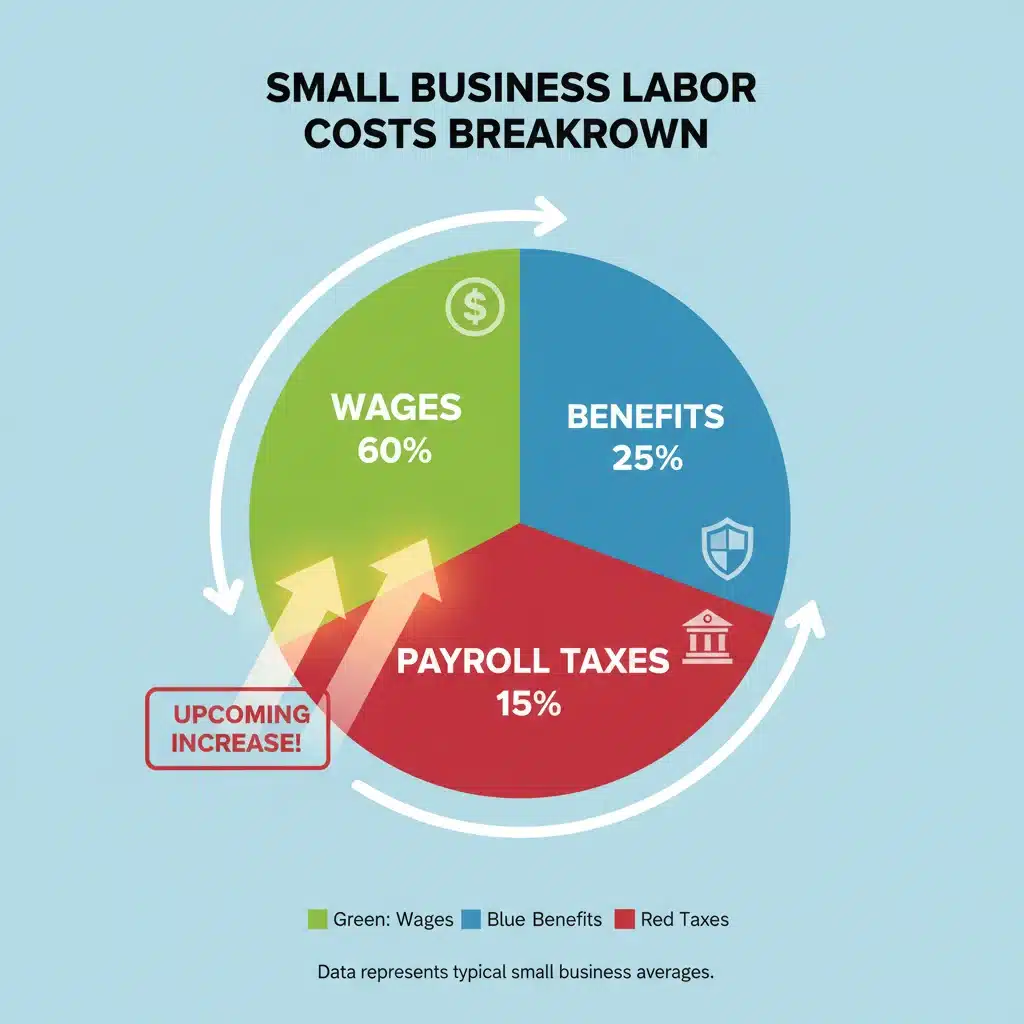
Beyond base wages, other costs are tied to employee salaries. Payroll taxes (Social Security, Medicare, unemployment insurance) are calculated as a percentage of wages, meaning they will also increase. Employee benefits, if tied to salary percentages or specific wage thresholds, could also see an uptick. Overtime pay, which is typically 1.5 times the regular rate, will likewise become more expensive, potentially influencing staffing decisions and scheduling. Businesses need to factor in these cascading costs when forecasting their financial outlook for the federal minimum wage 2026 era.
Pricing Strategies and Consumer Impact
To offset increased labor costs, many businesses may consider raising prices for their goods or services. This decision, however, is fraught with complexities. While some price adjustments might be necessary, businesses must carefully evaluate their market position, competitive landscape, and consumer elasticity. Excessive price hikes could deter customers and lead to a loss of market share. Finding the right balance between maintaining profitability and remaining competitive will be a critical challenge in the wake of the federal minimum wage 2026 implementation.
Competitive Landscape and Market Dynamics
The impact of the wage hike won’t be uniform across all businesses. Larger corporations with higher profit margins might absorb the costs more easily than small and medium-sized enterprises (SMEs). This could potentially create an uneven playing field, where smaller businesses struggle to compete on price or talent. Conversely, some economists argue that a higher minimum wage stimulates consumer spending, benefiting businesses that cater to lower-income demographics. Understanding these dynamic shifts will be crucial for strategic positioning.
Employee Morale, Retention, and Productivity
While challenging for employers, a higher minimum wage can have positive effects on employees. Increased wages can lead to improved morale, reduced turnover, and enhanced productivity. Employees who feel fairly compensated are often more engaged and motivated. Businesses might experience lower recruitment and training costs due to better retention. This positive aspect of the federal minimum wage 2026 increase should not be overlooked, as it can contribute to a more stable and efficient workforce.
Proactive Strategies for Business Compliance and Adaptation
Preparing for the federal minimum wage 2026 increase requires a multi-pronged approach that addresses financial, operational, and human resources aspects.
Financial Planning and Budgeting Adjustments
Revisiting Budget Forecasts
The first step is to meticulously review and revise all financial forecasts and budgets. Businesses should create scenarios based on different potential minimum wage levels for 2026 and beyond. This involves updating payroll projections, factoring in increased payroll taxes and benefits, and estimating the impact on overall operating expenses. Utilize financial modeling tools to visualize the effects on your profit and loss statements.
Cost-Saving Measures and Efficiency Improvements
To absorb increased labor costs, businesses should explore avenues for cost reduction and efficiency gains. This could include:
- Automation: Investing in technology to automate repetitive tasks can reduce the need for manual labor in certain areas.
- Supply Chain Optimization: Renegotiating with suppliers, seeking bulk discounts, or exploring new vendors can lower material costs.
- Energy Efficiency: Implementing energy-saving measures can reduce utility expenses.
- Process Streamlining: Analyzing workflows to eliminate redundancies and improve operational efficiency.
Strategic Pricing Adjustments
As discussed, pricing adjustments might be necessary. Conduct a thorough market analysis to understand price elasticity for your products or services. Consider a phased approach to price increases, or explore value-added services that justify higher price points without alienating customers. Communicate any necessary price changes transparently to your customer base.
Operational Adjustments and Workforce Management
Staffing Level Review and Scheduling Optimization
Businesses may need to re-evaluate staffing levels. This doesn’t necessarily mean layoffs, but rather optimizing existing staff. Can cross-training allow for more flexible scheduling? Can peak hours be managed more efficiently with existing personnel? Scheduling software can help optimize employee shifts to minimize overtime and maximize productivity per hour. The federal minimum wage 2026 push for higher wages often necessitates a closer look at every hour worked.
Investing in Employee Training and Development
With higher wages, the expectation for employee productivity and skill level may also rise. Investing in training and development can empower employees to take on more responsibilities, improve efficiency, and contribute more value to the business. A highly skilled workforce can justify higher wages through increased output and quality of service.
Technology Adoption and Automation
Beyond cost-saving, technology can enhance customer experience and operational speed. Self-service kiosks, online ordering systems, or robotic process automation (RPA) in back-office functions can reduce the need for manual intervention, allowing existing staff to focus on more complex or customer-facing tasks. This strategic adoption of technology becomes even more compelling with the federal minimum wage 2026 changes.
Legal Compliance and HR Best Practices
Staying Informed on Legislative Updates
Legislation around the federal minimum wage 2026 is dynamic. Businesses must stay continuously informed about federal, state, and local wage laws. Subscribe to updates from official government labor departments, industry associations, and legal counsel. Ignorance of the law is not a defense against non-compliance.
Updating Payroll Systems and Record-Keeping
Ensure your payroll systems are updated to automatically reflect the new minimum wage rates by the effective date. Accurate record-keeping of hours worked and wages paid is paramount. Non-compliance can lead to significant back pay, fines, and legal challenges. Consult with your payroll provider to ensure their systems are ready for the federal minimum wage 2026 adjustment.
Reviewing Employee Classifications and Exemptions
The minimum wage increase may prompt a review of employee classifications. Ensure that all employees are correctly classified as exempt or non-exempt under the Fair Labor Standards Act (FLSA). Misclassification can lead to significant penalties, especially concerning overtime pay. The salary thresholds for certain exemptions might also be adjusted in conjunction with the federal minimum wage 2026, requiring careful review.
Communicating Changes to Employees
Transparency with employees about wage changes, even if it’s an increase, is crucial. Clearly communicate when and how their wages will be adjusted. Address any questions or concerns to maintain trust and morale. A well-informed workforce is a more stable workforce.

Specific Considerations for Different Business Sectors
The impact of the federal minimum wage 2026 will vary significantly across different industries due to their unique operational structures and labor dependencies.
Retail and Hospitality
These sectors are often highly reliant on minimum wage workers, especially for entry-level positions. They will likely face substantial increases in labor costs. Strategies might include:
- Menu/Product Price Adjustments: Carefully calibrated price increases.
- Customer Self-Service: Implementing self-checkout kiosks or online ordering to reduce staffing needs.
- Training for Upselling/Cross-selling: Empowering employees to generate more revenue per customer interaction.
- Optimized Scheduling: Using data analytics to predict demand and staff accordingly.
Small Businesses
SMEs often operate on tighter margins and may have fewer resources to absorb increased costs. They might need to be particularly agile:
- Focus on Niche Markets: Differentiating products/services to justify higher prices.
- Owner Involvement: Owners taking on more operational roles to reduce paid staff hours.
- Community Support: Leveraging local partnerships and customer loyalty.
- Government Programs: Exploring any potential government assistance or tax credits for small businesses adjusting to wage hikes.
Manufacturing and Agriculture
While these sectors might have a mix of skilled and unskilled labor, the minimum wage increase will still impact entry-level positions and potentially the entire wage structure. Considerations:
- Automation in Production: Investing in robotics or advanced machinery to reduce manual labor.
- Seasonal Labor Management: More strategic planning for seasonal hiring and remuneration.
- Supply Chain Negotiation: Finding ways to reduce raw material costs to offset labor increases.
Service-Based Industries (e.g., Cleaning, Home Healthcare)
These industries are inherently labor-intensive, with direct service provision forming the core of their business. The federal minimum wage 2026 will directly impact their pricing models and service delivery.
- Service Bundling: Offering package deals to increase average transaction value.
- Subscription Models: Creating recurring revenue streams to stabilize income.
- Efficiency Tools: Using route optimization software for mobile service providers.
- Client Communication: Transparently explaining the need for price adjustments due to increased labor costs.
Leveraging the Wage Hike for Business Growth
While the federal minimum wage 2026 increase presents challenges, it also offers opportunities for forward-thinking businesses.
Improved Employee Engagement and Productivity
Fairer wages can significantly boost employee morale, leading to higher engagement, reduced absenteeism, and increased productivity. Happy employees are often more committed, innovative, and provide better customer service, which can be a competitive advantage.
Reduced Turnover and Recruitment Costs
A higher minimum wage can make your business a more attractive employer, leading to lower employee turnover. This reduces the significant costs associated with constant recruitment, hiring, and training of new staff. Investing in better wages can thus lead to long-term savings.
Enhanced Brand Reputation and Customer Loyalty
Businesses known for paying fair wages often garner a positive public image. Consumers, especially younger generations, are increasingly conscious of a company’s ethical practices. Highlighting your commitment to fair labor practices can attract socially conscious customers, enhancing brand reputation and fostering loyalty.
Stimulated Local Economy and Increased Consumer Spending
Economists argue that higher wages put more money into the hands of consumers, particularly those with a higher propensity to spend. This increased consumer spending can stimulate local economies, potentially benefiting businesses through higher sales volumes. While individual businesses bear the initial cost, the collective economic effect can be positive.
Conclusion: Preparing for a New Economic Chapter
The impending federal minimum wage 2026 increase is more than just a regulatory update; it signifies a new chapter in the economic landscape for US businesses. While the immediate focus will undoubtedly be on managing rising labor costs, a comprehensive and proactive approach can transform this challenge into an opportunity for growth and increased efficiency.
By diligently analyzing the direct and indirect financial impacts, optimizing operational workflows, investing in technology and employee development, and maintaining strict legal compliance, businesses can position themselves for success. The key is not to react defensively but to strategically adapt, innovate, and leverage the potential benefits of a fairly compensated workforce.
Start your preparations now. Monitor legislative developments, engage with financial advisors and HR experts, and foster open communication within your organization. The businesses that embrace these changes with foresight and flexibility will be the ones that not only weather the storm but emerge stronger and more resilient in the evolving US economy. The time to plan for the federal minimum wage 2026 is now.