EdTech Trends 2025: Transforming K-12 Learning
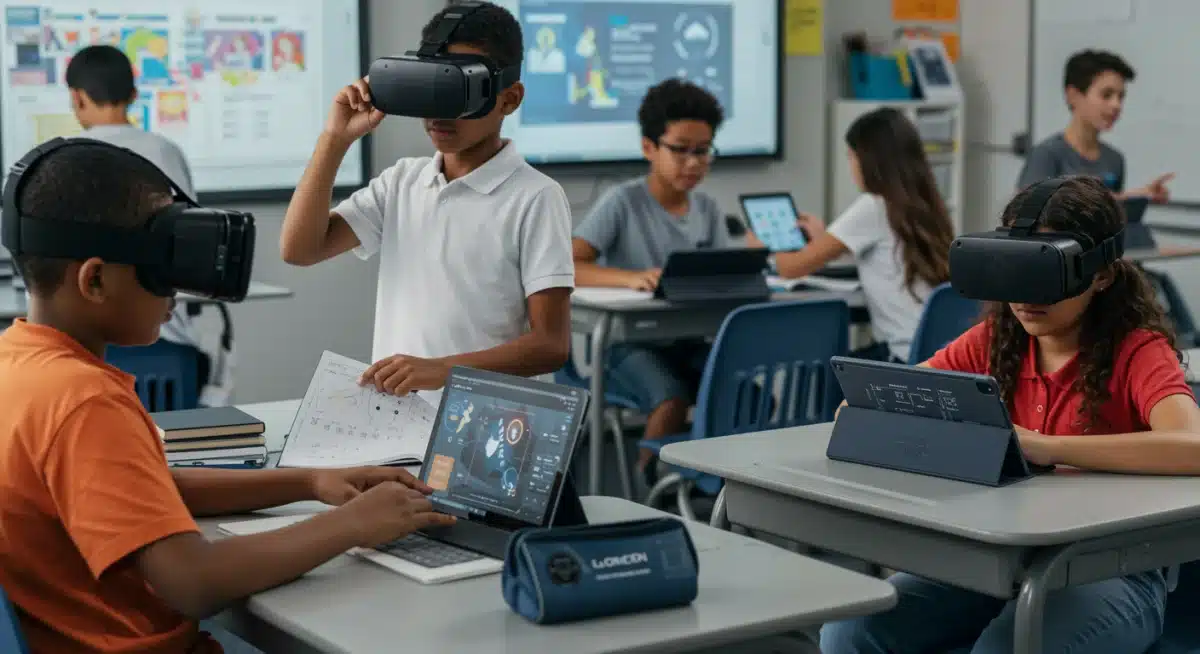
The landscape of K-12 education is poised for significant transformation by 2025, driven by five key education technology trends, including artificial intelligence, virtual reality, and enhanced connectivity, fundamentally altering how students learn and educators teach.
The landscape of education is in constant flux, but the pace of change is accelerating, especially with the integration of technology. By 2025, the 5 most impactful education technology trends transforming K-12 learning in 2025 will fundamentally redefine pedagogical approaches and student engagement. These advancements promise to create more personalized, immersive, and effective learning experiences for students across the United States.
The Rise of AI-Powered Personalized Learning
Artificial Intelligence (AI) is no longer a futuristic concept; it is rapidly becoming an integral part of K-12 education. This trend focuses on tailoring the learning experience to each student’s unique needs, pace, and style, moving away from the traditional one-size-fits-all model. AI algorithms can analyze student performance data, identify strengths and weaknesses, and then recommend customized learning paths and resources.
The promise of AI in personalized learning extends beyond simple adaptive quizzes. It encompasses intelligent tutoring systems that offer real-time feedback, AI-driven content curation that adapts to student interests, and even predictive analytics to identify students at risk of falling behind. This level of individualization was once unimaginable in large classroom settings.
Adaptive learning platforms
Adaptive learning platforms use AI to adjust the difficulty and content of lessons based on a student’s ongoing performance. This ensures that students are always challenged appropriately, preventing boredom for advanced learners and providing necessary support for those who need more time.
- Individualized learning paths
- Real-time performance analytics
- Automated content recommendations
- Targeted intervention strategies
Intelligent tutoring systems
These systems go beyond simple question-and-answer formats. They can engage students in dialogue, explain complex concepts, and guide them through problem-solving processes, much like a human tutor would. The goal is to provide consistent, high-quality support that is always available.
The integration of AI into personalized learning environments aims to empower both students and educators. Students gain autonomy over their learning journey, while teachers receive valuable insights into student progress, allowing them to focus on higher-level instruction and socio-emotional development. This shift could lead to more equitable educational outcomes.
Immersive Learning Experiences with VR and AR
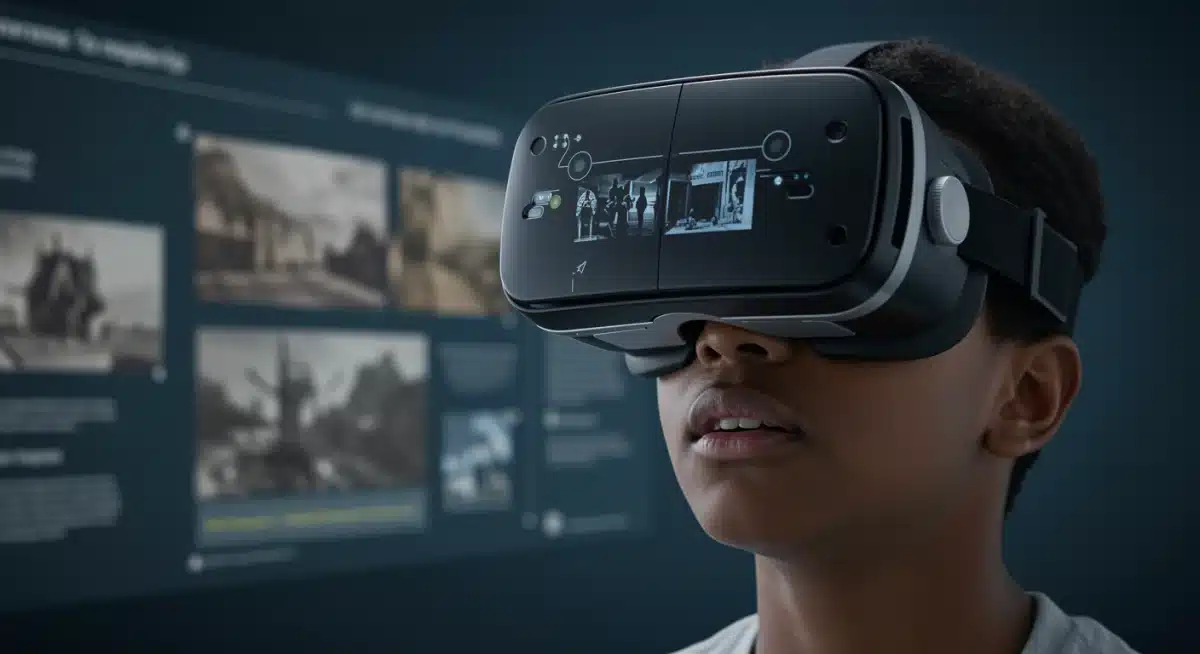
Virtual Reality (VR) and Augmented Reality (AR) are set to revolutionize how students interact with educational content, moving beyond passive consumption to active, immersive exploration. These technologies create environments where abstract concepts become tangible and distant places or historical events feel immediate and real. Imagine dissecting a virtual frog without the mess or exploring ancient Rome from your classroom.
The power of VR and AR lies in their ability to engage multiple senses and provide experiential learning opportunities that are otherwise impossible or impractical. This can significantly boost engagement, retention, and a deeper understanding of complex subjects. As hardware becomes more affordable and content more readily available, these technologies will become commonplace in K-12 classrooms.
Virtual field trips
Instead of relying on textbooks or documentaries, students can take virtual field trips to distant ecosystems, historical landmarks, or even inside the human body. This allows for exploration and interaction that traditional methods cannot replicate.
- Exploring historical sites in 3D
- Simulating scientific experiments
- Experiencing different cultures firsthand
- Understanding complex systems visually
Augmented reality overlays
AR overlays digital information onto the real world. A student could point a tablet at a textbook image of a dinosaur and see a 3D animated model appear on the screen, moving and roaring in their classroom. This adds an interactive layer to existing learning materials.
These immersive technologies foster curiosity and critical thinking by allowing students to manipulate and experiment within safe, controlled environments. They also cater to different learning styles, particularly visual and kinesthetic learners, making education more inclusive and effective for a wider range of students. The blending of the physical and digital worlds will redefine the classroom experience.
Data-Driven Instruction and Analytics
The increasing digitalization of learning generates vast amounts of data, and by 2025, schools will be leveraging this data more effectively to inform instructional decisions. Data-driven instruction moves beyond grading performance to understanding the ‘why’ behind student outcomes, enabling educators to adapt their teaching strategies proactively and precisely. This trend empowers teachers with actionable insights into student progress and learning gaps.
Educational analytics tools can track everything from time spent on a task to specific misconceptions identified through quizzes. This granular data provides a comprehensive view of individual and collective student learning, allowing for timely interventions and targeted support. The goal is to optimize learning environments and ensure every student reaches their full potential.
Learning analytics dashboards
These dashboards provide teachers with a real-time overview of student engagement, progress, and areas where they might be struggling. This immediate feedback helps teachers adjust their lessons on the fly rather than waiting for formal assessments.
- Track student engagement metrics
- Identify common areas of difficulty
- Monitor progress towards learning objectives
- Generate reports for parent-teacher conferences
Personalized intervention strategies
With detailed data, educators can pinpoint exactly where a student is struggling and deploy specific, tailored interventions. This might involve assigning supplementary materials, recommending specific practice exercises, or providing one-on-one support in targeted areas.
The effective use of data in K-12 education ensures that instructional practices are evidence-based and continuously improved. It fosters a culture of continuous assessment and adaptation, ultimately leading to more effective teaching and better learning outcomes for all students. Data becomes a powerful tool for equitable education.
The Expansion of Blended and Hybrid Learning Models
While the pandemic accelerated the adoption of remote learning, by 2025, the focus will shift towards refined blended and hybrid learning models. These approaches strategically combine face-to-face instruction with online learning components, offering flexibility, personalized pacing, and access to a wider range of resources. This trend acknowledges the benefits of both in-person interaction and digital learning, seeking to optimize the best of both worlds.
Blended learning allows students to engage with content online at their own pace, freeing up classroom time for collaborative projects, deeper discussions, and individualized teacher support. Hybrid models, often involving a mix of in-person and remote days, offer greater flexibility in scheduling and can accommodate diverse student needs and circumstances. These models are becoming a cornerstone of modern educational design.
Flexible learning environments
These models allow schools to adapt to various situations, from individual student needs to broader community challenges. They provide continuity of education and ensure that learning can happen anywhere, anytime, breaking down traditional classroom barriers.
The expansion of blended and hybrid learning also promotes digital literacy and self-directed learning skills, which are crucial for success in the 21st century. Students learn to manage their time, utilize online resources effectively, and take ownership of their educational journey. This prepares them for higher education and future careers.
Enhanced Connectivity and Digital Equity Initiatives
The effectiveness of any educational technology hinges on reliable access to the internet and appropriate devices. By 2025, there will be a continued and intensified focus on enhancing connectivity and addressing digital equity gaps across K-12 institutions. This trend recognizes that technology’s transformative power can only be fully realized if all students have equal access to it, regardless of their socioeconomic background or geographic location.
Initiatives will include expanding broadband access, providing devices to students who lack them, and ensuring technical support for families. The goal is to create a level playing field where every student can participate in and benefit from the advanced educational technologies available. Without equitable access, the promise of edtech remains unfulfilled for many.
Broadband expansion programs
Governments and private organizations are investing in expanding high-speed internet infrastructure, especially in rural and underserved urban areas. This is fundamental to supporting online learning and digital resource access.
- Government funding for internet access
- Community Wi-Fi initiatives
- Partnerships with internet service providers
- Digital literacy training for families
One-to-one device programs
Many school districts are implementing programs to provide every student with a laptop or tablet, ensuring they have the necessary tools for digital learning both inside and outside the classroom. This removes a significant barrier to participation.
Addressing digital equity is not just about providing hardware; it also involves comprehensive training for both students and educators on how to effectively use these tools. It’s about fostering an inclusive digital learning environment where every student has the opportunity to thrive through technology. This commitment to equitable access is paramount for the future of K-12 education.
The Role of Gamification in Student Engagement
Gamification, the application of game-design elements and game principles in non-game contexts, is rapidly gaining traction in K-12 education as a powerful tool for boosting student engagement and motivation. By 2025, this trend will be more sophisticated, moving beyond simple points and badges to incorporate complex narrative structures, collaborative challenges, and meaningful rewards that align with learning objectives. This approach leverages students’ natural inclination towards play and competition to make learning more enjoyable and effective.
The core idea behind gamification is to make learning feel less like a chore and more like an exciting quest. When students are actively involved in solving problems, earning achievements, and progressing through levels, they are more likely to stay focused, persevere through challenges, and retain information. Gamification can be applied across various subjects, from math challenges to historical simulations, making abstract concepts more relatable and fun.
Interactive learning games
These are not just educational games; they are carefully designed experiences that embed learning objectives within engaging gameplay. Students might solve mathematical puzzles to unlock new levels or complete grammar challenges to earn virtual currency for their avatars.
- Points, badges, and leaderboards for motivation
- Story-driven learning quests
- Collaborative challenges and team play
- Personalized progress tracking and rewards
Feedback and reward systems
Effective gamification provides immediate and constructive feedback, allowing students to understand their mistakes and learn from them in a low-stakes environment. Rewards, whether virtual or tangible, acknowledge effort and achievement, reinforcing positive learning behaviors.
Gamification also encourages problem-solving, critical thinking, and collaboration skills, which are essential for success in the modern world. By transforming the learning process into an interactive and rewarding experience, educators can foster a lifelong love of learning, making education not just effective but also genuinely enjoyable. This trend is set to make classrooms more dynamic and student-centric.
| Key Trend | Brief Description |
|---|---|
| AI-Powered Learning | Customizes educational content and pace for individual student needs through intelligent algorithms. |
| Immersive VR/AR | Creates engaging virtual and augmented reality experiences for deeper understanding and exploration. |
| Data-Driven Instruction | Utilizes student performance data to inform teaching strategies and provide targeted support. |
| Blended/Hybrid Models | Combines online and in-person learning for flexible, personalized, and effective educational delivery. |
Frequently Asked Questions about EdTech in K-12
AI will personalize K-12 learning by analyzing student data to create adaptive learning paths, recommend tailored resources, and provide real-time feedback. It can identify individual learning gaps and suggest specific exercises or content to address them, ensuring each student progresses at their optimal pace and style.
The main benefits of VR/AR include creating immersive and engaging learning experiences, making abstract concepts tangible, and enabling virtual field trips to places otherwise inaccessible. These technologies enhance sensory engagement, improve retention, and foster deeper understanding through experiential learning.
Data-driven instruction improves teaching by providing educators with actionable insights into student performance and learning patterns. Teachers can use this data to identify struggling students, adapt their teaching methods, and implement targeted interventions, leading to more effective and personalized educational outcomes for the entire class.
Digital equity is crucial as it ensures all students have equal access to the necessary technology and internet connectivity to benefit from these trends. Without equitable access to devices and broadband, the transformative potential of edtech cannot be fully realized for every student, perpetuating educational disparities.
Gamification enhances K-12 learning by making it more engaging, motivating, and interactive. By incorporating game elements like points, badges, and challenges, it fosters a fun environment that encourages active participation, problem-solving, and perseverance, ultimately improving student retention and a love for learning.
Conclusion
The trajectory of K-12 education in the United States is undeniably shaped by rapid technological advancements. By 2025, the five most impactful education technology trends transforming K-12 learning, including AI-powered personalization, immersive VR/AR experiences, data-driven instruction, expanded blended learning, and enhanced digital equity, will collectively create a more dynamic and effective educational ecosystem. These innovations promise to foster an environment where learning is not only more engaging and accessible but also deeply customized to meet the individual needs of every student. As these trends continue to evolve, they will empower educators, inspire students, and ultimately prepare the next generation for a future that is increasingly digital and interconnected. The commitment to embracing and strategically implementing these technologies will be paramount for schools aiming to provide a truly future-ready education.