0.5% GDP Growth: What it Means for US Households
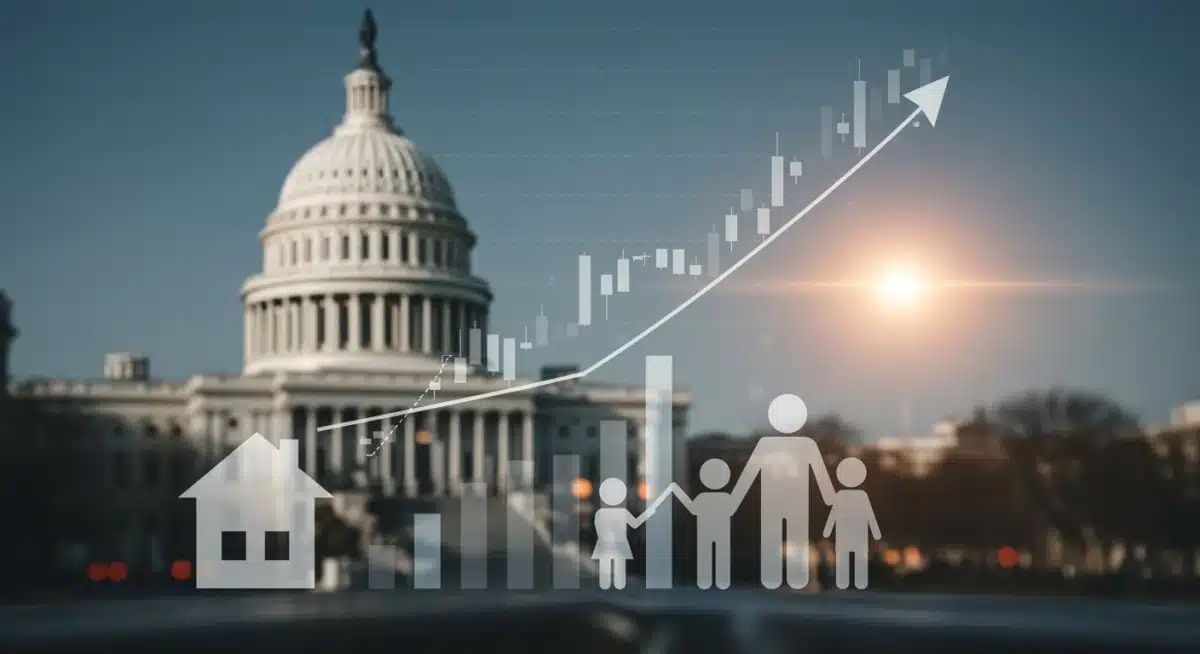
A 0.5% GDP growth forecast signals a period of modest economic expansion for US households, impacting everything from job security and wage growth to inflation and interest rates, requiring careful financial planning.
The economy is constantly shifting, and understanding these movements is key to navigating your financial future. The latest economic indicators suggest a US GDP Growth 2025 forecast of 0.5%, a figure that, while seemingly small, carries significant implications for American households. What does this projected growth truly mean for your job, your savings, and your daily expenses?
Understanding the 0.5% GDP Growth Forecast
A 0.5% Gross Domestic Product (GDP) growth forecast for 2025 in the United States indicates a period of slow but positive economic expansion. GDP, which measures the total value of goods and services produced in a country, is a key indicator of economic health. A modest growth rate like 0.5% suggests that the economy is expanding, but at a pace that might not feel robust to everyone.
This forecast is often a result of various factors, including global economic conditions, domestic consumer spending patterns, business investment levels, and government policies. Economists analyze these elements to project future growth, providing a snapshot of what might lie ahead. For households, understanding this baseline is crucial because it sets the stage for everything from employment prospects to the cost of living.
What Drives GDP Growth?
GDP growth is influenced by four main components: consumer spending, business investment, government spending, and net exports. When consumer confidence is high, people tend to spend more, boosting economic activity. Similarly, businesses investing in new equipment or expanding operations create jobs and increase output. Government expenditures, from infrastructure projects to social programs, also contribute significantly. Finally, the balance between a country’s exports and imports impacts its GDP.
- Consumer Spending: Represents the largest component of US GDP, reflecting household purchases of goods and services.
- Business Investment: Includes spending by companies on capital goods, such as machinery, factories, and research and development.
- Government Spending: Public sector expenditures on goods and services, including defense, education, and infrastructure.
- Net Exports: The difference between a country’s total exports and total imports, indicating its trade balance.
A 0.5% growth rate suggests that while these components are generally moving in a positive direction, some might be experiencing headwinds or growing at a slower pace than in previous, more booming economic periods. This requires a nuanced understanding of how each factor contributes to the overall picture and, crucially, how it translates to the daily lives of American families.
In essence, a 0.5% GDP growth forecast for 2025 points to a cautiously expanding economy. It’s a rate that implies stability rather than rapid acceleration, suggesting that while the US economy is not contracting, it’s also not experiencing a boom. This moderate pace has distinct implications for how households should prepare and adapt their financial strategies.
Impact on Employment and Job Market Stability
A 0.5% GDP growth rate typically translates to a stable, albeit not rapidly expanding, job market. While it may not lead to widespread hiring sprees, it generally indicates that the economy is generating enough activity to maintain current employment levels and possibly create a modest number of new jobs. For US households, this means job security might remain relatively strong, but opportunities for significant wage increases or rapid career advancement could be more limited than during periods of higher growth.
Businesses facing slower growth might become more cautious about expanding their workforce, focusing instead on efficiency and retaining their existing talent. This environment encourages employees to prioritize skill development and adaptability to remain competitive. Sectors that are less sensitive to economic fluctuations, such as healthcare or certain government services, might experience more consistent demand for labor compared to cyclical industries like manufacturing or construction.
Sector-Specific Employment Outlook
The impact of a 0.5% GDP growth won’t be uniform across all industries. Some sectors might continue to thrive due to specific trends or foundational demand, while others could face challenges. Understanding these distinctions is important for individuals considering career changes or those entering the workforce.
- Technology: Continued innovation and digital transformation efforts may sustain demand, though growth might moderate.
- Healthcare: Demographic shifts, particularly an aging population, ensure consistent demand for healthcare services and professionals.
- Manufacturing: Could experience slower growth, with an emphasis on automation and efficiency rather than significant job creation.
- Retail and Hospitality: Highly sensitive to consumer spending, these sectors might see modest gains in employment aligning with overall economic growth.
For job seekers, this economic climate underscores the importance of acquiring specialized skills and considering industries with inherent resilience. Employers, on the other hand, might focus on upskilling their current workforce and optimizing operations to navigate the slower growth period effectively. The stability offered by 0.5% GDP growth is a double-edged sword: it avoids significant job losses but also limits the rapid expansion of new opportunities.
In summary, a 0.5% GDP growth forecast for 2025 suggests a job market characterized by stability rather than explosive growth. Households should anticipate steady employment conditions, with a focus on skill development and strategic career planning to maximize opportunities within this moderate economic environment.
Inflationary Pressures and Cost of Living
The relationship between GDP growth and inflation is complex, but a 0.5% growth forecast typically suggests that inflationary pressures might be contained, or at least not accelerating dramatically. Slower economic growth can sometimes temper demand, which in turn can prevent prices from rising too quickly. However, other factors, such as global supply chain issues, energy costs, and fiscal policies, also play a significant role in determining the cost of living for US households.
For families, this means that while the overall rate of price increases might not be as alarming as during periods of overheating, specific categories of goods and services could still see notable price hikes. Essential expenses like housing, food, and transportation are particularly sensitive to various economic forces, and their movements directly impact household budgets. Wage growth, if it remains stagnant or grows slower than inflation, can erode purchasing power even with modest price increases.

Managing Household Budgets in a Modest Growth Environment
In an environment of 0.5% GDP growth, households need to be proactive in managing their finances. Budgeting becomes even more critical to ensure that income keeps pace with expenses, especially if inflation persists even at lower rates. This might involve re-evaluating spending habits, seeking out more affordable alternatives, and exploring ways to increase income or reduce debt.
- Budget Review: Regularly assess income and expenses to identify areas for savings and adjust spending priorities.
- Debt Management: Prioritize paying down high-interest debt to free up cash flow and reduce financial burden.
- Emergency Savings: Maintain a robust emergency fund to cushion against unexpected expenses or income disruptions.
- Smart Shopping: Look for discounts, buy in bulk, and compare prices to mitigate the effects of rising costs on everyday necessities.
The goal is to build financial resilience against potential economic headwinds, ensuring that a modest GDP growth rate doesn’t disproportionately impact a household’s quality of life. Understanding where your money goes and making conscious decisions about spending and saving are paramount. Even small adjustments can make a big difference over time, helping to preserve purchasing power.
Ultimately, a 0.5% GDP growth forecast implies a need for vigilance regarding inflationary pressures and the cost of living. While overall inflation might be contained, households should remain strategic in their financial planning and budgeting to navigate the potential for rising costs in key areas, thereby protecting their economic well-being.
Investment Landscape and Savings Strategies
A 0.5% GDP growth forecast for 2025 paints a picture of a cautious investment landscape. In such an environment, investors typically seek stability and reliable returns, often favoring assets that are less volatile than those that thrive during rapid expansion. Interest rates, which are influenced by economic growth and central bank policies, will play a crucial role in shaping the attractiveness of various savings and investment vehicles. Lower growth might lead central banks to maintain or even lower interest rates to stimulate the economy, affecting everything from mortgage rates to savings account yields.
For US households, this means a need to re-evaluate their investment portfolios and savings strategies. Traditional savings accounts might offer minimal returns, prompting a search for alternatives that provide a better hedge against inflation, even if modest. Diversification becomes even more important, as does a long-term perspective, to weather any short-term market fluctuations that might accompany slower economic expansion.
Optimizing Investments and Savings
Navigating a low-growth environment requires a thoughtful approach to both saving and investing. It’s a time to be strategic and informed, rather than reactive, to ensure your money works as hard as possible for you.
- Diversify Portfolio: Spread investments across various asset classes (stocks, bonds, real estate) to mitigate risk.
- Consider Value Stocks: Companies with strong fundamentals and stable earnings might perform better than growth stocks in a slower economy.
- Explore Fixed Income: Bonds and other fixed-income securities can offer stability, especially if interest rates are expected to remain low.
- Review Retirement Accounts: Ensure 401(k)s and IRAs are aligned with long-term goals and current economic outlooks.
It’s also a good time to consider professional financial advice to tailor strategies to individual circumstances and risk tolerance. The goal is to identify opportunities that offer reasonable returns without taking on excessive risk in a period where rapid gains might be less common. Savings strategies should focus on ensuring liquidity for emergencies while seeking out instruments that offer slightly better returns than traditional bank accounts, such as high-yield savings accounts or certificates of deposit (CDs) if rates are favorable.
In essence, a 0.5% GDP growth forecast for 2025 calls for a strategic and conservative approach to investments and savings. Households should prioritize diversification, seek stable assets, and continuously review their financial plans to align with the moderate economic expansion, ensuring their long-term financial health.
Government Policy and Household Support
In an economic climate characterized by 0.5% GDP growth, government policy often shifts to a supportive stance, aiming to stimulate economic activity and provide stability for households. This can manifest in various forms, including fiscal measures like tax adjustments or targeted spending programs, and monetary policies enacted by the Federal Reserve. The objective is typically to prevent a slowdown from turning into a recession and to ensure that the benefits of even modest growth are felt across the population.
For US households, understanding these potential government actions is crucial, as they can directly impact disposable income, access to credit, and the availability of social safety nets. Policies might focus on supporting small businesses to maintain employment, investing in infrastructure to create jobs, or offering direct aid to vulnerable populations. The effectiveness of these measures in translating a 0.5% growth into tangible improvements for everyday Americans will be a key area of observation.
Key Policy Areas to Watch
Several policy areas are likely to be at the forefront in response to a 0.5% GDP growth forecast, each with distinct implications for households.
- Fiscal Stimulus: Potential for government spending on public works, research, or direct consumer relief to boost demand.
- Monetary Policy: The Federal Reserve’s decisions on interest rates, aimed at influencing borrowing costs and investment.
- Tax Policy: Adjustments to tax codes for individuals or businesses that could affect disposable income or investment incentives.
- Social Programs: Strengthening or expanding unemployment benefits, food assistance, or housing support to address potential economic vulnerabilities.
Households should stay informed about legislative changes and economic aid programs that could offer financial relief or new opportunities. For instance, tax credits for specific expenses or investments could become more prevalent, or there might be increased funding for job training programs to help individuals adapt to evolving labor market demands. These government interventions are designed to buffer the effects of slower growth and ensure a degree of economic stability for families.
Therefore, a 0.5% GDP growth forecast for 2025 will likely prompt proactive government policy aimed at supporting households and sustaining economic momentum. Staying aware of these policy developments is essential for American families to leverage available resources and navigate the modest growth period effectively.
Consumer Behavior and Spending Patterns
A 0.5% GDP growth forecast for 2025 is likely to influence consumer behavior and spending patterns among US households. In an environment of moderate economic expansion, consumers tend to become more cautious, prioritizing essential goods and services over discretionary purchases. This shift can be driven by a desire to save more, fear of potential economic downturns, or simply a response to slower wage growth and persistent, albeit contained, inflation. Businesses will need to adapt to these changing preferences, focusing on value, durability, and necessity to attract and retain customers.
This cautious approach can lead to a reallocation of household budgets, with families spending more on housing, healthcare, and utilities, and less on luxury items, entertainment, or travel. The retail sector, in particular, will feel the effects, with a potential increase in demand for discount retailers and private-label brands. Understanding these shifts is vital for both consumers, who can make more informed purchasing decisions, and businesses, which need to align their offerings with evolving market demands.
Adapting to Shifting Consumer Priorities
Households can proactively adjust their spending to optimize their financial situation in a 0.5% growth environment. This involves a conscious effort to differentiate between needs and wants and to make strategic purchasing choices.
- Prioritize Essentials: Focus spending on housing, food, healthcare, and transportation, ensuring these fundamental needs are met.
- Seek Value: Opt for products and services that offer the best value for money, possibly exploring generic brands or sales.
- Delay Discretionary Purchases: Postpone large, non-essential expenditures like new cars or vacations until economic conditions improve or savings accumulate.
- Increase Savings: Dedicate a larger portion of income to savings, building a stronger financial buffer for the future.
Moreover, the digital economy continues to play a significant role, with online shopping and digital services offering convenience and competitive pricing. Households might increasingly rely on these platforms to compare prices and access deals, further influencing traditional retail models. The overall trend will likely be towards more thoughtful and deliberate consumption, reflecting a broader economic sentiment of prudence.
In conclusion, a 0.5% GDP growth forecast for 2025 will likely foster more cautious consumer behavior and spending patterns among US households. This shift towards prioritizing essentials and seeking value will require both families and businesses to adapt by making informed financial decisions and offering relevant products and services, respectively.
Long-Term Economic Outlook and Future Preparedness
While a 0.5% GDP growth forecast for 2025 might suggest a period of modest expansion, it also prompts US households to consider their long-term economic outlook and preparedness. This rate of growth, while positive, is below historical averages for robust economic booms, indicating that future economic cycles might continue to be characterized by periods of slower expansion interspersed with moderate growth. Preparing for such a landscape involves building financial resilience, adapting to evolving market conditions, and making strategic decisions that safeguard future prosperity.
The long-term outlook will also be shaped by global economic trends, technological advancements, and policy decisions beyond 2025. Households that proactively plan for these eventualities, focusing on education, skill development, and diversified financial portfolios, will be better positioned to thrive regardless of economic fluctuations. This includes understanding the potential for future interest rate changes, inflationary pressures, and shifts in the job market that could impact personal finances over the coming decades.
Strategies for Long-Term Financial Resilience
Building long-term financial resilience is paramount in an economic environment that anticipates modest growth. This involves a holistic approach to personal finance, encompassing various aspects of income, spending, saving, and investing.
- Continuous Learning: Invest in education and skill development to enhance career prospects and adaptability in the job market.
- Retirement Planning: Consistently contribute to retirement accounts, leveraging compounding interest over the long term.
- Asset Diversification: Maintain a well-diversified investment portfolio that can withstand different economic conditions.
- Health and Insurance: Ensure adequate health insurance and other forms of coverage to protect against unforeseen financial shocks.
- Real Estate Strategy: Carefully consider real estate decisions, whether buying or renting, based on long-term financial goals and market trends.
Moreover, fostering a culture of saving and responsible spending within the household can create a strong foundation for future financial stability. This might involve teaching younger generations about financial literacy and making collective decisions that align with long-term economic goals. The ability to adapt and pivot in response to economic changes will be a defining characteristic of financially resilient households.
Ultimately, the 0.5% GDP growth forecast for 2025 serves as a valuable reminder for US households to prioritize long-term economic preparedness. By adopting strategies that build financial resilience, continuously adapt to evolving conditions, and make informed choices, families can secure their financial future amidst varying economic landscapes.
| Key Economic Aspect | Implication for US Households in 2025 (0.5% GDP Growth) |
|---|---|
| Employment | Stable job market with modest new job creation; focus on skill development for competitiveness. |
| Inflation & Cost of Living | Potentially contained inflation, but vigilance needed for essential goods; budgeting is crucial. |
| Investments & Savings | Cautious investment landscape; focus on diversification and stable assets; explore higher-yield savings. |
| Government Support | Likely policy measures to stimulate economy and provide household stability; stay informed on programs. |
Frequently Asked Questions About US GDP Growth in 2025
A 0.5% GDP growth suggests modest wage increases, if any, for average US households. Growth might be slower than inflation in some sectors, potentially impacting purchasing power. Employees should focus on skill development to maintain competitiveness and seek opportunities for advancement.
Yes, slower GDP growth could lead the Federal Reserve to maintain or lower interest rates to stimulate the economy. This would generally mean more favorable rates for mortgages, auto loans, and other forms of credit, benefiting borrowers but potentially reducing returns on savings.
Households should consider becoming more cautious with discretionary spending, prioritizing essential goods and services. Focusing on budgeting, seeking value, and increasing emergency savings will build financial resilience. Delaying large, non-essential purchases might also be prudent.
Industries like healthcare and certain technology sectors, driven by underlying demand and innovation, may show resilience. Cyclical industries such as manufacturing, construction, and some retail segments might experience slower growth due to reduced consumer and business spending. Diversification is key.
In a 0.5% growth scenario, governments might implement targeted fiscal stimulus, expand social safety nets, or offer tax incentives. Households should monitor federal and state announcements for potential unemployment benefits, housing assistance, energy subsidies, or job training programs designed to bolster economic stability.
Conclusion
The projected 0.5% GDP growth for the US economy in 2025 signals a period of measured expansion, rather than a robust boom. For American households, this forecast underscores the importance of proactive financial planning and adaptability. While job markets are likely to remain stable, wage growth may be modest, and inflationary pressures, though potentially contained overall, will still require careful budgeting for essential expenses. The investment landscape will favor stability and diversification, urging individuals to re-evaluate their portfolios and savings strategies. Furthermore, government policies will likely aim to support economic stability and provide targeted assistance, making it crucial for households to stay informed about available programs. By understanding these dynamics and implementing strategic financial decisions, US households can navigate the upcoming economic environment effectively, ensuring their long-term financial well-being.