Mastering Employee Retention: Strategies for Long-Term Success

Mastering Employee Retention: Strategies for Long-Term Success
In today’s dynamic business landscape, the ability to attract and, more importantly, retain top talent is not just an HR concern; it’s a fundamental pillar of sustainable organizational success. The concept of employee retention strategies has evolved from a reactive measure to a proactive, integral component of corporate strategy. High employee turnover can be a significant drain on resources, impacting productivity, morale, and ultimately, the bottom line. Conversely, a workforce that feels valued, engaged, and committed is a powerful asset, driving innovation, customer satisfaction, and continuous growth.
Understanding the multifaceted nature of why employees leave and, more critically, why they choose to stay, is the first step toward building an effective retention framework. This comprehensive guide will delve deep into the most impactful employee retention strategies, offering actionable insights for businesses of all sizes looking to cultivate a loyal and high-performing team. We will explore everything from competitive compensation and benefits to fostering a thriving workplace culture, professional development opportunities, and effective leadership.
The Cost of High Employee Turnover
Before we explore specific employee retention strategies, it’s crucial to understand the tangible and intangible costs associated with high employee turnover. Many organizations underestimate the true financial impact, often only considering the immediate recruitment expenses. However, the costs extend far beyond just advertising and interviewing.
Direct Costs:
- Recruitment Expenses: Advertising, headhunter fees, background checks, and signing bonuses.
- Onboarding and Training: The time and resources invested in bringing a new employee up to speed, including formal training programs, mentor time, and lost productivity during the learning curve.
- Administrative Costs: Processing paperwork for both departing and new employees, payroll adjustments, and benefits administration.
Indirect Costs:
- Lost Productivity: The period between an employee’s departure and a new hire becoming fully productive results in a significant dip in output. Existing team members may also experience increased workloads, potentially leading to burnout.
- Decreased Morale: High turnover can create an unstable work environment, leading to anxiety, uncertainty, and decreased morale among remaining employees. This can further exacerbate retention problems.
- Loss of Institutional Knowledge: Departing employees take with them valuable experience, client relationships, and specific operational knowledge that can be difficult or impossible to replace.
- Impact on Customer Service: Inconsistent service quality or delays can occur when new employees are learning the ropes, potentially damaging customer relationships and brand reputation.
- Reduced Innovation: A stable, experienced workforce often fosters a culture of innovation. High turnover can disrupt continuity and hinder the development of new ideas and processes.
Recognizing these profound impacts underscores the immense value of investing in robust employee retention strategies. It’s not merely about saving money; it’s about safeguarding the intellectual capital, cultural integrity, and future viability of the organization.
Foundation of Effective Employee Retention Strategies: A Holistic Approach
Successful employee retention strategies are rarely isolated initiatives. Instead, they form a holistic ecosystem where various elements work in concert to create an environment where employees thrive and choose to stay. This approach considers the entire employee lifecycle, from initial recruitment to ongoing development and recognition.
1. Competitive Compensation and Benefits
While not the only factor, competitive compensation and a robust benefits package remain foundational to any effective employee retention strategy. Employees need to feel that their contributions are fairly valued in the market. This includes:
- Market-Rate Salaries: Regularly benchmark salaries against industry standards to ensure competitiveness.
- Performance-Based Incentives: Bonuses, profit-sharing, and equity options can motivate and reward high performance, fostering a sense of ownership.
- Comprehensive Health and Wellness Programs: Health insurance, dental, vision, mental health support, and wellness initiatives demonstrate a commitment to employee well-being.
- Retirement Plans: 401(k) matching or pension plans provide long-term financial security.
- Paid Time Off (PTO): Generous vacation, sick leave, and parental leave policies support work-life balance.
2. Fostering a Positive Workplace Culture
Culture is often cited as a primary reason employees stay or leave. A positive, inclusive, and supportive workplace culture is a powerful employee retention strategy. Key elements include:
- Clear Values and Mission: Employees want to feel connected to a purpose. Clearly articulated values and a compelling mission can inspire loyalty.
- Open Communication: Encourage transparency from leadership and provide channels for employees to voice their ideas, concerns, and feedback without fear of reprisal.
- Respect and Trust: Cultivate an environment where all employees feel respected, trusted, and valued for their unique contributions.
- Inclusivity and Diversity: Actively promote diversity and create an inclusive environment where everyone feels they belong and can thrive.
- Work-Life Balance: Support flexible work arrangements, remote work options, and discourage excessive overtime to prevent burnout.
Enhancing Engagement and Professional Growth
Beyond the basics of compensation and culture, engaging employees and providing avenues for growth are critical employee retention strategies. Employees are more likely to commit long-term when they see a future for themselves within the organization.
3. Robust Professional Development and Career Pathing
Employees seek opportunities to learn, grow, and advance their careers. Organizations that invest in their employees’ development demonstrate a commitment that fosters loyalty.
- Training and Upskilling Programs: Offer regular workshops, online courses, and certifications relevant to their roles and future aspirations.
- Mentorship and Coaching: Pair employees with experienced mentors or provide access to professional coaching to guide their development.
- Clear Career Paths: Help employees visualize their potential growth within the company by outlining clear career progression paths and the skills required for advancement.
- Internal Mobility: Encourage and support employees in exploring different roles or departments within the organization, rather than seeking opportunities elsewhere.
4. Recognition and Appreciation
Feeling appreciated is a fundamental human need that extends to the workplace. Acknowledging and rewarding employees for their hard work and achievements is a highly effective employee retention strategy.
- Formal Recognition Programs: Implement awards, bonuses, or public acknowledgments for outstanding performance.
- Informal Appreciation: Encourage managers to regularly offer genuine, specific praise and thanks for contributions.
- Celebrations of Milestones: Acknowledge work anniversaries, project completions, and personal achievements.
- Feedback and Performance Reviews: Conduct regular, constructive performance reviews that focus on strengths, areas for development, and future goals, ensuring employees feel heard and supported.

Leadership and Management’s Role in Retention
The quality of leadership and management often directly correlates with employee satisfaction and retention. Managers are on the front lines, directly impacting the daily experiences of their teams. Therefore, developing strong leaders is a pivotal employee retention strategy.
5. Effective Leadership and Management Training
Managers need to be equipped with the skills to lead, motivate, and support their teams effectively.
- Leadership Development Programs: Invest in training that focuses on communication, empathy, conflict resolution, and performance management.
- Emotional Intelligence: Train managers to understand and manage their own emotions and those of their team members.
- Delegation and Empowerment: Encourage managers to delegate meaningful tasks and empower employees to take ownership of their work.
- Regular One-on-One Meetings: Managers should conduct consistent one-on-one meetings to discuss progress, challenges, and career aspirations.
6. Soliciting and Acting on Employee Feedback
Employees want to feel heard and that their opinions matter. Creating mechanisms for feedback and demonstrating that action is taken based on that feedback is a powerful employee retention strategy.
- Employee Surveys: Conduct regular anonymous surveys (e.g., annual engagement surveys, pulse surveys) to gauge satisfaction, identify pain points, and gather suggestions.
- Exit Interviews: Conduct thorough exit interviews to understand the reasons for departure and identify recurring themes that can inform retention efforts.
- Stay Interviews: Proactively conduct ‘stay interviews’ with current employees to understand why they choose to stay, what they value, and what might make them consider leaving.
- Actionable Insights: Crucially, use the feedback gathered to implement changes and communicate those changes back to employees, demonstrating that their input is valued.
Leveraging Technology and Data for Better Retention
In the digital age, technology and data analytics offer powerful tools to enhance employee retention strategies. By leveraging these resources, organizations can gain deeper insights and personalize their approach.
7. Predictive Analytics for Turnover Risk
Advanced HR analytics can help identify employees who might be at risk of leaving before they even start looking for new opportunities.
- Data Analysis: Analyze historical data on employee demographics, performance, tenure, promotion history, and survey responses to identify patterns associated with turnover.
- Early Warning Systems: Implement systems that flag potential risks, allowing HR and managers to intervene proactively with targeted support or opportunities.
- Personalized Interventions: Use data to tailor retention efforts to individual employees or specific segments of the workforce.
8. HR Technology for Streamlined Processes and Communication
Modern HR platforms can significantly improve the employee experience, which indirectly contributes to retention.
- Self-Service Portals: Provide employees with easy access to HR information, benefits enrollment, and payroll details.
- Performance Management Systems: Tools that facilitate goal setting, continuous feedback, and performance reviews.
- Internal Communication Platforms: Use platforms (e.g., Slack, Microsoft Teams) to foster collaboration, share company news, and build community.
Building a Culture of Well-being and Support
An often-overlooked but increasingly vital aspect of employee retention strategies is prioritizing employee well-being. A supportive environment that genuinely cares for its employees’ holistic health can significantly boost loyalty.
9. Prioritizing Mental and Physical Well-being
The impact of stress and burnout on employee turnover is undeniable. Organizations must actively support the mental and physical health of their workforce.
- Mental Health Resources: Provide access to counseling services, Employee Assistance Programs (EAPs), and mental health awareness training.
- Wellness Programs: Offer initiatives like fitness challenges, healthy eating programs, and stress management workshops.
- Encourage Breaks and Time Off: Foster a culture where employees feel comfortable taking breaks and utilizing their paid time off to recharge.
- Supportive Work Environment: Design workspaces that promote comfort, natural light, and opportunities for movement.
10. Promoting Work-Life Integration, Not Just Balance
The traditional concept of work-life balance is evolving. Many employees now seek work-life integration, where work and personal life can coexist flexibly.
- Flexible Work Schedules: Offer options like compressed workweeks, flextime, or remote work to accommodate personal needs.
- Parental and Family Support: Provide robust parental leave policies, childcare assistance, or flexible options for parents.
- Autonomy and Trust: Empower employees with greater control over how and when they perform their work, fostering trust and responsibility.
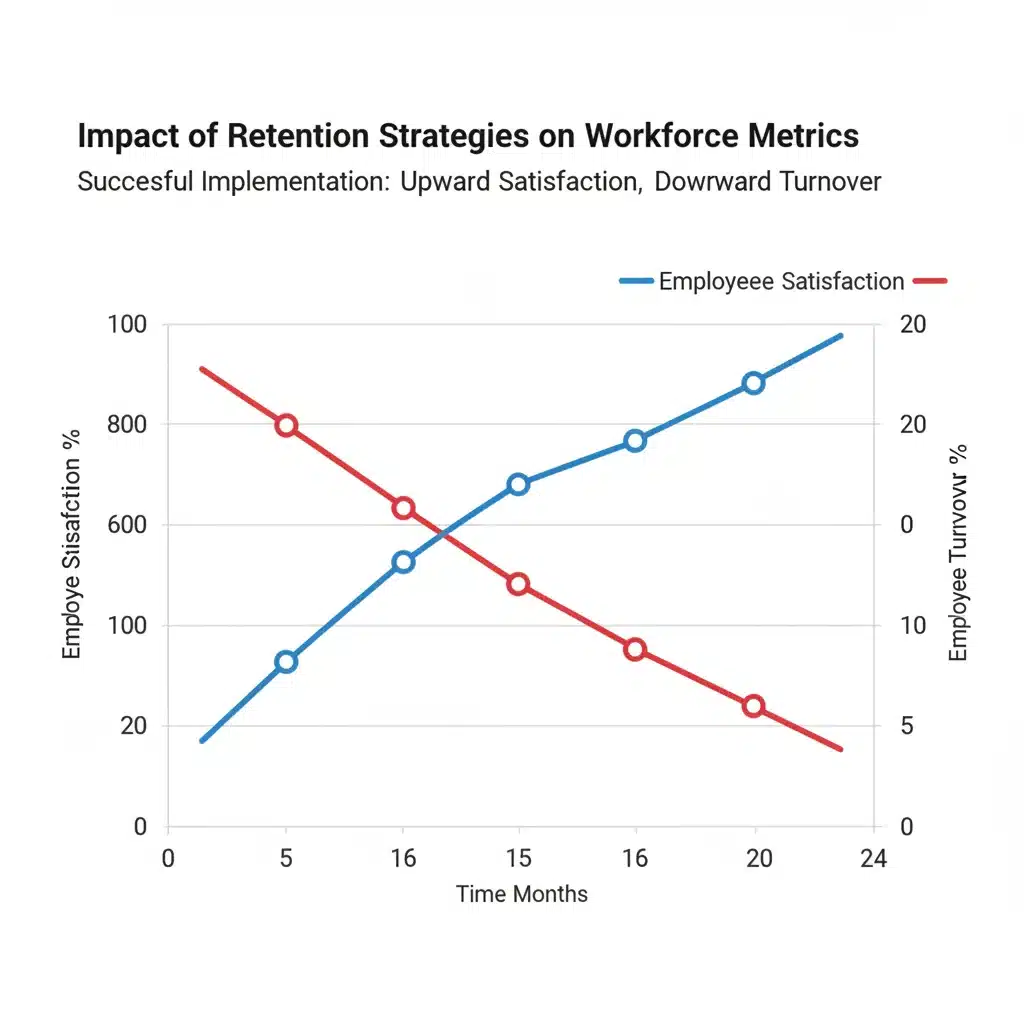
Measuring the Success of Retention Strategies
Implementing employee retention strategies is only half the battle; measuring their effectiveness is crucial for continuous improvement. Without proper metrics, it’s impossible to know what’s working and what needs adjustment.
Key Metrics to Track:
- Turnover Rate: Calculate overall turnover, voluntary turnover, and involuntary turnover. Also, track turnover by department, manager, and tenure.
- Cost of Turnover: Quantify the financial impact of employee departures.
- Employee Engagement Scores: Track results from engagement surveys over time to see if initiatives are improving morale and commitment.
- Employee Satisfaction: Utilize regular surveys to gauge satisfaction with various aspects of the job, culture, and management.
- Retention Rate: The percentage of employees who remain with the company over a specific period.
- Time to Productivity: How long it takes new hires to reach full productivity, indicating the effectiveness of onboarding.
- Absenteeism Rate: High absenteeism can be an early indicator of disengagement or burnout.
Regularly reviewing these metrics allows organizations to refine their employee retention strategies, ensuring they remain relevant and impactful. It’s an iterative process of implementation, measurement, analysis, and adaptation.
The Future of Employee Retention
As the nature of work continues to evolve, so too must employee retention strategies. The rise of the gig economy, the increasing importance of purpose-driven work, and technological advancements all play a role in shaping employee expectations. Organizations that stay ahead of these trends will be better positioned to retain their talent.
Emerging Trends:
- Personalization: Moving beyond one-size-fits-all approaches to tailor benefits, development, and work arrangements to individual employee needs.
- Skills-Based Organizations: Focusing on skills development and internal mobility to build adaptable workforces.
- Ethical Leadership and ESG: Employees are increasingly drawn to companies with strong ethical practices and a commitment to Environmental, Social, and Governance (ESG) principles.
- Continuous Learning Culture: Embedding learning and development into the daily workflow, making it an ongoing process rather than periodic training.
By embracing these trends and continually re-evaluating their approach, companies can ensure their employee retention strategies remain cutting-edge and effective in an ever-changing world.
Conclusion: Investing in People for Lasting Success
In conclusion, effective employee retention strategies are not a luxury but a necessity for any organization aiming for long-term success and sustainability. The investment in people—through competitive compensation, a positive culture, growth opportunities, recognition, and supportive leadership—yields significant returns in terms of productivity, innovation, customer loyalty, and financial performance.
It requires a conscious, continuous effort from all levels of the organization, from top leadership to individual managers. By adopting a holistic and proactive approach to retention, businesses can transform their workforce from a revolving door into a stable, engaged, and highly effective team. Prioritizing employee well-being, fostering growth, and creating an inclusive environment are not just good for employees; they are unequivocally good for business. Mastering these strategies ensures that your most valuable asset—your people—remain committed to your shared vision and contribute to your enduring prosperity.
Author