Pell Grant Expansion 2026: Impact on 1.5 Million US Students

Understanding the 2026 Pell Grant Expansion: What it Means for 1.5 Million US Students
The landscape of higher education in the United States is constantly evolving, with financial aid serving as a critical pillar for millions of aspiring students. Among the various forms of federal assistance, the Pell Grant stands out as a cornerstone, providing need-based aid to undergraduate students to promote access to postsecondary education. As we move closer to 2026, significant changes are on the horizon for the Pell Grant program, promising to expand its reach and impact even more profoundly. This impending Pell Grant Expansion is set to be a game-changer, potentially benefiting an estimated 1.5 million additional US students. Understanding these changes is crucial for students, parents, educators, and policymakers alike.
For decades, the Pell Grant has been instrumental in bridging the financial gap for low-income students, enabling them to pursue degrees and vocational training that might otherwise be out of reach. The program’s effectiveness is undeniable, but its limitations, particularly in keeping pace with rising tuition costs, have also been a point of contention. The 2026 expansion aims to address some of these challenges, fundamentally reshaping who qualifies for aid and how much they receive. This article will delve deep into the specifics of this expansion, exploring its historical context, the legislative drivers behind it, and its projected impact on student enrollment, retention, and ultimately, economic mobility.
The implications of such a widespread expansion are vast. It’s not just about providing more money; it’s about fostering greater equity in education, stimulating economic growth by creating a more skilled workforce, and empowering individuals to achieve their full potential regardless of their socioeconomic background. As we unpack the details of the Pell Grant Expansion, we will also consider the challenges and opportunities that lie ahead, offering a comprehensive overview of what this pivotal moment means for the future of American higher education.
The Historical Context of the Pell Grant Program
To fully appreciate the significance of the 2026 Pell Grant Expansion, it’s essential to understand the program’s origins and evolution. Established in 1972 as the Basic Educational Opportunity Grant (BEOG) and later renamed in honor of Senator Claiborne Pell, the program was designed to be the foundational layer of federal student financial aid. Its primary goal was to provide direct grants to undergraduate students with demonstrated financial need, rather than relying solely on loans or work-study programs.
Over the past five decades, the Pell Grant has undergone numerous adjustments and reauthorizations, reflecting changing economic conditions, educational costs, and policy priorities. Initially, the maximum grant amount was relatively modest, but it has steadily increased over time, albeit often lagging behind the accelerating pace of tuition hikes. Despite this, the Pell Grant has consistently remained the largest source of federal grant aid, supporting millions of students annually.
Key Milestones and Challenges
- Early Years (1970s-1980s): Focused on establishing a broad base of support for low-income students, defining eligibility criteria, and streamlining the application process.
- Expansion and Adjustments (1990s-2000s): Saw increases in maximum grant awards and efforts to make the program more responsive to diverse student populations, including part-time students.
- The Great Recession and Beyond (2008-Present): Faced pressure from budget constraints while simultaneously experiencing increased demand as more students sought higher education during economic downturns. This period also highlighted the growing disparity between the maximum Pell Grant award and the rising cost of college.
One of the persistent criticisms of the Pell Grant has been its diminishing purchasing power. While the maximum grant has increased, it covers a smaller percentage of college costs today than it did in its early years. This erosion of value has meant that even Pell-eligible students often face significant unmet financial need, necessitating loans or other forms of aid. This historical context sets the stage for the 2026 Pell Grant Expansion, which seeks to not only increase the number of eligible students but also to enhance the grant’s effectiveness in covering educational expenses.
Legislative Drivers Behind the 2026 Pell Grant Expansion
The upcoming changes to the Pell Grant program are not accidental; they are the result of concerted legislative efforts aimed at improving access and affordability in higher education. The primary vehicle for these changes is the FAFSA Simplification Act, enacted as part of the Consolidated Appropriations Act, 2021. This landmark legislation, among other things, mandated significant reforms to the federal student aid system, including a comprehensive overhaul of the Free Application for Federal Student Aid (FAFSA) and substantial updates to Pell Grant eligibility.
Key Provisions of the FAFSA Simplification Act Affecting Pell Grants
- Simplified FAFSA Form: The act aims to make the FAFSA significantly shorter and easier to complete, reducing barriers for prospective students and their families. This simplification is expected to encourage more eligible students to apply for financial aid, including the Pell Grant.
- New Eligibility Formula: Perhaps the most impactful change is the revised methodology for determining Pell Grant eligibility. The Expected Family Contribution (EFC) is being replaced by the Student Aid Index (SAI). This new formula is designed to be more equitable and to better reflect a family’s true ability to pay for college.
- Expansion of Eligibility: The SAI model is projected to expand Pell Grant eligibility to a greater number of students, particularly those with significant financial need who might have previously been just outside the eligibility threshold. This is where the estimate of 1.5 million additional students comes from.
- Maximum and Minimum Pell Grant Awards: The act also includes provisions that tie Pell Grant eligibility more directly to poverty levels, ensuring that students below a certain federal poverty line automatically qualify for the maximum Pell Grant amount. Conversely, students with higher SAIs might still qualify for a partial Pell Grant, extending the benefit to a broader income spectrum.
- Elimination of Certain Questions: Several questions on the FAFSA that were historically seen as burdensome or confusing are being removed, further simplifying the application process.
The legislative intent behind these changes is clear: to make the Pell Grant program more accessible, more equitable, and more effective in achieving its mission. By streamlining the application and updating the eligibility criteria, Congress hopes to remove administrative hurdles that often deter eligible students from applying, thereby increasing overall participation in higher education. This legislative push underscores a national commitment to ensuring that financial barriers do not prevent deserving students from pursuing their educational aspirations. The Pell Grant Expansion is a direct outcome of this commitment.
Who Benefits? Understanding the 1.5 Million Additional Students
The most anticipated outcome of the 2026 Pell Grant Expansion is the projected increase in beneficiaries by 1.5 million US students. This significant figure represents a diverse group of individuals who will now find higher education more within their financial reach. But who exactly are these students, and what impact will this expansion have on their lives?
Demographics of New Pell Grant Recipients
While precise demographic breakdowns are still being analyzed, projections suggest that the expanded eligibility will primarily benefit:
- Low-Income Students: Many students from families at or just above the federal poverty line who previously received minimal or no Pell Grant funding will now qualify for substantial aid, including the maximum grant for some.
- Students from Middle-Income Families with Multiple Dependents: The new SAI formula is expected to be more favorable to families with several children attending college simultaneously, a factor that was often not adequately accounted for in the previous EFC calculation.
- Independent Students: Non-traditional students, including adult learners, veterans, and those supporting their own families, may find it easier to qualify due to changes in how independent student status is assessed.
- Part-Time Students: The FAFSA Simplification Act also includes provisions that make it easier for part-time students to receive Pell Grants, recognizing the growing trend of students balancing work, family, and education.
- Students with Challenging Circumstances: Homeless youth and foster youth will also see streamlined access to aid, removing some of the bureaucratic hurdles they previously faced.
This broader eligibility means that more students across various socioeconomic backgrounds will have the opportunity to pursue higher education without the crushing burden of excessive debt. For many, a Pell Grant can be the deciding factor between attending college and forgoing it entirely. For others, it can reduce the need to work multiple jobs while studying, allowing them to focus more on their academics and complete their degrees in a timely manner.

Real-World Impact and Testimonials (Anticipated)
Imagine a high school senior from a modest-income family who dreams of becoming a nurse. Currently, they might look at tuition costs and despair, even with some aid. With the Pell Grant Expansion, that same student could receive a larger grant, making a significant dent in their tuition and allowing them to attend their desired nursing program without accumulating crippling debt. This is the kind of tangible impact that is expected.
Similarly, an adult learner looking to re-skill for a new career might have been deterred by the financial commitment. The expanded Pell Grant eligibility could provide the necessary support, enabling them to invest in their future and contribute to a more dynamic workforce. The stories of these 1.5 million individuals will be varied, but the common thread will be the newfound access to educational opportunities that were previously out of reach or fraught with immense financial strain.
Key Changes in Pell Grant Eligibility and Calculation
The core of the 2026 Pell Grant Expansion lies in the fundamental changes to how eligibility is determined and how the grant amount is calculated. The shift from Expected Family Contribution (EFC) to the Student Aid Index (SAI) is not merely a semantic change; it represents a philosophical reorientation of federal financial aid.
From EFC to SAI: A Paradigm Shift
- Expected Family Contribution (EFC): For decades, the EFC was a measure of how much a family was expected to contribute to a student’s education. It was a complex calculation that often did not fully account for unique family circumstances or the true cost of living. A low EFC meant higher eligibility for aid.
- Student Aid Index (SAI): The SAI is designed to be a more direct and transparent measure of a student’s financial need. Unlike the EFC, the SAI can be a negative number (down to -1500), indicating a higher level of financial need. This allows for a more nuanced assessment of the lowest-income students, potentially enabling them to receive more aid.
Simplified Application Process
The FAFSA form itself will be significantly streamlined. The number of questions is expected to be reduced, making it less daunting for applicants. Furthermore, the IRS Direct Data Exchange (DDX) will replace the IRS Data Retrieval Tool (DRT), allowing for more seamless and secure transfer of tax information directly from the IRS to the FAFSA. This automation is expected to reduce errors and expedite the application process, making it easier for students to apply for the Pell Grant Expansion.
Automatic Maximum and Minimum Pell Grants
One of the most significant improvements is the provision for automatic maximum and minimum Pell Grants based on federal poverty levels:
- Automatic Maximum Pell Grant: Students whose household income falls below a certain percentage of the federal poverty level (FPL) will automatically qualify for the maximum Pell Grant amount, regardless of their calculated SAI. This provision targets the most financially vulnerable students, ensuring they receive the highest level of assistance.
- Automatic Minimum Pell Grant: Conversely, students whose household income is above 175% (or 225% for single-parent households) of the FPL, but who still demonstrate financial need, will be eligible for a minimum Pell Grant award, even if their SAI would have previously excluded them from aid. This expands the safety net for students from working-class families.
These changes are not just administrative; they represent a fundamental shift towards a more student-centric approach to financial aid. By simplifying the application, refining the eligibility formula, and guaranteeing certain award levels, the Pell Grant Expansion aims to remove significant barriers to higher education for millions of Americans.
Projected Impact on Higher Education Institutions
The 2026 Pell Grant Expansion will not only impact students but also have profound effects on higher education institutions across the country. Colleges and universities, particularly those serving a high percentage of low-income students, will need to adapt to these changes and leverage the increased funding to support their student bodies.
Increased Enrollment and Retention
- Higher Access: More students from underserved communities and diverse backgrounds will be able to consider and attend college.
- Improved Retention: Financial stress is a major reason why students drop out. With more robust financial aid, students may be better able to focus on their studies, leading to higher retention rates and ultimately, increased graduation rates.
- Diversified Student Body: Institutions will likely see an even greater diversity in their student populations, enriching the campus environment and learning experience for everyone.
Operational and Administrative Adjustments
While beneficial, the changes will also require institutions to make adjustments:
- Financial Aid Offices: These offices will need to be well-versed in the new FAFSA and SAI methodologies. Training for staff will be essential to accurately process applications and advise students.
- Enrollment Management: Admissions and enrollment teams will need to adjust their outreach strategies to communicate the new opportunities presented by the Pell Grant Expansion to prospective students.
- Resource Allocation: Increased enrollment might necessitate adjustments in academic support services, housing, and other campus resources to accommodate a larger student population.
Furthermore, institutions that rely heavily on tuition revenue from Pell-eligible students may find their financial models shifting. While the increased federal aid is a boon, it also means institutions must ensure their programs remain high-quality and provide value to students who are investing their Pell Grants. The expansion encourages a renewed focus on student success and accountability across the higher education sector.
Challenges and Opportunities Ahead
While the 2026 Pell Grant Expansion represents a significant step forward, it is not without its challenges and opportunities. Navigating these will be crucial for maximizing the positive impact of the program.
Potential Challenges
- Implementation Hurdles: The transition to the new FAFSA and SAI system is complex. Technical glitches, communication breakdowns, and initial confusion among students and institutions could pose challenges in the early stages.
- Funding Sustainability: While the current expansion is funded, ongoing political and economic factors could influence future funding levels for the Pell Grant program. Advocates will need to continue making the case for sustained investment.
- Institutional Capacity: A sudden influx of students could strain institutional resources, particularly at community colleges and regional universities that are often the primary access points for Pell-eligible students.
- Awareness and Outreach: Despite the simplification, ensuring that all 1.5 million newly eligible students are aware of and apply for the Pell Grant will require robust outreach campaigns from federal agencies, states, and institutions.
Significant Opportunities
- Enhanced Equity: The expansion directly addresses long-standing inequities in higher education access, providing a pathway for more students from disadvantaged backgrounds to achieve their academic and career goals.
- Economic Growth: A more educated workforce leads to increased productivity, innovation, and economic growth. By investing in education through the Pell Grant Expansion, the nation is investing in its future prosperity.
- Reduced Student Debt: For many students, a larger Pell Grant means less reliance on student loans, leading to lower debt burdens post-graduation and greater financial flexibility.
- Improved Student Outcomes: With reduced financial stress, students are more likely to persist in their studies, perform better academically, and graduate on time, leading to better career prospects.
- Innovation in Education: The increased access could also spur institutions to innovate in program delivery, support services, and curriculum development to better serve a more diverse student body.
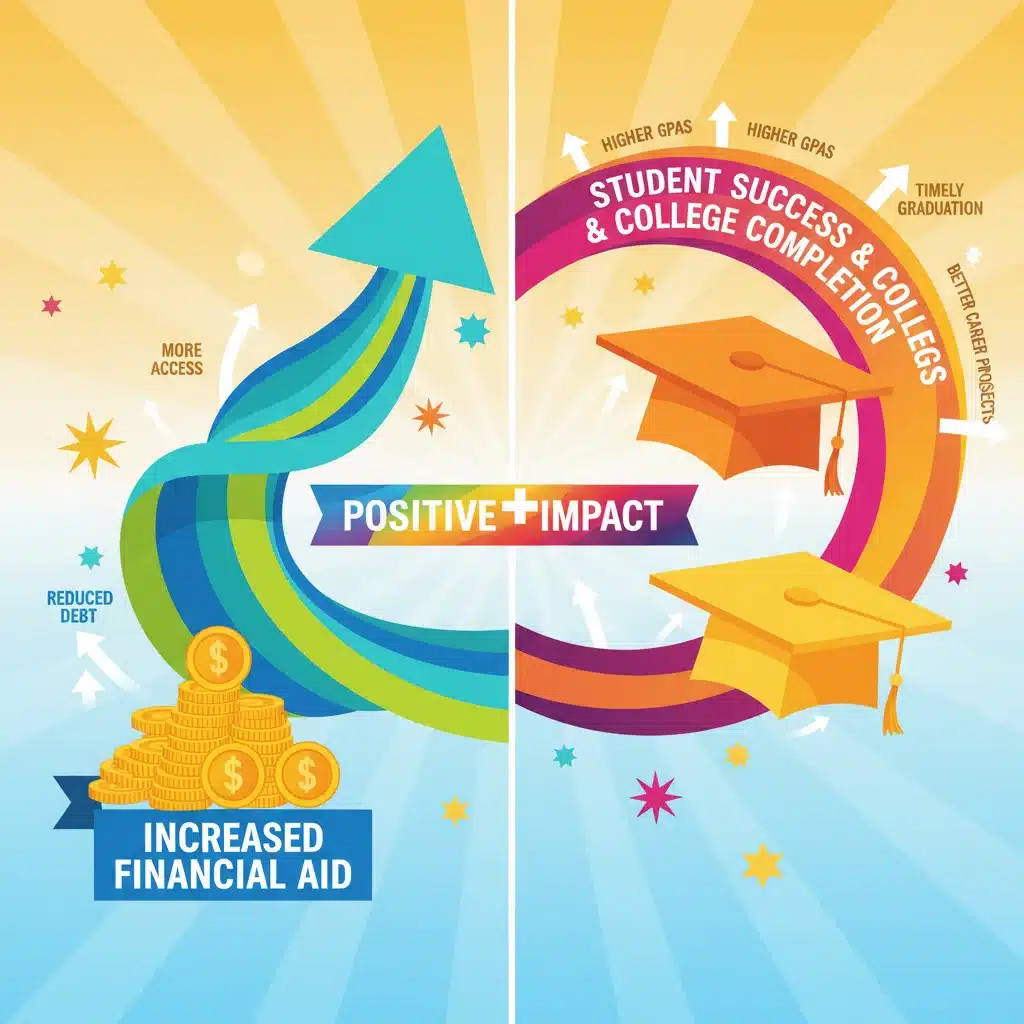
Addressing the challenges proactively and seizing the opportunities strategically will be key to realizing the full potential of this historic expansion. Collaboration between government agencies, educational institutions, and community organizations will be essential to ensure a smooth and effective implementation.
Preparing for the 2026 Pell Grant Expansion: Advice for Students and Institutions
With the 2026 Pell Grant Expansion on the horizon, proactive preparation is vital for both prospective students and higher education institutions.
For Students and Families:
- Stay Informed: Keep an eye on official announcements from the U.S. Department of Education and your prospective colleges regarding the specific changes to the FAFSA and Pell Grant eligibility.
- Plan to File FAFSA: Even if you previously thought you weren’t eligible for financial aid, the new SAI formula might change that. Plan to complete the FAFSA as soon as it becomes available for the 2026-2027 academic year. The simplified form should make this process easier.
- Seek Assistance: Don’t hesitate to reach out to your high school counselor, college financial aid office, or non-profit organizations for help with the FAFSA. They can provide guidance on the new process and answer any questions you may have.
- Understand Your Aid Package: Once you receive your financial aid offer, carefully review all components, including your Pell Grant amount, and understand how it contributes to your overall cost of attendance.
- Explore Other Aid: Remember that the Pell Grant is foundational aid. Continue to explore scholarships, state grants, and institutional aid to further reduce your educational costs.
For Higher Education Institutions:
- Train Financial Aid Staff: Comprehensive training on the new FAFSA, SAI calculation, and Pell Grant eligibility rules is paramount. Staff must be equipped to accurately advise students and process applications.
- Update Communication Strategies: Revise admissions and financial aid marketing materials to highlight the expanded Pell Grant opportunities. Proactively reach out to prospective students who may now be eligible.
- Assess Institutional Capacity: Evaluate the potential impact of increased enrollment on academic programs, student services, housing, and other campus resources. Plan for necessary adjustments.
- Strengthen Support Services: With a potentially larger and more diverse student body, enhancing academic advising, tutoring, mental health services, and career counseling will be crucial for student success.
- Advocate for Continued Funding: Work with state and federal policymakers to ensure the long-term sustainability and growth of the Pell Grant program.
The success of the Pell Grant Expansion hinges on effective communication and preparation from all stakeholders. By working together, we can ensure that this historic investment in higher education translates into tangible opportunities for millions of students and a stronger future for the nation.
Conclusion: A New Era for Educational Access
The 2026 Pell Grant Expansion marks a pivotal moment in the history of federal student aid and higher education in the United States. With an estimated 1.5 million additional students set to benefit, this initiative promises to significantly enhance access and affordability for those aspiring to pursue postsecondary education. By simplifying the FAFSA, replacing the EFC with the more equitable SAI, and guaranteeing minimum and maximum grant awards based on poverty levels, the program is poised to be more effective and inclusive than ever before.
This expansion is more than just an increase in funding; it represents a renewed national commitment to the principle that education should be accessible to all, regardless of their socioeconomic background. It offers a lifeline to countless students who might otherwise be deterred by rising tuition costs and the burden of student debt. The ripple effects of this investment will extend far beyond individual students, fostering a more educated workforce, stimulating economic growth, and promoting greater social mobility across the country.
While challenges in implementation and ongoing funding sustainability will undoubtedly arise, the opportunities presented by this Pell Grant Expansion far outweigh them. By embracing these changes, both students and institutions can prepare for a future where higher education is truly within reach for a broader segment of the American population. As we approach 2026, the anticipation builds for what promises to be a transformative era for educational access and student success.
Stay informed, prepare diligently, and look forward to a future where the promise of higher education is a reality for millions more.