Policy Watch: Analyzing Potential Tax Reform Effects on Businesses in 2026

Policy Watch: Analyzing the Potential Effects of Proposed Tax Reforms on Businesses in 2026
The economic landscape is in perpetual motion, and few forces shape its contours as profoundly as tax policy. As we approach 2026, the whispers of proposed tax reforms are growing louder, signaling a critical juncture for businesses across all sectors. Understanding these potential changes and their wide-ranging implications is not merely a matter of compliance but a strategic imperative for survival and growth. This comprehensive analysis delves into the anticipated Tax Reform 2026 Business impacts, offering insights into what companies can expect and how they can proactively prepare for the evolving fiscal environment.
The year 2026 stands as a significant marker for several reasons. Many provisions from previous tax legislation are set to expire, creating a natural window for lawmakers to propose new frameworks. The current political climate, coupled with ongoing economic pressures and evolving societal needs, further fuels the likelihood of substantial adjustments to the tax code. For businesses, this translates into a period of uncertainty but also an opportunity for strategic re-evaluation.
Our objective is to dissect the various facets of these proposed reforms, examining how they might affect different business sizes and industries. From corporate tax rates and deductions to international tax rules and incentives for specific activities, the ripple effects will be felt far and wide. We will explore the potential economic consequences, both positive and negative, and provide actionable strategies for businesses to mitigate risks and capitalize on new opportunities.
The Current Tax Landscape and the Impetus for Change
Before we project forward, it’s essential to understand the foundation upon which these new reforms will be built. The current tax code, largely shaped by the Tax Cuts and Jobs Act (TCJA) of 2017, introduced significant changes, including a reduction in the corporate tax rate to 21% and various provisions impacting pass-through entities. While some of these changes were permanent, many are slated to sunset by the end of 2025, setting the stage for a legislative rethink.
The impetus for new reforms stems from a confluence of factors. Economically, governments are grappling with increasing national debt, inflationary pressures, and the need to fund critical public services and infrastructure projects. Socially, there’s a growing demand for greater equity and fairness in the tax system, leading to discussions around progressive taxation and wealth distribution. Politically, the shifting balance of power in Washington often dictates the direction and nature of tax policy, with different administrations prioritizing distinct economic philosophies.
Furthermore, global tax trends, such as the OECD’s initiatives for a global minimum corporate tax, are influencing domestic policy decisions. As multinational corporations operate across borders, the need for international tax harmonization becomes increasingly apparent, adding another layer of complexity to the 2026 discussions. Businesses must therefore consider not just domestic policy but also the broader international tax environment when planning for the future.
Understanding these underlying drivers is crucial for businesses to anticipate the types of reforms that might be proposed. Are lawmakers likely to prioritize revenue generation, economic stimulus, or social equity? The answer to this question will largely determine the shape of the Tax Reform 2026 Business landscape.
Key Areas of Proposed Tax Reform for 2026
While specific legislative proposals are still taking shape, several key areas are consistently highlighted in discussions surrounding potential tax reforms for 2026. Businesses should pay close attention to these categories, as changes here will likely have the most direct and significant impact on their operations and financial health.
Corporate Tax Rate Adjustments
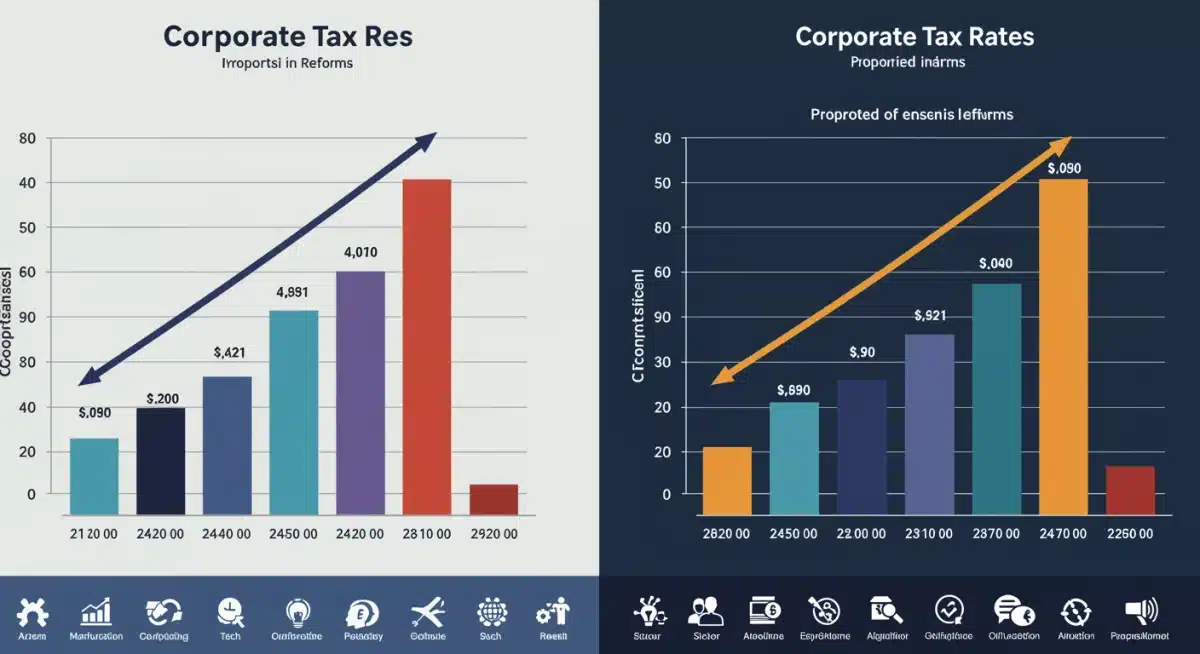
One of the most frequently debated topics is the corporate tax rate. The TCJA reduced it from 35% to 21%, a significant cut that many argue stimulated economic growth. However, proponents of higher corporate taxes contend that it disproportionately benefits large corporations and contributes to income inequality. Proposals range from maintaining the current 21% to increasing it to 25%, 28%, or even closer to pre-TCJA levels. Each percentage point change can translate into billions of dollars for businesses, directly affecting their net income and investment capacity.
The impact of a corporate tax rate adjustment is not uniform. Larger corporations with substantial taxable income will feel the brunt of increases more acutely. Small and medium-sized enterprises (SMEs) structured as C-corporations would also see their tax liabilities rise. However, pass-through entities (S-corps, partnerships, LLCs), which are taxed at the individual owner level, might see indirect effects depending on changes to individual income tax rates and specific deductions.
Changes to Deductions and Credits
Beyond the headline corporate tax rate, changes to various deductions and credits are equally important. Many provisions from the TCJA are set to expire, including those related to R&D expensing, interest expense limitations, and bonus depreciation. Lawmakers might choose to extend, modify, or eliminate these provisions. For instance, the full expensing of R&D costs, which reverted to a five-year amortization schedule in 2022, is a critical concern for innovation-driven companies. Its reinstatement or continued amortization will significantly affect investment in research and development.
Similarly, the limitation on business interest expense deductions (under Section 163(j)) has already impacted many businesses, especially those with high leverage. Further modifications or a return to pre-TCJA rules could either alleviate or intensify financial pressures. Bonus depreciation, which allowed businesses to immediately deduct a large percentage of the cost of eligible property, is also phasing out. Its future will influence capital expenditure decisions and investment cycles.
International Tax Rules
The international tax framework, particularly the Global Intangible Low-Taxed Income (GILTI) and Foreign-Derived Intangible Income (FDII) provisions, is another area ripe for reform. The OECD’s global minimum tax initiative (Pillar Two) aims to ensure that multinational corporations pay a minimum effective tax rate of 15% on their profits, regardless of where they are headquartered or operate. U.S. tax policy will likely need to align or adapt to these global standards to remain competitive and prevent profit shifting.
For U.S. multinational corporations, this could mean adjustments to how their foreign earnings are taxed, potentially leading to higher overall tax burdens or requiring significant restructuring of international operations. Businesses with global supply chains and foreign subsidiaries must closely monitor these developments, as they could impact profitability and operational efficiency on a worldwide scale.
Individual Income Tax Changes Affecting Pass-Throughs
Many small and medium-sized businesses are structured as pass-through entities, meaning their profits are taxed at the individual owner’s tax rate. The expiration of individual income tax rate cuts from the TCJA could lead to higher tax burdens for these business owners. Additionally, the qualified business income (QBI) deduction (Section 199A), which allows eligible pass-through entities to deduct up to 20% of their qualified business income, is also set to expire. Its future will be a critical factor for millions of small business owners.
Any changes to individual tax rates, capital gains taxes, or the QBI deduction will directly impact the disposable income of business owners and their capacity to reinvest in their companies. This makes an understanding of individual tax reform proposals as important as corporate tax changes for the broader business community.

Economic Implications and Business Impact
The potential economic implications of these proposed tax reforms are vast and multifaceted. Businesses, policymakers, and economists alike are analyzing how these changes could influence everything from investment decisions and employment to consumer spending and overall economic growth.
Investment and Capital Allocation
A significant increase in the corporate tax rate, coupled with reduced deductions for R&D and capital expenditures, could disincentivize domestic investment. Businesses might choose to reduce capital spending, delay expansion plans, or even consider shifting operations to jurisdictions with more favorable tax regimes. Conversely, if reforms include targeted incentives for specific industries or activities (e.g., green energy, manufacturing), capital could be redirected towards those sectors.
The future of bonus depreciation is particularly critical for industries that rely heavily on capital investment, such as manufacturing, transportation, and construction. Its absence could lead to slower equipment upgrades and reduced productivity growth. Businesses need to model different scenarios to understand how these changes might affect their cost of capital and investment returns.
Employment and Wages
Changes in corporate taxation can have a direct bearing on employment levels and wage growth. Higher corporate taxes might lead companies to reduce hiring, slow wage increases, or even consider workforce reductions to maintain profitability. Small businesses, often operating on tighter margins, could be particularly vulnerable to increased tax burdens, potentially hindering their ability to create jobs.
However, proponents of higher corporate taxes often argue that the revenue generated can be used to fund public services or direct aid programs that indirectly support employment and consumer demand. The net effect on employment will depend on the overall design of the reforms and how the generated revenue is utilized.
Consumer Prices and Inflation
When businesses face higher costs due to increased taxes, they often pass these costs on to consumers in the form of higher prices. This could exacerbate existing inflationary pressures, impacting household purchasing power and consumer spending. The extent to which this occurs depends on market competition and the elasticity of demand for various goods and services.
Conversely, if tax reforms are perceived to improve economic equity or stimulate demand, they could have a stabilizing effect on the economy in the long run. Businesses must meticulously analyze their cost structures and pricing strategies in anticipation of potential tax-induced cost increases.
Competitiveness and Global Standing
For multinational corporations, the interplay between domestic tax reforms and international initiatives like the global minimum tax will be critical. If U.S. corporate tax rates rise significantly above those in other major economies, it could impact the competitiveness of U.S.-based businesses on the global stage. Companies might face pressure to relocate intellectual property, manufacturing, or even their headquarters to more tax-friendly environments.
Conversely, aligning with global minimum tax standards could create a more level playing field, reducing incentives for profit shifting and fostering greater transparency. The ultimate impact on U.S. competitiveness will hinge on the specifics of the reforms and the global response to international tax harmonization efforts.
Strategic Responses for Businesses
Given the potential for significant changes, proactive planning is paramount. Businesses that anticipate and adapt to the new Tax Reform 2026 Business environment will be better positioned to thrive. Here are several strategic responses companies should consider:
Scenario Planning and Financial Modeling
The first step is to conduct robust scenario planning. Businesses should model various tax reform outcomes, including different corporate tax rates, deduction changes, and international tax scenarios. This involves working with financial advisors and tax experts to project how different legislative proposals would impact their cash flow, profitability, and balance sheet. Understanding these potential outcomes will enable businesses to identify vulnerabilities and develop contingency plans.
For example, if the QBI deduction is eliminated, pass-through entities need to understand the direct impact on their owners’ personal tax liabilities and how that might affect their ability to retain earnings or invest. C-corporations should model the impact of higher corporate tax rates on their quarterly tax payments and year-end liabilities.
Reviewing Business Structure and Jurisdiction
Depending on the nature of the reforms, some businesses might need to re-evaluate their legal structure. For instance, if individual income tax rates for pass-through owners increase significantly while corporate rates remain relatively stable, some pass-through entities might consider converting to C-corporations, or vice versa. This is a complex decision with various legal and operational implications, requiring careful analysis.
Multinational corporations should also review their international holding structures, transfer pricing policies, and the location of their intellectual property to ensure compliance and optimize their global tax position in light of potential changes to GILTI, FDII, and global minimum tax rules.
Capital Expenditure and Investment Strategy
With potential changes to bonus depreciation and R&D expensing, businesses should carefully time their capital expenditure and R&D investments. If bonus depreciation is set to expire, accelerating certain capital investments before the end of 2025 might be advantageous. Conversely, if new incentives are proposed for specific types of investments, delaying certain projects could be beneficial.
Companies reliant on R&D for their competitive edge must factor in the potential for higher R&D costs if full expensing is not reinstated. This might necessitate adjusting R&D budgets or seeking alternative funding mechanisms.
Cash Flow Management and Liquidity
Increased tax liabilities can strain cash flow. Businesses should strengthen their cash flow management practices and ensure they maintain adequate liquidity to cover potential higher tax payments. This might involve optimizing working capital, establishing credit lines, or adjusting dividend policies.
For businesses with international operations, managing foreign currency fluctuations in conjunction with potential international tax changes becomes even more critical for maintaining stable cash flows.
Advocacy and Engagement
Businesses and industry associations have a vital role to play in shaping tax policy. Engaging with policymakers, providing feedback on proposed legislation, and advocating for provisions that support their industry can influence the final outcome of the reforms. This can involve participating in public consultations, lobbying efforts, or joining industry coalitions.
Staying informed through reputable tax policy organizations and legal counsel is also essential to understand the evolving legislative landscape and ensure timely compliance.
Sector-Specific Considerations
The impact of tax reforms will not be uniform across all industries. Certain sectors may experience particular advantages or disadvantages depending on the specifics of the legislation.
Technology and Innovation
The technology sector, heavily reliant on research and development, will be keenly watching the fate of R&D expensing. A return to full expensing would be a significant boost, encouraging further innovation. Conversely, continued amortization could increase costs and potentially slow the pace of technological advancement. Furthermore, proposals related to taxing digital services or intellectual property could have a unique impact on tech giants with global operations.
Manufacturing and Heavy Industry
Manufacturing and heavy industry are typically capital-intensive, making the future of bonus depreciation and other capital allowance provisions critical. Incentives for domestic manufacturing, such as tax credits for reshoring or investing in U.S.-based production facilities, could provide a significant boost. Changes to international tax rules could also affect supply chain decisions for companies with global manufacturing footprints.
Retail and Consumer Goods
The retail sector is highly sensitive to consumer spending. Any tax reforms that impact disposable income, either positively or negatively, will directly affect sales. Additionally, changes to inventory accounting methods or sales tax regulations could have a notable impact on operational costs. Small retail businesses, often structured as pass-through entities, will be particularly sensitive to individual income tax rate changes and the QBI deduction.
Financial Services
The financial services sector is subject to complex regulatory and tax frameworks. Changes to interest expense deductions, capital gains taxes, and international tax rules will have direct implications for banks, investment firms, and insurance companies. Discussions around potential financial transaction taxes or changes to executive compensation taxation could also be relevant.
Small Businesses and Startups
Small businesses and startups, often the engine of job creation, are particularly vulnerable to tax policy shifts due to their limited resources. The future of the QBI deduction and individual income tax rates will be paramount for many. Simplified tax compliance measures or targeted small business tax credits could provide much-needed support, while increased burdens could stifle growth and innovation in this vital sector.
The Road Ahead: Monitoring and Adapting
The legislative process is often protracted and subject to political negotiation. Therefore, the exact contours of the 2026 tax reforms remain uncertain. However, the direction of travel is becoming clearer, and businesses cannot afford to wait for final legislation before beginning their preparations.
Continuous monitoring of legislative developments, engagement with tax professionals, and proactive internal strategic planning are essential. This includes staying abreast of proposals from both sides of the political spectrum, as well as analyses from non-partisan organizations. Understanding the potential range of outcomes will allow businesses to build resilience and agility into their financial and operational strategies.
The period leading up to 2026 will be characterized by intense debate and lobbying. Businesses have an opportunity to participate in this process, ensuring that their perspectives are heard and that the final tax code fosters a healthy and competitive business environment. Ultimately, the ability to adapt swiftly and strategically to the new Tax Reform 2026 Business landscape will distinguish successful enterprises.
In conclusion, the proposed tax reforms for 2026 represent a significant inflection point for businesses. By understanding the potential changes, their economic implications, and by adopting proactive strategic responses, companies can not only navigate the challenges but also identify new avenues for growth and sustained success in the evolving fiscal future.