Unemployment Benefits 2026: Policy Shifts and Claiming Your 26 Weeks

The economic landscape is in constant flux, and with it, the policies designed to support individuals during periods of joblessness. As we look ahead to 2026, understanding the nuances of unemployment benefits 2026 is more crucial than ever. This comprehensive guide aims to equip you with the knowledge needed to navigate the system, understand recent policy shifts, and effectively claim your full 26 weeks of aid.
Unemployment Benefits 2026: Recent Policy Shifts and How to Claim Your Full 26 Weeks of Aid
Losing a job can be a profoundly destabilizing experience, bringing with it not only emotional stress but also significant financial uncertainty. For many, unemployment benefits serve as a vital safety net, providing temporary financial assistance while they search for new employment. However, the rules and regulations governing these benefits are not static; they evolve in response to economic conditions, legislative changes, and societal needs. This article delves into the projected landscape of unemployment benefits 2026, highlighting anticipated policy shifts and offering a detailed roadmap for eligible individuals to claim their maximum entitlement, typically up to 26 weeks of aid.
The year 2026 is poised to bring several adjustments to unemployment insurance programs across various states and at the federal level. These changes could impact everything from eligibility criteria and weekly benefit amounts to the duration of benefits and the requirements for maintaining eligibility. Staying informed is your first line of defense against unexpected hurdles. Our goal is to demystify these changes and provide actionable advice, ensuring you are well-prepared to access the support you deserve.
Understanding the Foundation: What Are Unemployment Benefits?
Before diving into the specifics of unemployment benefits 2026, it’s essential to grasp the fundamental nature of unemployment insurance (UI). UI is a joint state-federal program that provides temporary financial payments to eligible workers who are unemployed through no fault of their own. The primary objective is to offer a financial bridge, allowing individuals to cover basic living expenses while actively seeking new employment.
Who Funds Unemployment Benefits?
Unemployment benefits are typically funded by taxes paid by employers into state unemployment insurance funds. These funds are then used to pay benefits to eligible workers. The federal government also plays a role, setting broad guidelines and providing administrative funding, especially during periods of high unemployment when extended benefits may be triggered.
Key Components of Unemployment Benefits:
- Eligibility Criteria: Generally, you must have worked a certain amount of time and earned a minimum amount of wages within a ‘base period’ (usually the first four of the last five completed calendar quarters before you filed your claim). You must also be unemployed through no fault of your own, be able to work, and be actively seeking work.
- Weekly Benefit Amount (WBA): This is the amount of money you receive each week. It is calculated based on your past earnings, usually a percentage of your average weekly wage during your base period, up to a state-specific maximum.
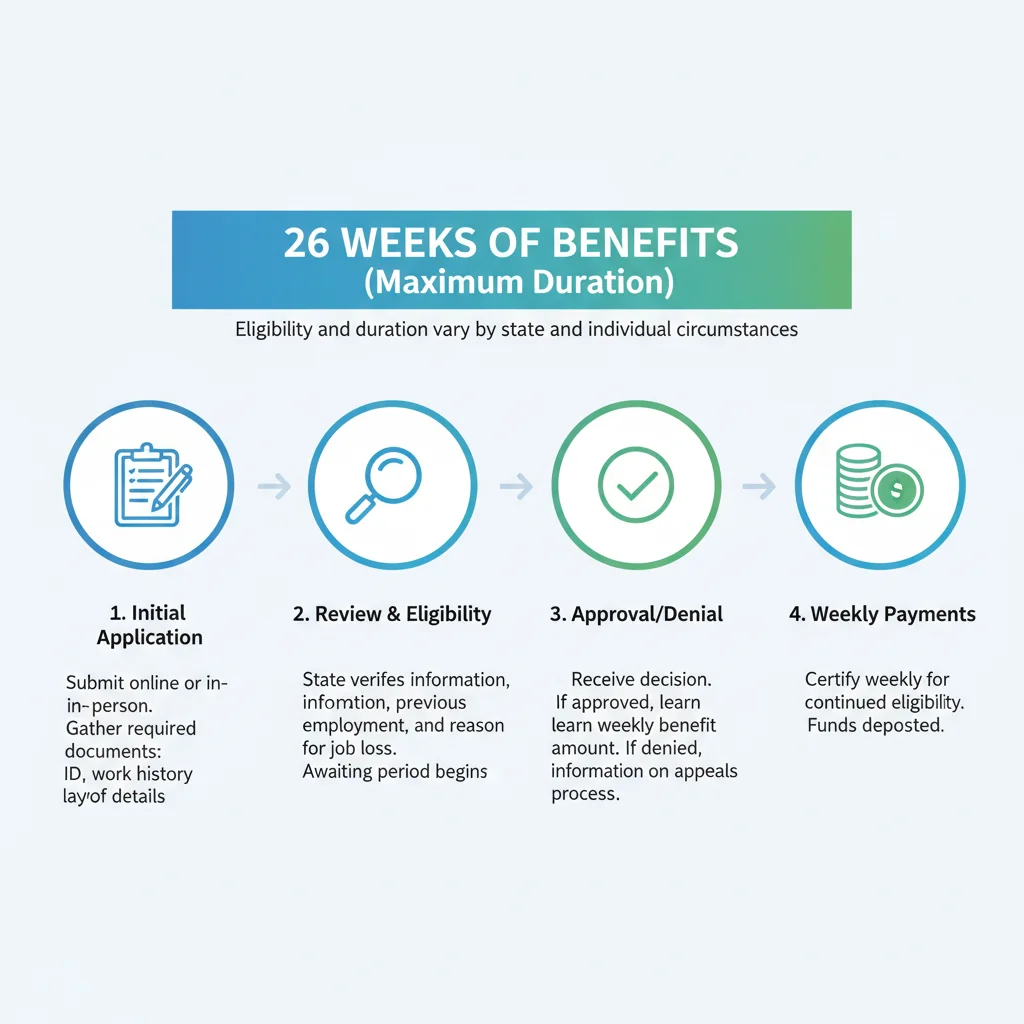
- Benefit Duration: The standard duration of unemployment benefits in most states is 26 weeks. However, this can vary, and during economic downturns, federal programs may extend benefits beyond this period. Understanding how to claim your full 26 weeks is a key focus of this guide.
- Work Search Requirements: To continue receiving benefits, you are generally required to actively search for work, document your job search efforts, and be available for work.
Anticipated Policy Shifts for Unemployment Benefits 2026
Predicting the exact legislative landscape for unemployment benefits 2026 can be challenging, as policies are often influenced by economic forecasts, political priorities, and unforeseen national events. However, based on current trends and discussions, several areas are likely to see significant focus and potential policy shifts:
1. Modernization of UI Systems:
The COVID-19 pandemic exposed significant vulnerabilities and outdated infrastructure within many state unemployment insurance systems. In the years leading up to 2026, there is a strong push for modernization, focusing on:
- Improved Technology: Expect more user-friendly online portals, streamlined application processes, and faster claims processing times. This aims to reduce the bureaucratic burden on applicants and state agencies alike.
- Fraud Prevention: Enhanced security measures and data analytics will likely be implemented to combat fraud more effectively, ensuring benefits go to legitimate claimants.
- Interoperability: Greater collaboration and data sharing between state and federal agencies could lead to a more cohesive and efficient national UI system.
2. Re-evaluation of Eligibility Criteria:
Some states may consider adjusting eligibility criteria to reflect changes in the modern workforce, including the rise of gig economy workers and independent contractors. Discussions around expanding coverage to these groups, or establishing new, more flexible criteria, are ongoing. For unemployment benefits 2026, this could mean:
- Broader Definitions of ‘Employee’: Potential legislative efforts to redefine who qualifies as an employee for UI purposes.
- Adjusted Wage Requirements: Changes to the minimum earnings or work history required to qualify for benefits, potentially making it easier or harder for some to meet the threshold.
3. Focus on Re-employment Services:
There’s a growing emphasis on not just providing financial aid but also actively facilitating re-employment. For unemployment benefits 2026, this could translate into:
- Mandatory Training Programs: Increased requirements for benefit recipients to participate in job training, skill development, or resume-building workshops.
- Enhanced Job Search Support: Greater access to career counseling, job placement services, and partnerships with local businesses to connect claimants with open positions.
- Stricter Work Search Requirements: While already a component, these requirements might become more rigorously enforced, with clearer guidelines on what constitutes an ‘active’ job search.
4. Potential for Federal Intervention and Extended Benefits:
While standard benefits are state-run, the federal government often steps in during severe economic downturns to fund extended benefits. The economic outlook for 2026 will heavily influence discussions around potential federal triggers for extended benefits. While the standard remains 26 weeks, understanding the mechanisms for extension is vital. Policy debates may focus on:
- Modernizing Triggers: Revisiting the economic indicators that automatically trigger federal extended benefits.
- Program Duration: Discussions about the duration and structure of any potential federal unemployment programs.
How to Prepare for Unemployment Benefits 2026
Proactive preparation is key to successfully navigating the unemployment benefits system, especially with potential policy shifts on the horizon. Here’s how you can get ready:
1. Maintain Meticulous Records:
Even if you’re currently employed, it’s wise to keep thorough records of your employment history. This includes:
- Pay Stubs: Keep copies of your pay stubs for at least the last two years.
- W-2 Forms: Store your W-2 forms in a safe place.
- Employment Dates: Document your start and end dates for each employer.
- Reason for Separation: If you leave a job, ensure you understand and document the official reason for your separation. This is critical for eligibility.
2. Understand Your State’s Specific Rules:
While there are federal guidelines, each state administers its own unemployment insurance program. The rules for unemployment benefits 2026 will still largely be state-specific. Familiarize yourself with your state’s particular requirements for:
- Eligibility: What are the specific wage and work history requirements?
- Weekly Benefit Amount Calculation: How is your WBA determined?
- Work Search Requirements: How many job contacts are required per week, and what documentation is needed?
- Waiting Period: Does your state have a waiting week before benefits begin?
3. Stay Informed About Legislative Changes:
Keep an eye on news from your state’s Department of Labor or equivalent agency. They are the primary source for updates on policy changes related to unemployment benefits 2026. Subscribing to newsletters or official alerts can help you stay current.
Claiming Your Full 26 Weeks of Aid: A Step-by-Step Guide
The standard duration of unemployment benefits in most states is 26 weeks. To maximize your chances of receiving this full entitlement, a systematic approach is essential. Here’s a detailed guide:
Step 1: File Your Claim Immediately
As soon as you become unemployed, file your claim for unemployment benefits. Do not delay. Benefits generally begin from the week you file your claim, not from your last day of employment. Most states allow you to file online, which is often the quickest method.
- Information Needed: Be prepared to provide personal information (Social Security number, driver’s license), employment history (employer names, addresses, dates of employment, wages), and the reason for your separation.
- Be Accurate and Honest: Provide truthful and accurate information. Misrepresentation can lead to delays, denials, or even penalties.
Step 2: Understand and Fulfill Eligibility Requirements
Your claim will be reviewed to determine if you meet your state’s specific eligibility criteria. Key factors include:
- Monetary Eligibility: Did you earn enough wages during your ‘base period’?
- Separation Reason: Were you laid off, or did you quit or were you fired for misconduct? Generally, you must be unemployed through no fault of your own.
- Ability and Availability: Are you physically and mentally able to work, and are you available for work?
Step 3: Actively Search for Work and Document Your Efforts
This is arguably the most crucial ongoing requirement for receiving unemployment benefits 2026 for the full 26 weeks. States require you to actively seek suitable employment. This typically involves:
- Making Job Contacts: Applying for jobs, attending interviews, networking, and registering with employment agencies.
- Documenting Efforts: Keep a detailed log of every job search activity, including the date, company name, contact person, job title, and outcome. Many states require you to submit this log weekly or bi-weekly.
- Being Available: You must be ready and willing to accept suitable work if offered.
Failing to meet work search requirements is one of the most common reasons benefits are terminated or denied.
Step 4: Certify for Benefits Regularly
To continue receiving benefits, you must ‘certify’ (or ‘claim your weekly benefits’) on a regular basis, usually weekly or bi-weekly. During certification, you will typically answer questions about:
- Work Search Efforts: Reporting the jobs you applied for.
- Earnings: Reporting any part-time work or income earned during the certification period.
- Availability: Confirming you were able and available for work.
- Refusal of Work: Disclosing if you refused any job offers.
Missed certifications can lead to delays or loss of benefits for that period.
Step 5: Report Any Changes in Circumstances
It is vital to report any changes in your circumstances to your state unemployment agency immediately. This includes:
- Starting a New Job (even part-time): Your benefits may be reduced or stop, but it’s crucial to report it.
- Returning to School Full-Time: This might affect your availability for work.
- Becoming Unable to Work: If you become sick or injured and cannot work, you may no longer be eligible for UI benefits but might qualify for other programs.
- Moving Out of State: This can affect where you file and receive benefits.
Step 6: Understand Appeals Processes
If your claim is denied or your benefits are stopped, you have the right to appeal the decision. Understand your state’s appeals process and deadlines. This typically involves:
- Filing an Appeal: Submitting a formal request for an appeal within a specified timeframe.
- Presenting Your Case: Attending a hearing (in person or virtually) where you can present evidence and argue your case.
Seeking legal aid or advocacy services can be beneficial during the appeals process.
Maximizing Your 26 Weeks: Key Strategies
Receiving benefits for the full 26 weeks isn’t just about following the rules; it’s about strategic engagement with the system and your job search.
1. Leverage State Resources:
Most state unemployment agencies offer more than just benefit payments. They often provide:
- Job Boards: State-specific job search platforms.
- Career Counseling: Professional guidance on resume building, interview skills, and career transitions.
- Training Programs: Access to free or subsidized training to acquire new skills or certifications, making you more competitive in the job market.
Actively utilizing these resources not only helps you find work faster but also demonstrates your commitment to your job search, fulfilling a key requirement for unemployment benefits 2026.
2. Network Actively:
Job searching is often about who you know. Attend industry events, connect with former colleagues, and utilize platforms like LinkedIn. Networking can open doors to opportunities that aren’t publicly advertised, accelerating your return to employment.
3. Tailor Your Applications:
Avoid generic applications. Customize your resume and cover letter for each position, highlighting how your skills and experience align with the specific requirements of the job. This increases your chances of getting an interview and demonstrates a serious commitment to finding work.
4. Consider Temporary or Part-Time Work:
Accepting temporary or part-time work, even if it’s not your ideal long-term role, can provide several benefits:
- Maintain Income: You might still be eligible for partial unemployment benefits, allowing you to earn some income while continuing your job search.
- Skill Development: Gain new skills or keep existing ones sharp.
- Networking: Expand your professional network.
- Resume Gap: Avoid a lengthy employment gap on your resume.
Always report any earnings to your unemployment agency, as it will affect your weekly benefit amount.

Common Pitfalls to Avoid When Claiming Unemployment Benefits 2026
While the process for claiming unemployment benefits 2026 is designed to be supportive, certain actions can jeopardize your eligibility or lead to delays. Be mindful of these common pitfalls:
1. Misunderstanding ‘Suitable Work’:
After a certain period, states may expect you to broaden your job search to include positions that are not exactly in your previous field or at your previous salary level, as long as they are ‘suitable.’ Refusing suitable work without good cause can lead to benefit disqualification.
2. Inadequate Work Search Documentation:
Many claimants lose benefits because they cannot adequately prove their job search efforts. A simple spreadsheet or logbook where you meticulously record every application, interview, and networking event is crucial.
3. Failure to Report Earnings:
Any income earned while receiving unemployment benefits must be reported. This includes freelance work, part-time jobs, or even severance pay. Failure to report earnings is considered fraud and can result in severe penalties, including repayment of benefits, fines, and even criminal charges.
4. Missing Deadlines:
Whether it’s for filing your initial claim, certifying for weekly benefits, or appealing a decision, deadlines are strict. Missing them can lead to a loss of benefits that cannot be recovered.
5. Not Responding to Agency Communications:
The unemployment agency may send you letters, emails, or call you for various reasons, including requests for additional information, scheduling appointments, or updates on your claim. Ignoring these communications can lead to your benefits being stopped.
The Broader Economic Context for Unemployment Benefits 2026
The policies surrounding unemployment benefits 2026 will not exist in a vacuum. They will be shaped by the broader economic conditions prevailing at the time. Factors such as inflation, interest rates, labor market participation, and technological advancements (like AI and automation) will all play a role in how unemployment policies are discussed and implemented.
Automation and Job Displacement:
The increasing pace of automation and the integration of artificial intelligence into various industries could lead to significant job displacement. Policymakers may need to consider how unemployment insurance can adapt to support workers transitioning from roles impacted by these technological shifts, potentially through enhanced training and re-skilling initiatives.
Changing Nature of Work:
The gig economy and remote work continue to transform traditional employment models. As mentioned earlier, there’s an ongoing debate about how to best provide a safety net for workers who don’t fit the traditional employee mold. Unemployment benefits 2026 may see legislative efforts to address these evolving work structures.
Economic Stability vs. Flexibility:
Governments often juggle the need for economic stability (keeping unemployment rates low and productivity high) with the need for flexibility in the labor market. Unemployment benefits are a critical tool in this balance, providing a cushion during transitions while also encouraging re-employment.
Conclusion: Navigating Unemployment Benefits 2026 with Confidence
The prospect of unemployment is daunting, but understanding the system of unemployment benefits 2026 can significantly alleviate the financial burden and stress. By staying informed about potential policy shifts, meticulously preparing your documentation, and diligently following the step-by-step process for claiming and maintaining your benefits, you can ensure you receive your full 26 weeks of aid.
Remember, unemployment insurance is a right earned through your past employment. It’s designed to provide temporary relief and support your return to the workforce. Take advantage of all available resources, remain proactive in your job search, and don’t hesitate to seek clarification from your state’s unemployment agency if you encounter any uncertainties. With careful planning and consistent effort, you can navigate the challenges of unemployment and emerge stronger on the other side.
Stay tuned to official government websites and reputable news sources for the most up-to-date information regarding unemployment benefits 2026, as policies can and do change. Your financial well-being depends on your awareness and preparedness.