Decoding 2026 Social Security COLA: Impact on Retirement Income

Decoding the 2026 Social Security COLA: What the 3.2% Increase Means for Your Retirement Income (RECENT UPDATES)
As we navigate the complexities of economic forecasts and personal finance, one of the most anticipated announcements for millions of Americans is the annual Cost-of-Living Adjustment (COLA) for Social Security benefits. While the official 2026 COLA announcement is still some time away, early projections and economic indicators provide valuable insights into what retirees and beneficiaries can expect. Understanding the projected 2026 COLA impact is crucial for effective retirement planning and managing your financial future. This comprehensive guide will delve into the factors influencing the COLA, analyze the projected 3.2% increase, and explore its potential effects on your retirement income.
The Social Security Administration (SSA) implements the COLA to ensure that the purchasing power of Social Security benefits is not eroded by inflation. This adjustment is a lifeline for many, helping them keep pace with rising costs of living, from groceries to healthcare. For those relying on Social Security for a significant portion of their income, even a seemingly small percentage increase can have a substantial impact on their monthly budget and overall financial stability. Therefore, keeping an eye on these projections and understanding their implications is paramount.
The 2026 COLA is not just a number; it represents the government’s response to the economic realities faced by seniors and other beneficiaries. It reflects the changes in consumer prices and serves as a vital mechanism to protect the financial well-being of a vulnerable population. As we look ahead to 2026, various economic forces will play a pivotal role in shaping this adjustment, from global supply chains to domestic fiscal policies. This article aims to demystify these factors and provide a clear picture of what the future might hold for your Social Security benefits.
Understanding the Mechanics of COLA: How It’s Calculated
Before we dive into the specifics of the projected 2026 COLA impact, it’s essential to understand how the Cost-of-Living Adjustment is calculated. The SSA uses a specific index to determine the annual COLA: the Consumer Price Index for Urban Wage Earners and Clerical Workers (CPI-W). This index measures the average change over time in the prices paid by urban wage earners and clerical workers for a market basket of consumer goods and services.
The COLA is determined by comparing the average CPI-W for the third quarter (July, August, and September) of the current year with the average CPI-W for the third quarter of the most recent year in which a COLA was payable. If there’s an increase, the percentage difference represents the COLA for the following year. For example, to calculate the 2026 COLA, the SSA will compare the average CPI-W for the third quarter of 2025 with the average CPI-W for the third quarter of 2024. If the CPI-W has increased, that percentage increase will be applied to Social Security benefits starting in January 2026.
It’s important to note that if the CPI-W shows no increase or a decrease, there will be no COLA for that year. This has happened a few times in history, most recently in 2010, 2011, and 2016. However, with persistent inflation being a concern in recent years, the likelihood of a zero COLA for 2026 seems relatively low based on current economic trends. The methodology ensures that benefits adjust to inflation, but only when inflation is present. This direct link to a specific inflation measure is what makes the COLA a crucial tool for maintaining the purchasing power of benefits, directly impacting the 2026 COLA impact on beneficiaries.
The Role of Inflation in COLA Projections
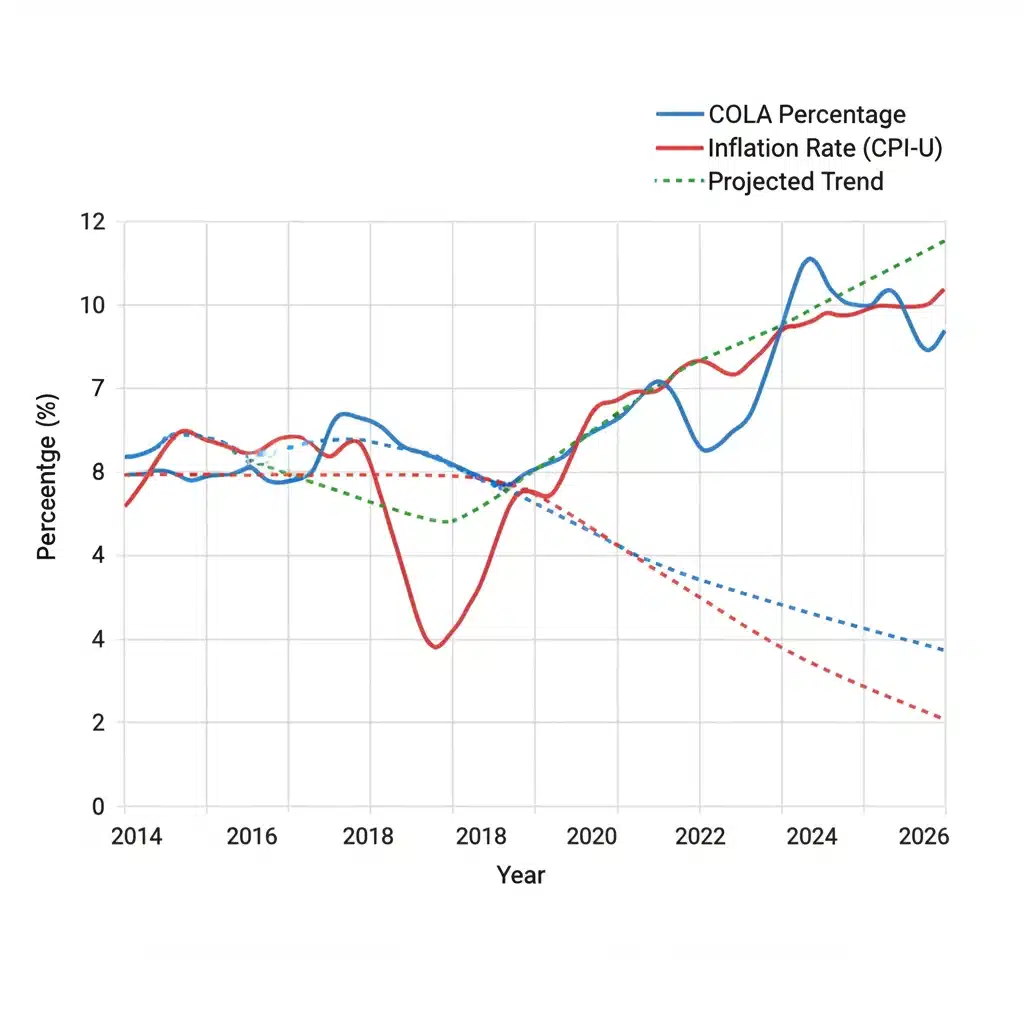
Inflation is the primary driver of the COLA. When the cost of goods and services rises, the purchasing power of a fixed income diminishes. The COLA mechanism is designed to counteract this erosion. Therefore, any projection for the 2026 COLA, including the anticipated 3.2% increase, is heavily dependent on inflation forecasts. Economic indicators such as energy prices, food costs, housing expenses, and healthcare expenditures all contribute to the overall inflation rate measured by the CPI-W.
Recent years have seen fluctuating inflation rates, influenced by a variety of global and domestic factors. Supply chain disruptions, geopolitical events, and shifts in consumer demand can all contribute to inflationary pressures. Economists closely monitor these trends to predict future inflation, which in turn informs COLA projections. A higher inflation rate typically translates to a larger COLA, while a lower or stable inflation rate would result in a smaller or no adjustment. The 2026 COLA impact will thus be a direct reflection of the economic environment in the preceding year.
It’s also worth noting that the CPI-W, while specifically designed for urban wage earners and clerical workers, may not perfectly reflect the spending patterns and inflation experiences of all Social Security beneficiaries, particularly seniors. For instance, healthcare costs, which tend to be a larger portion of senior budgets, may rise at a different rate than the overall CPI-W. This discrepancy is a frequent point of discussion among policymakers and advocacy groups, but for now, the CPI-W remains the official metric for COLA calculations. Understanding this nuance is key to fully grasping the 2026 COLA impact.
The Projected 3.2% COLA for 2026: What It Means
While the official announcement for the 2026 COLA will not be made until October 2025, various organizations and economists provide projections based on current economic data and inflation trends. A widely discussed projection suggests a 3.2% COLA for 2026. If this projection holds true, it would signify a notable increase for Social Security beneficiaries, following potentially smaller adjustments in the immediate preceding years compared to the highs seen in 2022 and 2023.
A 3.2% increase means that for every $1,000 in monthly Social Security benefits, beneficiaries would receive an additional $32 per month. While this might seem modest to some, for individuals and families who rely heavily on these benefits, it can make a significant difference. Over the course of a year, this translates to an extra $384. This additional income can help cover rising costs of living, contribute to savings, or alleviate financial strain. The real 2026 COLA impact will be felt in the everyday lives of retirees.
It’s crucial to remember that this is a projection, and the actual COLA could be higher or lower depending on how inflation evolves over the coming months, particularly during the third quarter of 2025. However, such projections offer a valuable benchmark for financial planning, allowing beneficiaries to anticipate potential changes to their income and adjust their budgets accordingly. The anticipation of the 2026 COLA impact helps individuals and families plan for their financial future with greater certainty.
Impact on Your Retirement Income: Beyond the Percentage
The 2026 COLA impact extends beyond just a percentage increase in your monthly check. Several other factors come into play that can influence your net retirement income. These include Medicare premiums, income taxes, and the potential for a higher earnings limit for those who continue to work while receiving benefits.
Medicare Premiums and COLA
One of the most significant considerations for many Social Security beneficiaries is the impact of Medicare Part B premiums. These premiums are typically deducted directly from Social Security benefits. Under the ‘hold harmless’ provision, Medicare Part B premiums cannot increase by more than the dollar amount of a beneficiary’s Social Security COLA, preventing a decrease in net benefits for most. However, this provision doesn’t apply to all beneficiaries, such as those who are new to Medicare, those who pay their Part B premiums directly, or those with higher incomes subject to income-related monthly adjustment amounts (IRMAA).
Therefore, while a 3.2% COLA will increase your gross Social Security benefit, a portion of that increase might be offset by a rise in Medicare Part B premiums. Understanding this interplay is vital for accurately assessing your net 2026 COLA impact. Beneficiaries should monitor Medicare premium announcements, which typically occur in the fall, to get a full picture of their take-home benefits.
Taxation of Social Security Benefits
Another factor to consider is the potential for Social Security benefits to be taxed. Depending on your ‘combined income’ (which includes adjusted gross income, tax-exempt interest, and half of your Social Security benefits), a portion of your Social Security benefits may be subject to federal income tax. The thresholds for taxation have not been adjusted for inflation since 1983, meaning that even modest COLAs can push more beneficiaries, or a larger portion of their benefits, into taxable territory.
A 3.2% COLA in 2026 could, for some, lead to a higher combined income, potentially resulting in a larger portion of their Social Security benefits being taxed. This can effectively reduce the real value of the COLA. It’s important for retirees to consult with a tax professional or use tax planning tools to understand how a COLA might affect their overall tax liability and the true 2026 COLA impact on their net income. Proactive tax planning is essential to maximize the benefit of any COLA.
Working While Receiving Benefits
For those who continue to work while receiving Social Security benefits before reaching their full retirement age, there are earnings limits. If you earn above these limits, a portion of your benefits may be withheld. These earnings limits are also subject to annual adjustments, often increasing with national average wage index. A COLA, while not directly tied to the earnings limit, often occurs in an economic environment where wage growth might also be present, suggesting potential increases in these limits.
If the earnings limit increases for 2026, it could allow working beneficiaries to earn more without having their Social Security benefits reduced, thereby indirectly enhancing the 2026 COLA impact. However, beneficiaries approaching or under full retirement age who continue to work should be mindful of these limits and how they interact with any COLA to avoid unexpected benefit reductions. Understanding these rules is a critical component of maximizing your retirement income.
Strategies for Maximizing Your Retirement Income in Light of COLA
Given the anticipated 2026 COLA impact, it’s a good time for retirees and those nearing retirement to review their financial strategies. While the COLA helps maintain purchasing power, proactive planning can further enhance your financial security.
Budgeting and Expense Management
The first step is to thoroughly review your budget. Understand where your money is going and identify areas where you might be able to save. Even with a COLA, rising costs, especially in areas like healthcare, can quickly absorb any increase. Create a detailed budget that accounts for all your income sources, including Social Security, and all your expenses. This will give you a clear picture of your financial standing and help you make informed decisions. The 2026 COLA impact is best managed with a clear financial plan.
Consider using budgeting apps or spreadsheets to track your spending. Look for opportunities to reduce discretionary expenses or find more cost-effective alternatives for essential services. For instance, reviewing insurance policies, utility providers, and subscription services periodically can yield significant savings. Every dollar saved complements the COLA increase, stretching your retirement income further.
Optimizing Investment Strategies
For those with investment portfolios, it’s wise to review your strategy with your financial advisor. Ensure your investments are aligned with your risk tolerance and financial goals, especially in an inflationary environment. While Social Security provides a baseline, a well-managed investment portfolio can offer additional growth and income streams.
Consider strategies that aim to generate inflation-protected income or growth. This might include dividend-paying stocks, real estate investment trusts (REITs), or Treasury Inflation-Protected Securities (TIPS). Diversification remains key to mitigating risk and optimizing returns. A thoughtful investment approach can significantly amplify the positive 2026 COLA impact on your overall financial health.
Exploring Additional Income Sources
If the COLA increase isn’t sufficient to meet your financial needs, exploring additional income sources might be an option. This doesn’t necessarily mean returning to full-time work. Many retirees find satisfaction and financial benefit in part-time work, consulting, or pursuing hobbies that can generate income. The gig economy offers numerous opportunities for flexible work arrangements.
Even small amounts of additional income can make a substantial difference, particularly when combined with a COLA. This could involve anything from selling crafts online to tutoring or pet-sitting. The key is to find something that fits your lifestyle and interests while providing a financial boost. Every extra dollar contributes to a more secure retirement, complementing the 2026 COLA impact.

The Broader Economic Context and Future Outlook
The 2026 COLA does not exist in a vacuum; it is part of a larger economic narrative. Understanding the broader economic context helps to put the COLA projection into perspective and provides insights into future adjustments. Factors such as global economic growth, central bank policies, and government spending all play a role in shaping the inflationary environment that dictates COLA. The 2026 COLA impact is a snapshot of these complex interactions.
Global Economic Trends
Global economic trends, such as international trade, supply chain stability, and geopolitical events, can significantly influence inflation rates. For instance, disruptions in global supply chains can lead to higher prices for goods, while international conflicts can drive up energy costs. These external factors can have a direct bearing on the CPI-W and, consequently, on the COLA. As the world becomes more interconnected, these global influences are increasingly important to consider when forecasting inflation and the 2026 COLA impact.
Central Bank Policies and Interest Rates
The monetary policies of central banks, particularly the Federal Reserve in the United States, also play a critical role. Decisions on interest rates and quantitative easing or tightening directly influence inflation. Higher interest rates, for example, can cool down an overheated economy and reduce inflationary pressures, potentially leading to smaller future COLAs. Conversely, accommodative monetary policies can fuel inflation. Monitoring the Federal Reserve’s stance on monetary policy is essential for understanding the potential trajectory of inflation and the 2026 COLA impact.
Government Fiscal Policy and Spending
Government fiscal policy, including spending levels and tax policies, can also impact inflation. Large government spending initiatives, especially if not offset by increased revenue, can inject more money into the economy, potentially leading to higher prices. Conversely, fiscal austerity measures can have a disinflationary effect. The ongoing debates and decisions in Congress regarding federal budgets and economic stimulus packages will undoubtedly influence the economic landscape and, by extension, future COLA adjustments, including the 2026 COLA impact.
Preparing for the Official COLA Announcement
While projections like the 3.2% 2026 COLA provide a useful guide, it’s important to await the official announcement from the Social Security Administration. This typically occurs in October of the preceding year (October 2025 for the 2026 COLA). Once the official announcement is made, beneficiaries will receive formal notification of their new benefit amount, usually in December.
Between now and the official announcement, continue to monitor economic news and inflation reports. Reputable financial news outlets and organizations often update their COLA projections as new data becomes available. This ongoing awareness allows for more precise financial planning and helps you to be fully prepared for the actual 2026 COLA impact on your benefits.
Use this time to review your retirement plan, consult with financial advisors if needed, and make any necessary adjustments to your budget. Being proactive ensures that you can effectively integrate the COLA increase into your financial strategy, regardless of its final percentage. The goal is to maximize the benefit of the adjustment and maintain your financial well-being throughout your retirement years. The 2026 COLA impact is an opportunity to fine-tune your financial strategies.
Conclusion: Navigating Your Financial Future with the 2026 COLA
The projected 3.2% COLA for 2026 offers a promising outlook for Social Security beneficiaries, signaling a continued effort to protect the purchasing power of retirement income against inflation. While the official announcement is yet to come, these early projections provide a valuable opportunity for proactive financial planning. Understanding the mechanics of COLA calculation, the influence of inflation, and the broader economic context is essential for every retiree.
Remember that the 2026 COLA impact is not just about the percentage increase; it’s about how that increase interacts with Medicare premiums, potential tax implications, and your overall financial strategy. By engaging in diligent budgeting, optimizing investments, and exploring supplementary income streams if necessary, you can effectively leverage the COLA to enhance your financial security in retirement.
Stay informed, plan wisely, and prepare to adapt your financial strategies as new economic data emerges. The 2026 COLA is a vital component of your retirement income, and by understanding its nuances, you can ensure a more stable and secure financial future. The journey of retirement planning is continuous, and staying ahead of changes like the COLA is a testament to sound financial stewardship. We will continue to provide updates as more information regarding the 2026 COLA becomes available, ensuring you are always equipped with the latest insights to manage your retirement income effectively.
Author