Mastering 2026 FAFSA: Your Guide to Maximizing Financial Aid

The landscape of higher education financing is continually evolving, and staying informed about these changes is paramount for students and families seeking financial assistance. As we look towards the 2026-2027 academic year, significant modifications to the Free Application for Federal Student Aid (FAFSA) are set to take effect, building upon the foundational changes introduced with the FAFSA Simplification Act. These updates are designed to streamline the application process, expand eligibility for federal student aid, and provide a more equitable distribution of funds. However, understanding the nuances of these 2026 FAFSA changes is crucial to navigate the system effectively and maximize your potential for financial aid.
For many, the FAFSA is the gateway to college. It’s the primary application used to determine eligibility for federal student aid, including Pell Grants, federal student loans, and work-study programs. Additionally, most states and many colleges use FAFSA data to award their own financial aid. Therefore, any alterations to this vital form have far-reaching implications. This comprehensive guide will delve into what students and families can expect from the 2026 FAFSA changes, offering actionable insights and strategies to prepare thoroughly and secure the financial support needed for a successful academic journey.
Understanding the Evolution of FAFSA: From EFC to SAI
Before diving into the specifics of the 2026 FAFSA changes, it’s essential to grasp the broader context of FAFSA reform. The FAFSA Simplification Act, enacted in December 2020, laid the groundwork for a more student-friendly and intuitive financial aid application process. While many of its provisions began implementation with the 2024-2025 FAFSA cycle, the full scope of these reforms, along with subsequent refinements, will be more evident by the 2026-2027 cycle.
One of the most significant shifts is the replacement of the Expected Family Contribution (EFC) with the Student Aid Index (SAI). The EFC, a formula that determined how much a family was expected to contribute to college costs, was often a source of confusion and frustration. The SAI aims to be a clearer indicator of a student’s eligibility for federal student aid, with a key difference being that the SAI can be a negative number. This negative SAI, ranging from -1500 to 0, signifies a student’s high financial need and potentially qualifies them for a larger Pell Grant award. Understanding this fundamental change is the first step in preparing for the 2026 FAFSA changes.
The transition from EFC to SAI is not merely a semantic change; it represents a philosophical shift in how financial need is assessed. The new methodology is designed to be more inclusive, particularly for low-income students and families. It takes into account a broader range of financial circumstances and aims to reduce barriers to higher education. As you prepare for the 2026 FAFSA, familiarizing yourself with the SAI calculation will be invaluable.
Key 2026 FAFSA Changes to Anticipate
While the core principles of the FAFSA Simplification Act are already in motion, the 2026-2027 FAFSA cycle will solidify many of these adjustments and introduce further refinements. Here’s a breakdown of the critical 2026 FAFSA changes you should be aware of:
Simplified Application Process
The FAFSA form itself is expected to be significantly shorter and more user-friendly. The number of questions has been reduced, and the language is intended to be clearer and less technical. This simplification aims to reduce the time and effort required to complete the application, encouraging more students to apply for aid. For the 2026 FAFSA, expect an even more streamlined experience, building on the initial improvements.
Expanded Eligibility for Pell Grants
One of the most impactful 2026 FAFSA changes is the expansion of Pell Grant eligibility. The new SAI calculation, coupled with direct data exchange with the IRS, will make it easier for eligible students to receive Pell Grants. The legislation ties Pell Grant eligibility to federal poverty levels, meaning more students from low-income backgrounds will qualify for the maximum Pell Grant award. Additionally, students whose SAI is below a certain threshold will automatically receive a full Pell Grant, regardless of their cost of attendance. This is a game-changer for many aspiring students.
Changes to Family Size Definition
The definition of ‘family size’ on the FAFSA will align more closely with the number of dependents reported on the applicant’s (and parents’, if applicable) federal income tax return. This change aims to simplify the process and reduce discrepancies. Previously, the FAFSA had its own methodology for determining family size, which sometimes differed from tax filings. The 2026 FAFSA changes will help to standardize this, making it easier for families to report accurate information.
Exclusion of Small Business and Family Farm Assets
Under the new rules, the net worth of small businesses and family farms will no longer be counted as assets in the SAI calculation. This is a significant relief for families who own these types of assets, as their inclusion often artificially inflated their EFC (now SAI) and reduced their eligibility for aid. This change recognizes that these assets often represent a family’s livelihood rather than readily available funds for college. This particular aspect of the 2026 FAFSA changes will benefit many entrepreneurial and agricultural families.
Child Support and Alimony Treatment
Child support received will now be treated as an asset, not as untaxed income, which could have an impact on a student’s SAI. Conversely, alimony payments will no longer be reported on the FAFSA at all. These adjustments reflect a more nuanced understanding of how these financial resources affect a family’s ability to pay for college. Keeping these specific 2026 FAFSA changes in mind is important for divorced or separated parents.
Direct Data Exchange with the IRS
A major improvement designed to simplify the application process and reduce errors is the mandatory direct data exchange with the IRS. All applicants, including parents and spouses, must provide consent for the Department of Education to access their tax information directly from the IRS. This eliminates the need for manual input of tax data, significantly reducing the chances of errors and making the process faster. This streamlined data sharing is a cornerstone of the 2026 FAFSA changes, enhancing accuracy and efficiency.
Impact on Divorced or Separated Parents
For dependent students whose parents are divorced or separated, the FAFSA will now require financial information from the parent who provides the most financial support, rather than the parent with whom the student lived most during the past 12 months. This is a return to a previous policy and could significantly alter aid eligibility for some students. Understanding this particular aspect of the 2026 FAFSA changes is vital for affected families.
Strategies to Maximize Your Financial Aid with the 2026 FAFSA
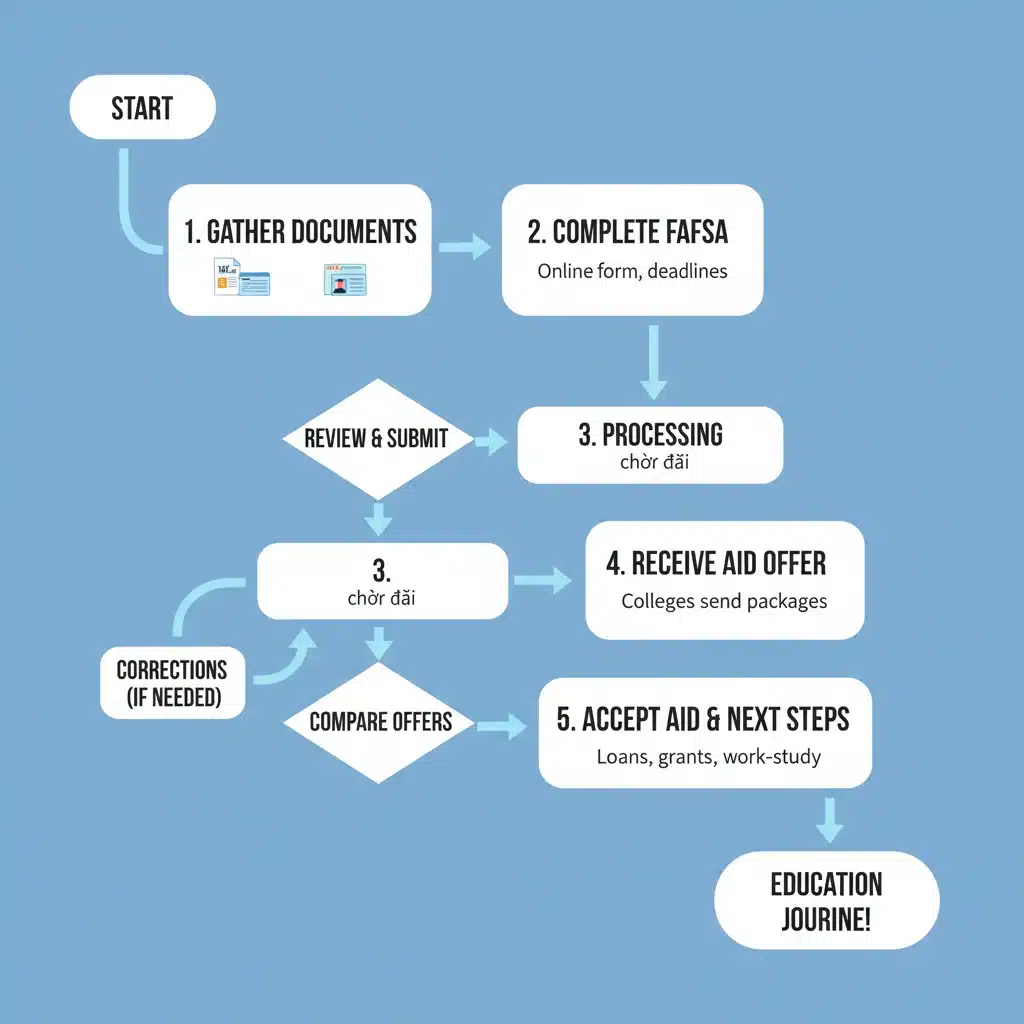
Navigating the new FAFSA landscape requires proactive planning and a clear understanding of how the 2026 FAFSA changes will impact your specific situation. Here are actionable strategies to help you maximize your financial aid:
1. Understand Your Student Aid Index (SAI)
Since the EFC is gone, your focus should shift to understanding the SAI. While you won’t calculate it yourself, knowing the factors that influence it – income, assets (excluding small businesses and family farms), and family size – will help you plan. The lower your SAI, the more aid you’re likely to receive. Familiarize yourself with the general principles behind the SAI to anticipate your eligibility.
2. File Early and Accurately
Even with a simplified form and direct IRS data exchange, filing the FAFSA as early as possible remains critical. Many types of financial aid, especially institutional grants, are awarded on a first-come, first-served basis. Completing the FAFSA soon after it becomes available (typically October 1st for the following academic year) increases your chances of securing limited funds. The mandatory IRS data exchange for the 2026 FAFSA changes will help with accuracy, but reviewing all pre-filled information is still essential.

3. Optimize Your Assets (Where Possible)
While the exclusion of small business and family farm assets is a welcome change, other assets can still impact your SAI. If you have significant liquid assets, consider strategies to reduce their reported value. For instance, funds in qualified retirement accounts (401k, IRA) are generally not counted in the FAFSA calculation. Investments in life insurance and annuities are also typically excluded. However, always consult with a financial advisor before making significant financial decisions solely for financial aid purposes, as tax implications and personal financial goals should take precedence. These strategic moves, when planned correctly, can positively influence your outcome with the 2026 FAFSA changes.
4. Understand the Income Look-Back Period
The FAFSA uses tax information from two years prior to the academic year for which you are applying. For the 2026-2027 FAFSA, you will use your 2024 tax information. This ‘prior-prior year’ (PPY) approach allows families to complete the FAFSA earlier, as tax returns for the relevant year are usually already filed. Be mindful of any significant income changes between your PPY and the current year, as these might warrant an appeal (see below). This consistency in the look-back period is a stable element amidst the 2026 FAFSA changes.
5. Be Aware of Special Circumstances and Appeals
Life happens, and sometimes your financial situation changes dramatically after the FAFSA’s ‘prior-prior year’ snapshot. If your family experiences a significant loss of income, job loss, high medical expenses, or other unusual circumstances not reflected on your FAFSA, you can appeal to your college’s financial aid office. They have the discretion to adjust your SAI based on these special circumstances. Gather documentation and be prepared to explain your situation clearly. Even with the 2026 FAFSA changes, the appeal process remains a vital safety net.
6. Research State and Institutional Aid
Remember that the FAFSA is primarily for federal aid. Many states and individual colleges offer their own grants, scholarships, and loan programs. Research these opportunities thoroughly. Some state aid programs have their own deadlines and application requirements that may be separate from the FAFSA. Colleges also have varying policies on how they use FAFSA data to award their institutional aid. Understanding these additional avenues is key to maximizing your overall financial assistance, especially with the evolving nature of the 2026 FAFSA changes.
7. Consider the Impact of Multiple Siblings in College
Under the FAFSA Simplification Act, the previous benefit of having multiple children in college simultaneously has been eliminated. Previously, the EFC was divided among the number of college-enrolled students in a family, effectively lowering each student’s expected contribution. With the transition to the SAI, this calculation no longer applies. Each student’s SAI will be calculated independently. This is a significant change that families with multiple college-bound children need to understand when planning for the 2026 FAFSA changes.
8. Create an FSA ID Early
Both the student and at least one parent (for dependent students) will need an FSA ID to complete and sign the FAFSA electronically. The FSA ID is a username and password that serves as your legal signature. Create your FSA ID well in advance of the FAFSA opening, as it can take a few days to verify. Having this ready will prevent delays when you’re ready to submit your 2026 FAFSA changes application.
9. Gather Necessary Documents
Even with direct IRS data exchange, it’s wise to have certain documents readily available. These include: Social Security numbers for the student and parents, alien registration numbers (if applicable), federal tax returns for the prior-prior year (2024 for the 2026-2027 FAFSA), records of untaxed income, and information on assets (cash, savings, checking accounts, investments). While less manual entry will be required, having these on hand helps with verification and ensures you can answer any additional questions accurately. Being prepared is half the battle with the 2026 FAFSA changes.
The Future of Financial Aid: What the 2026 FAFSA Changes Mean for You
The overarching goal of the FAFSA Simplification Act and the subsequent 2026 FAFSA changes is to make federal student aid more accessible and equitable. For many students, particularly those from lower-income backgrounds, these changes are expected to result in increased eligibility for Pell Grants and other forms of federal assistance. The simplified application process also aims to reduce the intimidation factor that often prevents eligible students from applying.
However, some families, particularly those with multiple children in college simultaneously or those with significant assets not previously counted, might find their aid eligibility shifts. It’s crucial for all families to re-evaluate their financial aid strategies in light of these reforms. Don’t assume your aid package will be the same as previous years; the 2026 FAFSA changes are designed to create a new playing field.
Common Misconceptions and Clarifications
With significant changes, misconceptions often arise. Let’s clarify a few points regarding the 2026 FAFSA changes:
- Myth: My family makes too much money to qualify for aid.
- Reality: There is no income cutoff for federal student aid. Many factors go into the SAI calculation, and even high-income families can qualify for unsubsidized federal loans. Always apply!
- Myth: The FAFSA only applies to federal aid.
- Reality: While it’s the gateway for federal aid, most states and colleges use FAFSA data to award their own financial aid. Completing it is almost always necessary for any form of assistance.
- Myth: I don’t need to fill out the FAFSA if I plan to only apply for scholarships.
- Reality: While some private scholarships don’t require the FAFSA, many institutional scholarships and even some private ones do. Additionally, even if you secure scholarships, the FAFSA can still qualify you for federal student loans with better terms than private loans.
- Myth: The new FAFSA will be perfect and error-free.
- Reality: While the direct IRS data exchange significantly reduces errors, it’s still crucial to review all pre-filled information carefully. Technology can have glitches, and personal circumstances can be nuanced.
Staying Informed: Your Best Defense
The best way to navigate the 2026 FAFSA changes is to stay informed. Regularly check the official Federal Student Aid website (StudentAid.gov) for the latest updates, announcements, and resources. Attend webinars, workshops, or information sessions offered by your high school, college, or community organizations. Financial aid offices at colleges are also excellent resources and can provide personalized guidance.
As the 2026-2027 FAFSA cycle approaches, more detailed guidance and tools will become available. Make it a priority to engage with these resources. Understanding the intricacies of the new SAI, the simplified application, and the expanded Pell Grant eligibility will put you in the strongest position to secure the financial aid you need to achieve your educational aspirations.
Conclusion: Embracing the Future of Financial Aid
The 2026 FAFSA changes represent a significant evolution in how federal student aid is distributed, aiming for a more equitable and accessible system. While these reforms promise a smoother application process and expanded opportunities for many, particularly low-income students, they also necessitate a fresh approach to financial aid planning for all families. By understanding the shift from EFC to SAI, familiarizing yourself with the new eligibility criteria, and implementing proactive strategies, you can effectively navigate the upcoming changes.
Remember to file your FAFSA early, utilize the direct IRS data exchange, and be prepared to address any special circumstances with your chosen institutions. With diligent preparation and a keen eye on official updates, you can confidently approach the 2026 FAFSA and maximize your chances of receiving the financial assistance essential for your higher education journey. The future of financial aid is here, and being prepared is your most powerful tool.
Author