Federal Reserve Rate Hikes 2026: Mortgage Impact Explained
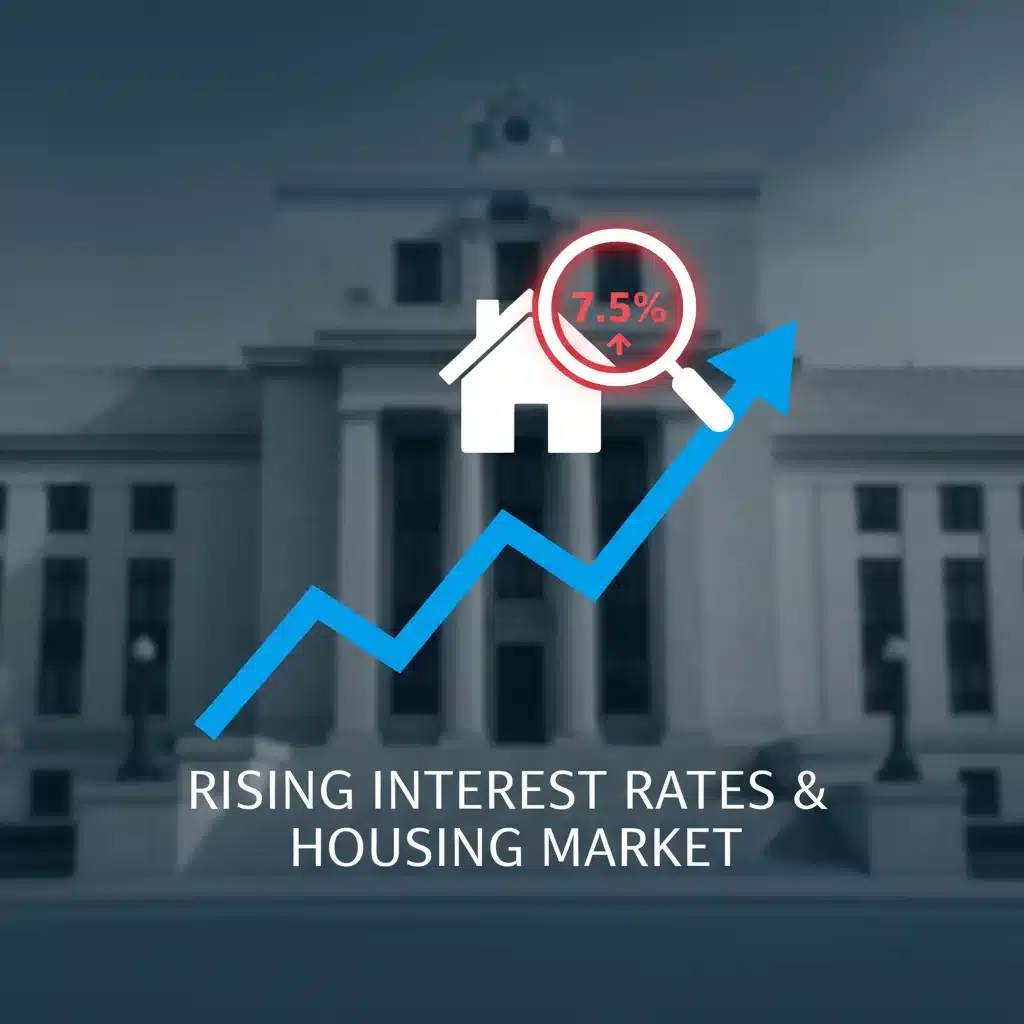
The financial landscape is ever-evolving, and few factors influence the everyday American’s wallet more directly than the decisions made by the Federal Reserve. As we look towards 2026, the prospect of further Federal Reserve interest rate hikes looms large, with discussions often centering on potential increases, such as a 0.25% rise. For homeowners and prospective buyers, understanding the implications of these mortgage rate hikes is not just academic; it’s a crucial step in financial planning. This comprehensive article delves into what a 0.25% increase in the federal funds rate could mean for your mortgage, the broader housing market, and strategies you can employ to navigate these changes effectively.
Understanding the Federal Reserve’s Role and Interest Rates
Before we dissect the impact of potential mortgage rate hikes, it’s essential to grasp the Federal Reserve’s mandate and how its actions ripple through the economy. The Federal Reserve, often referred to as ‘the Fed,’ is the central banking system of the United States. Its primary goals are to promote maximum employment, stable prices, and moderate long-term interest rates. To achieve these objectives, the Fed employs various monetary policy tools, with adjusting the federal funds rate being one of the most prominent.
The Federal Funds Rate: A Key Economic Lever
The federal funds rate is the target interest rate set by the Federal Open Market Committee (FOMC) for overnight borrowing and lending of reserves among commercial banks. While it’s an overnight rate for banks, its influence extends far beyond, affecting other short-term interest rates and, indirectly, long-term rates like those associated with mortgages. When the Fed raises the federal funds rate, it generally makes borrowing more expensive for banks, which in turn leads banks to charge higher interest rates to consumers and businesses for loans, including mortgages.
Why the Fed Raises Rates
The Fed typically raises interest rates to combat inflation. When the economy is growing too quickly, and prices for goods and services are rising unsustainably, increasing the cost of borrowing can cool down economic activity. This reduces demand, which can help bring inflation back within the Fed’s target range, usually around 2%. Other reasons might include stabilizing the financial system or correcting imbalances in the economy. Conversely, the Fed lowers rates to stimulate economic growth during downturns or periods of low inflation.
The Anticipated 2026 Federal Reserve Interest Rate Hikes
Forecasting economic conditions and Federal Reserve actions is a complex endeavor, fraught with uncertainties. However, economic indicators, historical patterns, and statements from Fed officials often provide clues about future policy directions. As of now, discussions around 2026 often include the possibility of further mortgage rate hikes, perhaps in incremental steps like 0.25%.
Economic Factors Driving Potential Hikes
Several factors could contribute to the Fed’s decision to implement mortgage rate hikes in 2026:
- Persistent Inflation: If inflation remains stubbornly above the Fed’s 2% target, further rate increases might be necessary to bring it under control. Supply chain issues, geopolitical events, and strong consumer demand can all contribute to inflationary pressures.
- Robust Economic Growth: A strong economy, characterized by low unemployment and healthy GDP growth, might give the Fed room to raise rates without fear of triggering a recession. A booming economy can also fuel inflation, necessitating rate adjustments.
- Labor Market Strength: A tight labor market, where employers struggle to find workers, can lead to wage growth. While beneficial for workers, excessive wage growth can contribute to inflation, prompting the Fed to act.
- Global Economic Conditions: International economic trends, such as global inflation or currency fluctuations, can also influence the Fed’s decisions, as the U.S. economy is interconnected with the rest of the world.
The 0.25% Increase: A Common Increment
A 0.25% increase is a standard increment for the Federal Reserve. It’s often seen as a measured approach, allowing the Fed to assess the impact of its policies on the economy before making further adjustments. While seemingly small, even a quarter-point increase can have noticeable effects, especially on variable-rate financial products like certain types of mortgages.
How a 0.25% Increase Impacts Your Mortgage
The direct impact of a 0.25% increase in the federal funds rate on your mortgage depends significantly on the type of mortgage you have. It’s crucial to distinguish between fixed-rate and adjustable-rate mortgages (ARMs).
Fixed-Rate Mortgages: Stable Payments
If you have a fixed-rate mortgage, the interest rate on your loan remains constant for the entire duration of the loan. This means that a 0.25% increase in the federal funds rate by the Federal Reserve will generally have no direct impact on your current monthly mortgage payments. Your payment schedule and interest rate are locked in, providing stability and predictability. However, for those looking to purchase a home or refinance in 2026, the story is different.
Adjustable-Rate Mortgages (ARMs): Potential for Higher Payments
Adjustable-rate mortgages (ARMs) are directly sensitive to changes in benchmark interest rates, which are influenced by the federal funds rate. ARMs typically have an initial fixed-rate period (e.g., 3, 5, 7, or 10 years), after which the interest rate adjusts periodically (e.g., annually). The adjustment is tied to a specific index (like the Secured Overnight Financing Rate – SOFR, or previously LIBOR) plus a margin set by the lender.
If your ARM is in its adjustable period, a 0.25% mortgage rate hike could lead to an increase in your interest rate, and consequently, your monthly mortgage payments. The exact impact will depend on:
- The index your ARM is tied to: How quickly and directly the index reacts to changes in the federal funds rate.
- Your ARM’s adjustment schedule: When your rate is next scheduled to adjust.
- Caps on your ARM: Most ARMs have interest rate caps (periodic and lifetime) that limit how much the rate can increase at each adjustment period and over the life of the loan. Even with caps, increases can still be significant over time.
Illustrative Example: ARM Payment Increase
Let’s consider a hypothetical scenario. Suppose you have an ARM with a current interest rate of 4.5% on a $300,000 outstanding balance. If your rate adjusts and the underlying index increases by 0.25%, your new rate might become 4.75% (assuming no caps are hit). While this might seem small, even a quarter-point can add several dollars to your monthly payment, which accumulates over the year.
For a $300,000 loan at 4.5% over 30 years, the principal and interest payment is approximately $1,520.
For a $300,000 loan at 4.75% over 30 years, the principal and interest payment is approximately $1,564.
This represents an increase of about $44 per month, or $528 per year. While this might be manageable for some, for others on tight budgets, it could necessitate adjustments to their household finances. This is why understanding potential mortgage rate hikes is so important.
Impact on New Mortgages and Refinancing
For individuals looking to obtain a new mortgage or refinance an existing one in 2026, a 0.25% increase in the federal funds rate will likely translate into higher interest rates for both fixed-rate and adjustable-rate products. Lenders will pass on their increased borrowing costs to consumers.
Higher interest rates mean:
- Higher monthly payments: You will pay more each month for the same loan amount.
- Reduced purchasing power: For the same monthly budget, you will qualify for a smaller loan amount, potentially limiting your home-buying options.
- Increased total interest paid: Over the life of the loan, you will pay significantly more in interest.

Calculation for New Mortgages
Let’s consider a $400,000 fixed-rate mortgage over 30 years:
- At 6.50% interest: Monthly P&I payment approximately $2,528. Total interest paid approximately $509,907.
- At 6.75% interest (after a 0.25% increase): Monthly P&I payment approximately $2,600. Total interest paid approximately $536,256.
This 0.25% increase would mean an extra $72 per month, or $864 per year, and an additional $26,349 in total interest over the life of the loan. This demonstrates the significant long-term financial implications of even small mortgage rate hikes.
Broader Impact on the Housing Market
Federal Reserve interest rate hikes extend their influence beyond individual mortgage payments, affecting the entire housing market.
Affordability Challenges
Higher mortgage rates directly reduce housing affordability. As borrowing costs rise, fewer potential buyers can afford the monthly payments for their desired homes. This can lead to a decrease in demand, especially in already expensive markets. The dream of homeownership becomes more distant for many first-time buyers.
Cooling Home Prices
Reduced demand, coupled with increased borrowing costs, typically puts downward pressure on home prices. While this might be welcome news for buyers, it could be a concern for existing homeowners who have seen significant equity gains and may be planning to sell. The pace of home price appreciation is likely to slow, and in some areas, prices could even decline, particularly if the market was overheated.
Reduced Sales Volume
With fewer affordable options and potential buyers retreating to the sidelines, the volume of home sales is likely to decrease. This can create a slower market, where homes stay on the market longer, and sellers may need to adjust their price expectations.
Impact on Refinancing Activity
When interest rates rise, refinancing becomes less attractive for many homeowners. Those with existing fixed-rate mortgages at lower rates have little incentive to refinance. Refinancing activity typically slows significantly during periods of rising rates, as the primary motivation for most refinances is to secure a lower interest rate or reduce monthly payments.
Strategies to Prepare for Mortgage Rate Hikes
While the prospect of mortgage rate hikes might seem daunting, there are proactive steps you can take to mitigate their impact and strengthen your financial position.
For Current Homeowners with ARMs
If you have an adjustable-rate mortgage, now is the time to review your loan terms and consider your options:
- Check your adjustment schedule and caps: Understand when your rate is next scheduled to adjust and what the maximum possible increase could be.
- Consider refinancing to a fixed-rate mortgage: If your ARM is approaching its adjustment period, refinancing to a fixed-rate mortgage could lock in a predictable payment and protect you from future rate increases. Even if current rates are higher than your initial ARM rate, the stability might be worth it.
- Accelerate principal payments: Paying extra towards your principal can reduce the overall loan amount, meaning that even if your interest rate increases, the impact on your monthly payment will be less severe.
- Build an emergency fund: Having a robust emergency fund can provide a buffer to absorb any increases in your monthly payments without straining your budget.
For Prospective Homebuyers
If you’re planning to buy a home in 2026, here’s how to prepare for potential mortgage rate hikes:
- Get pre-approved early: A mortgage pre-approval locks in an interest rate for a certain period (e.g., 30 to 90 days). This can protect you if rates rise during your home search.
- Save a larger down payment: A larger down payment reduces the amount you need to borrow, thereby lowering your monthly payments and the total interest paid, even at higher rates.
- Improve your credit score: A higher credit score can help you qualify for the best possible interest rates, even in a rising rate environment. Pay bills on time, reduce debt, and avoid opening new lines of credit unnecessarily.
- Budget conservatively: When calculating how much home you can afford, factor in potential rate increases. Don’t stretch your budget to the absolute maximum.
- Explore different loan products: While fixed-rate mortgages are generally preferred in a rising rate environment for predictability, understand all your options.
For Homeowners with Fixed-Rate Mortgages
While your current monthly payments are secure, you might still consider:
- Accelerating principal payments: This is always a good strategy to reduce total interest paid and build equity faster.
- Monitoring market trends: Stay informed about economic forecasts and housing market conditions, especially if you plan to sell or refinance in the future.
The Broader Economic Context and Expert Outlook
It’s important to view potential mortgage rate hikes within the broader economic context. The Federal Reserve’s decisions are not made in a vacuum; they are a response to complex economic data and forecasts. Economic stability is a delicate balance, and the Fed aims to achieve it without stifling growth or triggering a recession.
Expert Perspectives
Economists and financial analysts offer diverse perspectives on the likelihood and extent of future rate hikes. Some anticipate a more aggressive stance if inflation proves persistent, while others believe the Fed might adopt a more cautious approach to avoid economic contraction. Geopolitical events, global supply chain stability, and domestic consumer spending patterns will all play a role in shaping the Fed’s ultimate decisions.
Inflation vs. Recession Risks
The Fed walks a tightrope, balancing the need to control inflation with the risk of pushing the economy into a recession. Each rate hike is a calculated risk, designed to cool demand without freezing economic activity entirely. Understanding this balance helps contextualize why even a 0.25% increase is a significant policy move.
The Psychology of Interest Rate Changes
Beyond the direct financial calculations, interest rate changes also have a psychological impact on consumers and the housing market. Anticipation of mortgage rate hikes can create a sense of urgency for some buyers to act before rates climb further, potentially leading to a temporary surge in demand. Conversely, sustained high rates can lead to buyer fatigue and a wait-and-see approach, contributing to a slowdown.
Consumer Confidence
Consumer confidence plays a vital role in economic stability. When people feel secure about their financial future and the economy, they are more likely to make large purchases, such as homes. Significant or frequent rate hikes can erode this confidence, leading to reduced spending and investment. Therefore, the Fed considers not only economic data but also the potential impact on consumer sentiment.
Market Sentiment in the Housing Sector
The housing market is particularly susceptible to sentiment. News of impending mortgage rate hikes can cause both buyers and sellers to adjust their expectations. Buyers might become more cautious, while sellers might become more flexible on pricing. This interplay of economic fundamentals and psychological factors shapes the market’s trajectory.

Long-Term Outlook and Adaptability
While specific forecasts for 2026 are subject to change, the broader trend of economic cycles, including periods of rising and falling interest rates, is a constant. The key for individuals and families is to remain adaptable and well-informed.
Continuous Financial Planning
Financial planning is not a one-time event but an ongoing process. Regularly reviewing your budget, debt, and investment strategies in light of economic changes is crucial. This includes reassessing your mortgage situation as interest rate environments shift.
Seeking Professional Advice
Don’t hesitate to consult with financial advisors and mortgage professionals. They can provide personalized guidance based on your specific circumstances, helping you understand the nuances of mortgage rate hikes and explore the best options for your financial goals. A mortgage broker, for instance, can help you compare various loan products and find the most favorable terms available.
Diversifying Investments
For those with broader investment portfolios, understanding how interest rate changes affect different asset classes is also important. While this article focuses on mortgages, the ripple effects of Fed policy are felt across stocks, bonds, and other investments. A diversified portfolio can help weather market volatility.
Conclusion
The possibility of Federal Reserve interest rate hikes in 2026, even a modest 0.25% increase, carries significant implications for your mortgage and the wider housing market. For current homeowners with ARMs, it means potentially higher monthly payments, necessitating a review of refinancing options or accelerated principal payments. For prospective buyers, it translates to reduced affordability and higher borrowing costs, making careful budgeting and credit score optimization more critical than ever.
While the future is always uncertain, being proactive and informed is your best defense. By understanding the Fed’s role, the mechanics of interest rate adjustments, and the specific impact on your financial situation, you can make strategic decisions to navigate these potential mortgage rate hikes effectively. The goal is not just to react to changes but to anticipate them and position yourself for financial resilience in the years to come. Staying abreast of economic news and seeking expert advice will empower you to make the most informed choices for your home and your financial well-being.