Public vs Private Universities: Financial Impact for 2026 Graduates
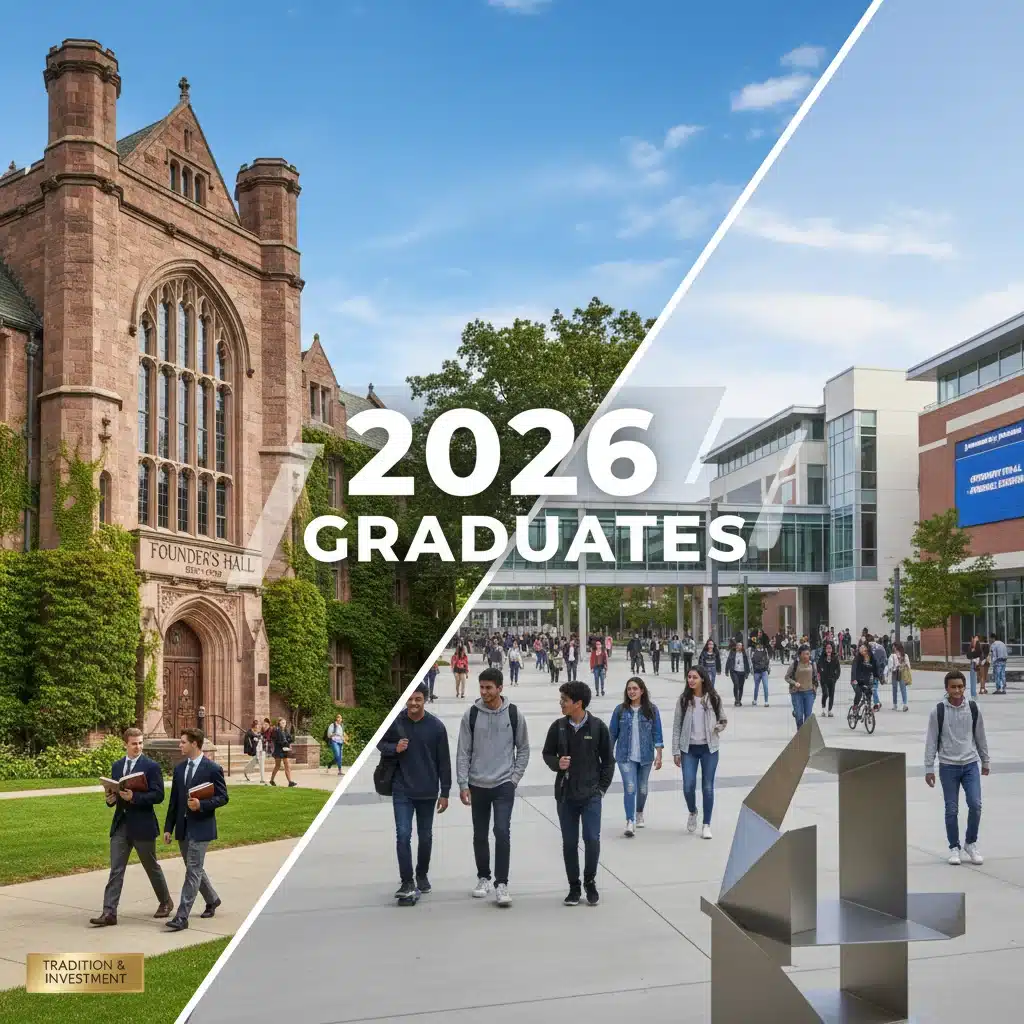
Comparing the Financial Impact of Public vs. Private Universities in the US for 2026 Graduates
Deciding where to pursue higher education is one of the most pivotal choices a young person and their family will make. Beyond academic programs, campus culture, and geographic location, the financial implications of this decision can reverberate for decades. For the graduating class of 2026, understanding the nuanced differences in the university financial impact between public and private institutions is more critical than ever. As tuition costs continue to climb and student loan debt reaches unprecedented levels, a strategic approach to college selection based on financial considerations is paramount.
This comprehensive guide will delve into the various financial facets of public and private universities, offering insights specifically tailored for students aiming to graduate in 2026. We will explore direct costs like tuition and fees, indirect costs, the availability and types of financial aid, the long-term return on investment (ROI), and the potential impact on future career paths and earning potential. Our goal is to equip prospective students and their families with the knowledge to make an informed, financially sound decision that aligns with their academic aspirations and long-term financial well-being.
Understanding the Core Differences: Public vs. Private
Before diving into the financial specifics, it’s essential to establish a clear understanding of what distinguishes public from private universities. This fundamental difference underpins their funding models and, consequently, their tuition structures and financial aid offerings.
Public Universities: State-Funded Accessibility
Public universities, often referred to as state universities, are primarily funded by state governments. This governmental support allows them to offer significantly lower tuition rates, particularly for in-state residents. Their mission often includes providing accessible and affordable education to the state’s population. Examples include the University of California system, the State University of New York (SUNY), and various state university systems across the US. While they still charge tuition, fees, and room and board, the state subsidies help keep these costs relatively lower than their private counterparts.
Private Universities: Independent Funding and Higher Costs
Private universities, conversely, operate independently of state government funding. Their revenue streams typically come from tuition, endowments, donations, and research grants. This independence often translates to higher sticker prices for tuition and fees, as they do not receive the same level of taxpayer support. Prestigious institutions like Harvard, Stanford, and Yale are well-known private universities, but the category also includes a vast array of smaller liberal arts colleges and specialized institutions. While their tuition is generally higher, private universities often have larger endowments, enabling them to offer substantial institutional financial aid.
Tuition and Fees: The Most Visible University Financial Impact
The sticker price of tuition and fees is usually the first financial hurdle prospective students encounter. For the class of 2026, these figures continue to be a major concern, directly influencing the overall university financial impact.
Public University Tuition Trends for 2026 Graduates
For in-state students attending public universities, tuition and fees are generally the most affordable option. While these costs have steadily risen over the past few decades, they remain considerably lower than private institutions. For out-of-state students, public university tuition can be significantly higher, sometimes approaching or even exceeding the costs of some private universities. This disparity highlights the importance of residency status in assessing the financial viability of public institutions.
Based on historical trends, the average annual tuition and fees for in-state students at public four-year institutions for the 2026 graduating class could range from approximately $11,000 to $13,000. For out-of-state students, this figure could jump to $28,000 to $32,000 or more. These figures do not include room, board, books, or other living expenses, which can add another $15,000 to $20,000 annually.
Private University Tuition Trends for 2026 Graduates
Private universities typically present a much higher sticker price. For the 2026 graduating class, the average annual tuition and fees at private four-year institutions could range from $38,000 to $45,000, with many elite institutions exceeding $60,000 per year. When factoring in room, board, and other expenses, the total annual cost of attendance at a private university can easily surpass $70,000 to $80,000.
However, it is crucial to remember that the sticker price at private universities often does not reflect the actual cost paid by many students due to generous financial aid packages. This is a critical point that often gets overlooked in initial comparisons of university financial impact.
The Role of Financial Aid: Mitigating the University Financial Impact
Financial aid is a game-changer when evaluating the true cost of higher education. Both public and private institutions offer various forms of aid, but the sources and amounts can differ significantly.
Financial Aid at Public Universities
Public universities primarily offer federal and state financial aid, including Pell Grants, Federal Supplemental Educational Opportunity Grants (FSEOG), and various state-specific grant programs. Scholarships from the university itself are also available, often based on merit (academic achievement) or specific talents (athletics, arts). Need-based aid is determined by the Free Application for Federal Student Aid (FAFSA). While public institutions strive to make education affordable, their institutional grant and scholarship budgets may be smaller compared to private universities, meaning students might rely more heavily on federal loans to cover remaining costs.
Financial Aid at Private Universities
Private universities often have larger endowments, which allow them to offer substantial institutional grants and scholarships. Many private institutions are committed to meeting 100% of demonstrated financial need, meaning they will provide enough aid (grants, scholarships, and sometimes loans/work-study) to cover the difference between the cost of attendance and what the family is expected to contribute. This can drastically reduce the net price, making a seemingly expensive private university surprisingly affordable, sometimes even more so than an out-of-state public university.
Therefore, when assessing the university financial impact, prospective students for 2026 should always look beyond the sticker price and diligently complete the FAFSA and, if required, the CSS Profile, to get an accurate estimate of their net cost at both public and private institutions.
Student Loan Debt: A Long-Term University Financial Impact
Student loans are a reality for a significant portion of college graduates. The amount borrowed directly impacts post-graduation financial freedom and can shape life choices for years to come. Understanding the potential for debt accumulation is a crucial aspect of evaluating the university financial impact.
Debt Trends for Public University Graduates (Class of 2026)
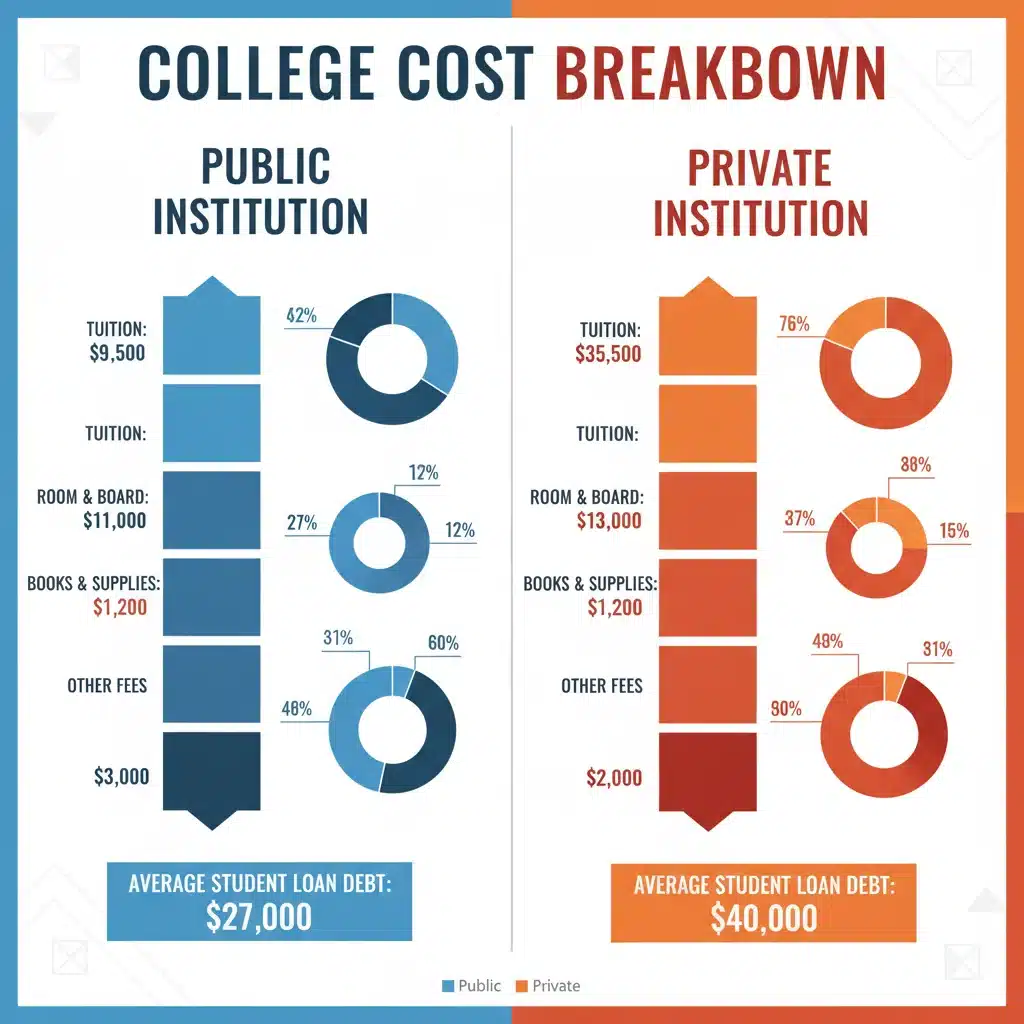
While public universities have lower sticker prices, graduates from these institutions still often carry substantial student loan debt. This is partly due to the rising cost of attendance, even with state subsidies, and the reliance on federal loans to cover gaps in financial aid. For the class of 2026, the average student loan debt for public university graduates could be in the range of $25,000 to $30,000. This debt can vary widely based on the student’s financial need, the specific institution, and whether they attended in-state or out-of-state.
Debt Trends for Private University Graduates (Class of 2026)
Counterintuitively, graduates from private universities do not always carry more debt than their public university counterparts. While the initial costs are higher, the more generous institutional aid offered by many private schools can often lead to a lower net price and, consequently, less reliance on loans. However, for students who do not receive substantial aid, the debt can be considerably higher. The average student loan debt for private university graduates could also fall within a similar range, or slightly higher, perhaps $30,000 to $35,000, but with a wider distribution. It’s not uncommon for some private university graduates to have very little debt, while others might have significantly more if their aid package was insufficient.
The key takeaway here is that net cost, not sticker price, is the most accurate predictor of potential student loan debt. Students and families must utilize net price calculators available on university websites to get a realistic estimate of their out-of-pocket expenses and potential loan burden.
Return on Investment (ROI): Beyond the Initial University Financial Impact
Beyond the immediate costs and potential debt, prospective 2026 graduates should consider the long-term return on investment (ROI) of their chosen institution. This encompasses factors like post-graduation earning potential, career services, alumni networks, and job placement rates.
ROI for Public University Graduates
Public universities often offer a strong ROI, particularly for in-state students who benefit from lower tuition. Graduates from well-regarded public institutions frequently find themselves in competitive job markets with solid earning potential, especially in fields like engineering, business, and healthcare. The larger class sizes and broad range of programs can provide diverse opportunities, and robust career services departments help connect students with employers. The lower debt burden often associated with public universities also means graduates can achieve financial independence more quickly.
ROI for Private University Graduates
Private universities, especially highly selective ones, can also offer an excellent ROI. Their smaller class sizes, personalized attention, strong alumni networks, and often prestigious reputations can open doors to high-paying jobs and advanced career opportunities. Many private institutions boast impressive job placement rates and can provide unparalleled networking opportunities. While the initial investment might be higher, the potential for accelerated career growth and higher starting salaries can, for some, justify the cost. The strength of the alumni network, in particular, can be a significant asset throughout a graduate’s career, providing mentorship, job leads, and professional connections.
It’s important to note that ROI is not solely determined by whether an institution is public or private, but rather by the specific program of study, the individual’s effort, and the institution’s overall reputation and resources within that field. A rigorous engineering program at a public university might offer a better ROI than a less competitive program at a private institution, and vice-versa.
Career Services and Alumni Networks: Long-Term Benefits
The support systems available during and after college play a significant role in a graduate’s career trajectory. Both public and private institutions invest in career services and foster alumni engagement, but their approaches and resources can vary.
Public University Career Support
Public universities, due to their larger student bodies, often have extensive career services departments that cater to a wide range of majors and industries. They typically host large career fairs, offer resume workshops, mock interviews, and provide access to job boards and internship databases. Their alumni networks are often vast and geographically dispersed, offering connections in numerous fields and locations. While these networks can be very powerful, navigating them might require more proactive effort from the student due to the sheer volume of alumni.
Private University Career Support
Private universities, especially smaller ones, often pride themselves on personalized career counseling and strong, close-knit alumni networks. The smaller student-to-counselor ratios can lead to more individualized guidance. Alumni from private institutions often feel a strong sense of loyalty and connection, making them highly engaged in supporting current students and recent graduates. This can manifest in mentorship opportunities, exclusive job postings, and easier access to influential professionals in various industries. The perceived prestige of some private university degrees can also provide an edge in certain competitive job markets.
Ultimately, the effectiveness of career services and alumni networks depends on how actively a student utilizes these resources. Regardless of the institution type, engagement is key to maximizing these benefits and enhancing the long-term university financial impact.

Hidden Costs and Unforeseen Expenses
Beyond tuition, fees, room, and board, there are numerous other costs that contribute to the overall university financial impact. These often overlooked expenses can add up quickly and should be factored into any financial planning for 2026 graduates.
Books and Supplies
Textbooks, lab fees, art supplies, and specialized software can be surprisingly expensive. While some universities are moving towards digital resources or open educational resources (OER), many courses still require costly materials. Budgeting $1,000 to $2,000 annually for books and supplies is a reasonable estimate.
Personal Expenses and Transportation
This category includes everything from toiletries and laundry to entertainment and travel expenses for breaks. Students living away from home will need money for personal care, clothing, and social activities. Transportation costs to and from home, especially for out-of-state students, can be substantial. These costs can easily add another $2,000 to $4,000 per year.
Health Insurance
Many universities require students to have health insurance. If a student is not covered under a parent’s plan, they will need to purchase a university-sponsored plan or an independent plan, which can cost several thousand dollars annually.
Technology
While most students arrive with laptops, specialized software or hardware might be required for certain majors (e.g., engineering, graphic design). Reliable internet access is also a necessity.
Miscellaneous Fees
Beyond tuition and general fees, universities often charge for specific services or activities, such as graduation fees, club memberships, parking permits, or orientation fees. While individually small, these can accumulate.
Failing to account for these hidden costs can lead to unexpected financial strain and potentially increase the need for additional loans, thereby amplifying the long-term university financial impact.
Making the Right Choice for the Class of 2026
For students graduating in 2026, the decision between a public and private university is not a simple one, and it rarely boils down to just one factor. It requires a holistic assessment of academic fit, personal preferences, and a thorough understanding of the university financial impact.
Factors to Consider:
- Net Price, Not Sticker Price: Always calculate the net cost after grants and scholarships. Use net price calculators on university websites.
- Financial Aid Offer Comparison: Don’t just compare aid amounts; compare the types of aid (grants vs. loans) and the total out-of-pocket cost.
- Program Specifics: Research the strength of your desired major at both public and private institutions. A top program at a public university might offer better opportunities than a mediocre one at a private university, regardless of cost.
- Location and Residency: In-state public universities are almost always the most affordable option. Consider the cost implications of moving out of state.
- Long-Term Career Goals: Does one type of institution better prepare you for your specific career path? Consider alumni networks and job placement rates.
- Personal Fit: While financial considerations are paramount, the overall college experience and fit are also important for academic success and personal growth.
- Debt Tolerance: How much student loan debt are you comfortable taking on? Factor this into your decision-making process.
The ideal choice will vary significantly from student to student. For some, a public university will provide an excellent education at a manageable cost, minimizing future debt. For others, a private university with a generous financial aid package and a strong program in their field of interest might offer a superior long-term ROI, even with a higher initial cost.
Strategies for Minimizing University Financial Impact
Regardless of whether a student chooses a public or private institution, there are several proactive strategies that the class of 2026 can employ to minimize their overall university financial impact:
- Apply for Scholarships Extensively: Look beyond institutional aid. Seek out external scholarships from local organizations, national foundations, and professional associations. Every dollar of scholarship money reduces the need for loans.
- Consider Community College First: Completing the first year or two at a community college and then transferring to a four-year institution can significantly reduce overall costs, especially for general education requirements.
- Work During College: A part-time job or work-study program can help cover living expenses and reduce the need for loans.
- Live at Home (if feasible): Eliminating room and board costs can dramatically lower the total cost of attendance.
- Choose an Affordable Meal Plan: Opt for a less extensive meal plan if you anticipate eating out or cooking some of your meals.
- Be Frugal with Expenses: Manage personal spending, avoid unnecessary purchases, and seek out student discounts.
- Graduate on Time (or Early): Every extra semester or year adds significantly to the overall cost. Plan your courses carefully to ensure timely graduation.
- Understand Loan Terms: If loans are necessary, understand the difference between subsidized and unsubsidized loans, interest rates, and repayment options.
By implementing these strategies, students and families can gain greater control over the financial aspects of higher education and ensure that the investment in a degree leads to a positive long-term outcome, rather than a burdensome debt load.
Conclusion: A Balanced Perspective for 2026 Graduates
The financial landscape of higher education is complex, and the choice between a public and private university carries substantial financial implications for the class of 2026. While private universities often have higher sticker prices, their generous financial aid can sometimes make them more affordable than expected. Conversely, public universities, particularly for in-state students, generally offer a lower initial cost but may require more reliance on loans if institutional aid is limited.
The ultimate university financial impact is a function of tuition, fees, financial aid, living expenses, and the long-term ROI in terms of career prospects and earning potential. Prospective students should conduct thorough research, compare net costs, evaluate program strengths, and consider their individual circumstances and career aspirations. By adopting a proactive and informed approach, 2026 graduates can navigate the complexities of college financing and choose an institution that not only fosters their academic and personal growth but also sets them on a path toward financial stability and success.
Remember, the goal is not merely to get into college, but to graduate with a valuable degree and manageable debt, poised for a successful future. The financial decisions made today will shape the opportunities available tomorrow.