Navigating the 2026 Federal Tax Code Overhaul: 3 Key Changes Affecting Your Income (RECENT UPDATES)
Navigating the 2026 Federal Tax Code Overhaul: 3 Key Changes Affecting Your Income (RECENT UPDATES)
As the calendar pages turn towards 2026, a significant shift is on the horizon for every American taxpayer. The 2026 Federal Tax Code Overhaul is not just another minor adjustment; it represents a fundamental reevaluation of the tax landscape, primarily driven by the expiration of key provisions from the landmark Tax Cuts and Jobs Act (TCJA) of 2017. Understanding these impending 2026 tax code changes is not merely a matter of compliance; it’s a critical component of proactive financial planning and safeguarding your income.
The TCJA brought about the most extensive tax reform in decades, introducing lower individual income tax rates, a higher standard deduction, expanded child tax credits, and limitations on various itemized deductions. These changes significantly impacted the take-home pay and financial strategies of millions. However, many of these provisions were temporary, with a built-in sunset clause set for the end of 2025. This means that come January 1, 2026, we will effectively revert to a pre-TCJA tax environment for individuals, unless new legislation is enacted to extend or modify these provisions.
The implications of this reversion are far-reaching. From individual income tax brackets to estate planning, and from business deductions to international taxation, the 2026 tax code changes will touch almost every facet of financial life. For individuals, this could mean a higher tax bill, less disposable income, and a need to rethink investment and savings strategies. For businesses, especially small and medium-sized enterprises, the changes could affect operational costs, profitability, and expansion plans.
This comprehensive guide aims to shed light on the three most impactful 2026 tax code changes that are poised to directly affect your income. We will delve into the specifics of each change, explain its potential ramifications, and offer actionable insights and strategies to help you prepare. Our goal is to equip you with the knowledge necessary to navigate this complex transition smoothly, ensuring you are not caught off guard by the evolving tax landscape. Stay tuned for recent updates and expert analysis to help you make informed decisions.
1. Reversion of Individual Income Tax Rates and Brackets
One of the most significant 2026 tax code changes will be the reversion of individual income tax rates and brackets to their pre-TCJA levels. The Tax Cuts and Jobs Act of 2017 lowered marginal tax rates across nearly all income brackets and adjusted the income thresholds for each bracket. For instance, the top individual income tax rate was reduced from 39.6% to 37%, and other rates saw similar reductions. This change, coupled with the adjustment of bracket ranges, resulted in many taxpayers falling into lower tax brackets or paying a lower percentage on their income within their existing brackets.
When these provisions expire at the end of 2025, the seven individual income tax brackets will return to their 2017 levels, adjusted for inflation. This means:
- Higher Marginal Tax Rates: Most taxpayers will likely see their marginal tax rates increase. For example, the top rate will revert to 39.6%, and other brackets will also increase accordingly. This directly translates to a larger portion of your income being paid in federal taxes, reducing your net take-home pay.
- Adjusted Income Thresholds: The income ranges for each tax bracket will also shift. This could push some taxpayers into higher tax brackets, even if their income hasn’t substantially increased, simply due to the redefinition of the brackets.
- Impact on All Income Levels: While the highest earners often face the most significant percentage changes, these adjustments will affect individuals across the income spectrum. Middle-income families, who saw considerable benefits from the TCJA’s lower rates, may experience a noticeable increase in their tax liability.
What This Means for Your Income:
The direct consequence of these 2026 tax code changes is a potential reduction in your disposable income. If your income remains constant, a higher tax rate means less money in your pocket. This can affect your ability to save, invest, or spend, requiring a reevaluation of your personal budget and financial goals.
Strategies to Prepare:
- Tax Planning and Forecasting: Work with a financial advisor to project your tax liability under the 2026 rules. This will help you understand the precise impact on your income.
- Income Shifting: If feasible, consider accelerating income into 2025 or deferring deductions to 2026, depending on your individual circumstances and projected tax rates.
- Review Withholding: Adjust your W-4 form with your employer to ensure your tax withholding is accurate for the new rates, preventing a large tax bill or refund.
- Maximize Retirement Contributions: Contributions to tax-advantaged accounts like 401(k)s and IRAs can reduce your taxable income, potentially keeping you in a lower tax bracket.
2. Changes to the Standard Deduction and Itemized Deductions
Another monumental aspect of the 2026 tax code changes involves the standard deduction and itemized deductions. The TCJA significantly increased the standard deduction, nearly doubling it for all filing statuses. This change, coupled with limitations on certain itemized deductions (such as the State and Local Tax or SALT deduction cap), led a vast number of taxpayers to opt for the standard deduction rather than itemizing.
With the sunset of the TCJA provisions, the standard deduction amounts will revert to their pre-2018 levels, adjusted for inflation. For example, the standard deduction for married couples filing jointly, which was $29,200 in 2024, will likely decrease substantially. Concurrently, some of the limitations on itemized deductions, like the SALT cap, are also set to expire, potentially allowing taxpayers to deduct more state and local taxes.
What This Means for Your Income:
- Fewer Taxpayers Using Standard Deduction: A lower standard deduction means that more individuals and families might find it advantageous to itemize their deductions. However, even with the potential expiration of some itemized deduction limits, the overall landscape for deductions will be different.
- Increased Taxable Income: For those who previously benefited from the higher standard deduction and will not have enough itemized deductions to surpass the new, lower standard deduction threshold, their taxable income will increase, leading to a higher tax liability.
- Revisiting Itemization: Taxpayers who previously stopped itemizing due to the higher standard deduction and SALT cap will need to re-evaluate whether itemizing makes sense again.
Strategies to Prepare:
- Track Itemized Deductions: Start meticulously tracking all potential itemized deductions, including mortgage interest, state and local taxes, charitable contributions, and medical expenses. This will be crucial for determining if itemizing will be more beneficial than the lower standard deduction.
- Bunching Deductions: Consider strategies like ‘bunching’ deductions, where you accelerate deductible expenses into one year to exceed the standard deduction threshold, then take the standard deduction in the subsequent year. For instance, making two years’ worth of charitable contributions in one year.
- Understand SALT Cap Expiration: If you live in a high-tax state, the potential expiration of the SALT cap could significantly impact your deductions. Stay informed about any legislative efforts to extend or modify this cap.

3. Adjustments to the Child Tax Credit and Other Family-Related Credits
The third major area of 2026 tax code changes that will directly affect many families’ income pertains to the Child Tax Credit (CTC) and other family-related tax credits. The TCJA made significant enhancements to the CTC, increasing it from $1,000 per child to $2,000 per qualifying child under age 17, with up to $1,400 of it being refundable. It also introduced a new, non-refundable credit of $500 for other dependents. These changes provided substantial tax relief to millions of families across various income levels.
Upon the expiration of the TCJA provisions, the CTC is set to revert to its pre-2018 amount of $1,000 per qualifying child, and the refundable portion will also be reduced. The credit for other dependents is also slated to disappear. These changes will have a direct and tangible impact on the financial well-being of families, particularly those with multiple children.
What This Means for Your Income:
- Reduced Tax Credits: For families who rely on the enhanced CTC, the reduction to $1,000 per child will mean a significant decrease in their overall tax credits, leading to a higher tax liability and potentially a smaller refund or even an amount due.
- Impact on Lower-Income Families: The reduction in the refundable portion of the CTC will disproportionately affect lower-income families who may not have enough tax liability to utilize the non-refundable portion fully.
- Fewer Credits for Other Dependents: The elimination of the $500 credit for other dependents will affect families supporting older children, parents, or other relatives.
Strategies to Prepare:
- Recalculate Expected Credits: Understand how the reversion of the CTC will affect your family’s specific tax situation. Use online tax calculators or consult with a tax professional to estimate your future tax liability.
- Adjust Family Budget: Anticipate the reduction in tax credits and adjust your family budget accordingly. This might involve reallocating funds from savings, investments, or discretionary spending.
- Explore Other Credits: Research other federal and state tax credits you might qualify for, such as the Earned Income Tax Credit (EITC), education credits, or dependent care credits, to help offset the reduction in the CTC.
- Advocate for Extension: Stay informed about any legislative discussions or efforts to extend the enhanced CTC. Advocacy groups and policymakers are actively debating the future of these credits.
Recent Updates and Legislative Outlook for 2026 Tax Code Changes
The discussion surrounding the 2026 tax code changes is not static. Lawmakers are keenly aware of the impending expirations and their potential impact on the economy and individual taxpayers. As of recent updates, there is ongoing debate and speculation about whether Congress will act to extend some or all of the expiring TCJA provisions, or if they will allow them to sunset as planned. The political landscape, including upcoming elections, will undoubtedly play a crucial role in shaping the final outcome.
Key areas of focus in legislative discussions include:
- Extension of Individual Tax Cuts: There is considerable pressure from various groups to extend the individual income tax rate reductions and the enhanced standard deduction. Proponents argue that allowing these to expire would be a de facto tax increase on the middle class.
- Child Tax Credit Debate: The future of the Child Tax Credit is a particularly contentious issue. While there’s bipartisan support for some form of child tax relief, the specifics of the credit’s amount, refundability, and eligibility criteria are subjects of intense negotiation. Recent proposals have aimed to find a middle ground between the TCJA’s enhanced credit and the pre-TCJA structure.
- Business Tax Provisions: While this article focuses on individual income, it’s worth noting that some business tax provisions from the TCJA are also set to expire or have already begun phasing out (e.g., immediate expensing for research and development costs). These changes could indirectly affect individuals through employment and investment opportunities.
- Potential for New Legislation: Beyond simply extending or reverting to old laws, there’s always the possibility of entirely new tax legislation being introduced. This could include changes to capital gains taxes, estate taxes, or the introduction of new credits and deductions.
It is imperative for taxpayers and financial professionals to remain vigilant and informed about these legislative developments. The final shape of the 2026 tax code changes could be influenced significantly by political compromises and economic conditions.
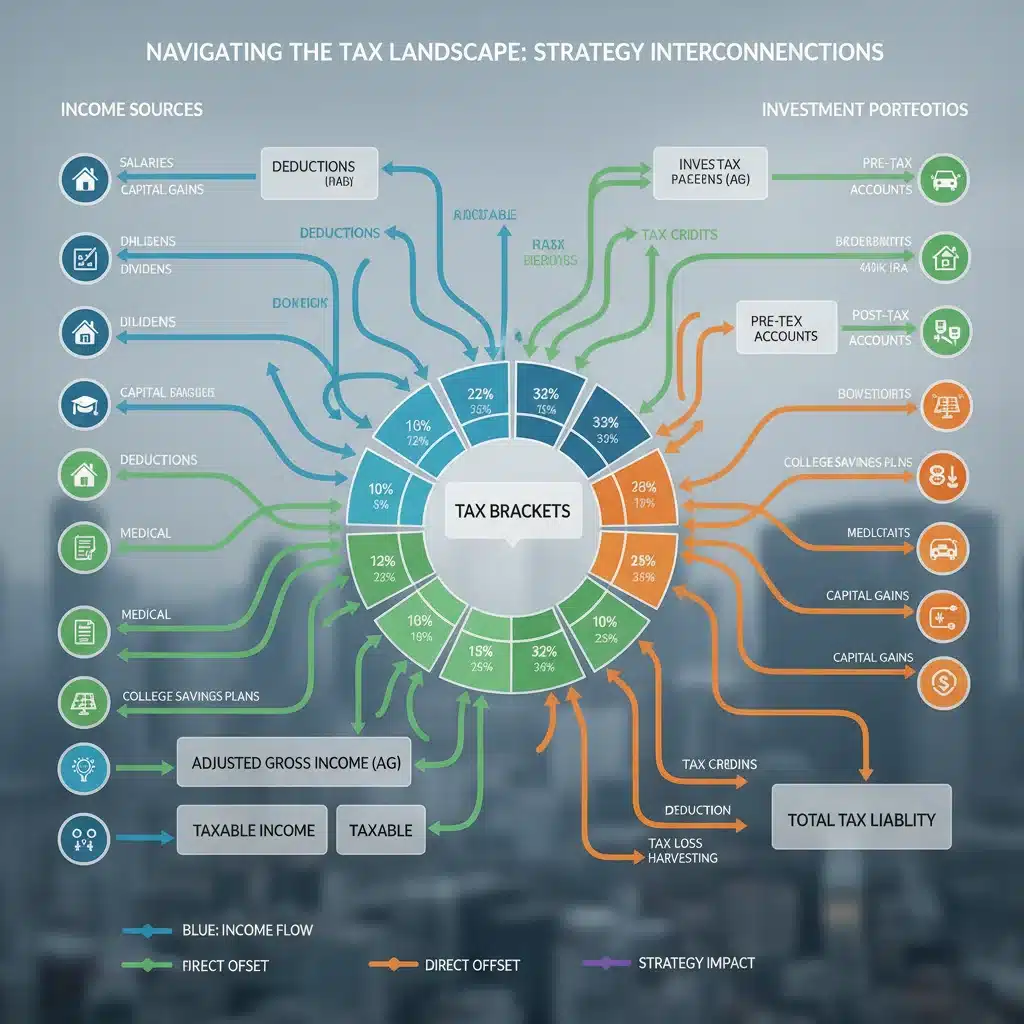
Comprehensive Strategies for Navigating the 2026 Tax Code Overhaul
Beyond the specific strategies for each change, a holistic approach to your financial planning is essential to effectively navigate the 2026 tax code changes. Here are some overarching considerations:
1. Proactive Financial Planning is Key:
Do not wait until late 2025 or early 2026 to start planning. The sooner you understand the potential impacts, the more time you have to adjust your strategies. This involves a comprehensive review of your income, expenses, investments, and long-term financial goals. Consider creating a detailed financial forecast that accounts for various tax scenarios.
2. Consult with a Qualified Tax Professional:
Tax laws are complex, and the upcoming changes will add another layer of intricacy. A certified public accountant (CPA) or a tax attorney can provide personalized advice tailored to your unique financial situation. They can help you understand the nuances of the 2026 tax code changes, identify potential opportunities for tax savings, and ensure you remain compliant.
3. Review Investment Strategies:
The changes in tax rates and deductions could impact the after-tax returns of your investments. Review your portfolio with a financial advisor. Consider strategies such as tax-loss harvesting, rebalancing your asset allocation, or optimizing the location of your investments (e.g., using tax-advantaged accounts like Roth IRAs or 529 plans) to minimize your tax burden.
4. Maximize Retirement Contributions:
Contributions to 401(k)s, IRAs (Traditional or Roth, depending on your income and future tax expectations), Health Savings Accounts (HSAs), and other tax-advantaged vehicles can be powerful tools to reduce your taxable income and grow your wealth more efficiently. As tax rates are expected to rise, the benefits of deferring income or enjoying tax-free growth become even more pronounced.
5. Estate and Gift Tax Planning:
While this article primarily focuses on income tax, it’s important to note that the TCJA also significantly increased the estate and gift tax exemption. This provision is also set to sunset at the end of 2025, reverting to pre-TCJA levels, adjusted for inflation. If you have substantial assets, now is an opportune time to review your estate plan with an attorney to understand the potential impact of these changes on your beneficiaries.
6. Stay Informed and Adaptable:
The legislative environment is dynamic. Stay updated on political discussions, proposed bills, and any new tax guidance issued by the IRS. Subscribing to reputable financial news sources and consulting with your tax professional regularly will ensure you are always working with the most current information. Be prepared to adapt your financial strategies as the situation evolves.
Conclusion: Preparing for the Future of Taxation
The 2026 Federal Tax Code Overhaul represents a pivotal moment for individual taxpayers and businesses alike. The expiration of key TCJA provisions will bring about substantial 2026 tax code changes, primarily affecting individual income tax rates, the standard deduction, and family-related tax credits. These shifts necessitate a proactive and informed approach to financial planning.
By understanding the three key changes discussed – the reversion of individual income tax rates and brackets, adjustments to the standard and itemized deductions, and modifications to the Child Tax Credit – you can begin to formulate strategies to mitigate negative impacts and potentially identify new opportunities. The importance of consulting with qualified tax and financial professionals cannot be overstated, as they can provide tailored advice and help you navigate the complexities of the evolving tax landscape.
The future of taxation is not entirely set in stone, with ongoing legislative debates that could alter the trajectory of these changes. Therefore, staying informed and maintaining a flexible financial plan will be paramount. Embrace this period of transition as an opportunity to review and optimize your financial strategies, ensuring that you are well-prepared for the 2026 tax code changes and beyond, ultimately safeguarding your income and securing your financial future.
Remember, foresight and preparation are your strongest allies in the face of tax reform. Start planning today to ensure a smooth transition into the new tax era.
Author