The Rise of Automation: 5 U.S. Industries Creating New Human-Machine Collaboration Roles for 2026
The Rise of Automation: 5 U.S. Industries Creating New Human-Machine Collaboration Roles for 2026
The landscape of work is undergoing a seismic shift, driven by the relentless march of automation. For years, the narrative around automation has often been tinged with apprehension, focusing on job displacement and the obsolescence of human labor. However, a more nuanced and increasingly accurate picture is emerging: automation is not just replacing jobs, but profoundly reshaping them, fostering an unprecedented era of human-machine collaboration. By 2026, this synergy will be the cornerstone of productivity and innovation in numerous U.S. industries, creating a plethora of new roles that demand unique blends of technical prowess and distinctly human skills.
This article aims to dissect this transformative trend, moving beyond the fear-mongering to explore the tangible opportunities arising from this technological evolution. We will delve into five specific U.S. industries that are at the forefront of integrating automation and artificial intelligence (AI) to create novel human-machine collaboration roles. These aren’t just minor adjustments; they represent fundamental shifts in how work is conceived, executed, and valued. Understanding these changes is crucial for individuals looking to future-proof their careers and for businesses striving to remain competitive in an increasingly automated world.
The future of work isn’t about humans versus machines; it’s about humans and machines working together, each leveraging their unique strengths to achieve outcomes that neither could accomplish alone. From enhancing precision in manufacturing to revolutionizing patient care, these collaborative models are setting the stage for a more efficient, innovative, and potentially more fulfilling work environment. Let’s explore the industries leading this charge and the exciting new roles they are forging.
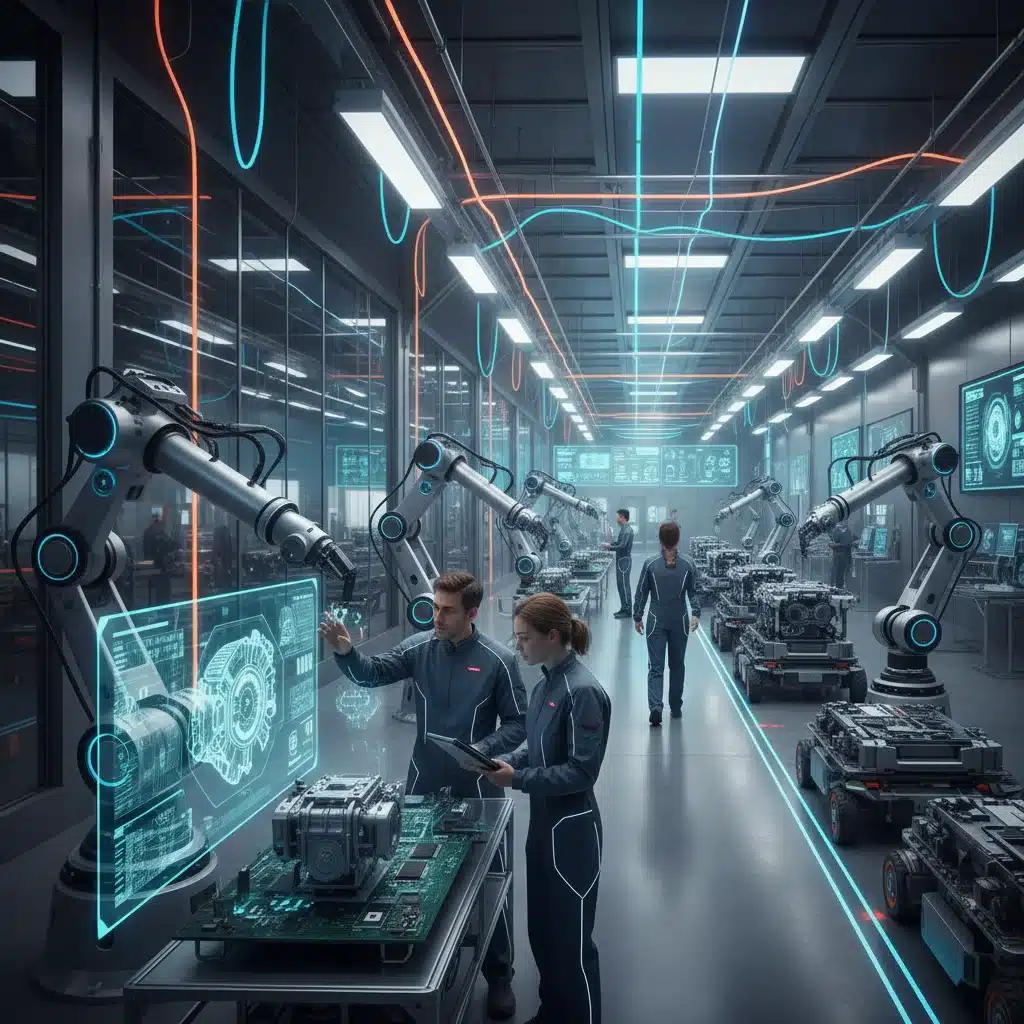
1. Advanced Manufacturing: From Assembly Lines to Intelligent Production
Manufacturing has long been a poster child for automation, with robots taking over repetitive and dangerous tasks. However, the next wave of automation in this sector is far more sophisticated, moving beyond simple task execution to intelligent, adaptive production systems. This evolution is giving rise to a new breed of human-machine collaboration roles that demand a deeper understanding of both mechanical and digital processes.
Emerging Roles in Advanced Manufacturing:
- Robot & Cobot Programmers/Trainers: These professionals will be responsible for programming, training, and fine-tuning collaborative robots (cobots) to work alongside human operators. Their role extends beyond initial setup to continuous optimization, ensuring seamless interaction and maximizing efficiency. They will need expertise in robotics, AI, machine learning, and human-robot interaction principles.
- Automation Systems Integrators: As factories become more complex, integrating disparate automated systems will be paramount. These specialists will design, implement, and maintain the overarching architecture that allows various robots, sensors, and AI platforms to communicate and operate cohesively. Strong systems thinking, networking, and software development skills will be essential.
- Predictive Maintenance Technicians: Leveraging AI and IoT sensors, these technicians will monitor machine health in real-time, predicting potential failures before they occur. Their work will involve interpreting complex data, performing proactive maintenance, and collaborating with AI systems to optimize maintenance schedules and minimize downtime.
- Human-Robot Interaction (HRI) Specialists: Focused on optimizing the interface between humans and robots, these specialists will ensure that collaborative workspaces are safe, efficient, and intuitive. They will design robot behaviors, user interfaces, and communication protocols to enhance teamwork and reduce cognitive load on human operators.
Impact on the Workforce:
The manufacturing sector will see a shift from manual labor to supervisory, analytical, and technical roles. Workers will need to acquire digital literacy, data analysis skills, and an understanding of automation technologies. The emphasis will be on problem-solving, critical thinking, and adaptability, as they work hand-in-hand with intelligent systems to produce higher quality goods with greater efficiency.
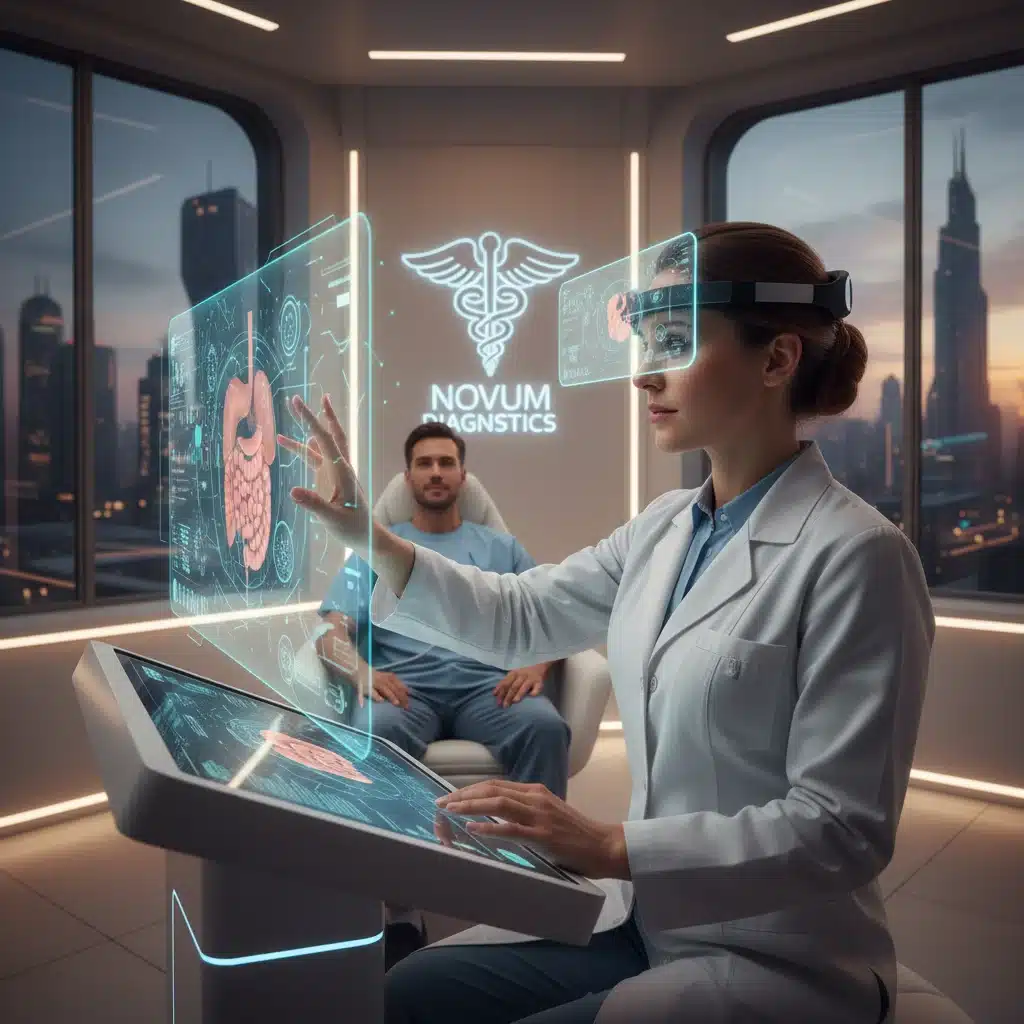
2. Healthcare: Augmenting Care with AI and Robotics
The healthcare industry is ripe for transformation through human-machine collaboration. While human empathy and critical judgment remain irreplaceable, automation and AI are poised to revolutionize diagnostics, surgery, patient monitoring, and administrative tasks, freeing up healthcare professionals to focus on direct patient care and complex decision-making.
Emerging Roles in Healthcare:
- AI-Assisted Diagnosticians: Physicians and radiologists will increasingly work with AI systems that can analyze medical images, patient data, and genomic information with unparalleled speed and accuracy. These roles will require clinicians who can interpret AI outputs, provide clinical context, and make final diagnostic decisions, effectively combining human intuition with machine precision.
- Robotics-Assisted Surgeons/Technicians: Surgical robots are already a reality, but by 2026, their use will be more widespread and sophisticated. Surgeons will operate these robots, while specialized technicians will be responsible for their setup, maintenance, and calibration. This demands a deep understanding of both surgical procedures and robotic mechanics.
- Telemedicine and Remote Monitoring Specialists: AI-powered platforms will enable more robust remote patient monitoring and telemedicine services. Professionals in these roles will manage virtual consultations, interpret data from wearable sensors, and coordinate care plans, often with the assistance of AI algorithms that flag potential issues or personalize health recommendations.
- Healthcare Data Analysts/Ethicists: The vast amounts of data generated by AI in healthcare will require specialists to analyze trends, identify patterns, and ensure ethical deployment of these technologies. These roles will combine data science expertise with a strong understanding of medical ethics and patient privacy regulations.
Impact on the Workforce:
Healthcare professionals will find their roles evolving to become more strategic and patient-centric. Routine tasks will be automated, allowing more time for complex cases, patient education, and emotional support. Continuous learning in digital health technologies and data literacy will be crucial for success. The human touch will become even more valuable when augmented by machine efficiency.
3. Logistics and Supply Chain Management: Intelligent Networks and Automated Deliveries
The global supply chain is a complex web, and automation is proving to be a game-changer in optimizing its efficiency, speed, and resilience. From automated warehouses to AI-driven route optimization and autonomous delivery systems, human-machine collaboration will redefine how goods move from production to consumption.
Emerging Roles in Logistics and Supply Chain:
- Autonomous Fleet Managers: As autonomous vehicles become more prevalent in logistics, these managers will oversee fleets of self-driving trucks, drones, and delivery robots. Their responsibilities will include route planning, predictive maintenance of autonomous units, regulatory compliance, and real-time problem-solving in collaboration with AI systems.
- Warehouse Automation Specialists: Modern warehouses are becoming highly automated, utilizing robots for picking, packing, and sorting. Specialists in this field will design, implement, and maintain these automated systems, ensuring optimal workflow and seamless integration with human operators.
- AI-Powered Supply Chain Optimizers: These professionals will use advanced AI and machine learning algorithms to predict demand, optimize inventory levels, identify potential disruptions, and streamline the entire supply chain. They will work closely with AI to make data-driven decisions that enhance efficiency and reduce costs.
- Last-Mile Delivery Coordinators (Human-Augmented): While autonomous vehicles handle much of the delivery, human coordinators will be essential for managing exceptions, handling complex customer interactions, and overseeing the final stages of delivery, often leveraging AI tools for real-time problem-solving and dynamic rerouting.
Impact on the Workforce:
The logistics sector will see a shift from physically demanding roles to more supervisory, analytical, and technical positions. Workers will need to adapt to managing automated systems, interpreting data, and making quick decisions based on AI insights. The focus will be on creating resilient, efficient, and transparent supply chains through smart human-machine collaboration.
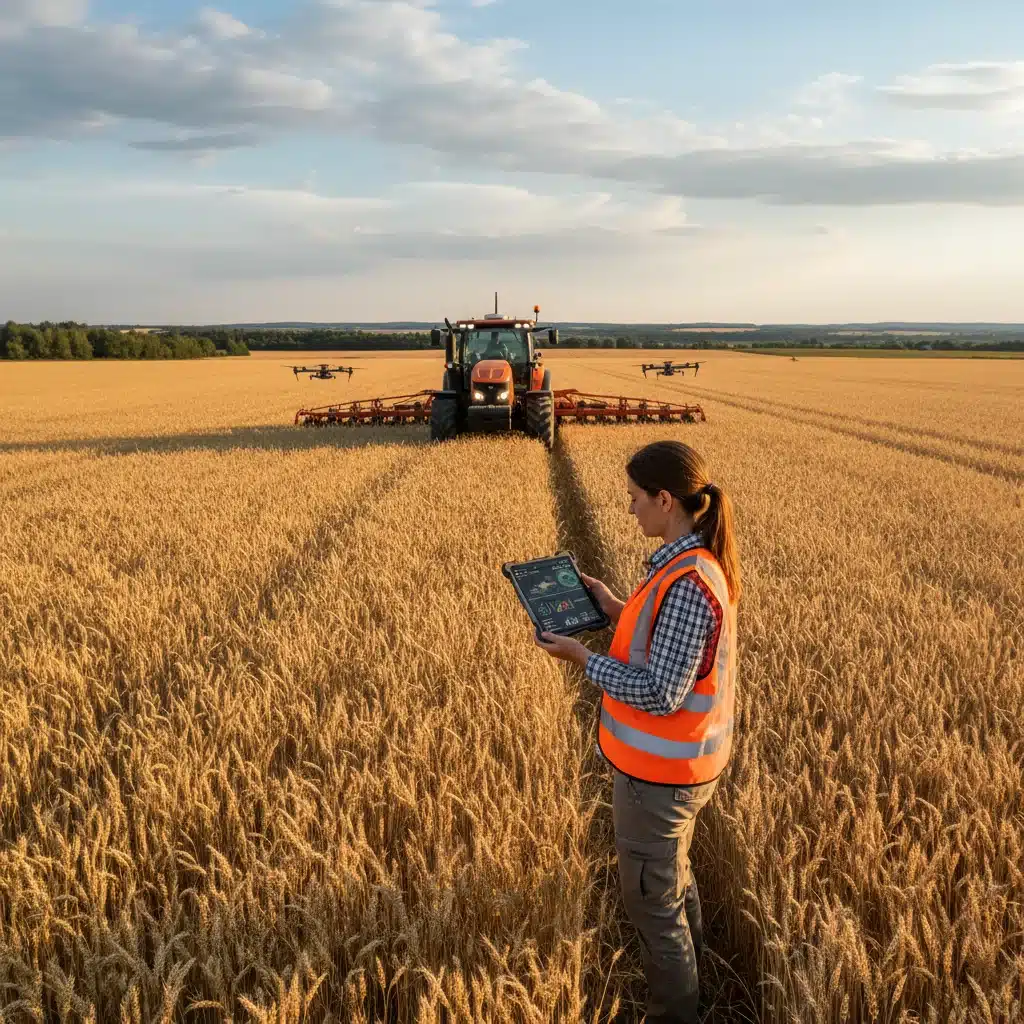
4. Agriculture: Precision Farming and Automated Crop Management
Agriculture, often seen as a traditional industry, is rapidly embracing automation and AI to address challenges like labor shortages, climate change, and the need for increased food production. Precision farming, autonomous machinery, and AI-driven crop management are leading to innovative human-machine collaboration roles that combine agricultural expertise with technological acumen.
Emerging Roles in Agriculture:
- Agricultural Robotics Operators/Technicians: These individuals will operate, maintain, and troubleshoot autonomous tractors, drones for crop monitoring, and robotic harvesters. They will need a blend of mechanical skills, agricultural knowledge, and proficiency in operating advanced robotic systems.
- Precision Agriculture Data Scientists: Utilizing data from sensors, drones, and satellite imagery, these scientists will employ AI to analyze soil health, crop growth, pest infestations, and water usage. They will work with farmers to translate these insights into actionable strategies for optimizing yields and resource allocation.
- AI-Powered Crop & Livestock Managers: Farmers and farm managers will increasingly rely on AI systems to monitor animal health, predict disease outbreaks, and optimize feeding schedules for livestock, or to precisely manage irrigation and fertilization for crops. These roles require a deep understanding of biology and agriculture, augmented by the ability to interpret and act on AI recommendations.
- Vertical Farming Automation Specialists: As vertical farms become more prevalent, specialists will be needed to design, implement, and manage the automated climate control, hydroponic systems, and robotic harvesting within these controlled environments. This is a highly interdisciplinary role requiring knowledge of engineering, plant science, and automation.
Impact on the Workforce:
Agricultural jobs will become more technical and data-driven. Farmers and farm workers will evolve into skilled operators and analysts, using technology to make more informed decisions and manage resources more efficiently. The integration of human-machine collaboration will lead to higher productivity and more sustainable farming practices.
5. Financial Services: Intelligent Automation and Personalized Client Experiences
The financial services industry is undergoing a significant transformation, with automation and AI streamlining back-office operations, enhancing fraud detection, and revolutionizing client interactions. The future will see more sophisticated human-machine collaboration, where financial professionals leverage AI to provide more personalized, efficient, and secure services.
Emerging Roles in Financial Services:
- AI-Augmented Financial Advisors: While human advisors remain crucial for complex financial planning and emotional guidance, AI will assist them by analyzing vast amounts of market data, predicting trends, and personalizing investment recommendations. Advisors will need to be adept at interpreting AI insights and communicating them effectively to clients.
- Robo-Advisor Oversight Specialists: For more automated investment platforms, human specialists will be needed to monitor the performance of robo-advisors, ensure regulatory compliance, and intervene in complex or unusual client situations that require human judgment.
- Fraud Detection & Cybersecurity Analysts (AI-Enhanced): AI is powerful in identifying anomalies and patterns indicative of fraud or cyber threats. Professionals in these roles will work with AI systems to investigate flagged activities, refine algorithms, and develop proactive security measures, combining human analytical skills with machine processing power.
- Automated Compliance Officers: Regulatory compliance is a massive undertaking in finance. AI can automate much of the monitoring and reporting. Compliance officers will oversee these automated systems, interpret complex regulations, and ensure that AI models are operating ethically and within legal boundaries.
Impact on the Workforce:
Financial professionals will find themselves moving away from routine data entry and analysis towards more strategic, client-facing, and problem-solving roles. Soft skills like communication, empathy, and critical thinking will become even more valuable, complemented by a strong understanding of financial AI tools and data analytics. The focus will be on leveraging human-machine collaboration to deliver superior client experiences and ensure robust financial security.
The Skills Revolution: Thriving in a Collaborative Future
As these industries embrace human-machine collaboration, the demand for a new set of skills will intensify. It’s no longer enough to be proficient in a single domain; interdisciplinary expertise will be key. Here are some of the critical skills for the workforce of 2026 and beyond:
- Digital Literacy & Data Fluency: The ability to understand, interpret, and work with data generated by automated systems and AI will be fundamental across all sectors. This includes basic coding, data visualization, and an understanding of machine learning principles.
- Critical Thinking & Problem Solving: While machines can process information, humans excel at complex problem-solving, creative thinking, and navigating ambiguous situations. These skills will be crucial for managing exceptions and innovating alongside AI.
- Adaptability & Lifelong Learning: The pace of technological change is accelerating. Workers must be willing and able to continuously learn new tools, technologies, and methodologies to remain relevant.
- Collaboration & Communication: The essence of human-machine collaboration is effective teamwork, not just with other humans, but also with intelligent systems. Clear communication, both human-to-human and human-to-machine (through interfaces and programming), will be vital.
- Ethical Reasoning & AI Governance: As AI systems become more autonomous and influential, understanding their ethical implications and contributing to their responsible development and deployment will be a critical skill, especially in fields like healthcare and finance.
- Interdisciplinary Thinking: The new roles often bridge traditional boundaries, requiring individuals who can connect concepts from engineering, computer science, psychology, and their specific industry domain.
Conclusion: Embracing the Collaborative Horizon
The vision of a future dominated by machines, devoid of human input, is a misconception. Instead, the rise of automation is ushering in an exciting era of human-machine collaboration, where the unique strengths of both humans and intelligent systems are harnessed to drive unprecedented progress. The five U.S. industries discussed – Advanced Manufacturing, Healthcare, Logistics and Supply Chain Management, Agriculture, and Financial Services – are merely a glimpse into the broader transformation underway.
By 2026, the roles emerging from this collaboration will not only be numerous but also more engaging and impactful, demanding a workforce that is adaptable, digitally fluent, and ethically conscious. For individuals, this means a continuous investment in skill development, focusing on areas where human capabilities complement machine efficiency. For businesses, it necessitates fostering a culture of innovation, providing training, and designing work environments that optimize this powerful synergy.
The future of work is not about fearing automation, but about embracing its potential to augment human capabilities. It’s about recognizing that the most powerful innovations will come from the intelligent partnership between humans and machines, creating a more productive, prosperous, and perhaps, even more human-centric world. The journey towards this collaborative horizon is already well underway, and those who prepare now will be the ones to lead the charge.
Author