US Education Adapting to Automation: Preparing for the 2026 Workforce
The landscape of work is undergoing a profound transformation, driven largely by the relentless march of automation and artificial intelligence. As we approach 2026, the urgency for the United States education system to adapt to these changes has never been greater. The question is no longer if automation will impact jobs, but how deeply, and more importantly, how effectively our educational institutions are preparing the next generation for this evolving reality. This article delves into the intricate ways US education is responding, offering insider knowledge and a critical analysis of its effectiveness in shaping the future workforce automation education paradigm.
The rise of automation presents both challenges and unparalleled opportunities. While concerns about job displacement are valid, the focus must shift towards job transformation and the emergence of entirely new roles. The skills required for these future jobs are fundamentally different from those traditionally emphasized. Rote memorization and repetitive tasks, once cornerstones of many curricula, are becoming increasingly obsolete. Instead, critical thinking, creativity, problem-solving, emotional intelligence, and digital literacy are becoming paramount. Understanding this shift is crucial for educators, policymakers, and students alike as they navigate the path to a resilient and adaptable workforce automation education system.
The Shifting Sands of the 2026 Workforce: What Automation Demands
Before examining educational responses, it’s vital to grasp the core demands of the automated workforce. Automation, in its essence, is about optimizing efficiency and performing tasks that are repetitive, dangerous, or require high precision. This frees up human workers to focus on higher-order cognitive functions, complex problem-solving, and tasks requiring uniquely human attributes. The World Economic Forum’s Future of Jobs Report consistently highlights a growing demand for skills such as analytical thinking, innovation, complex problem-solving, critical thinking, creativity, originality, leadership, and emotional intelligence. These are not merely buzzwords; they are the bedrock upon which a successful career in the automated future will be built.
Furthermore, digital fluency is no longer a niche skill but a universal requirement. This extends beyond basic computer literacy to encompass data analysis, understanding algorithms, cybersecurity awareness, and the ability to interact seamlessly with AI-powered tools. The 2026 workforce will demand individuals who are not just users of technology but also critical thinkers about its ethical implications, its potential, and its limitations. This intricate blend of technical prowess and human-centric skills defines the new frontier for workforce automation education.
The Skills Gap Widens: A Looming Challenge
One of the most pressing issues facing the US is the widening skills gap. Many current educational programs, particularly at the K-12 level, are still largely designed for an industrial-age economy. This creates a significant disconnect between the skills students acquire and those employers desperately need. The challenge is multi-faceted: it involves updating curricula, re-training educators, investing in new technologies, and fostering a culture of continuous learning. Without a concerted effort, this gap will continue to grow, leaving a substantial portion of the population ill-equipped for the jobs of tomorrow and hindering national economic competitiveness.
The impact of this gap is already being felt across various industries. Manufacturing, once thought to be completely taken over by robots, is now seeing a demand for skilled technicians who can program, maintain, and troubleshoot advanced robotic systems. Healthcare requires professionals who can leverage AI for diagnostics and personalized medicine. Even creative industries are finding new ways to integrate AI as a tool, not a replacement. Therefore, the ability to adapt and acquire new skills rapidly will be a defining characteristic of the successful worker in 2026 and beyond. This requires a proactive and dynamic approach to workforce automation education.
How US Education is Adapting: Strategies and Innovations
Recognizing these challenges, various segments of the US education system are beginning to implement significant changes. These adaptations range from curriculum overhauls to new pedagogical approaches and partnerships with industry. The goal is to cultivate a learning environment that is agile, future-focused, and capable of producing a generation of innovators and problem-solvers.
Emphasis on STEM and STEAM Education
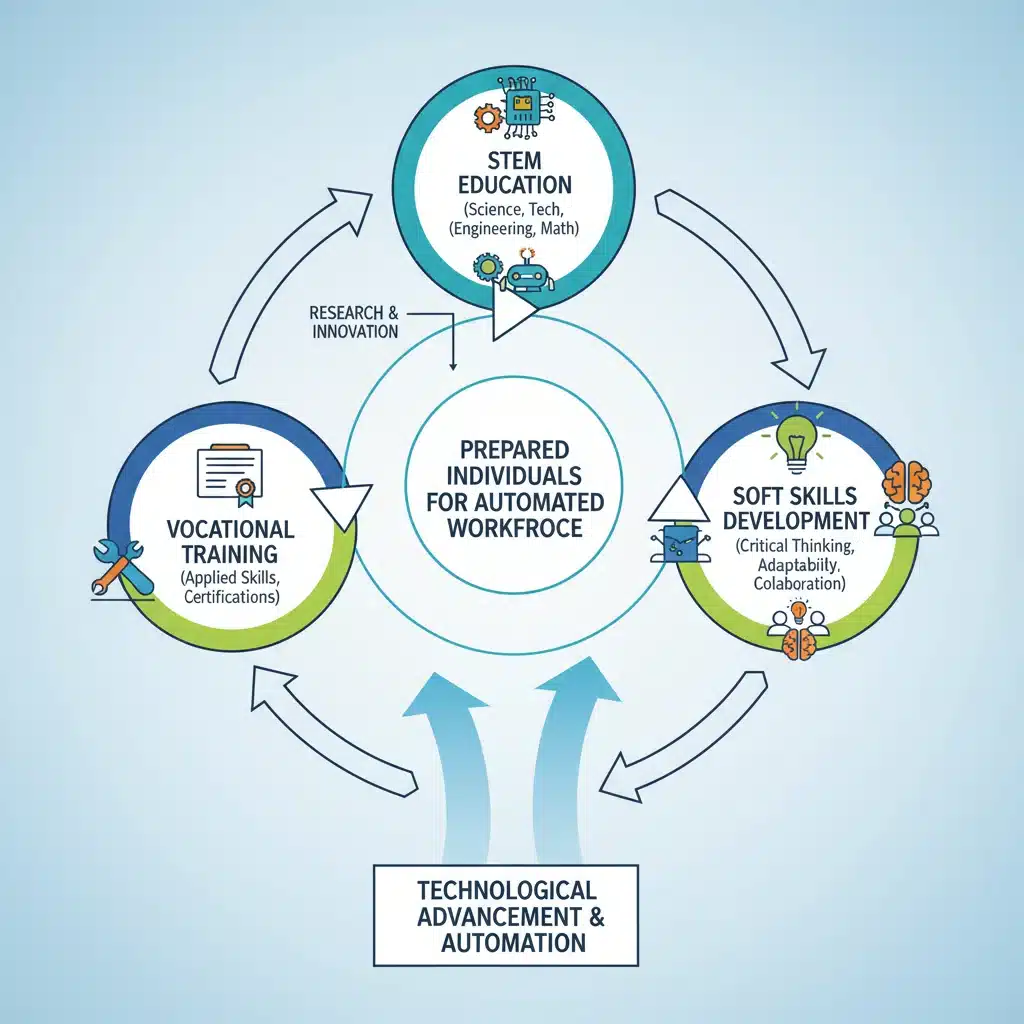
STEM (Science, Technology, Engineering, and Mathematics) education has been a priority for years, but its importance is amplified in an automated world. Beyond traditional STEM, there’s a growing movement towards STEAM, integrating ‘Arts’ to foster creativity, design thinking, and innovation – skills crucial for developing and applying new technologies ethically and effectively. Schools are introducing robotics clubs, coding bootcamps, and engineering challenges earlier in the curriculum, exposing students to computational thinking from a young age. This early exposure is vital for demystifying technology and building foundational skills for the workforce automation education pipeline.
Many states are revising their K-12 science and math standards to include more project-based learning and real-world applications, encouraging students to think like scientists and engineers rather than just memorizing facts. Higher education institutions are expanding their engineering, computer science, and data science programs, often with interdisciplinary approaches that combine technical skills with ethics, humanities, and business acumen. This holistic approach ensures that graduates are not just technically proficient but also well-rounded individuals capable of navigating complex societal challenges posed by automation.
Upskilling and Reskilling Initiatives for Adults
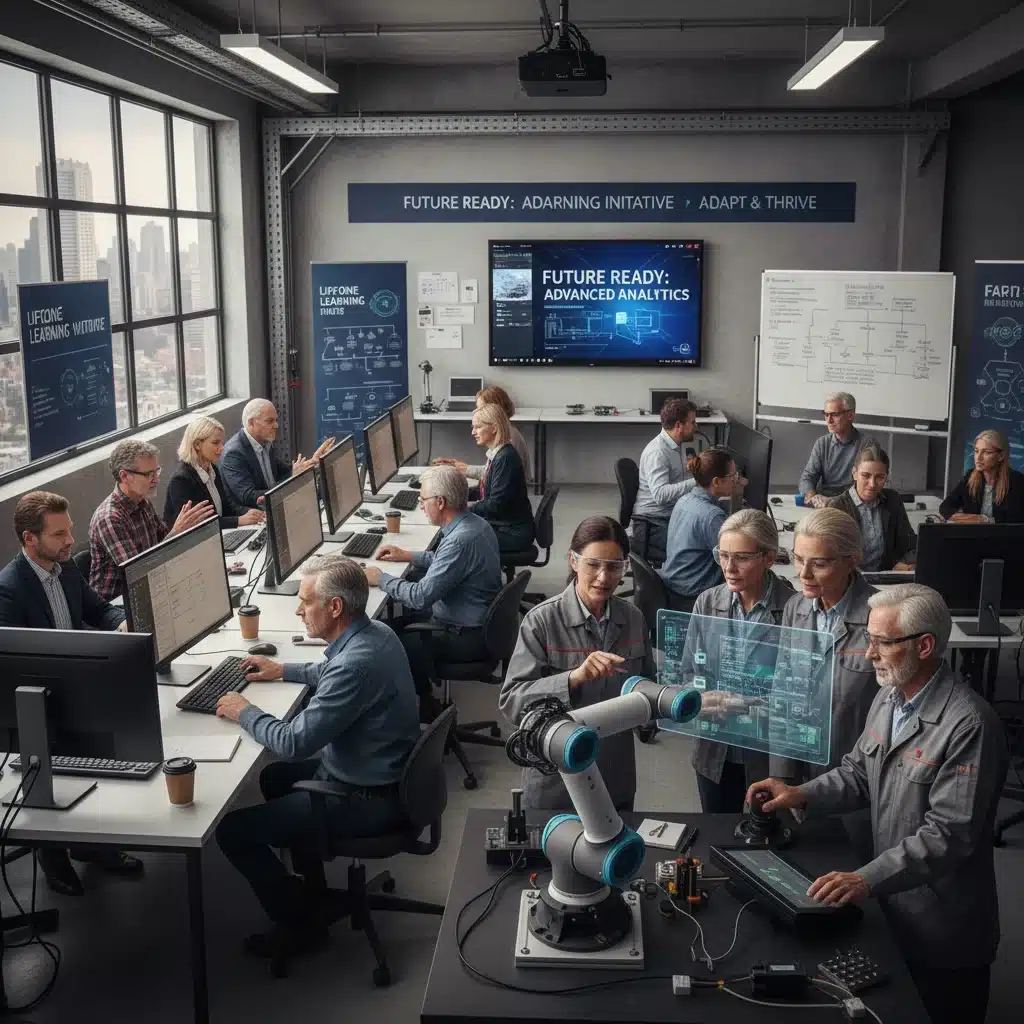
The challenge isn’t just for new entrants to the workforce. Millions of existing workers will need to upskill (learn new skills to improve in their current role) or reskill (learn entirely new skills for a different role) to remain relevant. Community colleges and vocational schools are at the forefront of this effort, offering flexible, short-term programs tailored to industry needs. These programs often focus on specific technical skills, such as advanced manufacturing, cybersecurity, cloud computing, and AI programming. Partnerships with local businesses are critical here, ensuring that the training provided directly addresses employer demand.
Online learning platforms and corporate training programs are also playing an increasingly vital role. Companies are investing in internal academies and sponsoring employees to pursue certifications and degrees that align with future business needs. Government initiatives, though still nascent, are exploring funding mechanisms and policy frameworks to support widespread adult learning and career transitions. This commitment to lifelong learning is a cornerstone of a successful workforce automation education strategy.
Focus on Soft Skills and Human-Centric Abilities
While technical skills are essential, the skills that automation cannot easily replicate – often referred to as ‘soft skills’ or ‘human skills’ – are gaining immense importance. These include communication, collaboration, critical thinking, creativity, adaptability, emotional intelligence, and ethical reasoning. Educational institutions are increasingly integrating these skills into their curricula, moving beyond traditional lecture-based learning to more interactive, project-based, and collaborative approaches.
For example, group projects, public speaking assignments, and ethics discussions are becoming more prevalent. The emphasis is on teaching students how to learn, how to adapt, and how to work effectively in diverse teams. These skills are not only crucial for navigating an automated workplace but also for fostering innovation and leading in an ever-changing environment. Cultivating these human-centric abilities ensures that individuals can leverage automation as a tool to augment their capabilities, rather than be replaced by it. This is a critical component of effective workforce automation education.
Technological Integration and Digital Literacy
Beyond teaching about technology, education itself is becoming more technologically integrated. This includes using AI-powered learning platforms for personalized education, virtual reality (VR) and augmented reality (AR) for immersive learning experiences, and data analytics to track student progress and tailor instruction. Digital literacy is no longer just about using computers; it’s about understanding the digital ecosystem, evaluating information critically, and being responsible digital citizens.
Schools are investing in better infrastructure, providing access to devices, and training teachers to effectively use these tools in the classroom. The goal is to ensure that students are not just consumers of technology but also creators and critical evaluators. This hands-on experience with emerging technologies prepares them directly for the tools they will encounter in the 2026 workforce. This practical integration defines a forward-thinking approach to workforce automation education.
Challenges and Criticisms: Is It Enough?
Despite these commendable efforts, the path to a fully adapted education system is fraught with challenges and criticisms. Many experts argue that the pace of change in education is still too slow compared to the rapid advancements in automation and AI.
Funding and Equity Issues
One of the most significant hurdles is funding. Implementing new technologies, developing updated curricula, and providing professional development for teachers all require substantial investment. Disparities in funding across school districts mean that students in underserved communities often lack access to the same resources and opportunities as their more affluent counterparts. This exacerbates existing inequalities and risks creating a two-tiered workforce: those prepared for the automated future and those left behind. Addressing these equity issues is paramount for any comprehensive workforce automation education strategy.
Teacher Training and Professional Development
Teachers are at the heart of the education system, but many lack the training and resources to effectively teach the skills needed for the automated workforce. Traditional teacher preparation programs often do not adequately cover topics like computational thinking, AI ethics, or advanced data literacy. Continuous professional development is essential, but it needs to be robust, ongoing, and accessible. Without a well-equipped teaching force, even the best curricula will fall short.
Curriculum Rigidity and Bureaucracy
The sheer size and bureaucratic nature of large educational systems can make rapid curriculum changes difficult. State and federal mandates, standardized testing, and established pedagogical practices can hinder innovation and agility. There’s a constant tension between maintaining academic rigor and adapting to the dynamic needs of the job market. Striking this balance is crucial for effective workforce automation education.
Measuring Success in an Evolving Landscape
How do we measure the success of educational reforms when the target (the future workforce) is constantly moving? Traditional metrics like standardized test scores may not adequately capture the development of critical thinking, creativity, or emotional intelligence. New assessment methods are needed that evaluate these complex skills, perhaps through project-based assessments, portfolios, or simulations. Defining and measuring success in this evolving landscape is a key challenge for workforce automation education.
Insider Knowledge: Perspectives from the Front Lines
To truly understand the state of US education’s adaptation, it’s insightful to hear from those directly involved. Conversations with educators, industry leaders, and policymakers reveal a complex picture of optimism mixed with apprehension.
Educator Insights: Passion and Practicalities
Many educators express a deep commitment to preparing their students for the future. “We see the writing on the wall,” one high school principal in California shared. “Our challenge is not just what to teach, but how to teach it. It’s about fostering curiosity and resilience, because the specific technologies will change, but the ability to learn will always be valuable.” Teachers are often self-funding professional development or forming informal networks to share best practices, highlighting a grassroots effort to bridge the gap. However, they also voice concerns about lack of centralized support, outdated resources, and the pressure to meet traditional academic benchmarks while simultaneously innovating for the future. The need for more integrated professional development focusing on AI literacy and practical application in various subjects is a recurring theme.
Industry Perspectives: A Call for Greater Collaboration
Industry leaders consistently emphasize the need for closer collaboration between businesses and educational institutions. “We can tell you exactly what skills we’re looking for, but often there’s a delay in seeing those reflected in new graduates,” noted a tech CEO in Texas. “We need more apprenticeships, more co-op programs, and more direct input into curriculum design, especially for vocational and community college programs.” There’s a strong desire for educational pathways that lead directly to certifications and industry-recognized credentials, rather than solely focusing on four-year degrees. This pragmatic approach from industry underscores the urgency for a more responsive workforce automation education system.
Policy Maker Viewpoints: Balancing Vision with Reality
Policymakers acknowledge the scale of the challenge. “The federal government is looking at incentivizing states to adopt future-ready curricula and invest in STEM,” a Department of Education official revealed. “However, education is largely a state and local issue, so our role is often to provide frameworks, research, and some funding. The real change happens at the local level.” There’s an ongoing debate about the balance between federal guidance and local autonomy, and how to ensure equitable access to quality education across all regions. The complexity of funding models and the political will to enact significant reforms remain critical factors in shaping the future of workforce automation education.
Comparative Analysis: Learning from Others
While the US grapples with its own challenges, examining how other nations are addressing the impact of automation on education can provide valuable insights. Countries like Finland, Singapore, and Germany are often cited for their innovative approaches.
Finland’s Holistic Approach
Finland, renowned for its high-performing education system, emphasizes a holistic approach that prioritizes critical thinking, problem-solving, and socio-emotional learning from an early age. They have a strong focus on teacher autonomy and continuous professional development, empowering educators to adapt their teaching methods. Their curriculum encourages interdisciplinary learning and real-world projects, naturally fostering many of the ‘soft skills’ crucial for an automated future. This integrated approach, rather than a piecemeal addition of tech courses, is a key takeaway for US workforce automation education efforts.
Singapore’s SkillsFuture Initiative
Singapore’s SkillsFuture initiative is a comprehensive national movement to provide all citizens with opportunities to develop their fullest potential throughout life, regardless of their starting point. It offers subsidies for a wide range of courses, from technical skills to soft skills, and encourages continuous learning. This proactive government-led strategy for upskilling and reskilling its entire population is a powerful model for addressing the adult learning component of workforce automation education in the US.
Germany’s Dual Vocational Training System
Germany’s well-established dual vocational training system, which combines classroom instruction with on-the-job training, provides a robust pipeline of skilled workers for its advanced manufacturing and engineering sectors. This system is highly adaptable to technological changes, as industry partners directly contribute to curriculum development and provide practical experience with cutting-edge technologies. The US could learn from this model by strengthening its vocational pathways and fostering deeper apprenticeships as part of its workforce automation education strategy.
The Path Forward: Recommendations for a Resilient Workforce
Preparing the US workforce for 2026 and beyond requires a multi-pronged, collaborative, and sustained effort. Here are key recommendations:
-
Invest in Early Childhood STEM/STEAM:
Introduce computational thinking, problem-solving, and design thinking from kindergarten. Make technology accessible and engaging, fostering curiosity rather than fear. This foundational learning is critical for building a robust workforce automation education system.
-
Prioritize Teacher Professional Development:
Provide ongoing, high-quality training for educators in AI literacy, data science, cybersecurity, and effective pedagogical approaches for teaching soft skills. Incentivize teachers to pursue advanced certifications in these areas.
-
Strengthen Industry-Education Partnerships:
Facilitate more apprenticeships, internships, and co-op programs. Establish industry advisory boards for schools and colleges to ensure curricula are aligned with current and future job market needs. This direct collaboration is vital for practical workforce automation education.
-
Expand and Modernize Vocational and Community College Programs:
Invest in state-of-the-art equipment and facilities. Offer flexible, stackable credentials and micro-degrees that allow workers to quickly acquire in-demand skills. These institutions are crucial for adult upskilling and reskilling.
-
Integrate Soft Skills Across All Curricula:
Move beyond discrete courses. Embed critical thinking, communication, collaboration, and ethical reasoning into every subject, from English to science. Emphasize project-based learning that requires teamwork and problem-solving.
-
Address Equity and Access:
Ensure that all students, regardless of socioeconomic background or geographic location, have access to high-quality technology, skilled teachers, and relevant educational opportunities. Close the digital divide.
-
Foster a Culture of Lifelong Learning:
Promote the idea that learning is a continuous process. Develop accessible and affordable pathways for adults to return to education, whether for upskilling, reskilling, or personal enrichment. This cultural shift is fundamental to a resilient workforce automation education strategy.
-
Reimagine Assessment:
Develop innovative assessment methods that measure complex skills like creativity, critical thinking, and adaptability, rather than solely relying on standardized tests. Portfolios, performance tasks, and simulations could play a larger role.
Conclusion: A Collective Responsibility
Preparing for the 2026 workforce in an era of rapid automation is not merely an educational challenge; it is a societal imperative. The US education system is making strides, but the pace and scale of adaptation need to accelerate. Success hinges on a collective responsibility involving policymakers, educators, industry leaders, parents, and students themselves. By embracing innovation, prioritizing critical human skills, fostering lifelong learning, and ensuring equitable access, the United States can transform the challenges of automation into opportunities, building a resilient, adaptable, and prosperous workforce for the future. The evolution of workforce automation education is not just about jobs; it’s about shaping the future of human potential.