Medicaid Expansion 2026: Eligibility, Deadlines & Future Changes

The landscape of healthcare access in the United States is constantly evolving, and understanding programs like Medicaid is crucial for millions of Americans. As we approach 2026, significant aspects of Medicaid Expansion 2026 are coming into sharper focus. This comprehensive guide aims to demystify the complexities surrounding eligibility criteria, critical enrollment deadlines, and the potential future changes that could impact your healthcare coverage. Whether you are currently enrolled, considering enrollment, or simply seeking to understand the implications of these policies, this article provides essential insights into Medicaid Expansion 2026.
Understanding the Foundation: What is Medicaid Expansion?
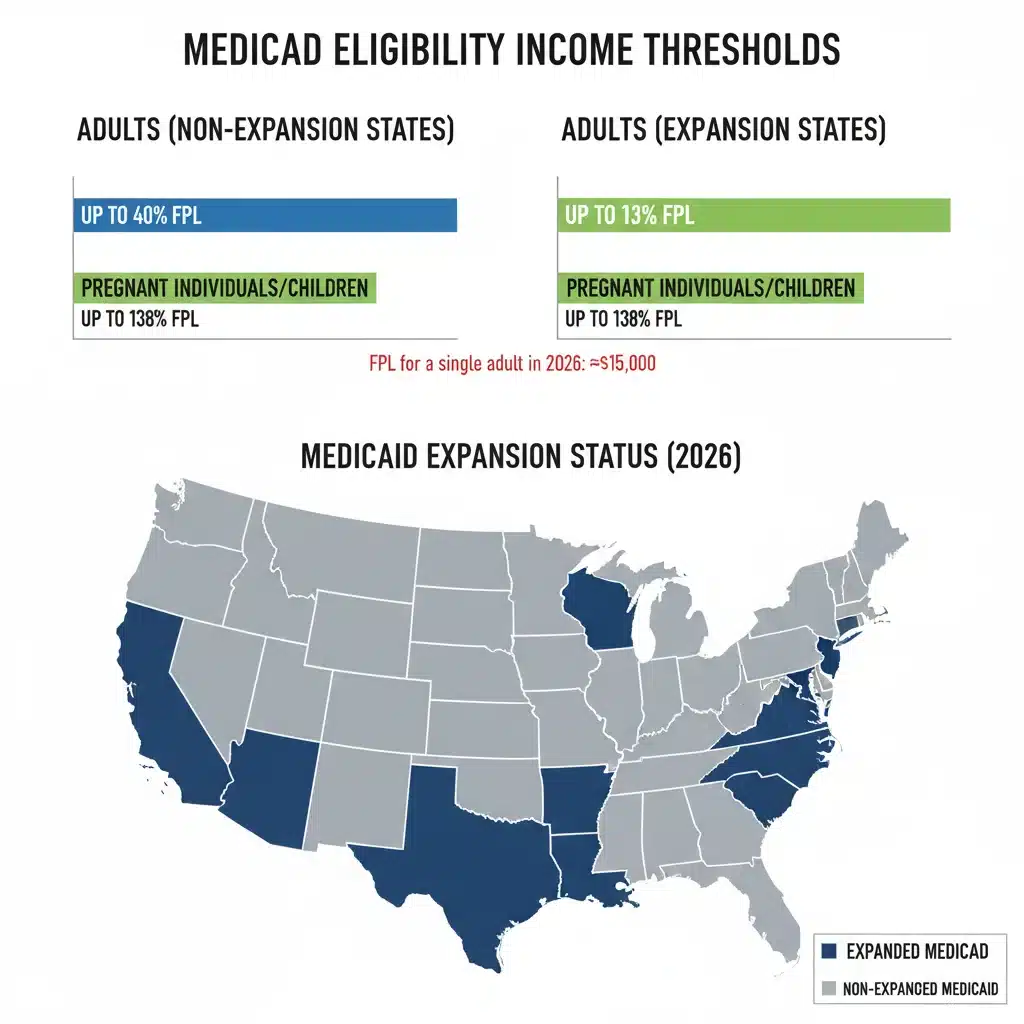
Before delving into the specifics of Medicaid Expansion 2026, it’s vital to grasp the foundational concept of Medicaid expansion itself. Originating from the Affordable Care Act (ACA) of 2010, Medicaid expansion aimed to extend health insurance coverage to more low-income adults. Historically, Medicaid primarily served specific vulnerable populations: pregnant women, children, the elderly, and individuals with disabilities. The ACA, however, offered states the option to expand their Medicaid programs to cover nearly all non-elderly adults with incomes up to 138% of the Federal Poverty Level (FPL).
This expansion was designed to fill a critical gap in healthcare coverage, particularly for individuals who earned too much to qualify for traditional Medicaid but too little to afford private insurance, even with ACA subsidies. The federal government initially covered 100% of the costs for newly eligible beneficiaries, gradually decreasing to 90% by 2020 and remaining at that level. This significant federal contribution has been a powerful incentive for states to adopt expansion.
As of today, a majority of states have opted for Medicaid expansion, profoundly impacting the health and financial well-being of millions. However, a handful of states have yet to expand, leaving many low-income residents without affordable healthcare options. The ongoing debate and potential shifts in these non-expansion states could be a key area of focus as we look towards Medicaid Expansion 2026.
Who is Eligible for Medicaid Expansion in 2026?
Eligibility for Medicaid Expansion 2026 largely hinges on two primary factors: your Modified Adjusted Gross Income (MAGI) and your state of residence. In states that have expanded Medicaid, non-elderly adults (generally those under 65) typically qualify if their household income is at or below 138% of the Federal Poverty Level (FPL). For context, the FPL is updated annually, so the exact dollar amount for 2026 will be released closer to that time, but it’s crucial to understand this percentage threshold.
It’s important to note that unlike traditional Medicaid, which often has asset tests or categorical requirements (e.g., being a parent, having a disability), Medicaid expansion primarily uses income as the determinant. This simplifies the application process for many and broadens the scope of who can receive coverage.
For individuals in states that have not expanded Medicaid, eligibility remains tied to the older, more restrictive guidelines. This often means only specific groups qualify, and income thresholds are significantly lower, sometimes well below the FPL. This creates what is known as the ‘coverage gap,’ where individuals earn too much for traditional Medicaid but too little to qualify for premium tax credits on the ACA marketplace. The status of these non-expansion states in 2026 will be a critical factor in understanding national healthcare access.
Furthermore, certain life changes can affect your eligibility. A change in household income, family size, or even state of residence can impact your Medicaid status. It’s always advisable to report any significant changes to your state Medicaid agency promptly to ensure continuous coverage or to understand new eligibility requirements for Medicaid Expansion 2026.
Key Enrollment Deadlines and How to Apply for Medicaid in 2026
Unlike marketplace insurance plans, which have specific open enrollment periods, Medicaid enrollment is generally open year-round for those who meet the eligibility criteria. This flexibility is a significant advantage, as it allows individuals to apply for coverage whenever their circumstances change or they become eligible. However, while there isn’t a strict ‘open enrollment’ for Medicaid in the same way there is for the ACA marketplace, understanding the application process and the importance of timely submission is paramount, especially when considering Medicaid Expansion 2026.
The Application Process: Step-by-Step
- Gather Your Information: Before you begin, collect necessary documents. This typically includes proof of income (pay stubs, tax returns), proof of residency, social security numbers for all household members, and information about any existing health insurance.
- Choose Your Application Method: You can generally apply for Medicaid in several ways:
- Online: Most states offer an online application portal through their Medicaid agency website or via the HealthCare.gov website. This is often the quickest and most convenient method.
- By Mail: You can download an application form from your state’s Medicaid website, fill it out, and mail it in.
- In Person: Visit your local Medicaid office or a designated enrollment center.
- By Phone: Some states allow you to apply over the phone.
- Submit Your Application: Carefully complete all sections of the application. Incomplete applications can lead to delays.
- Follow Up: After submission, you may be contacted for additional information or clarification. Respond promptly to any requests to expedite the process.
- Receive a Decision: Your state Medicaid agency will review your application and notify you of their decision. If approved, you’ll receive information about your coverage start date and how to use your benefits.
Important Considerations for Medicaid Expansion 2026:
- Retroactive Coverage: In many states, Medicaid can cover medical expenses incurred up to 3 months before the application date, provided you were eligible during that period. This can be a significant benefit for unexpected medical bills.
- Renewals: Medicaid eligibility is typically reviewed annually. You will receive a renewal notice, usually by mail, prompting you to update your information. It’s crucial to complete this process to avoid a lapse in coverage.
- Changes in Circumstances: If your income or household size changes significantly, report these changes to your state Medicaid agency immediately. This could impact your eligibility or the type of coverage you receive.
While there isn’t a specific ‘deadline’ to apply for Medicaid in 2026, applying as soon as you believe you’re eligible is always the best course of action to ensure you receive timely access to necessary healthcare services.
Anticipated Changes and Policy Shifts Affecting Medicaid in 2026
The political and economic climate constantly influences healthcare policy, and Medicaid Expansion 2026 is unlikely to be immune to these forces. Several factors could lead to significant changes or continued stability in the program.
Potential Legislative Actions:
Future legislative actions at both federal and state levels could alter the scope and funding of Medicaid. While the Affordable Care Act’s framework for expansion has remained largely intact, there are always discussions about potential modifications, such as block grants, per capita caps, or changes to federal matching rates. Any of these could significantly impact states’ willingness or ability to continue or adopt expansion.
State-Level Decisions:
The decisions of non-expansion states remain a critical variable. Political shifts or new financial incentives could encourage more states to expand their Medicaid programs by 2026, thereby extending coverage to millions more individuals. Conversely, states that have expanded could face pressure to introduce new restrictions or requirements, though the federal government’s 90% match for expansion populations makes such moves financially challenging for states.
Post-Public Health Emergency (PHE) Dynamics:
The COVID-19 Public Health Emergency brought about continuous Medicaid enrollment, preventing states from disenrolling most beneficiaries during the pandemic. As the PHE unwinds and states redetermine eligibility for millions, there could be significant shifts in enrollment numbers. While this process will largely conclude before 2026, its effects on state Medicaid budgets and administrative capacities could still be felt, potentially influencing future policy decisions regarding Medicaid Expansion 2026.
Economic Factors:
Economic downturns or upturns can also play a role. During recessions, more people may become eligible for Medicaid, increasing enrollment and state costs. Conversely, a strong economy might see fewer people needing Medicaid, though the fundamental eligibility criteria for expansion populations would remain.
Staying informed about these potential policy shifts is crucial for anyone relying on or interested in the future of Medicaid Expansion 2026. Reliable sources like the Kaiser Family Foundation, the National Conference of State Legislatures, and official government websites (Medicaid.gov) are excellent resources for tracking these developments.
The Impact of Medicaid Expansion 2026 on Healthcare Access and Outcomes
The impact of Medicaid expansion extends far beyond simply increasing the number of insured individuals. It has profound effects on healthcare access, health outcomes, and even the financial stability of healthcare providers and states.
Improved Access to Care:
For those newly eligible under expansion, access to primary care, preventive services, specialty care, and prescription medications dramatically improves. This means individuals are more likely to receive timely diagnoses, manage chronic conditions effectively, and avoid preventable hospitalizations. Reduced emergency room visits for non-emergent conditions are a common finding in expansion states, as people gain access to regular primary care providers.
Better Health Outcomes:
Studies have consistently shown that Medicaid expansion leads to better health outcomes. This includes reductions in mortality rates, improvements in self-reported health, and better management of chronic diseases like diabetes and hypertension. Early detection of cancers and other serious conditions also becomes more prevalent, leading to more effective treatment.
Financial Protection:
Medicaid expansion provides critical financial protection for low-income individuals and families. Without insurance, a single medical emergency can lead to devastating medical debt and even bankruptcy. Medicaid coverage alleviates this burden, allowing individuals to seek necessary care without fear of insurmountable costs.
Economic Benefits for States and Providers:
While states bear a portion of the cost, the federal match (90%) for expansion populations brings significant federal dollars into state economies. This not only supports healthcare systems but also creates jobs. Hospitals, particularly rural and safety-net hospitals, benefit from reduced uncompensated care costs, which can improve their financial viability and ability to serve their communities. The overall economic stimulus from these federal funds is a compelling argument for expansion.
As we look towards Medicaid Expansion 2026, these positive impacts are expected to continue in expansion states and could extend to new states if they opt to expand. The ongoing evaluation of these benefits will undoubtedly play a role in future policy discussions.

Challenges and Considerations for Medicaid Expansion 2026
While Medicaid expansion offers numerous benefits, it also presents challenges and ongoing considerations that policymakers and beneficiaries alike must address as we approach 2026.
Funding and State Budgets:
Despite the generous federal matching rate, states are still responsible for 10% of the costs for the expansion population. This can be a significant expenditure, particularly for states with large low-income populations. Debates often arise about how these costs impact other state priorities and whether the economic benefits truly outweigh the state’s share of the financial burden. The stability of federal funding for Medicaid Expansion 2026 will be a continuous point of discussion.
Work Requirements and Other Restrictions:
Some states have sought to implement additional requirements for Medicaid beneficiaries, such as work requirements, premium contributions, or healthy behavior incentives. While many of these have faced legal challenges and have been largely unsuccessful, the political will to introduce such measures may persist. The federal government’s stance on approving these waivers could evolve, potentially impacting eligibility and access for some individuals under Medicaid Expansion 2026.
Provider Capacity and Access:
An increase in insured individuals requires a corresponding increase in healthcare provider capacity. In some areas, particularly rural regions, there may be a shortage of primary care physicians, specialists, or mental health professionals. While Medicaid expansion improves financial access, it doesn’t automatically solve issues of physical access to care. States will continue to grapple with strategies to bolster their healthcare workforce to meet the demands of an expanded insured population.
Administrative Burden:
Managing a larger Medicaid program can place a significant administrative burden on state agencies. Processing applications, conducting renewals, and managing provider networks require robust systems and staffing. Any changes to federal reporting requirements or eligibility criteria for Medicaid Expansion 2026 could further strain these administrative resources.
Public Awareness and Enrollment Outreach:
Despite the existence of Medicaid expansion, many eligible individuals may not be aware of their options or how to apply. Ongoing public awareness campaigns and robust enrollment outreach efforts are essential to ensure that those who qualify for Medicaid Expansion 2026 can successfully access coverage. This is particularly true in non-expansion states where misinformation or lack of information can be prevalent.
Addressing these challenges effectively will be key to maximizing the benefits of Medicaid expansion and ensuring that the program continues to serve its intended purpose of providing essential healthcare to vulnerable populations.
Resources and Where to Find More Information on Medicaid Expansion 2026
Navigating the intricacies of Medicaid can be daunting, but numerous resources are available to help you understand your options and apply for coverage. As we move closer to Medicaid Expansion 2026, staying informed through reliable channels is more important than ever.
Official Government Websites:
- Medicaid.gov: This is the official federal government website for Medicaid and the Children’s Health Insurance Program (CHIP). It offers general information, links to state-specific programs, and updates on federal policy. It’s an excellent starting point for understanding the overall program.
- HealthCare.gov: While primarily known for the ACA marketplace, HealthCare.gov also serves as a portal for Medicaid applications. When you apply for health coverage through this site, it will determine if you qualify for Medicaid or CHIP based on your income and state of residence.
- Your State’s Medicaid Website: Each state has its own Medicaid agency and website. These sites provide detailed information on specific eligibility criteria, application procedures, and benefits available in your state. A quick search for “[Your State Name] Medicaid” will usually lead you to the official site.
Non-Profit Organizations and Advocacy Groups:
- Kaiser Family Foundation (KFF): KFF is a non-profit organization that provides in-depth analysis and data on health policy issues, including Medicaid. Their website is an invaluable resource for understanding the latest trends, state-by-state data, and policy debates surrounding Medicaid expansion.
- Families USA: This national non-profit organization is dedicated to achieving high-quality, affordable healthcare for all. They offer resources and advocate for policies that expand access to coverage, including Medicaid.
- Local Community Health Centers: Many Federally Qualified Health Centers (FQHCs) and other community health organizations offer assistance with Medicaid enrollment and provide primary care services regardless of your ability to pay. They can often help you understand eligibility and navigate the application process.
Assistance Programs:
- Navigators and Assisters: Through the ACA, trained navigators and assisters are available in many communities to provide free, unbiased help with understanding health insurance options, including Medicaid. You can find local help through HealthCare.gov.
- Legal Aid Societies: If you encounter issues with your Medicaid application or coverage, local legal aid societies may be able to provide assistance or direct you to appropriate resources.
Remember, information regarding Medicaid Expansion 2026 can be dynamic. Regularly checking these resources will help you stay up-to-date on any changes that may affect your eligibility or benefits.
The Future Outlook for Medicaid Expansion 2026
As we peer into 2026, the future of Medicaid expansion appears to be a blend of established policy and potential evolution. While the core structure established by the ACA is likely to remain, several factors could shape its trajectory.
Continued State Adoption:
There is an ongoing possibility that more of the remaining non-expansion states may choose to expand Medicaid. Factors such as ballot initiatives, changing political landscapes, and increasing financial incentives could drive these decisions. If additional states expand, it would significantly reduce the ‘coverage gap’ and bring millions more under the umbrella of affordable healthcare, solidifying the reach of Medicaid Expansion 2026.
Focus on Health Equity:
A growing emphasis on health equity and addressing disparities in healthcare access could also influence Medicaid policy. This might lead to initiatives aimed at improving outreach to underserved communities, enhancing benefits for specific populations, or addressing social determinants of health through Medicaid programs. The role of Medicaid Expansion 2026 in achieving greater health equity will likely be a central theme.
Integration with Other Healthcare Initiatives:
Medicaid could see further integration with other healthcare initiatives, such as efforts to improve behavioral health services, long-term care, and addressing the opioid crisis. As healthcare systems strive for more coordinated care, Medicaid’s role as a foundational safety net program will continue to be crucial in these broader efforts.
Technological Advancements:
Technological advancements, including telehealth and digital health tools, are likely to become even more embedded in Medicaid service delivery. This could improve access to care, particularly in rural areas, and enhance efficiency in program administration. Medicaid Expansion 2026 will need to adapt to and leverage these innovations to best serve beneficiaries.
Political and Economic Stability:
Ultimately, the stability of Medicaid Expansion 2026 will be influenced by the broader political and economic environment. A stable policy environment with consistent federal support will allow states to plan and execute their Medicaid programs more effectively. Economic fluctuations, on the other hand, could put pressure on state budgets and necessitate careful resource management.
In conclusion, while the core tenets of Medicaid expansion are expected to endure, its future is dynamic. Beneficiaries, healthcare providers, and policymakers will need to remain vigilant and adaptable to ensure that the program continues to meet the healthcare needs of low-income Americans effectively.
Conclusion: Preparing for Medicaid Expansion 2026
The journey through the intricacies of Medicaid Expansion 2026 reveals a program that is both a cornerstone of American healthcare and a subject of continuous evolution. For millions of low-income adults, it represents a vital pathway to affordable health insurance, offering access to essential medical services that might otherwise be out of reach. Understanding the eligibility criteria, knowing how and when to apply, and staying informed about potential policy shifts are not just administrative tasks; they are crucial steps toward securing personal health and financial well-being.
As we’ve explored, the expansion has significantly improved healthcare access and outcomes in participating states, reducing uncompensated care and providing critical financial protection. However, challenges such as funding debates, provider capacity, and the persistent ‘coverage gap’ in non-expansion states continue to shape its landscape. The ongoing process of redeterminations post-Public Health Emergency also underscores the dynamic nature of Medicaid enrollment and the importance of proactive engagement from beneficiaries.
Looking ahead to Medicaid Expansion 2026, the program’s future will likely be influenced by legislative actions, state-level decisions, economic conditions, and a growing emphasis on health equity and technological integration. For individuals, this means a continued need to utilize official government resources, non-profit organizations, and community assistance programs to navigate their options effectively.
Ultimately, Medicaid expansion is more than just a government program; it is a critical component of the nation’s health infrastructure, striving to ensure that essential healthcare is a right, not a privilege. By staying informed and engaged, individuals can empower themselves to make the most of the opportunities provided by Medicaid Expansion 2026 and contribute to a healthier future for all.
Author