
Understanding the 2026 Medicare Part B Premium Changes: What You’ll Pay Each Month (RECENT UPDATES)
As we move closer to 2026, millions of Americans relying on Medicare for their healthcare needs are beginning to wonder about potential adjustments to their monthly premiums. Specifically, understanding the Medicare Part B premiums for 2026 is crucial for effective financial planning and ensuring seamless access to essential medical services. Medicare Part B covers medically necessary services like doctors’ visits, outpatient care, durable medical equipment, and some preventive services. The cost of these premiums is a significant component of many retirees’ budgets, and any changes can have a substantial impact.
This comprehensive guide aims to shed light on the anticipated 2026 Medicare Part B premiums, offering insights into what factors drive these costs, how they are calculated, and what recent updates might influence your monthly payments. We’ll delve into the intricacies of Medicare financing, the role of federal projections, and the impact of broader economic and healthcare trends. By the end of this article, you will have a clearer picture of what to expect and how to prepare for the upcoming changes.
What Drives Medicare Part B Premiums Annually?
The determination of Medicare Part B premiums is a complex process influenced by several key factors. Understanding these elements is essential to grasp why premiums fluctuate year after year. The Centers for Medicare & Medicaid Services (CMS) is responsible for setting these amounts, typically announcing them in the fall for the following year.
Healthcare Spending Trends
One of the primary drivers is the overall spending on healthcare services covered by Part B. This includes the cost of physician services, outpatient hospital care, and medical equipment. Advances in medical technology, new drug therapies, and the increasing utilization of healthcare services can all contribute to rising expenditures, which in turn can push Medicare Part B premiums higher.
Inflation and Economic Factors
Broader economic conditions, particularly inflation, play a significant role. When the cost of living increases, so does the cost of providing healthcare. Inflation affects everything from the wages of healthcare professionals to the price of medical supplies and administrative costs. These increases are often reflected in the premiums beneficiaries pay.
Trust Fund Projections
Medicare Part B is financed through a combination of beneficiary premiums and general revenue from the federal government. The Medicare Trustees analyze the financial health of the program, including projections for the Supplementary Medical Insurance (SMI) Trust Fund (which covers Part B and Part D). Their annual reports provide crucial data that informs CMS’s premium-setting decisions. If the trust fund is projected to face financial challenges, premiums may need to be adjusted to ensure the program’s solvency.
“Hold Harmless” Provision
A critical consideration for many beneficiaries is the “hold harmless” provision. This provision protects about two-thirds of Medicare beneficiaries from seeing their Part B premium increase by more than the dollar increase in their Social Security benefits from one year to the next. This prevents a situation where a premium increase could reduce a beneficiary’s net Social Security payment. However, it’s important to note that this provision does not apply to all beneficiaries, particularly those who are new to Medicare, those who don’t receive Social Security benefits, or those whose income triggers Income-Related Monthly Adjustment Amounts (IRMAA).
How Are 2026 Medicare Part B Premiums Calculated?
The calculation of Medicare Part B premiums involves a multi-step process that considers various factors, from standard base rates to individual income levels. For 2026, the methodology is expected to remain consistent with previous years, but the specific figures will be adjusted based on the economic and healthcare landscape.
Standard Monthly Premium
The majority of Medicare beneficiaries pay a standard monthly premium for Part B. This base amount is determined by CMS based on the projected costs of the Part B program and the need to ensure the program remains financially sound. The standard premium covers approximately 25% of the average per capita cost of Part B benefits, with general revenues covering the remaining 75%.
Income-Related Monthly Adjustment Amount (IRMAA)
For higher-income beneficiaries, an additional amount is added to the standard premium. This is known as the Income-Related Monthly Adjustment Amount, or IRMAA. IRMAA affects individuals with modified adjusted gross income (MAGI) above certain thresholds. These thresholds are typically adjusted annually for inflation.
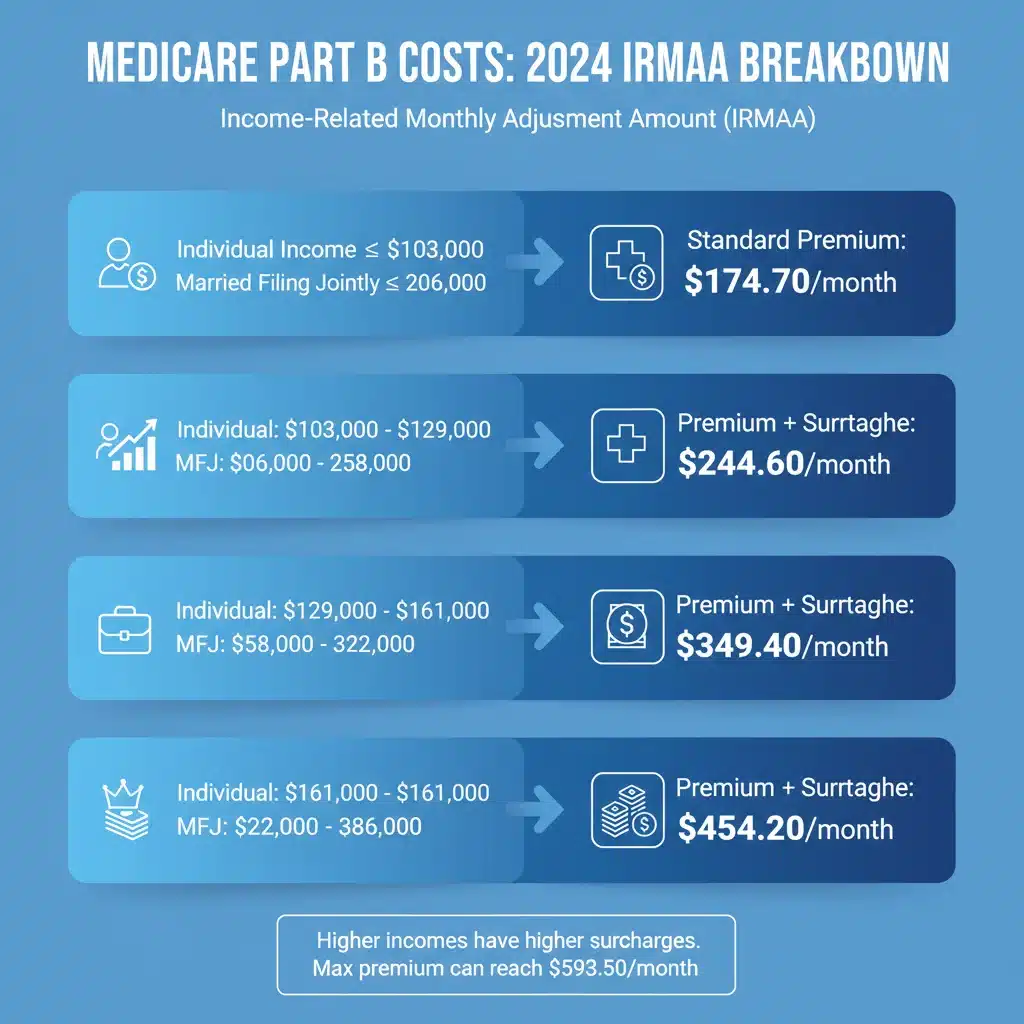
For 2026, while the exact thresholds are yet to be announced, they will likely follow a similar tiered structure to previous years. For instance, in past years, individuals earning above a certain MAGI (e.g., $103,000 for an individual or $206,000 for a married couple filing jointly) would pay higher premiums. The higher your income, the larger your IRMAA surcharge. This mechanism ensures that those with greater financial capacity contribute more to the Medicare program.
Recent Updates and Projections for 2026
While official figures for 2026 Medicare Part B premiums will not be released until late 2025, we can look at current trends and expert projections to anticipate potential changes. In recent years, Part B premiums have seen moderate increases, often reflecting the rising cost of healthcare and adjustments to the program’s financial outlook.
One significant factor that could influence 2026 premiums is the ongoing impact of new medical technologies and prescription drugs. While these innovations improve patient outcomes, they often come with higher price tags, which can ripple through the entire healthcare system and affect Part B costs. Additionally, the broader economic recovery and inflation rates will be closely watched. If inflation remains elevated, it could put upward pressure on premiums.
Another area of focus is the utilization of services. Post-pandemic healthcare patterns, including deferred care and the increased use of telehealth, could also play a role in the overall spending trends that inform premium calculations. CMS continually monitors these trends to ensure that premiums are set at a level that is both fair to beneficiaries and sustainable for the program.
Impact of IRMAA on Your 2026 Medicare Part B Premiums
The Income-Related Monthly Adjustment Amount (IRMAA) is a critical component of Medicare Part B premiums for a substantial number of beneficiaries. It’s not just a small surcharge; for some, it can significantly increase their monthly outlay. Understanding how IRMAA works and how it might affect you in 2026 is vital for accurate financial planning.
How IRMAA is Determined
Your IRMAA for 2026 will be based on your modified adjusted gross income (MAGI) from two years prior. This means that your 2024 tax return will be used to determine your 2026 IRMAA. MAGI includes your adjusted gross income plus any tax-exempt interest income. It’s important to keep this two-year look-back period in mind, as significant changes in your income (e.g., retirement, sale of a property) in 2025 could still impact your 2027 premiums, even if your current income is lower.
IRMAA Tiers for 2026 (Projected)
While the exact income thresholds for 2026 are not yet available, they are typically adjusted for inflation each year. We can anticipate a similar tiered structure to previous years. For example, in 2024, there were five IRMAA tiers above the standard premium level. The higher your MAGI, the higher the percentage of the total Part B cost you are responsible for, ranging from 35% to 85% of the cost, compared to the standard 25%.
It is crucial for beneficiaries approaching Medicare age or those experiencing significant income changes to monitor their MAGI. Proactive tax planning can sometimes help manage your MAGI to potentially avoid higher IRMAA surcharges. Consulting with a financial advisor or tax professional specializing in retirement planning can provide tailored strategies.
Strategies to Manage Your Medicare Part B Costs
Even with potential increases in Medicare Part B premiums, there are several strategies beneficiaries can employ to manage their healthcare costs effectively. Proactive planning and awareness can make a significant difference in your annual healthcare budget.
Reviewing Your Income Annually
Since IRMAA is based on your income from two years prior, it’s essential to review your income annually. If you’ve had a significant life-changing event that reduced your income (e.g., retirement, divorce, death of a spouse, work stoppage), you may be able to appeal your IRMAA determination. You would need to contact the Social Security Administration (SSA) and provide evidence of the qualifying event and your reduced income for the current year. This can potentially lower your Medicare Part B premiums.
Considering Medicare Advantage Plans (Part C)
Medicare Advantage plans, offered by private insurance companies approved by Medicare, must cover all the benefits of Original Medicare (Part A and Part B). Many Medicare Advantage plans also offer additional benefits, such as prescription drug coverage (Part D), vision, dental, and hearing. Some plans may even have $0 monthly premiums beyond your standard Part B premium. While you still pay your Part B premium, a Medicare Advantage plan might help consolidate your costs and provide additional benefits, potentially offering better value depending on your needs.
Exploring Medicare Supplement (Medigap) Plans
Medigap policies work differently. They help cover some of the out-of-pocket costs that Original Medicare doesn’t, such as deductibles, copayments, and coinsurance. While you still pay your Medicare Part B premiums and a separate premium for your Medigap policy, these plans can provide predictable out-of-pocket expenses, which can be invaluable for budgeting, especially if you anticipate frequent healthcare needs.
Utilizing Preventive Services
Medicare Part B covers a wide range of preventive services, often at no additional cost. Taking advantage of these services, such as annual wellness visits, screenings for various conditions, and vaccinations, can help you stay healthy and potentially avoid more costly medical interventions down the line. Proactive health management is one of the best ways to control long-term healthcare expenses.
The Role of Government and Policy in Medicare Part B Premiums
The setting of Medicare Part B premiums is not solely a financial calculation; it is also influenced by government policy, legislative actions, and the broader political landscape. Understanding these influences provides a more complete picture of why premiums change.
Congressional Oversight and Legislation
While CMS sets the annual premiums, Congress has oversight of the Medicare program and can pass legislation that directly or indirectly impacts Part B costs. For example, laws related to drug pricing, healthcare provider reimbursement, or the solvency of the trust funds can all have ripple effects on premiums. Any significant healthcare reform discussions in the lead-up to 2026 could therefore be relevant.
Presidential Administrations’ Priorities
The priorities of the current presidential administration can also influence Medicare policy. Administrations may focus on cost containment, expanding benefits, or improving access to care, all of which can have implications for how Medicare Part B premiums are structured and calculated. These influences are often subtle but can shape the direction of the program over time.
Social Security Administration (SSA) Involvement
The SSA plays a critical role in the administration of Medicare Part B, particularly regarding premium collection and the application of the “hold harmless” provision and IRMAA. Most beneficiaries have their Part B premiums deducted directly from their Social Security benefits. The SSA also handles appeals for IRMAA determinations, making them a key point of contact for beneficiaries with income-related premium concerns.
Preparing for 2026: Key Takeaways and Actionable Steps
As 2026 approaches, staying informed and taking proactive steps can help you navigate the changes to your Medicare Part B premiums effectively. Here are some key takeaways and actionable steps to consider:
Stay Informed About Official Announcements
The most important step is to keep an eye on official announcements from CMS and the Social Security Administration. These agencies typically release the new premium amounts and IRMAA thresholds in the fall of the preceding year (e.g., fall 2025 for 2026 premiums). Reliable sources include the official Medicare.gov website and the Social Security Administration’s website.
Review Your Income and Tax Returns
Familiarize yourself with your modified adjusted gross income (MAGI) from your 2024 tax return, as this will determine your 2026 IRMAA. If you anticipate significant income changes, especially reductions, gather documentation that could support an IRMAA appeal to the SSA.
Evaluate Your Coverage Options
During the Annual Enrollment Period (AEP), typically from October 15 to December 7 each year, review your current Medicare coverage. This is the time to consider whether a Medicare Advantage plan or a Medigap policy might better suit your needs and budget, especially in light of potential changes to Medicare Part B premiums. Compare plans based on premiums, deductibles, copayments, and network restrictions.

Budget for Potential Increases
Even if the “hold harmless” provision protects you, it’s wise to budget for potential increases in your Medicare Part B premiums. Factor these potential costs into your retirement budget to avoid financial surprises. If you’re not protected by “hold harmless,” prepare for the possibility of a more substantial increase.
Seek Professional Advice
Navigating Medicare can be complex. If you have specific questions about your premiums, IRMAA, or coverage options, consider consulting with a qualified financial advisor, a Medicare counselor (available through State Health Insurance Assistance Programs – SHIP), or a tax professional. They can provide personalized guidance based on your unique financial and health situation.
Frequently Asked Questions About 2026 Medicare Part B Premiums
Q1: When will the official 2026 Medicare Part B premium amounts be announced?
A1: The Centers for Medicare & Medicaid Services (CMS) typically announces the official Medicare Part B premium amounts for the upcoming year in the fall of the preceding year. So, for 2026, expect the announcement in late 2025, usually around October or November.
Q2: Will everyone pay the same Medicare Part B premium in 2026?
A2: No. While there is a standard monthly premium, many beneficiaries will pay more due to the Income-Related Monthly Adjustment Amount (IRMAA) if their modified adjusted gross income (MAGI) exceeds certain thresholds. Additionally, some beneficiaries may be protected by the “hold harmless” provision, meaning their premium increase is limited by their Social Security cost-of-living adjustment (COLA).
Q3: How is my income for IRMAA purposes determined for 2026?
A3: Your IRMAA for 2026 will be based on your modified adjusted gross income (MAGI) from your 2024 tax return. The Social Security Administration (SSA) uses this information to determine if you owe an IRMAA surcharge.
Q4: What if my income has significantly decreased since 2024? Can I appeal my IRMAA?
A4: Yes, you can appeal your IRMAA determination if you’ve experienced a life-changing event that reduced your income (e.g., retirement, divorce, death of a spouse, loss of income-producing property). You would need to contact the Social Security Administration (SSA) and provide documentation of the event and your current lower income.
Q5: Does the “hold harmless” provision apply to all Medicare Part B beneficiaries?
A5: No. The “hold harmless” provision primarily protects beneficiaries who have their Part B premiums deducted directly from their Social Security benefits, preventing their net Social Security payment from decreasing due to a premium hike. It generally does not apply to new Medicare enrollees, those who don’t receive Social Security benefits, or those who pay IRMAA.
Q6: Can choosing a Medicare Advantage plan help reduce my Medicare Part B premium?
A6: No, you must still pay your standard Medicare Part B premiums even if you enroll in a Medicare Advantage (Part C) plan. However, some Medicare Advantage plans may offer $0 additional monthly premiums, and they can consolidate your healthcare costs, potentially providing more comprehensive benefits for your overall healthcare budget.
Q7: Where can I find reliable information about 2026 Medicare Part B premium updates?
A7: The most reliable sources for information on Medicare Part B premiums are the official Medicare.gov website, the Social Security Administration (SSA) website, and the Centers for Medicare & Medicaid Services (CMS) publications. Be wary of unofficial sources that promise early or speculative figures.
Conclusion
Navigating the complexities of Medicare, especially understanding potential changes to Medicare Part B premiums, is a crucial aspect of retirement planning. While the exact figures for 2026 are still pending official release, staying informed about the factors that influence these costs, such as healthcare spending trends, inflation, and your own income, will empower you to make informed decisions.
By proactively reviewing your financial situation, understanding the implications of IRMAA, and exploring your coverage options during the Annual Enrollment Period, you can effectively manage your healthcare expenses and ensure you have the coverage you need. Remember to rely on official sources for the most accurate and up-to-date information, and don’t hesitate to seek professional guidance if you have specific questions. Your financial well-being in retirement hinges on understanding and preparing for these essential healthcare costs.