Critical Thinking in AI Era: New US Curriculum Strategies for 2026

The dawn of the artificial intelligence (AI) era presents both unprecedented opportunities and significant challenges for society. As AI systems become increasingly integrated into our daily lives, from personalized recommendations to complex decision-making processes, the need for a populace equipped with robust critical thinking skills has never been more urgent. The traditional educational models, often focused on rote memorization and standardized testing, are proving inadequate for preparing students to thrive in a world where information is abundant, often biased, and constantly evolving. This article delves into the crucial need for new US curriculum strategies for 2026, specifically designed to foster AI critical thinking, offering insider knowledge and practical solutions for educators, policymakers, and parents alike.
The landscape of education is undergoing a profound transformation. The skills valued in the workforce are shifting from purely technical competencies to a blend of digital literacy, creativity, collaboration, and, most importantly, critical thinking. In an AI-driven world, individuals must be able to evaluate information from diverse sources, understand the implications of AI algorithms, identify potential biases, and make informed decisions. This requires a proactive approach to curriculum development, one that anticipates future needs rather than merely reacting to current trends. The strategies outlined here are not just about teaching students how to use AI; they are about teaching them how to think critically with and about AI.
The Imperative for AI Critical Thinking in 2026
Why is AI critical thinking becoming such a paramount concern for US education by 2026? The answer lies in the rapid advancement and pervasive integration of AI. Consider these key factors:
- Information Overload and Misinformation: AI-generated content and sophisticated algorithms can spread misinformation at an unprecedented scale. Students need to discern credible sources, identify logical fallacies, and understand the potential for manipulation.
- Ethical Dilemmas of AI: From autonomous vehicles to facial recognition, AI raises complex ethical questions. Students must be able to analyze these dilemmas, consider different perspectives, and contribute to responsible AI development and governance.
- Bias in Algorithms: AI systems learn from data, and if that data is biased, the AI will perpetuate and even amplify those biases. Understanding how bias can be embedded in algorithms and developing strategies to mitigate it is a crucial critical thinking skill.
- Automation and the Future of Work: Many routine tasks are being automated by AI. This necessitates a shift in focus towards skills that AI cannot easily replicate, such as creative problem-solving, complex reasoning, and adaptive thinking.
- Personalized Learning and Data Privacy: AI is increasingly used to personalize educational experiences, but this also brings concerns about data privacy and the potential for algorithmic manipulation of learning pathways. Students need to understand these trade-offs.
These challenges are not futuristic hypotheticals; they are current realities. The 2026 curriculum must therefore be designed to equip students with the cognitive tools to navigate this complex landscape effectively. This isn’t just about understanding technology; it’s about understanding the world through a new lens, one shaped by artificial intelligence.
Key Pillars of New US Curriculum Strategies for AI Critical Thinking
Developing a robust curriculum for AI critical thinking requires a multi-faceted approach. Here are the core pillars that US educational institutions are considering for implementation by 2026:
1. Integrating AI Literacy Across All Subjects
AI critical thinking cannot be confined to a single computer science class. It must be woven into the fabric of the entire curriculum. This means:
- English Language Arts (ELA): Analyzing AI-generated texts for coherence, bias, and persuasive techniques. Debating the ethical implications of AI in literature and media.
- Social Studies/History: Examining the historical impact of technological revolutions and drawing parallels to AI. Studying the societal and political implications of AI on democracy, labor, and human rights.
- Mathematics: Understanding the statistical foundations of AI algorithms, data analysis, and the concept of probability in machine learning.
- Science: Exploring the scientific principles behind AI, such as neural networks and machine learning, and discussing AI’s role in scientific discovery and research.
- Arts: Investigating AI’s role in creative processes, from generating art and music to understanding intellectual property in an AI-augmented world.
This cross-curricular integration ensures that students encounter AI concepts in various contexts, reinforcing their understanding and promoting a holistic perspective on its impact.
2. Fostering Computational Thinking and Problem-Solving
Computational thinking – breaking down complex problems into smaller, manageable parts, recognizing patterns, abstracting information, and designing algorithms – is foundational to understanding AI. New curricula will emphasize:
- Algorithmic Thinking: Introducing basic concepts of algorithms and how they drive AI systems, encouraging students to design simple algorithms for everyday problems.
- Data Analysis and Interpretation: Teaching students how to collect, organize, analyze, and interpret data, understanding that data is the fuel for AI. This includes recognizing data limitations and potential biases.
- Problem Decomposition: Equipping students with strategies to break down complex, real-world problems into smaller, more solvable components, a skill highly transferable to both AI development and critical evaluation.
- Debugging and Iteration: Encouraging a mindset of experimentation, identifying errors, and iteratively refining solutions, mirroring the process of AI development and model improvement.
These skills are not just for future computer scientists; they are essential for anyone interacting with or affected by AI.

3. Emphasizing Ethical Reasoning and Digital Citizenship
The ethical dimension of AI is arguably the most critical aspect of AI critical thinking. The curriculum must explicitly address:
- AI Ethics Frameworks: Introducing students to ethical principles like fairness, accountability, transparency, and privacy in the context of AI.
- Bias Detection and Mitigation: Training students to identify sources of bias in data and algorithms, and to think critically about how these biases can lead to unfair or discriminatory outcomes.
- Privacy and Data Security: Educating students about their digital footprint, the implications of data collection by AI systems, and strategies for protecting personal information.
- Responsible AI Use: Encouraging discussions and debates on the responsible development and deployment of AI technologies, considering their societal impact.
- Digital Empathy and Social Impact: Fostering an understanding of how AI can affect different communities and promoting empathetic consideration in technological design and use.
Developing a strong ethical compass is paramount for future generations who will live in an increasingly AI-mediated world.
4. Promoting Inquiry-Based Learning and Project-Based Activities
Traditional lecture-based learning is less effective for developing AI critical thinking. New strategies will lean heavily on:
- Inquiry-Based Projects: Students engaging in open-ended investigations related to AI, formulating their own questions, conducting research, and drawing conclusions.
- Case Studies: Analyzing real-world examples of AI applications, both successful and problematic, to understand their complexities and ethical implications.
- Simulations and Role-Playing: Creating scenarios where students take on roles of AI developers, ethicists, or policymakers to grapple with AI-related challenges.
- Collaborative Problem-Solving: Working in teams to address complex AI problems, mirroring real-world innovation and fostering diverse perspectives.
- Debates and Discussions: Encouraging lively discussions on controversial AI topics to develop argumentation skills, critical evaluation of evidence, and respectful discourse.
These active learning approaches empower students to construct their own understanding and apply critical thinking skills in practical contexts.
Practical Solutions for Implementing AI Critical Thinking Curricula
While the vision is clear, implementation requires practical strategies. Here’s how US schools can prepare for the 2026 curriculum changes:
Teacher Training and Professional Development
The success of any new curriculum hinges on well-prepared educators. Teachers need:
- AI Literacy Training: Comprehensive training on fundamental AI concepts, ethical considerations, and practical applications.
- Pedagogical Shift: Professional development focused on inquiry-based learning, project-based instruction, and facilitating critical discussions around AI.
- Resource Development: Access to curated resources, lesson plans, and tools specifically designed to integrate AI critical thinking into various subjects.
- Ongoing Support: Continuous learning opportunities, peer collaboration networks, and expert mentorship to adapt to the rapidly evolving AI landscape.
Investing in teachers is investing in the future of AI critical thinking for students.
Developing Flexible and Adaptive Learning Resources
The pace of AI innovation demands curriculum materials that can evolve. This includes:
- Open Educational Resources (OER): Leveraging and contributing to openly licensed materials that can be easily updated and customized.
- Modular Curriculum Units: Creating flexible units that can be integrated into existing subjects or form standalone electives, allowing for adaptation as AI progresses.
- Partnerships with Tech Industry and Academia: Collaborating with AI experts to ensure curriculum relevance and access to cutting-edge knowledge and tools.
- Real-World Case Studies: Continuously updating examples and case studies to reflect current AI developments and challenges.
Static textbooks will not suffice; dynamic resources are essential for nurturing AI critical thinking.
Leveraging AI Tools Responsibly in the Classroom
It might seem counterintuitive, but AI tools themselves can be powerful instruments for teaching AI critical thinking:
- AI for Personalized Feedback: Using AI-powered tools to provide immediate, formative feedback on student work, allowing teachers to focus on higher-order thinking skills.
- AI for Content Generation Analysis: Having students critically analyze AI-generated text, images, or code to identify strengths, weaknesses, and potential biases.
- AI for Data Exploration: Utilizing AI-driven data visualization and analysis tools to explore complex datasets and draw inferences.
- AI for Algorithmic Understanding: Engaging with simplified AI models or simulations to understand how algorithms make decisions and the impact of different parameters.
The key is to use AI as a tool for learning and critical inquiry, not as a replacement for human intellect.
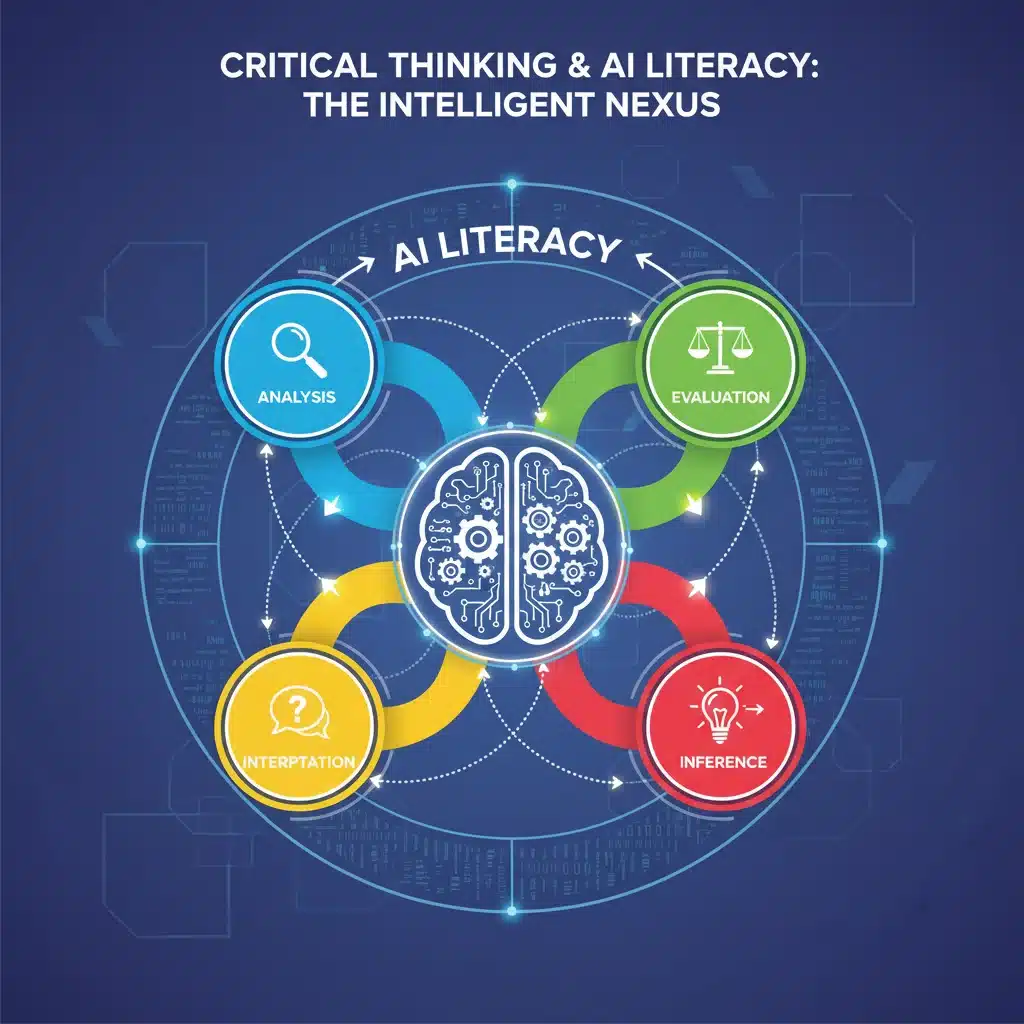
Insider Knowledge: Anticipated Challenges and Solutions
Implementing such significant curriculum changes by 2026 will not be without hurdles. Here’s an insider look at anticipated challenges and proactive solutions:
Challenge 1: Funding and Resources
Developing new curriculum, training teachers, and acquiring necessary technology requires substantial investment.
- Solution: Advocate for increased federal and state funding for AI education initiatives. Explore public-private partnerships with technology companies and foundations. Leverage existing infrastructure where possible and prioritize cost-effective, open-source solutions.
Challenge 2: Teacher Readiness and Resistance to Change
Some educators may feel unprepared or resistant to integrating new AI concepts into their established teaching practices.
- Solution: Provide extensive, high-quality, and ongoing professional development that addresses concerns and builds confidence. Foster a culture of continuous learning and experimentation. Highlight successful early adopters and create peer mentoring programs.
Challenge 3: Rapid Pace of AI Development
The AI landscape evolves so quickly that curriculum can become outdated before it’s even fully implemented.
- Solution: Design a flexible curriculum framework rather than rigid content. Emphasize foundational critical thinking skills that are transferable regardless of specific AI advancements. Prioritize OER and modular content that can be easily updated. Establish expert advisory boards to regularly review and recommend curriculum adjustments.
Challenge 4: Equity and Access
Ensuring all students, regardless of socioeconomic background, have access to quality AI education and the necessary technology.
- Solution: Implement policies to bridge the digital divide, providing devices and internet access. Develop accessible curriculum materials for diverse learners. Focus on low-cost or free AI tools and resources. Prioritize professional development for teachers in underserved communities.
Challenge 5: Assessment of AI Critical Thinking
Traditional assessment methods may not adequately measure complex critical thinking skills related to AI.
- Solution: Develop authentic assessment tasks, such as project-based assessments, debates, ethical case studies, and simulations. Use rubrics that clearly define what constitutes strong AI critical thinking. Incorporate peer and self-assessment to foster metacognition.
The Role of Stakeholders in Shaping the 2026 Curriculum
Successful implementation of these new strategies for AI critical thinking requires a concerted effort from various stakeholders:
- Policymakers: Need to establish clear educational standards, allocate adequate funding, and create supportive legislative frameworks.
- Educators: Are at the frontline, requiring professional development, resources, and autonomy to innovate in their classrooms.
- Parents: Play a vital role in supporting their children’s learning, understanding the importance of AI critical thinking, and engaging in discussions at home.
- Technology Companies: Can contribute by developing educational tools, providing resources, and partnering with schools for curriculum development and teacher training.
- Researchers and Academia: Are crucial for conducting studies on effective pedagogical approaches and informing curriculum design with the latest insights.
A collaborative ecosystem is essential to ensure that the US educational system is prepared to cultivate a generation of critically thinking individuals ready for the AI era.
Looking Beyond 2026: Continuous Evolution
The year 2026 is an important milestone, but the journey to integrate AI critical thinking into education is continuous. The curriculum must be viewed as a living document, constantly adapted and refined in response to technological advancements, societal needs, and new pedagogical research. The goal is not just to teach students about AI, but to empower them to be thoughtful, ethical, and effective participants in a world increasingly shaped by intelligent machines.
The ultimate aim is to foster a generation that can not only understand and utilize AI but also critically question its implications, challenge its biases, and steer its development towards a more equitable and prosperous future. This requires a fundamental shift in how we conceive of education, moving from knowledge transmission to skill cultivation, with AI critical thinking at its very core. The time to act is now, to ensure that the future workforce and citizenry are prepared for the complexities of the AI age.
Author