Federal Housing Initiatives 2026: What First-Time Buyers Need to Know by Year-End (TIME-SENSITIVE)
The dream of homeownership remains a cornerstone of the American ideal, yet for many first-time buyers, the path to securing a home can be fraught with financial hurdles. Fortunately, the federal government consistently rolls out and updates various federal housing initiatives designed to make this dream a reality. As we approach the end of 2026, it’s more crucial than ever for prospective homeowners to understand the landscape of available programs, especially those with time-sensitive deadlines or evolving criteria. This comprehensive guide will delve into the most impactful federal housing initiatives, offering first-time buyers a clear roadmap to leveraging these opportunities before they expire or change.
The housing market is dynamic, influenced by economic shifts, interest rates, and policy changes. Recognizing this, the government, through agencies like the Department of Housing and Urban Development (HUD), the Federal Housing Administration (FHA), and the Department of Veterans Affairs (VA), continuously adapts its support structures. For first-time buyers, understanding these programs isn’t just about finding financial aid; it’s about strategizing their entry into one of the most significant investments of their lives. This article aims to cut through the complexity, providing actionable insights into grants, loan programs, and educational resources that could be instrumental in your homebuying journey.
Many of these federal housing initiatives are designed with specific goals in mind: to reduce the upfront costs of buying a home, to make mortgage payments more affordable, or to provide safer and more sustainable housing options. The urgency around year-end 2026 stems from the fact that some pilot programs conclude, funding allocations may shift, and legislative mandates might be renewed or altered. Therefore, staying informed and acting decisively can significantly impact your ability to qualify for and benefit from these programs. Let’s explore the key initiatives that every first-time buyer should be aware of.
Understanding the Core Federal Housing Initiatives for First-Time Buyers
At the heart of federal assistance for homebuyers are several foundational programs. These programs are often the first point of contact for individuals and families looking to purchase their first home. They address common barriers such as large down payments, strict credit requirements, and high interest rates. Navigating these options effectively requires a clear understanding of what each program offers and who it is designed to help.
FHA Loans: A Cornerstone of First-Time Homebuyer Support
The Federal Housing Administration (FHA) loan program is arguably one of the most popular federal housing initiatives for first-time buyers. Insured by the FHA, these loans offer more lenient qualification criteria compared to conventional mortgages. Key benefits include:
- Lower Down Payments: FHA loans typically require a down payment as low as 3.5% for borrowers with a credit score of 580 or higher. This significantly reduces the initial financial burden for many first-time buyers.
- Flexible Credit Requirements: While a credit score of 580 is ideal, some lenders may accept scores as low as 500 with a 10% down payment. This flexibility opens doors for individuals who might not qualify for conventional loans.
- Competitive Interest Rates: Because FHA loans are government-insured, lenders often offer more attractive interest rates, making monthly payments more manageable.
- Assumable Mortgages: In some cases, FHA loans can be assumed by a future buyer, which can be an attractive selling point down the line.
However, it’s important to note that FHA loans come with mortgage insurance premiums (MIPs), both an upfront premium and an annual premium, which can add to the overall cost. For first-time buyers, weighing these costs against the benefits of easier qualification is essential. As of late 2026, there are discussions about potential adjustments to MIP rates, so staying updated on these changes is crucial.
VA Loans: Exclusive Benefits for Service Members and Veterans
For eligible service members, veterans, and surviving spouses, VA loans represent an unparalleled federal housing initiative. Backed by the U.S. Department of Veterans Affairs, these loans offer some of the most generous terms available:
- No Down Payment: Qualified borrowers can often purchase a home with no money down, a significant advantage in today’s market.
- No Private Mortgage Insurance (PMI): Unlike FHA loans or conventional loans with low down payments, VA loans do not require PMI, leading to lower monthly housing costs.
- Competitive Interest Rates: VA loans typically feature lower interest rates than conventional loans, thanks to the government guarantee.
- Limited Closing Costs: The VA limits the closing costs lenders can charge to borrowers, further reducing the upfront financial burden.
Eligibility for VA loans depends on service history and other criteria. For those who qualify, this program is a powerful tool for achieving homeownership. While VA loan benefits are generally stable, potential changes could include adjustments to funding fees or specific eligibility criteria, making timely application advisable.
USDA Loans: Supporting Rural Homeownership
The U.S. Department of Agriculture (USDA) offers a unique federal housing initiative through its Rural Development Guaranteed Housing Loan Program. This program is designed to help low- and moderate-income individuals purchase homes in eligible rural areas. Key features include:
- No Down Payment: Similar to VA loans, USDA loans often allow for 100% financing, eliminating the need for a down payment.
- Low Monthly Mortgage Insurance: While USDA loans do have an upfront guarantee fee and an annual fee, these are generally lower than FHA mortgage insurance premiums.
- Flexible Credit Guidelines: The USDA program is known for its more flexible credit requirements, making it accessible to a broader range of borrowers.
- Income Limits: Eligibility is tied to income limits, ensuring the program serves those in genuine need within designated rural areas.
It’s vital for first-time buyers to check if their desired property falls within an eligible rural area and if their income meets the program’s thresholds. The definition of ‘rural’ can change, and income limits are regularly updated, so verifying current parameters is essential.
Grants and Down Payment Assistance Programs: Reducing Upfront Costs
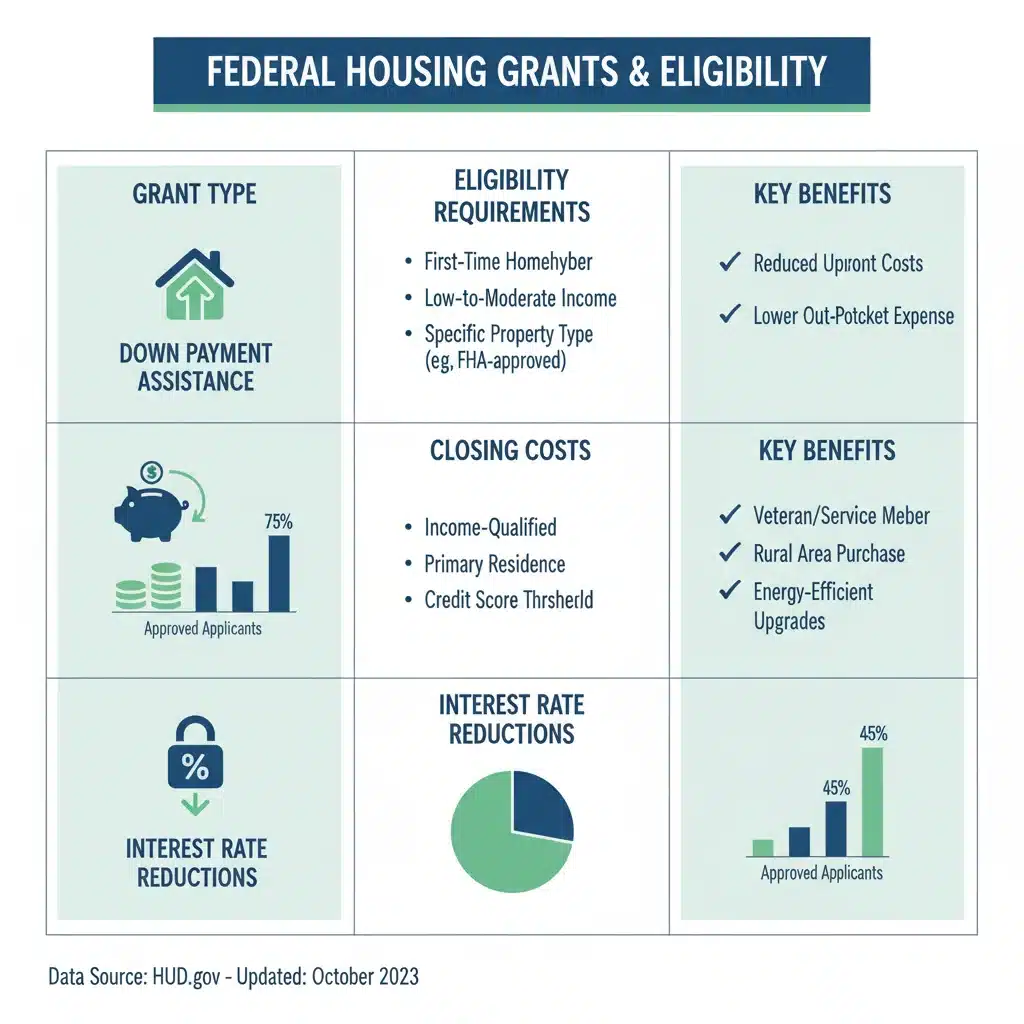
Beyond the major loan programs, a multitude of grants and down payment assistance (DPA) programs operate at federal, state, and local levels. These federal housing initiatives are specifically designed to reduce the most significant barrier for many first-time buyers: the initial upfront costs of purchasing a home.
Federal Grants and Their Impact
While direct federal grants for down payments are rare, many federal programs provide funding to state and local housing agencies, which then distribute these funds as grants or forgivable loans to eligible homebuyers. Key federal sources include:
- Community Development Block Grants (CDBG): Administered by HUD, CDBG funds are given to states and localities, which use them for various community development activities, including housing assistance for low- and moderate-income individuals.
- HOME Investment Partnerships Program: Also a HUD program, HOME funds are allocated to states and local governments to create affordable housing for low-income households. These funds can be used for down payment assistance, rental assistance, or housing rehabilitation.
The challenge for first-time buyers is that these funds are often disbursed through local programs, meaning eligibility criteria and availability can vary significantly by location. It’s crucial to research programs offered by your state housing finance agency (HFA) and local government.
State and Local Down Payment Assistance
Many states and cities offer their own DPA programs, often funded in part by the federal housing initiatives mentioned above. These programs can take several forms:
- Grants: Funds that do not need to be repaid, provided the homebuyer meets certain conditions (e.g., living in the home for a set number of years).
- Forgivable Loans: Loans that are forgiven over time, typically after a certain period of owner-occupancy. If the home is sold or refinanced before the term ends, a portion of the loan may need to be repaid.
- Deferred-Payment Loans: Loans where repayment is postponed until the home is sold, refinanced, or the mortgage is paid off.
- Low-Interest Loans: Loans offered at below-market interest rates, making them more affordable than conventional financing for the down payment.
These programs often have specific eligibility requirements related to income, credit score, and the location of the property. Some are exclusively for first-time buyers, while others are open to a broader range of applicants. Given the time-sensitive nature of some funding cycles, it’s advisable to contact your state HFA or a HUD-approved housing counseling agency as soon as you begin considering homeownership.
Specialized Federal Housing Initiatives and Programs
Beyond the broad categories, several specialized federal housing initiatives cater to specific groups or unique housing needs. These programs can provide targeted support for those who qualify.
Good Neighbor Next Door Program
Administered by HUD, the Good Neighbor Next Door program offers significant discounts on homes for sale to law enforcement officers, teachers, firefighters, and emergency medical technicians. Participants can purchase eligible homes for 50% off the list price, provided they commit to living in the property as their sole residence for three years. This is a highly attractive, though competitive, federal housing initiative that can dramatically reduce the cost of homeownership for essential service professionals.
Native American Direct Loan (NADL) Program
For eligible Native American veterans and their spouses, the VA’s Native American Direct Loan (NADL) program provides direct home loans to purchase, construct, or improve homes on Federal Trust Land. This program addresses the unique challenges of financing on tribal lands and offers the same favorable terms as traditional VA loans, including no down payment and no PMI. This specialized federal housing initiative is a vital resource for Native American veterans.
Energy-Efficient Mortgages (EEMs)
Both FHA and VA offer Energy-Efficient Mortgages (EEMs), which allow homebuyers to finance the cost of energy-efficient improvements into their mortgage. This federal housing initiative encourages sustainable living by enabling borrowers to make upgrades like adding solar panels, upgrading insulation, or installing energy-efficient windows, often without increasing their down payment. The idea is that the savings on utility bills can offset the slightly higher mortgage payment, benefiting both the homeowner and the environment.
HUD-Approved Housing Counseling Agencies
While not a direct financial program, HUD-approved housing counseling agencies are an invaluable federal housing initiative resource for first-time buyers. These agencies offer free or low-cost advice on everything from understanding credit scores and managing debt to navigating the mortgage application process and avoiding predatory lending. Participating in homebuyer education courses can even be a requirement for some DPA programs, making these agencies a crucial first step for many.
Navigating the Application Process and Key Deadlines for 2026
Understanding the available federal housing initiatives is only half the battle; successfully applying and securing benefits requires careful planning and timely action. As we approach the end of 2026, several considerations become paramount.
Pre-Approval and Documentation
Before diving into specific programs, obtaining mortgage pre-approval is a critical first step. This gives you a clear understanding of what you can afford and signals to sellers that you are a serious buyer. Gather all necessary documentation early: tax returns, pay stubs, bank statements, and credit reports. Many federal housing initiatives will require thorough documentation to verify eligibility.
Working with Lenders and Housing Counselors
Not all lenders offer every federal loan program. It’s essential to work with lenders who specialize in FHA, VA, or USDA loans and are familiar with various DPA programs in your area. A HUD-approved housing counselor can be an invaluable guide, helping you identify programs you qualify for and assisting with the application process. They can also provide insights into any upcoming changes or deadlines for federal housing initiatives.

Time-Sensitive Considerations for Year-End 2026
The ‘time-sensitive’ aspect of this guide cannot be overstated. Here’s why:
- Funding Cycles: Many state and local DPA programs operate on annual funding cycles. Funds can be limited and may run out before the end of the year. Applying early in the year or as soon as new funds are announced can increase your chances of securing assistance.
- Pilot Programs: Some innovative federal housing initiatives are introduced as pilot programs with a limited duration. While some may be renewed, others might conclude by year-end 2026. Keep an eye on announcements from HUD and other federal agencies.
- Legislative Changes: Housing policy is subject to legislative review. Congress may introduce new bills or amend existing ones that could impact eligibility requirements, loan limits, or funding for various programs. Monitoring these legislative developments is important.
- Interest Rate Fluctuations: While not directly a program deadline, interest rates are a major factor in affordability. Acting before significant rate hikes could lock in a lower monthly payment, making the overall cost of homeownership more manageable, even with federal assistance.
It’s highly recommended to start your research and engagement with housing professionals well in advance of year-end 2026. This proactive approach ensures you have ample time to gather documents, understand program requirements, and submit applications before any potential deadlines or changes take effect.
Beyond the Federal: State and Local Support
While this article focuses on federal housing initiatives, it’s crucial to remember that a robust ecosystem of state and local programs often complements federal efforts. These programs can provide additional layers of support, from property tax abatements to first-time buyer savings accounts.
State Housing Finance Agencies (HFAs)
Every state has an HFA that offers a variety of programs for first-time homebuyers. These often include:
- First-Time Homebuyer Bonds: Tax-exempt bonds that allow HFAs to offer mortgages with lower interest rates.
- Down Payment and Closing Cost Assistance: Many HFAs package their mortgages with DPA, often in the form of grants or forgivable loans.
- Homebuyer Education: HFAs frequently provide or require homebuyer education courses, often online or through approved counseling agencies.
These state-level federal housing initiatives often work in conjunction with FHA, VA, and USDA loans, providing a powerful combination of assistance. Researching your state’s HFA website is a vital step.
Local Government and Non-Profit Programs
Cities, counties, and local non-profit organizations also play a significant role. They might offer:
- Affordable Housing Programs: Initiatives to build or preserve affordable housing units, sometimes with purchase subsidies for eligible buyers.
- Property Tax Assistance: Programs that offer temporary or permanent reductions in property taxes for first-time buyers or low-income homeowners.
- Rehabilitation Loans: Low-interest loans to help buyers purchase homes that need repairs, often combined with purchase assistance.
These local programs are highly localized, so direct inquiry with your city or county housing department, or local community development corporations, is necessary.
Conclusion: Act Now to Secure Your Homeownership Dream
The landscape of federal housing initiatives is rich with opportunities for first-time homebuyers, but it’s also a landscape that is constantly evolving. From the flexible terms of FHA, VA, and USDA loans to the crucial financial relief offered by grants and down payment assistance programs, the government provides significant support to help individuals and families achieve homeownership. However, the time-sensitive nature of many of these programs, particularly as we approach year-end 2026, underscores the importance of prompt action.
Don’t let the complexity deter you. Begin your journey by assessing your financial situation, researching the programs applicable to your circumstances, and connecting with experienced professionals such as mortgage lenders and HUD-approved housing counselors. These experts can demystify the process, help you navigate the paperwork, and ensure you take full advantage of every available resource.
The dream of owning a home is within reach for many first-time buyers, especially when armed with the right information and a proactive approach. By understanding and leveraging these vital federal housing initiatives before the deadlines and potential changes of year-end 2026, you can significantly improve your chances of stepping into your first home with confidence and financial stability. Start your research today, and take the critical steps toward securing your future in the housing market.