Maximizing 2026 Retirement Contributions: IRA & 401(k) Limits Explained

Maximizing Your 2026 Retirement Contributions: Understanding the New IRA and 401(k) Limits
As we navigate the ever-evolving landscape of personal finance, one constant remains paramount: the critical importance of planning for retirement. For many, the thought of retirement can evoke a mix of excitement and apprehension. Excitement for the freedom and leisure it promises, and apprehension regarding the financial security needed to truly enjoy it. This is precisely why understanding and maximizing your retirement contributions, particularly for the year 2026, is not just a good idea, but an absolute necessity. The Internal Revenue Service (IRS) periodically adjusts contribution limits for various retirement vehicles like Individual Retirement Arrangements (IRAs) and 401(k) plans to account for inflation and economic changes. These adjustments present fresh opportunities for savvy savers to supercharge their retirement nest eggs.
The year 2026 brings with it new financial thresholds and strategic considerations that could significantly impact your long-term wealth accumulation. Staying informed about these changes is the first step towards making informed decisions. This comprehensive guide will delve deep into the projected 2026 IRA and 401(k) contribution limits, explore the nuances of each retirement vehicle, and provide actionable strategies to help you maximize your savings. We’ll cover everything from understanding the benefits of different account types to advanced strategies for high-income earners and the self-employed. Our goal is to equip you with the knowledge and tools necessary to approach your retirement planning with confidence and clarity, ensuring you are well-positioned for a comfortable and secure future.
Understanding the Importance of Retirement Contributions
Before we dive into the specifics of 2026, it’s crucial to reiterate why consistent and maximized retirement contributions are so vital. The power of compound interest, tax advantages, and the simple fact that time is your greatest asset in investing all underscore the importance of starting early and contributing regularly. Every dollar you contribute today has the potential to grow exponentially over decades, thanks to the magic of compounding. Furthermore, many retirement accounts offer significant tax benefits, either by reducing your current taxable income or allowing for tax-free growth and withdrawals in retirement. Ignoring these benefits is akin to leaving money on the table.
Consider the rising costs of living, healthcare, and leisure activities in retirement. Social Security alone is often insufficient to maintain one’s desired lifestyle. Personal savings, primarily through employer-sponsored plans and individual accounts, become the bedrock of a financially independent retirement. By actively engaging with your retirement planning now, you are not just saving money; you are investing in your future self, ensuring peace of mind and the freedom to enjoy your golden years without financial constraint. The 2026 Retirement Contributions limits are designed to encourage this essential long-term planning.
Projected 2026 IRA Contribution Limits
Individual Retirement Arrangements (IRAs) are powerful tools for retirement savings, offering flexibility and various tax advantages. They are particularly beneficial for those who may not have access to an employer-sponsored plan or wish to supplement their existing retirement savings. While the official 2026 limits are typically announced later in the year, we can project them based on historical trends and inflation adjustments. Historically, IRA contribution limits increase by $500 increments. Given recent inflation trends, it is reasonable to anticipate an increase for 2026. For the sake of this discussion and to provide a robust planning framework, let’s consider a projected increase.
Traditional IRA
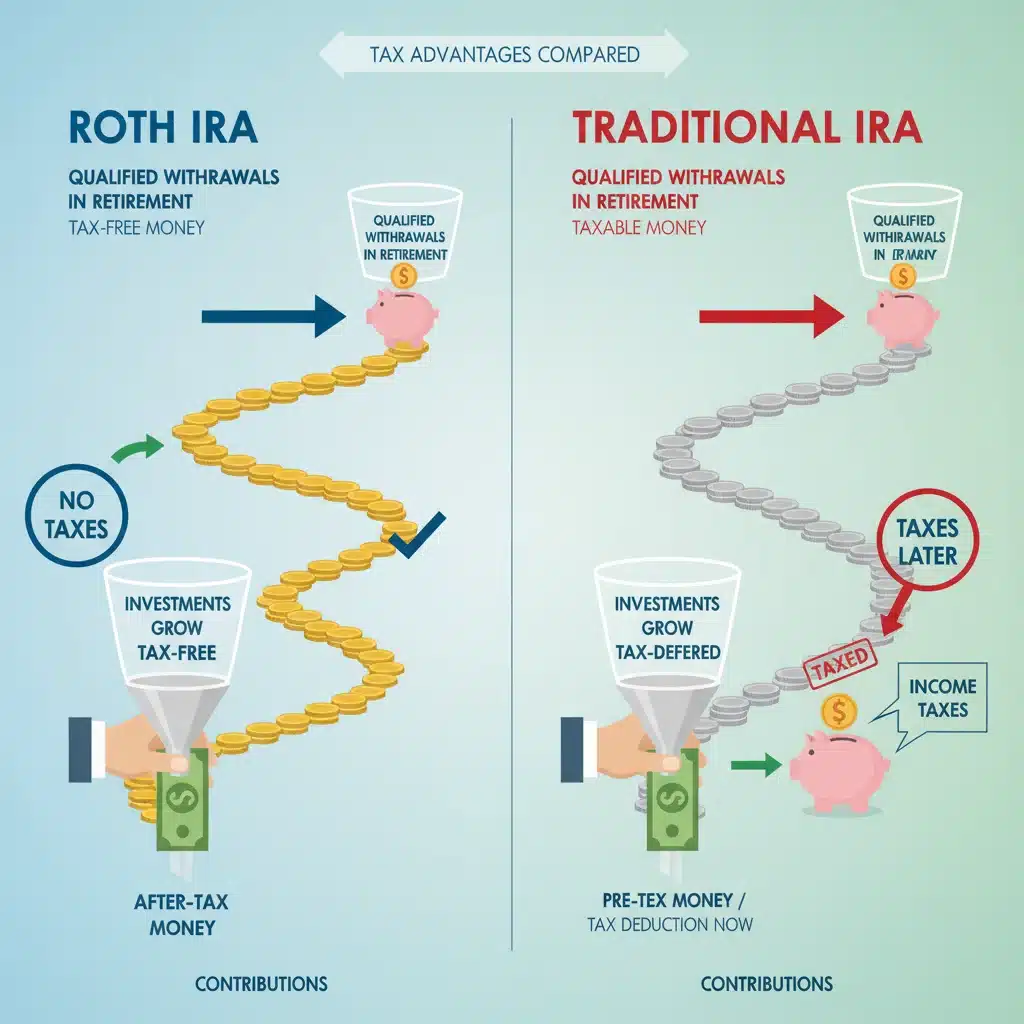
A Traditional IRA allows you to contribute pre-tax dollars, meaning your contributions might be tax-deductible in the current year, lowering your taxable income. Your investments then grow tax-deferred, and you pay taxes only when you withdraw the money in retirement. This can be particularly advantageous if you expect to be in a lower tax bracket in retirement than you are currently. The projected 2026 contribution limit for Traditional IRAs for individuals under 50 is expected to see an increase, potentially to around $7,500. For those aged 50 and over, catch-up contributions are permitted, allowing them to contribute an additional amount, possibly increasing to $1,500, bringing their total to around $9,000. These are crucial figures for maximizing your 2026 Retirement Contributions.
Roth IRA
Roth IRAs operate on an opposite tax principle: contributions are made with after-tax dollars, meaning they are not tax-deductible in the current year. However, qualified withdrawals in retirement are entirely tax-free. This makes Roth IRAs incredibly attractive if you anticipate being in a higher tax bracket during retirement, or if you simply prefer the certainty of tax-free income in your later years. The projected 2026 contribution limit for Roth IRAs is generally the same as Traditional IRAs for individuals, with similar catch-up provisions for those 50 and older. It’s important to note that Roth IRAs have income limitations for direct contributions. If your Modified Adjusted Gross Income (MAGI) exceeds certain thresholds, your ability to contribute directly to a Roth IRA may be phased out or eliminated. However, the ‘Backdoor Roth IRA’ strategy can be a viable option for high-income earners, which we will discuss later.
Understanding these projected limits is the first step in formulating your 2026 Retirement Contributions strategy. It allows you to plan how much you can allocate to these accounts and whether a Traditional or Roth IRA best suits your financial situation and tax outlook.
Projected 2026 401(k) Contribution Limits
Employer-sponsored 401(k) plans are often the cornerstone of many individuals’ retirement savings strategies. They typically offer higher contribution limits than IRAs and often come with the added benefit of employer matching contributions, which is essentially free money for your retirement. Like IRAs, 401(k) limits are adjusted annually for inflation.
Employee Contributions
The projected 2026 employee contribution limit for 401(k) plans (and similar plans like 403(b)s, most 457 plans, and the Thrift Savings Plan) is expected to see a significant increase. Based on current trends, it could potentially rise to around $24,500 for individuals under 50. This represents a substantial opportunity to save aggressively for retirement. For employees aged 50 and over, the catch-up contribution limit is also expected to increase, possibly reaching $8,000, bringing their total potential contribution to an impressive $32,500. These figures are critical for maximizing your 2026 Retirement Contributions.
Employer Contributions and Total Limits
Beyond your own contributions, your employer can also contribute to your 401(k) through matching contributions or profit-sharing. There’s an overall limit to the total contributions (employee + employer) that can be made to a 401(k) plan each year. For 2026, this overall limit (IRC Section 415(c) limit) is also expected to increase, potentially reaching around $70,000. For those 50 and over, including catch-up contributions, this could be even higher. Reaching this total limit often requires a combination of employee contributions, employer matching, and potentially after-tax contributions that can be converted to a Roth 401(k) (known as a ‘Mega Backdoor Roth’), a strategy we will explore.
These higher limits for 401(k)s underscore the immense potential for wealth accumulation through these plans. Taking full advantage of these limits, especially employer matching, should be a top priority for anyone serious about their retirement planning.
Strategic Approaches to Maximizing Your 2026 Retirement Contributions
Knowing the limits is just the beginning. The real power lies in strategically applying this knowledge to your personal financial situation. Here are several key strategies to help you maximize your 2026 Retirement Contributions:
1. Prioritize Employer Match (if available)
This is arguably the most important step for anyone with access to an employer-sponsored 401(k) that offers a match. An employer match is essentially a 100% return on your investment from day one. Failing to contribute enough to receive the full match is like turning down free money. Always contribute at least enough to get the full employer match before considering other savings avenues.
2. Max Out Your 401(k)
Once you’ve secured the employer match, aim to contribute the maximum allowable amount to your 401(k). The higher contribution limits for 2026 make this an even more impactful strategy. The tax-deferred growth (or tax-free growth in a Roth 401(k)) combined with the significant contribution capacity makes the 401(k) an unparalleled retirement savings tool. If you can’t max it out immediately, set a goal to increase your contribution percentage by 1% or 2% each year until you reach the maximum.
3. Max Out Your IRA (Traditional or Roth)
After maximizing your 401(k) (or contributing enough to get the match), turn your attention to your IRA. Whether a Traditional or Roth IRA is better for you depends on your current income, expected future tax bracket, and eligibility. For 2026, consider the projected increased limits to ensure you’re putting away as much as possible. Even if you have a 401(k), an IRA offers additional investment choices and flexibility.
4. Utilize Catch-Up Contributions
If you are 50 or older, take full advantage of catch-up contributions for both your IRA and 401(k). These additional contributions are designed to help older workers boost their retirement savings as they approach their golden years. The projected increases for 2026 make these even more valuable. For example, contributing an extra $8,000 to your 401(k) and an extra $1,500 to your IRA can significantly impact your total retirement nest egg.
5. The Backdoor Roth IRA Strategy
For high-income earners who exceed the income limits for direct Roth IRA contributions, the ‘Backdoor Roth IRA’ is a perfectly legal and widely used strategy. It involves contributing after-tax money to a Traditional IRA and then immediately converting it to a Roth IRA. While the conversion itself might be a taxable event if you have pre-tax IRA funds, if you only have after-tax funds in your Traditional IRA, the conversion is generally tax-free. This allows high-income individuals to still benefit from tax-free growth and withdrawals of a Roth IRA, helping them make substantial 2026 Retirement Contributions.
6. The Mega Backdoor Roth Strategy
This advanced strategy is available to individuals whose 401(k) plans allow after-tax contributions. It involves contributing after-tax dollars to your 401(k) beyond the standard employee contribution limit (but within the overall Section 415(c) limit), and then converting those after-tax funds to a Roth 401(k) or rolling them into a Roth IRA. This allows for a massive influx of funds into a Roth account, growing tax-free. Not all 401(k) plans allow after-tax contributions or in-service Roth conversions, so check with your plan administrator. If available, this can be a game-changer for maximizing your 2026 Retirement Contributions.
7. Consider Health Savings Accounts (HSAs)
While primarily designed for healthcare expenses, HSAs are often referred to as ‘triple-tax advantaged’ accounts and can function as an excellent supplemental retirement savings vehicle. Contributions are tax-deductible, investments grow tax-free, and qualified withdrawals for medical expenses are tax-free. After age 65, you can withdraw funds for any purpose without penalty, though non-medical withdrawals will be taxed as ordinary income. If you have a high-deductible health plan (HDHP), contributing to an HSA should be a strong consideration in your overall strategy for 2026 Retirement Contributions.
Navigating Income Limitations and Eligibility
While the goal is to maximize contributions, it’s essential to be aware of income limitations and eligibility requirements that can affect your ability to contribute to certain accounts or deduct contributions. These thresholds are also adjusted annually for inflation.
IRA Deductibility for Traditional IRAs
Your ability to deduct Traditional IRA contributions depends on whether you (or your spouse, if filing jointly) are covered by a retirement plan at work and your Modified Adjusted Gross Income (MAGI). If you are not covered by a workplace plan, your Traditional IRA contributions are fully deductible. If you are covered, the deductibility phases out at higher MAGI levels. For 2026, these MAGI thresholds will likely be increased, so it’s important to check the official IRS guidance once it’s released.
Roth IRA Income Limitations
Direct contributions to a Roth IRA are subject to MAGI limitations. If your MAGI exceeds a certain amount, your ability to contribute directly is phased out. Above a higher threshold, you cannot contribute directly at all. These income limits are also expected to increase for 2026. If you find yourself above these limits, the Backdoor Roth IRA strategy becomes particularly relevant.
Spousal IRA
If you are married and file jointly, and one spouse has little or no earned income, they may still be able to contribute to an IRA (Traditional or Roth) through a ‘Spousal IRA.’ This allows the non-working or low-earning spouse to save for retirement using the working spouse’s income, provided certain conditions are met. This is an excellent way for families to double their IRA contributions.
The Power of Compounding: Why Every Dollar Counts
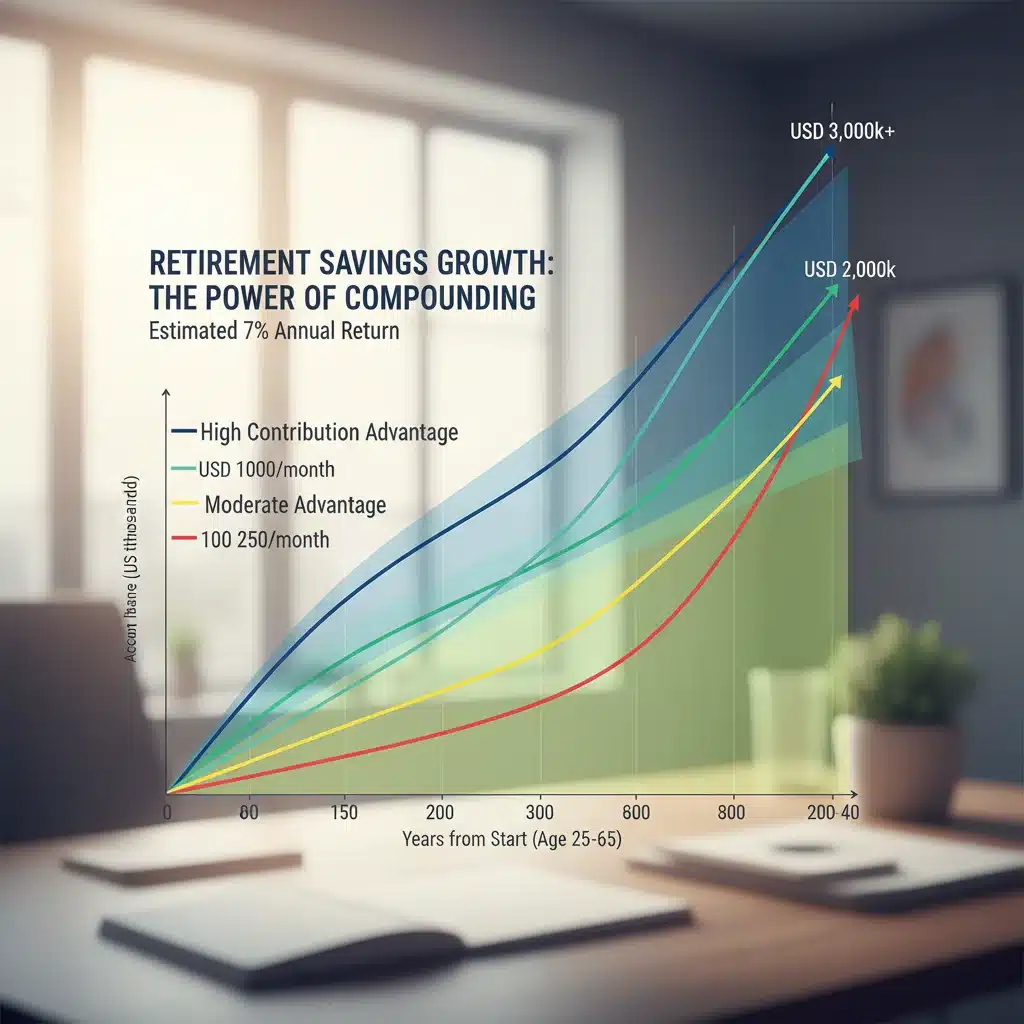
Understanding the projected 2026 Retirement Contributions limits is vital, but equally important is appreciating the long-term impact of consistent contributions, especially when combined with the power of compounding. Compounding is the process where your investments earn returns, and those returns then earn returns themselves, creating a snowball effect over time. The earlier you start and the more you contribute, the more time your money has to compound.
Even an extra few thousand dollars contributed each year, especially at a young age, can translate into hundreds of thousands, or even millions, of dollars more in retirement. For instance, an extra $1,000 contributed annually over 30 years, assuming an average 7% annual return, could grow to over $94,000. This illustrates why maximizing your 2026 Retirement Contributions, even by small increments, is so impactful. Don’t underestimate the power of consistent saving and investing.
Monitoring and Adjusting Your Strategy
Retirement planning is not a set-it-and-forget-it endeavor. It requires ongoing monitoring and adjustments. As the official 2026 contribution limits are released by the IRS, review your current savings strategy. Are you on track to meet your goals? Are there opportunities to increase your contributions? Life events, such as a new job, a raise, marriage, or the birth of a child, can all impact your financial situation and necessitate a review of your retirement plan.
Furthermore, market fluctuations and changes in your personal risk tolerance might warrant rebalancing your investment portfolio. Consider working with a qualified financial advisor who can help you navigate these complexities, understand the latest regulations, and tailor a retirement plan that aligns with your specific goals and risk profile. They can provide personalized advice on how best to leverage the 2026 Retirement Contributions limits and other financial tools.
Beyond Contributions: Other Retirement Planning Considerations for 2026
While maximizing your 2026 Retirement Contributions is a cornerstone of a strong retirement plan, it’s part of a larger financial ecosystem. Here are other crucial elements to consider:
- Investment Diversification: Ensure your portfolio is diversified across various asset classes (stocks, bonds, real estate, etc.) to mitigate risk and optimize returns.
- Asset Allocation: Your asset allocation should align with your risk tolerance and time horizon. Younger investors typically have a higher allocation to growth-oriented assets, while those closer to retirement often shift towards more conservative investments.
- Estate Planning: Review and update your beneficiaries for all retirement accounts and create or update your will and other estate planning documents.
- Healthcare Costs: Plan for rising healthcare costs in retirement. HSAs are a great tool, but also consider long-term care insurance or other strategies.
- Debt Management: High-interest debt can erode your ability to save for retirement. Prioritize paying down expensive debt, especially credit card debt, to free up more funds for contributions.
- Emergency Fund: Maintain a robust emergency fund (typically 3-6 months of living expenses) to avoid having to tap into your retirement savings prematurely during unexpected financial setbacks.
These considerations, combined with a focused effort on maximizing your 2026 Retirement Contributions, will create a holistic and resilient financial plan for your future.
Conclusion: Take Action Now for a Secure Retirement
The year 2026 presents a fresh opportunity to reassess and enhance your retirement savings strategy. By staying informed about the projected IRA and 401(k) contribution limits and actively implementing smart saving strategies, you can significantly impact your financial well-being in retirement. Whether it’s prioritizing your employer match, maxing out your 401(k) and IRA, leveraging catch-up contributions, or employing advanced strategies like the Backdoor Roth, every intentional step you take contributes to a more secure future.
Don’t wait for the official announcements to start planning. Begin by reviewing your current contributions, understanding your eligibility, and setting clear goals for your 2026 Retirement Contributions. Remember, consistency and proactive planning are your most powerful allies in the journey towards financial independence. A comfortable retirement isn’t just a dream; it’s a tangible goal achievable through diligent planning and strategic action. Start today, and give your future self the gift of financial security and peace of mind.