Surviving Spouse Benefits 2026: Navigating Social Security and VA Entitlements (PRACTICAL SOLUTIONS)
Surviving Spouse Benefits 2026: Navigating Social Security and VA Entitlements (PRACTICAL SOLUTIONS)
Losing a spouse is an incredibly challenging experience, marked by grief, emotional upheaval, and often, significant financial uncertainty. During such a difficult time, understanding the financial support available can provide a much-needed sense of security. For 2026, surviving spouses in the United States may be eligible for various benefits from both the Social Security Administration (SSA) and the Department of Veterans Affairs (VA). Navigating these systems can be complex, but with the right information and practical solutions, you can successfully claim the entitlements you deserve. This comprehensive guide will walk you through the intricacies of surviving spouse benefits, focusing on what to expect in 2026, eligibility criteria, application processes, and crucial tips for maximizing your support.
The landscape of federal benefits is ever-evolving, with annual adjustments and occasional policy changes. Staying informed about the latest updates for 2026 is paramount to ensuring you don’t miss out on vital assistance. We’ll delve into the specific details of Social Security survivor benefits, including how they are calculated and who qualifies. Furthermore, we will explore the extensive range of VA benefits available to surviving spouses of veterans, which can include Dependency and Indemnity Compensation (DIC), educational assistance, health care, and more. Our goal is to empower you with the knowledge to navigate these systems confidently, offering practical, actionable advice to ease your journey during a time of loss.
Understanding Social Security Surviving Spouse Benefits in 2026
Social Security provides a crucial safety net for millions of Americans, and its survivor benefits program is designed to offer financial protection to families when a wage earner dies. For 2026, the fundamental principles of these benefits remain consistent, though specific dollar amounts and certain thresholds will be adjusted. It’s essential to understand that these surviving spouse benefits are not automatic; you must apply for them.
Who is Eligible for Social Security Survivor Benefits?
Eligibility for Social Security survivor benefits primarily depends on the deceased worker’s earnings record and your relationship to them. Generally, you may be eligible if you are:
- A Widow or Widower: You can receive benefits if you are at least 60 years old (50 if disabled) or any age if you are caring for the deceased’s child who is under age 16 or disabled. The marriage must have lasted at least nine months, with some exceptions (e.g., accidental death, military death).
- A Divorced Spouse: If your marriage lasted 10 years or more, you may be eligible for benefits on your ex-spouse’s record, provided you are not remarried (unless the remarriage occurred after age 60, or 50 if disabled).
- A Child: Unmarried children under age 18 (or 19 if still a full-time elementary or secondary student) or any age if disabled before age 22, can receive benefits.
- A Dependent Parent: Parents aged 62 or older who were dependent on the deceased for at least half of their support may also be eligible.
It’s important to note that certain conditions, such as remarriage before a certain age, can affect your eligibility or the amount of your benefits. The SSA website or a direct consultation with an SSA representative can provide personalized guidance.
How are Social Security Survivor Benefits Calculated?
The amount of surviving spouse benefits is based on the deceased worker’s primary insurance amount (PIA), which is the full monthly benefit they would have received at their full retirement age. The percentage of the PIA you receive depends on your age and whether you are caring for a child:
- Widow(er), Full Retirement Age or Older: 100% of the deceased worker’s basic benefit amount.
- Widow(er), Age 60 to Full Retirement Age: Between 71.5% and 99% of the deceased worker’s basic benefit amount, depending on your age when you start receiving benefits.
- Widow(er) with a Child Under 16 or Disabled: 75% of the deceased worker’s basic benefit amount.
- Children: 75% of the deceased worker’s basic benefit amount.
There’s also a family maximum benefit, which limits the total amount of benefits that can be paid to a family on a deceased worker’s record. This maximum is typically between 150% and 180% of the deceased’s PIA. If the sum of all individual benefits exceeds this limit, each person’s benefit will be reduced proportionally.
Applying for Social Security Survivor Benefits in 2026
The application process for surviving spouse benefits requires several documents and can be initiated online, by phone, or in person at a Social Security office. Key documents typically include:
- Proof of the deceased’s death (death certificate)
- The deceased’s Social Security number
- Your Social Security number
- Your birth certificate
- Your marriage certificate
- Children’s birth certificates (if applicable)
- The deceased’s W-2 forms or self-employment tax returns for the most recent year
- Bank account information for direct deposit
It is advisable to apply as soon as possible after the death, as some benefits may be retroactive. However, even if some time has passed, you should still inquire, as you might be eligible for certain payments. The SSA website (www.ssa.gov) is an excellent resource for detailed instructions and to begin the application process.
Veterans Affairs (VA) Surviving Spouse Benefits in 2026
For surviving spouses of veterans, the Department of Veterans Affairs offers a distinct set of benefits designed to provide financial and other forms of support. These surviving spouse benefits are separate from Social Security and have their own eligibility criteria and application procedures. Understanding the various programs available can significantly impact your financial well-being.
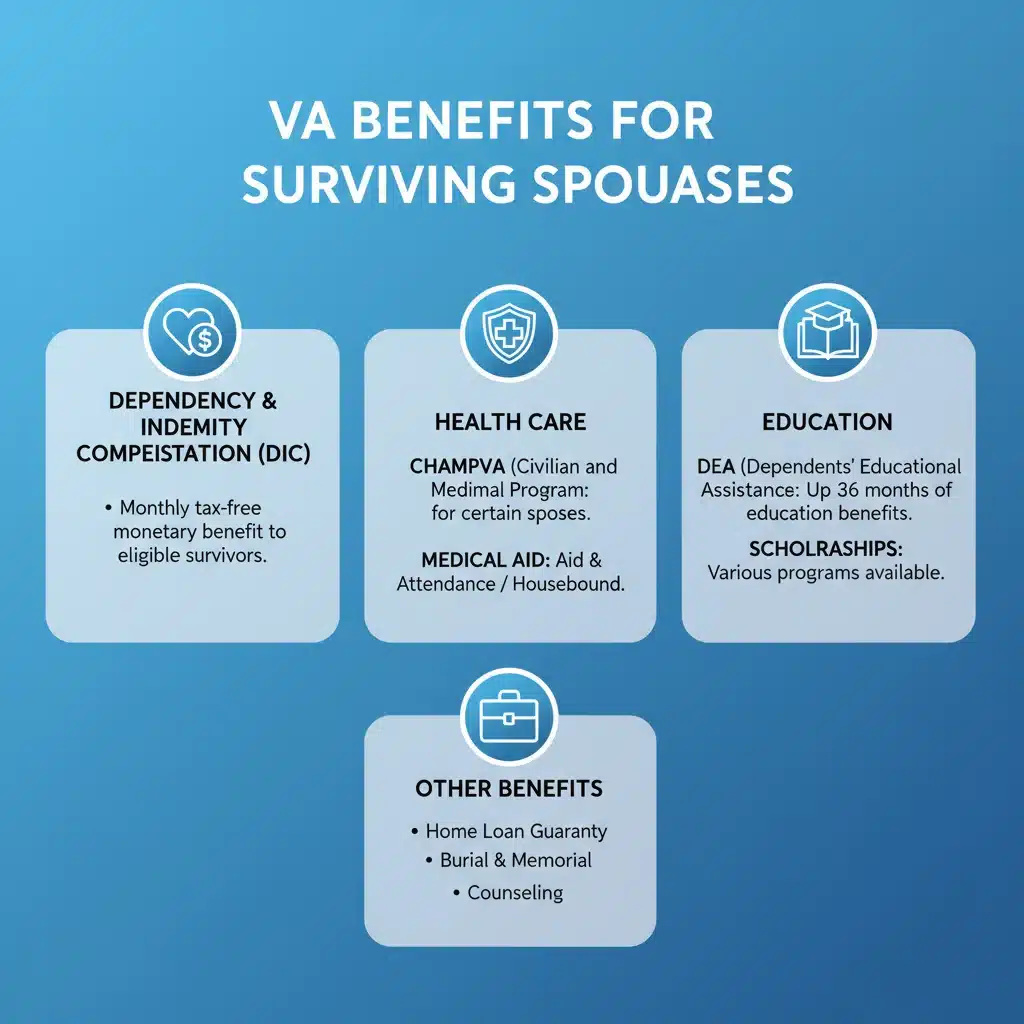
Dependency and Indemnity Compensation (DIC)
DIC is a tax-free monetary benefit paid to eligible surviving spouses, children, or parents of veterans who died from a service-related injury or disease, or who were totally disabled from a service-connected condition at the time of death. For 2026, the benefit amounts will likely see an adjustment based on cost-of-living increases. Eligibility criteria for surviving spouses include:
- Valid marriage to the veteran.
- The veteran died from a service-connected disability.
- The veteran was totally disabled by a service-connected disability for at least 10 years immediately preceding death.
- The veteran was totally disabled by a service-connected disability for at least 5 years from the date of marriage to the veteran.
- The veteran was totally disabled by a service-connected disability for at least one year before death if a former prisoner of war.
Remarriage can affect DIC eligibility. Generally, if you remarry before age 57, your DIC benefits will stop. However, if you remarry on or after age 57, your eligibility for DIC may continue.
VA Pension for Surviving Spouses (Death Pension)
The VA Death Pension is a needs-based benefit paid to low-income surviving spouses and children of deceased veterans who served during a period of war. Unlike DIC, the veteran’s death does not have to be service-connected. Eligibility is based on the surviving spouse’s income and net worth, which must fall below certain limits set by law. The veteran must have met specific service requirements, including:
- Served during a wartime period.
- Discharged under conditions other than dishonorable.
- Met minimum service requirements.
The pension amount is calculated based on the difference between your countable income and a maximum annual pension rate (MAPR) set by Congress. Additional allowances may be available for surviving spouses who are housebound or require aid and attendance.
Other VA Benefits for Surviving Spouses
Beyond DIC and Death Pension, several other surviving spouse benefits are available through the VA:
- Health Care: Through programs like CHAMPVA (Civilian Health and Medical Program of the Department of Veterans Affairs), eligible surviving spouses and children may receive health care benefits if they are not eligible for Medicare or other VA health care programs.
- Education Benefits: The Dependents’ Educational Assistance (DEA) program offers education and training opportunities to eligible dependents of veterans who are permanently and totally disabled from a service-connected disability or who died while on active duty or as a result of a service-connected disability.
- Home Loan Guaranty: Certain surviving spouses may be eligible for a VA home loan guaranty, which can assist in purchasing a home without a down payment.
- Burial and Memorial Benefits: The VA provides burial benefits, including a burial plot allowance, headstones, markers, and presidential memorial certificates, to eligible surviving spouses and family members.
- Spina Bifida and Children of Women Vietnam Veterans (CWVV) Health Care: Specific health care benefits are available for children of certain veterans, including those with spina bifida due to a parent’s exposure to Agent Orange.
Applying for VA Surviving Spouse Benefits in 2026
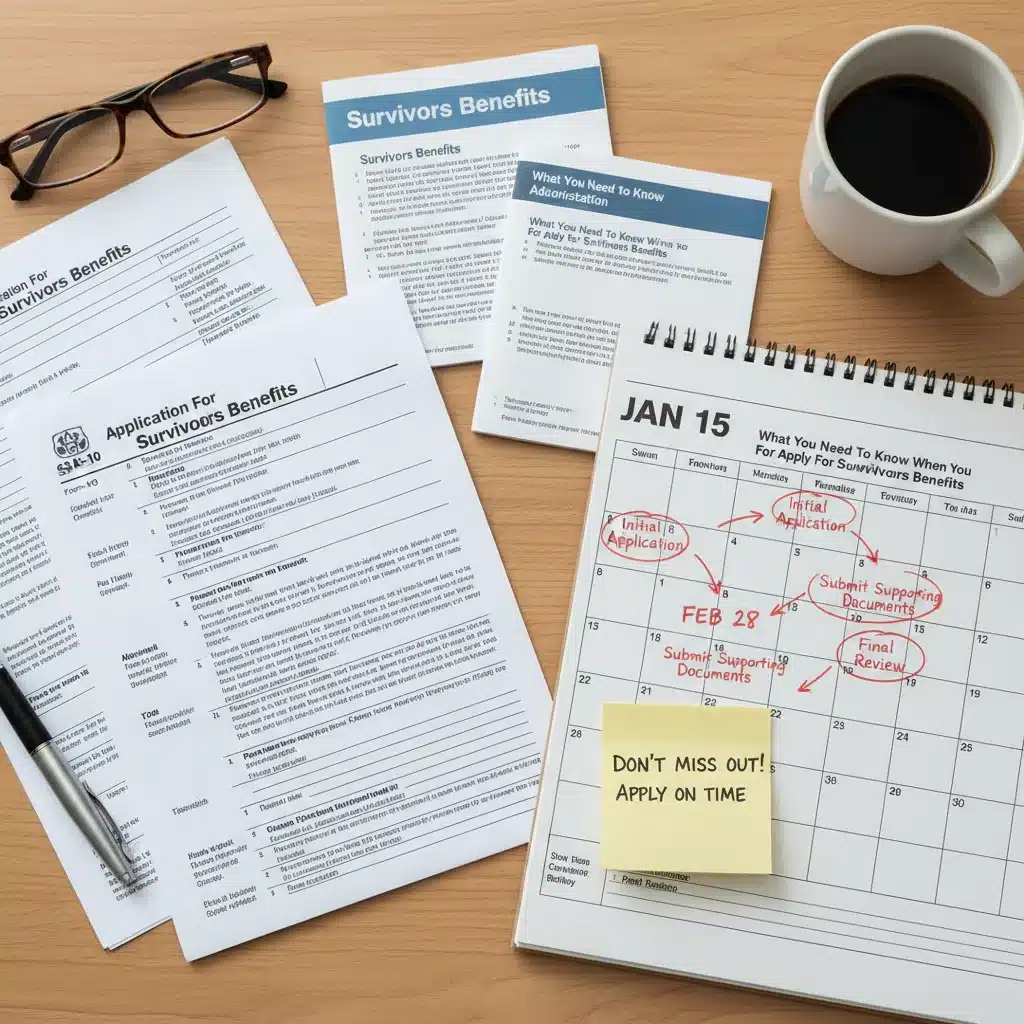
The application process for VA surviving spouse benefits can be intricate. It often requires submitting VA Form 21P-534EZ, "Application for DIC, Survivors Pension, and/or Accrued Benefits." You will need various documents, including:
- The veteran’s death certificate.
- Your marriage certificate.
- Children’s birth certificates (if applicable).
- The veteran’s discharge papers (DD Form 214).
- Medical evidence related to the veteran’s service-connected disability (if applying for DIC).
- Financial information (for Death Pension).
It is highly recommended to seek assistance from a Veterans Service Officer (VSO) who can guide you through the application process, help gather necessary documents, and ensure your claim is properly filed. These services are typically free.
Practical Solutions and Maximizing Your Benefits
Navigating the aftermath of a spouse’s death requires more than just understanding eligibility; it demands practical strategies to ensure you receive all the surviving spouse benefits you’re entitled to. Here are some actionable tips and considerations for 2026:
1. Gather All Necessary Documentation Promptly
The sooner you gather essential documents, the smoother your application process will be. Create a dedicated folder for:
- Death certificates (obtain multiple certified copies).
- Marriage certificates.
- Birth certificates for yourself and any dependent children.
- Social Security cards for all family members.
- The deceased’s military discharge papers (DD Form 214).
- Recent tax returns and W-2s.
- Bank statements and investment records.
- Medical records related to the deceased’s conditions, especially if service-connected.
2. Understand the Interplay Between Benefits
It’s crucial to understand that receiving one type of benefit may affect your eligibility or the amount of another. For instance, while you can often receive both Social Security survivor benefits and VA DIC, the VA Death Pension is needs-based, and other income sources will be considered. Consult with an expert to understand how different benefits interact and to avoid any unintended consequences.
3. Seek Professional Guidance
Don’t try to navigate this complex landscape alone. Resources like:
- Social Security Administration (SSA): Direct contact for survivor benefits.
- Veterans Service Officers (VSOs): Accredited professionals who provide free assistance with VA claims. Organizations like the American Legion, VFW, DAV, and state/county veteran affairs offices employ VSOs.
- Financial Advisors: Can help integrate benefits into your overall financial plan.
- Estate Attorneys: Can assist with probate, wills, and other legal aspects following a death.
4. Be Aware of Deadlines and Retroactive Benefits
While some benefits can be retroactive, meaning they pay for past months you were eligible, there are often limits. For example, Social Security survivor benefits can be paid retroactively for up to six months. It’s best to apply as soon as possible after the death to avoid missing out on potential payments. Keep a record of all communication, application dates, and document submissions.
5. Consider the Long-Term Financial Impact
Beyond immediate benefits, think about your long-term financial health. How do these surviving spouse benefits fit into your retirement plan, health care needs, and any potential future expenses? Review your insurance policies, investments, and estate plan. Adjusting your budget and financial goals may be necessary to ensure continued stability.
6. Explore Other Potential Resources
Depending on your situation, other resources might be available:
- Employer Benefits: Check if the deceased’s employer offered life insurance, pension plans, or other survivor benefits.
- Private Life Insurance: If your spouse had private life insurance, initiate a claim promptly.
- State and Local Programs: Some states or localities offer additional aid or support for widows/widowers.
- Grief Counseling and Support Groups: While not financial, these resources can provide invaluable emotional support, which is critical during this difficult period.
Common Pitfalls and How to Avoid Them
Even with thorough preparation, navigating surviving spouse benefits can present challenges. Being aware of common pitfalls can help you avoid unnecessary delays or denials:
- Incomplete Applications: One of the most frequent reasons for delays is submitting an application with missing information or documents. Double-check all forms before submission.
- Misunderstanding Eligibility Rules: The rules for Social Security and VA benefits are complex and vary based on age, relationship, and specific circumstances. Don’t assume; verify your eligibility with official sources or qualified professionals.
- Failing to Report Changes: If your income, marital status, or living situation changes, it can affect your benefits. Promptly report any such changes to the SSA or VA to avoid overpayments or interruptions.
- Not Appealing Denials: If your claim is denied, don’t give up. You have the right to appeal. Seek assistance from a VSO or legal aid to understand the appeals process and strengthen your case.
- Delaying Application: As mentioned, some benefits have retroactive limits. Delaying your application can mean losing out on months of potential payments.
- Falling for Scams: Be wary of individuals or organizations promising to expedite your benefits for a fee, especially if they are not accredited VSOs or attorneys. Most legitimate assistance is free or offered by reputable professionals.
Looking Ahead to 2026: What to Anticipate
While specific figures for 2026 are subject to annual adjustments, we can anticipate certain trends and considerations for surviving spouse benefits:
- Cost-of-Living Adjustments (COLAs): Both Social Security and VA benefits typically receive annual COLAs to help beneficiaries keep pace with inflation. These adjustments are usually announced in the fall of the preceding year. Monitor official announcements for the 2026 COLA.
- Earnings Limits for Social Security: If you are working while receiving Social Security survivor benefits and are under your full retirement age, there will be an annual earnings limit. Exceeding this limit can result in a reduction of your benefits. This limit is adjusted annually.
- Income and Net Worth Thresholds for VA Pension: The MAPR and net worth limits for the VA Death Pension will also be updated for 2026. These changes can affect eligibility for needs-based benefits.
- Digital Services: Both the SSA and VA continue to enhance their online portals and digital application processes. Familiarize yourself with these platforms for potentially faster and more convenient service.
- Legislative Changes: While major overhauls are less frequent, minor legislative changes could impact certain aspects of benefits. Staying informed through official government websites and reputable news sources is always a good practice.
Conclusion
The journey of a surviving spouse is undeniably difficult, marked by emotional pain and the daunting task of reorganizing life. However, understanding and accessing the surviving spouse benefits available through Social Security and the Department of Veterans Affairs can provide a critical foundation for financial stability and peace of mind. For 2026, being proactive, organized, and informed is key. By diligently gathering documents, understanding eligibility criteria, and seeking professional guidance from VSOs or SSA representatives, you can navigate these complex systems effectively.
Remember, these benefits are your rightful entitlements, designed to support you and your family during a time of immense need. Do not hesitate to explore every avenue of support available. With practical solutions and a clear understanding of the processes, you can secure the assistance necessary to move forward, honoring your loved one’s legacy while building a stable future for yourself. Take the first step today by reviewing your potential eligibility and reaching out to the appropriate agencies. Your well-being is paramount, and these benefits are there to help you achieve it.
Author