2026 VA Disability Rates: Comprehensive Guide for Veterans

Understanding your veteran benefits is crucial for financial stability and peace of mind. As we look ahead, the 2026 VA Disability Compensation Rates are a topic of significant interest for countless veterans and their families. This comprehensive guide aims to demystify the process, provide clarity on potential updates, and offer actionable insights into maximizing your deserved benefits. The Department of Veterans Affairs (VA) provides financial compensation to veterans who have service-connected disabilities, and these rates are adjusted periodically to account for economic factors.
The VA disability compensation program is designed to provide monthly tax-free payments to veterans who became sick or injured while serving in the military, or whose existing conditions were made worse by military service. The amount of compensation a veteran receives depends on their disability rating, which is determined by the VA based on the severity of their service-connected conditions. These ratings range from 0% to 100% in 10% increments. While a 0% rating does not typically result in monthly compensation, it can still qualify a veteran for other VA benefits, such as health care.
The Foundation of VA Disability Compensation
Before delving into the specifics of the 2026 VA Disability rates, it’s essential to understand the fundamental principles that govern VA disability compensation. The VA uses a Schedule for Rating Disabilities to assign a percentage rating to each service-connected condition. This rating reflects the average impairment in earning capacity resulting from the disability. If a veteran has multiple service-connected disabilities, the VA uses a combined rating system, which is not a simple addition of percentages but a more complex calculation that accounts for the overall impact on the veteran’s health and ability to work.
Key factors influencing your VA disability compensation include:
- Disability Rating: This is the primary determinant of your monthly payment.
- Dependents: Veterans with a disability rating of 30% or higher may receive additional compensation for eligible dependents, including spouses, minor children, and dependent parents.
- Special Monthly Compensation (SMC): This is an additional payment for veterans with specific severe disabilities or combinations of disabilities, such as the loss of a limb, blindness, or the need for aid and attendance.
- Cost of Living Adjustments (COLA): VA disability compensation rates are typically adjusted annually based on the Social Security Administration’s COLA. This ensures that benefits keep pace with inflation.
The anticipation surrounding the 2026 VA Disability rates stems from the annual COLA. While the exact percentage for 2026 won’t be announced until late 2025, veterans can expect an adjustment that reflects economic changes. Historically, these adjustments have been crucial in maintaining the purchasing power of veterans’ benefits.
Projecting the 2026 VA Disability Compensation Rates
Predicting the exact 2026 VA Disability compensation rates at this stage is speculative, as the official COLA announcement is still some time away. However, we can analyze historical trends and economic indicators to make informed projections. The COLA is tied to the Consumer Price Index for Urban Wage Earners and Clerical Workers (CPI-W). If inflation continues to be a factor, it is reasonable to expect an increase in rates. Conversely, if inflation moderates, the COLA might be smaller. It’s important for veterans to stay informed by monitoring official VA announcements and economic reports as 2025 progresses.
For instance, the COLA for 2024 was 3.2%, and for 2023, it was a significant 8.7%. These figures illustrate the variability of the annual adjustment. While we cannot provide definitive numbers for 2026, veterans should anticipate a similar percentage-based increase across all disability ratings. This means that if you are currently receiving, for example, $1,000 per month, a 3% COLA would increase your payment to $1,030 per month.
Veterans should also be aware that changes in legislation or VA policy could potentially impact how disability rates are calculated or applied. While major overhauls are less common, minor adjustments can occur. Staying connected with veteran advocacy groups and official VA channels is the best way to remain informed about any such developments that might affect your 2026 VA Disability benefits.
Eligibility for VA Disability Compensation
To be eligible for 2026 VA Disability compensation, a veteran must meet specific criteria. The fundamental requirement is that you must have a service-connected disability. This means that your disability was incurred or aggravated during active military service.
There are several ways a disability can be considered service-connected:
- Direct Service Connection: The disability was directly caused by an event or injury during your military service. For example, a combat injury.
- Presumptive Service Connection: Certain conditions are presumed to be service-connected if they manifest within a specific time frame after discharge or if the veteran served in a particular location or during a specific period. Examples include Agent Orange exposure, Gulf War Syndrome, and conditions related to burn pits.
- Secondary Service Connection: A disability that is caused or aggravated by an already service-connected condition. For example, if a service-connected knee injury leads to chronic back pain, the back pain could be secondarily service-connected.
- Aggravation: An existing condition that was made worse by military service.
In addition to having a service-connected disability, veterans must have been discharged under other than dishonorable conditions. The type of discharge can significantly impact eligibility for VA benefits. If you have a less than honorable discharge, it may be possible to apply for a discharge upgrade or seek a character of service determination from the VA.
How to Apply for VA Disability Benefits
Applying for 2026 VA Disability benefits, or any VA disability benefits, requires careful attention to detail and thorough documentation. The process can seem daunting, but with the right approach, it is manageable. Here’s a general overview of the application process:
- Gather Evidence: This is perhaps the most critical step. You will need medical records from your time in service, current medical records related to your disability, and any other evidence that supports your claim (e.g., buddy statements, personal statements).
- File an Intent to File: This is a crucial step that locks in your effective date for benefits. Once you file an Intent to File, you have one year to submit your full application. If your claim is approved, your benefits will be retroactive to the date of your Intent to File.
- Submit Your Claim: You can file a claim online through the VA website, by mail, or with the assistance of a Veterans Service Organization (VSO). A VSO can provide invaluable assistance with gathering documents, understanding the process, and ensuring your application is complete and accurate.
- Attend C&P Exams: After you file your claim, the VA will likely schedule you for Compensation & Pension (C&P) exams. These exams are conducted by VA-contracted medical professionals to assess the severity of your service-connected conditions. It’s vital to attend these appointments and be honest and thorough about your symptoms and how they affect your daily life.
- Decision and Appeals: Once the VA reviews all your evidence and C&P exam results, they will issue a decision. If you disagree with the decision, you have the right to appeal. The appeals process can be complex, and again, the assistance of a VSO or an accredited claims agent can be extremely beneficial.
Starting the application process early is always advisable, as claims can take time to process. Even if you are not seeking benefits immediately, understanding the requirements for 2026 VA Disability and future rates will help you prepare.
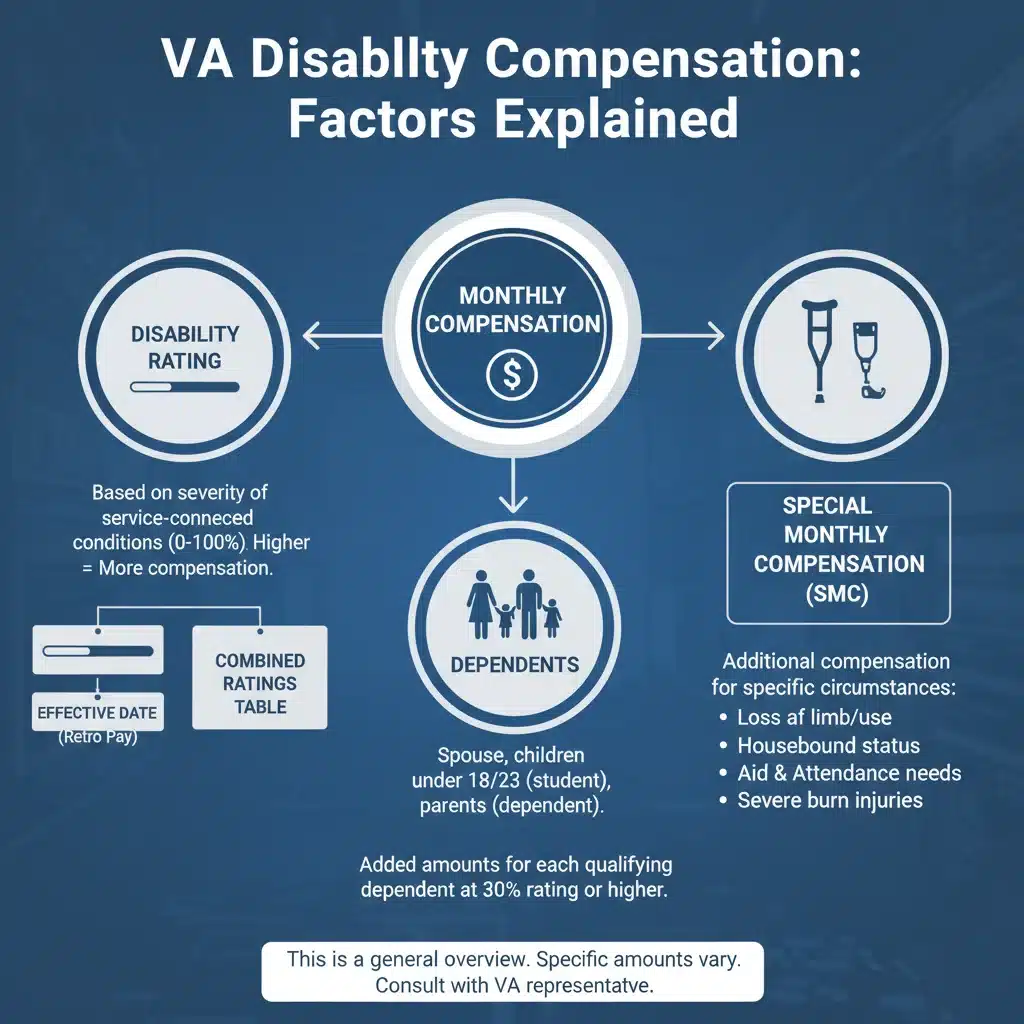
Factors Affecting Your 2026 VA Disability Payments
Beyond the basic disability rating, several factors can influence the final amount of your 2026 VA Disability payment. Being aware of these can help veterans understand their potential benefits more thoroughly.
Combined Disability Ratings
As mentioned, if you have multiple service-connected disabilities, the VA uses a combined rating system. This system is designed to reflect the overall impact of all your disabilities on your earning capacity, not just a simple sum. For example, two 50% disabilities do not combine to 100%. The VA starts with the highest rating and then combines the remaining ratings with the "remaining efficiency" of the veteran. This can be a complex calculation, and online VA disability calculators can help veterans estimate their combined rating.
Dependents
Veterans with a disability rating of 30% or higher are eligible for additional compensation for dependents. This includes:
- A spouse
- Children under 18
- Children between 18 and 23 who are attending school
- Dependent parents
It’s crucial to inform the VA of any changes in your dependent status, such as marriage, divorce, birth of a child, or a child graduating from high school, as these can affect your monthly payments. Ensuring your dependent information is up-to-date is a key aspect of maximizing your 2026 VA Disability benefits.
Special Monthly Compensation (SMC)
SMC is an additional benefit paid to veterans who have specific severe disabilities. These are conditions that go beyond the scope of the regular disability rating schedule. Examples include the loss of use of a creative organ, loss of use of a limb, blindness, or being housebound. SMC rates vary significantly depending on the specific circumstances and combinations of disabilities. If you believe your condition warrants SMC, it’s important to discuss this with a VSO or VA claims expert.
Aid and Attendance
A specific type of SMC, Aid and Attendance, is provided to veterans who need the regular aid and attendance of another person to perform daily activities, or who are permanently housebound due to their service-connected disabilities. This can significantly increase the monthly compensation and is an important consideration for veterans with severe impairments.
Temporary 100% Disability
In some cases, veterans may receive a temporary 100% disability rating. This can happen if a veteran is hospitalized for a service-connected condition for an extended period, or if they undergo surgery for a service-connected condition that requires a prolonged recovery period. This temporary rating provides financial relief during times of acute medical need and can impact your overall 2026 VA Disability outlook.
Navigating the Appeals Process
If you receive a decision from the VA regarding your 2026 VA Disability claim that you believe is incorrect, you have the right to appeal. The VA modernized its appeals process in 2019, offering three main lanes for appeal:
- Supplemental Claim Lane: This lane allows veterans to submit new and relevant evidence to support their claim. If the VA denies your claim, you can submit a supplemental claim with additional evidence.
- Higher-Level Review Lane: In this lane, a senior claims adjudicator reviews your existing claim and evidence to determine if there was an error or difference of opinion. No new evidence can be submitted in this lane.
- Board Appeal Lane: If you disagree with the decision from the Supplemental Claim or Higher-Level Review lanes, or if you prefer, you can appeal directly to the Board of Veterans’ Appeals. The Board offers three options: direct review, evidence submission, or a hearing with a Veterans Law Judge.
Each appeal lane has its own procedures and timelines. Understanding which lane is most appropriate for your situation is crucial. Many veterans find the appeals process complex and choose to seek assistance from a VSO or an accredited attorney specializing in VA claims. Their expertise can be invaluable in presenting a strong case and navigating the intricacies of the VA system, ultimately impacting your potential 2026 VA Disability benefits.
Maximizing Your VA Disability Benefits
Beyond understanding the 2026 VA Disability rates, there are several proactive steps veterans can take to maximize their benefits:
- Keep Thorough Records: Maintain copies of all medical records, military service records, and communications with the VA. This documentation is vital for supporting your claims and appeals.
- Seek Regular Medical Treatment: Consistent medical treatment for your service-connected conditions not only helps manage your health but also creates a continuous record of your symptoms and their impact, which is essential evidence for the VA.
- Understand Your Conditions: Educate yourself about your service-connected disabilities and how they affect your daily life. Being able to articulate this clearly during C&P exams and in personal statements can significantly strengthen your claim.
- File for All Service-Connected Conditions: Don’t just file for the most obvious conditions. If you have multiple conditions that are related to your service, file a claim for each of them. Even seemingly minor conditions can contribute to your combined rating.
- Utilize Veterans Service Organizations (VSOs): VSOs like the American Legion, Disabled American Veterans (DAV), or Veterans of Foreign Wars (VFW) offer free assistance to veterans with their claims. Their accredited representatives are experts in VA regulations and can guide you through every step of the process, from initial application to appeals.
- Consider a Nexus Letter: For conditions where the service connection isn’t immediately obvious, a "nexus letter" from a private medical professional can be incredibly powerful. This letter explicitly links your current condition to your military service.
- Stay Informed About Changes: VA policies and procedures can change. Regularly check the VA website, subscribe to newsletters, and engage with veteran communities to stay updated on any developments that could affect your benefits, including the 2026 VA Disability rates.
- Review Your Rating Periodically: If your service-connected conditions worsen over time, you can file for an increased disability rating. This is a common occurrence, especially for progressive conditions. The VA also has a duty to assist veterans in obtaining evidence, but being proactive about your health and documenting changes is key.
By taking these steps, veterans can ensure they are well-positioned to receive the maximum compensation they are entitled to under the 2026 VA Disability compensation rates and beyond.

Beyond Compensation: Other VA Benefits
While the focus of this guide is on 2026 VA Disability compensation rates, it’s important to remember that the VA offers a wide array of other benefits that can significantly improve a veteran’s quality of life. These include:
- VA Health Care: Eligibility for VA health care is often tied to service-connected disabilities, and even a 0% rating can open doors to comprehensive medical services.
- Education Benefits: The GI Bill and other education programs can help veterans pursue higher education or vocational training.
- Home Loan Guaranty: VA home loans offer significant advantages, including no down payment requirements and competitive interest rates.
- Vocational Rehabilitation and Employment (VR&E): This program helps veterans with service-connected disabilities find and maintain suitable employment, or achieve independence in daily living.
- Life Insurance: Various life insurance programs are available to veterans.
- Burial and Memorial Benefits: The VA provides benefits to help with burial and funeral costs.
Understanding the full scope of VA benefits is crucial. Often, eligibility for one benefit can lead to eligibility for others. Veterans should explore all available resources to ensure they are taking advantage of every opportunity to support themselves and their families.
Conclusion: Preparing for 2026 VA Disability Rates
The 2026 VA Disability Compensation Rates will undoubtedly be a critical topic for veterans across the nation. While the precise figures are yet to be determined, staying informed, understanding the underlying principles of VA compensation, and proactively managing your claims are the best ways to prepare. The VA’s commitment to veterans is steadfast, and by engaging with the system effectively, you can ensure you receive the benefits you have earned through your service.
Remember to utilize the valuable resources available, particularly Veterans Service Organizations, which serve as invaluable guides through the often-complex landscape of VA benefits. Keep meticulous records, seek consistent medical care, and never hesitate to appeal a decision if you believe it is unjust. Your service to the nation is deeply appreciated, and securing your rightful compensation is a testament to that gratitude. By following the advice in this guide, you can confidently navigate the path to understanding and maximizing your 2026 VA Disability compensation and other vital veteran benefits.
Author