
Comparing Medicare Part D Plans for 2026: How to Save 15% on Prescription Costs
As we approach 2026, understanding and strategically selecting your Medicare Part D plan becomes more critical than ever. For millions of Americans, prescription drug costs represent a significant portion of their healthcare expenses. With continuous changes in drug formularies, premiums, deductibles, and cost-sharing structures, a thorough comparison of available plans can lead to substantial savings – potentially 15% or even more on your annual prescription costs. This comprehensive guide will equip you with the knowledge and tools to navigate the complexities of Medicare Part D in 2026, ensuring you make an informed decision that optimizes your healthcare budget.
The landscape of Medicare Part D is dynamic, influenced by legislative updates, pharmaceutical advancements, and insurer adjustments. What might have been the best plan for you in previous years may no longer be the most cost-effective or comprehensive option for 2026. Therefore, a proactive and detailed review is not just recommended, but essential. Our focus here is to demystify the process, highlight key considerations, and provide actionable strategies to help you secure the best possible coverage for your prescription drug needs while keeping more money in your pocket.
Understanding Medicare Part D: The Basics for 2026
Before diving into comparison strategies, it’s crucial to have a firm grasp of what Medicare Part D entails. Medicare Part D is prescription drug coverage offered by private insurance companies approved by Medicare. These plans help cover the cost of prescription drugs, including brand-name and generic drugs. Each plan has its own list of covered drugs, called a formulary, and different cost-sharing rules.
Key Components of Medicare Part D
- Premiums: The monthly fee you pay for your Part D plan. This is separate from your Part B premium.
- Deductible: The amount you must pay out-of-pocket before your plan starts to pay for your drugs. Many plans have a deductible, but some cover certain drugs before the deductible is met.
- Copayments and Coinsurance: The amount you pay for each prescription after your deductible is met. A copayment is a fixed dollar amount, while coinsurance is a percentage of the drug’s cost.
- Formulary: The list of prescription drugs covered by the plan. Plans must cover a wide range of drugs in most therapeutic categories, but specific drug coverage varies.
- Coverage Gap (Donut Hole): A temporary limit on what the drug plan will cover for drugs. After you and your plan have spent a certain amount on covered drugs, you pay a higher percentage of the cost until you reach the catastrophic coverage stage.
- Catastrophic Coverage: Once you’ve spent a certain amount out-of-pocket, your plan pays almost all of your drug costs for the rest of the year.
For 2026, some significant changes are anticipated, building on the Inflation Reduction Act of 2022. These changes aim to reduce out-of-pocket costs for beneficiaries. Understanding these new rules is fundamental to maximizing your savings when comparing Medicare Part D 2026 plans.
Anticipated Changes to Medicare Part D in 2026
The reforms introduced by the Inflation Reduction Act (IRA) of 2022 are being phased in, with 2026 bringing some of the most impactful changes to Medicare Part D. These changes are designed to lower prescription drug costs for beneficiaries and reshape the financial structure of the program.
Key Reforms Affecting 2026 Plans:
- $2,000 Out-of-Pocket Cap: This is arguably the most significant change. Starting in 2025 (and continuing into 2026), out-of-pocket spending for Part D covered drugs will be capped at $2,000 annually. This means once you spend $2,000 out-of-pocket on your prescriptions, you will pay nothing for covered drugs for the remainder of the year. This provides immense financial protection, especially for those with high prescription drug costs.
- Elimination of the 5% Coinsurance in Catastrophic Phase: Directly tied to the out-of-pocket cap, the 5% coinsurance that beneficiaries previously paid in the catastrophic phase will be eliminated. Once you hit the $2,000 cap, your costs drop to zero.
- Manufacturer Discounts and Government Subsidies: The IRA increases the responsibility of drug manufacturers and Medicare for costs in the catastrophic phase, reducing the burden on beneficiaries and plans.
- Insulin Cost Caps: The $35 cap on a month’s supply of insulin for Medicare beneficiaries, which began in 2023, will continue. This is a crucial saving for many individuals with diabetes.
- Vaccine Coverage: Most adult vaccines recommended by the Advisory Committee on Immunization Practices (ACIP) are covered with no cost-sharing under Part D.
These changes are designed to make prescription drugs more affordable and predictable. However, even with these reforms, careful plan comparison remains essential. While the out-of-pocket cap offers significant relief, the path to reaching that cap, including premiums, deductibles, and initial copayments, will still vary greatly between Medicare Part D 2026 plans. Choosing the right plan can help you save money long before you hit the $2,000 limit.
Strategic Comparison: How to Save 15% or More
Saving 15% or more on your prescription costs requires a methodical approach to comparing Medicare Part D plans. It’s not just about finding the lowest premium; it’s about finding the plan that offers the best overall value for your specific medication needs.
Step 1: Compile Your Current Medication List
This is the most critical first step. Create an accurate and comprehensive list of all your prescription medications. For each drug, include:
- The exact drug name (brand and generic, if applicable)
- Dosage (e.g., 10mg)
- Quantity (e.g., 30 pills)
- Frequency (e.g., once daily)
- Your preferred pharmacy (or pharmacies)
Having this information readily available will streamline the comparison process and ensure accuracy.
Step 2: Utilize the Medicare Plan Finder Tool
The official Medicare Plan Finder tool on Medicare.gov is your most powerful resource for comparing Medicare Part D 2026 plans. This free, unbiased tool allows you to input your medications and preferred pharmacies, then calculates estimated annual costs for each plan available in your area. This includes premiums, deductibles, and estimated out-of-pocket drug costs.
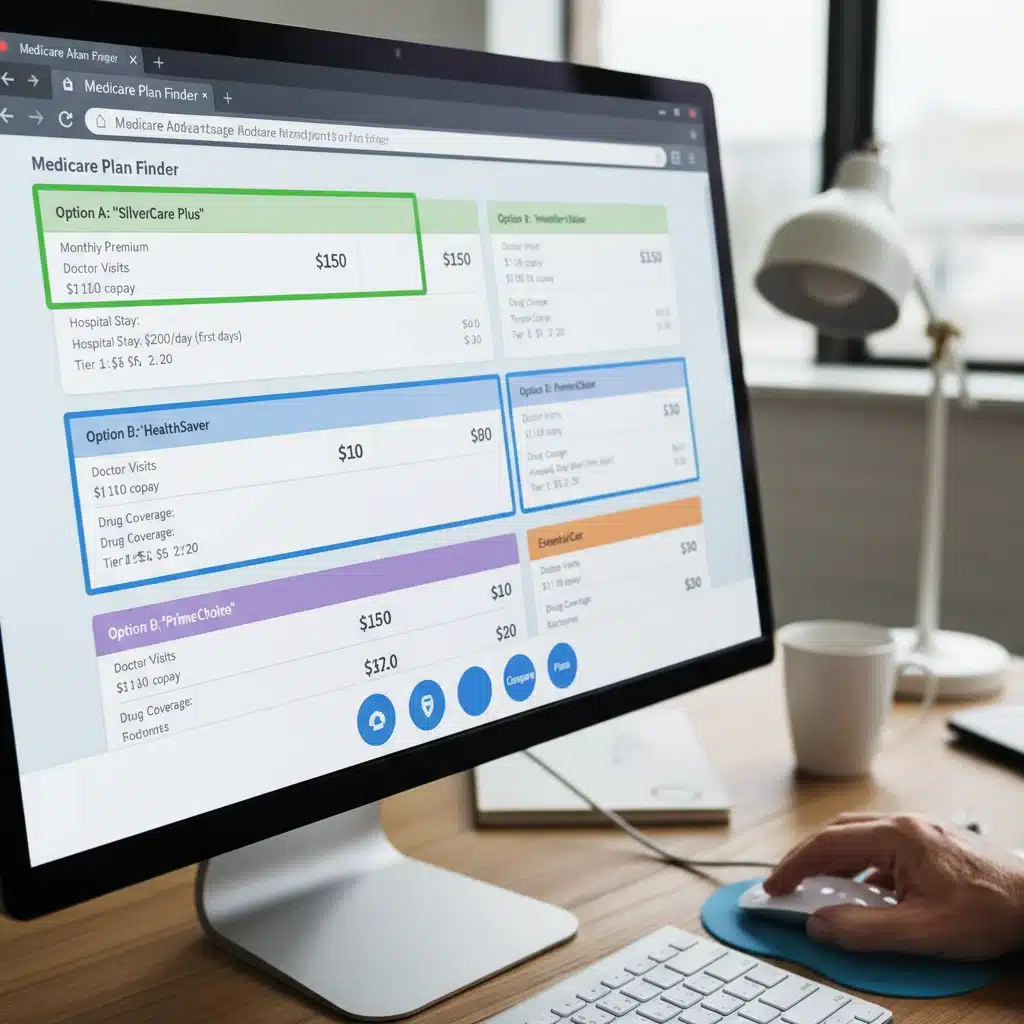
How to Use the Plan Finder Effectively:
- Enter Your Location: Start by entering your zip code.
- Input Medications: Carefully enter all your prescription drugs from your compiled list. The tool will suggest drug names as you type.
- Select Pharmacies: Add your preferred pharmacies. Different plans have different preferred pharmacy networks, and costs can vary significantly based on where you fill your prescriptions.
- Review Results: The tool will present a list of plans, typically sorted by estimated annual cost. Pay attention to more than just the lowest premium. Look at the total estimated out-of-pocket costs.
- Check Formularies: For each plan, click to view its formulary and ensure all your medications are covered. Pay attention to any restrictions, such as prior authorization or step therapy requirements.
- Understand Cost-Sharing: Examine the deductible, copayments, and coinsurance for your specific drugs under each plan. Some plans might have a $0 deductible for generic drugs, which can be a significant saving.
Step 3: Consider Plan Types and Networks
Medicare Part D plans come in two main types:
- Standalone Prescription Drug Plans (PDPs): These plans add drug coverage to Original Medicare, some Medicare Cost Plans, some Medicare Private Fee-for-Service Plans, and Medicare Medical Savings Account Plans.
- Medicare Advantage Plans (MA-PDs): These are Medicare Advantage Plans that include prescription drug coverage. They combine your Part A, Part B, and Part D benefits into one plan.
If you have Original Medicare, you’ll choose a PDP. If you have a Medicare Advantage Plan, check if it includes drug coverage. If not, you generally cannot join a standalone Part D plan.
Also, consider the pharmacy network. Many plans offer preferred pharmacy networks where you pay lower copayments. If your preferred pharmacy isn’t in a plan’s preferred network, your costs could be higher.
Step 4: Evaluate the Coverage Gap and Catastrophic Coverage
While the $2,000 out-of-pocket cap in 2026 significantly simplifies the catastrophic phase, understanding how different plans handle the initial coverage phases is still important. Some plans may offer additional coverage in the donut hole (coverage gap), which can help reduce your costs before you reach the $2,000 cap. The Medicare Plan Finder will factor these elements into its estimated annual costs, making it easier to compare.
Step 5: Look for Extra Help and Low-Income Subsidies
If you have limited income and resources, you might qualify for Extra Help, a Medicare program that helps pay for Part D premiums, deductibles, and copayments. This can lead to even greater savings. You can apply for Extra Help through the Social Security Administration.
Beyond the Numbers: Other Factors to Consider
While cost is a primary driver, other factors can influence your overall satisfaction and access to necessary medications.
Formulary Flexibility and Tiers
Drug formularies are typically organized into tiers, with lower-tiered drugs (generics) having lower copayments and higher-tiered drugs (specialty or non-preferred brand-name) having higher costs. Ensure your essential medications are on the plan’s formulary and ideally in a lower tier. If a specific drug isn’t on a plan’s formulary, you might need to request an exception or consider a different plan.
Prior Authorization and Step Therapy
Some plans require prior authorization (your doctor must get approval from the plan before you can fill certain prescriptions) or step therapy (you must try a less expensive, similar drug first before the plan will cover a more expensive one). These can be administrative hurdles. Reviewing these requirements for your specific drugs can prevent future headaches.
Customer Service and Plan Reputation
While harder to quantify, a plan’s customer service and overall reputation can impact your experience. Look for plans with good star ratings from Medicare, which reflect plan quality and performance.
When to Enroll or Switch Plans
The Annual Enrollment Period (AEP) for Medicare runs from October 15th to December 7th each year. During this time, you can:
- Join a Medicare Part D 2026 plan.
- Switch from one Part D plan to another.
- Switch from Original Medicare to a Medicare Advantage Plan (or vice versa).
- Switch from one Medicare Advantage Plan to another.
Any changes you make during AEP become effective on January 1st of the following year. This is your primary window to review and adjust your coverage for 2026.
There are also Special Enrollment Periods (SEPs) that allow you to change plans outside of AEP under specific circumstances, such as moving to a new area, losing other creditable drug coverage, or qualifying for Extra Help.
Real-World Scenarios: How a 15% Saving Translates
Let’s consider how a 15% saving can impact your budget. Suppose your estimated annual out-of-pocket prescription costs (including premiums, deductibles, and copayments before hitting the $2,000 cap) are $4,000. A 15% saving would mean reducing that by $600, bringing your total to $3,400. This is significant, and for many, it can be the difference between comfortably affording medications and facing financial strain.
Even for those with lower drug costs, say $1,500 annually, a 15% saving is $225 – money that can be used for other essential needs or simply to improve your quality of life. The new $2,000 out-of-pocket cap for 2026 offers a safety net, but smart plan selection can minimize your spending leading up to that cap.

Tips for Maximizing Your Medicare Part D Savings
Beyond the direct comparison, several other strategies can help you save on prescription costs throughout the year.
1. Talk to Your Doctor
Discuss your prescription costs with your doctor. They might be able to prescribe a generic alternative or a less expensive brand-name drug that is equally effective and covered more favorably by your plan’s formulary. Sometimes, a slight change in dosage or form can also impact cost.
2. Explore Patient Assistance Programs
Many pharmaceutical companies offer patient assistance programs (PAPs) for individuals who cannot afford their medications. Non-profit organizations also offer assistance. These programs can provide significant relief, especially for high-cost specialty drugs.
3. Use Mail-Order Pharmacies
Some Part D plans offer lower costs for medications filled through their preferred mail-order pharmacy. This can be convenient and cost-effective for maintenance medications.
4. Check for Pharmacy Discounts
Even with Part D coverage, sometimes a pharmacy’s cash price for a generic drug might be lower than your copayment. Always ask your pharmacist about the cash price or check discount cards (though these generally cannot be used simultaneously with Medicare Part D benefits for the same prescription).
5. Stay Informed About Formulary Changes
Plans can change their formularies during the year. While they must notify you if a covered drug is removed or moved to a higher cost-sharing tier, it’s wise to stay aware. If a critical drug is affected, you may have options, including requesting an exception or a Special Enrollment Period.
6. Review Your Plan Annually
Even if you were satisfied with your plan in 2025, it’s crucial to re-evaluate it for 2026. Formularies change, premiums change, your health needs might change, and new plans may become available. An annual review during AEP is the best way to ensure you always have the most cost-effective coverage.
The Role of Personalized Advice
While the Medicare Plan Finder is an excellent tool, for some, personalized advice can be invaluable. State Health Insurance Assistance Programs (SHIPs) offer free, unbiased counseling on all Medicare-related topics, including Part D. These counselors can help you navigate the Plan Finder, understand complex plan details, and identify potential savings.
Additionally, licensed insurance agents specializing in Medicare can provide guidance. However, ensure you work with an independent agent who can show you plans from multiple carriers, rather than one who is tied to a single insurance company.
Conclusion: Empowering Your Medicare Part D Decisions for 2026
Navigating Medicare Part D 2026 doesn’t have to be overwhelming. By understanding the basics, anticipating the new changes, and employing a strategic comparison approach, you can confidently select a plan that meets your prescription needs and significantly reduces your out-of-pocket costs. The potential to save 15% or more on your annual prescription expenses is a powerful incentive to invest the time and effort into a thorough review.
Remember to gather your medication list, utilize the Medicare Plan Finder, consider all aspects of plan coverage, and take advantage of available assistance programs. Your health and financial well-being depend on making informed choices. Proactive planning for 2026 will not only secure your access to necessary medications but also provide peace of mind knowing you’ve optimized your Medicare Part D benefits.
Don’t wait until the last minute. Start your research as soon as the 2026 plan information becomes available during the Annual Enrollment Period. Your future self (and your wallet) will thank you.