Social Security Adjustments 2026: Understanding Your 3.5% COLA Impact

Social Security Adjustments for 2026: How the 3.5% COLA Impacts Your Benefits (FINANCIAL IMPACT)
As we look ahead to 2026, millions of Americans relying on Social Security benefits are eagerly anticipating the next Cost-of-Living Adjustment (COLA). The projected Social Security COLA 2026, estimated at a significant 3.5%, is poised to bring crucial changes to the financial landscape of retirees, disabled individuals, and survivors. This adjustment, designed to help beneficiaries keep pace with inflation, is more than just a number; it represents a tangible increase in purchasing power for many. Understanding the intricacies of this COLA is vital for effective retirement planning and ensuring your financial stability in the coming years. This comprehensive guide will delve deep into what the 3.5% COLA means for you, how it’s calculated, its potential impact on your benefits and Medicare premiums, and strategies to maximize your financial well-being.
The Social Security Administration (SSA) makes these annual adjustments to combat the erosion of purchasing power due to inflation. Without regular COLAs, the fixed income of beneficiaries would steadily lose value, making it harder to afford essential goods and services. The Social Security COLA 2026 is particularly noteworthy as it follows a period of significant economic shifts and inflationary pressures. While the official announcement won’t come until late 2025, early projections provide a valuable opportunity for proactive financial planning. We will explore the historical context of COLA, the methodology behind its calculation, and what a 3.5% increase could mean for various income brackets and household situations. Our goal is to equip you with the knowledge to navigate these changes confidently.
Understanding the Cost-of-Living Adjustment (COLA)
The Cost-of-Living Adjustment, or COLA, is a critical feature of the Social Security program. It ensures that the value of Social Security and Supplemental Security Income (SSI) benefits does not diminish over time due to inflation. Essentially, COLA is an annual increase in benefits based on changes in the cost of living. This adjustment is not arbitrary; it’s determined by a specific economic indicator to reflect real-world price changes. The primary purpose of COLA is to maintain the purchasing power of beneficiaries, allowing them to afford the same level of goods and services year after year, despite rising prices.
How COLA is Calculated: The CPI-W Index
The calculation of the Social Security COLA 2026, like all previous COLAs, hinges on the Consumer Price Index for Urban Wage Earners and Clerical Workers (CPI-W). The CPI-W is a specific measure of inflation that tracks the average change over time in the prices paid by urban wage earners and clerical workers for a market basket of consumer goods and services. This market basket includes everything from food and housing to transportation and medical care. The SSA compares the average CPI-W for the third quarter of the current year (July, August, and September) with the average CPI-W for the third quarter of the last year in which a COLA became effective.
If there is an increase, the percentage difference, rounded to the nearest tenth of a percent, becomes the COLA for the following year. For example, to determine the Social Security COLA 2026, the SSA will compare the CPI-W average from Q3 2025 to the CPI-W average from Q3 2024 (assuming a COLA was effective in 2025). If there is no increase in the CPI-W, or if it decreases, then there is no COLA for that year. This methodology ensures that the adjustment is directly tied to the inflation experienced by a significant segment of the population, aiming for fairness and accuracy in benefit adjustments.
Historical Context of COLA Adjustments
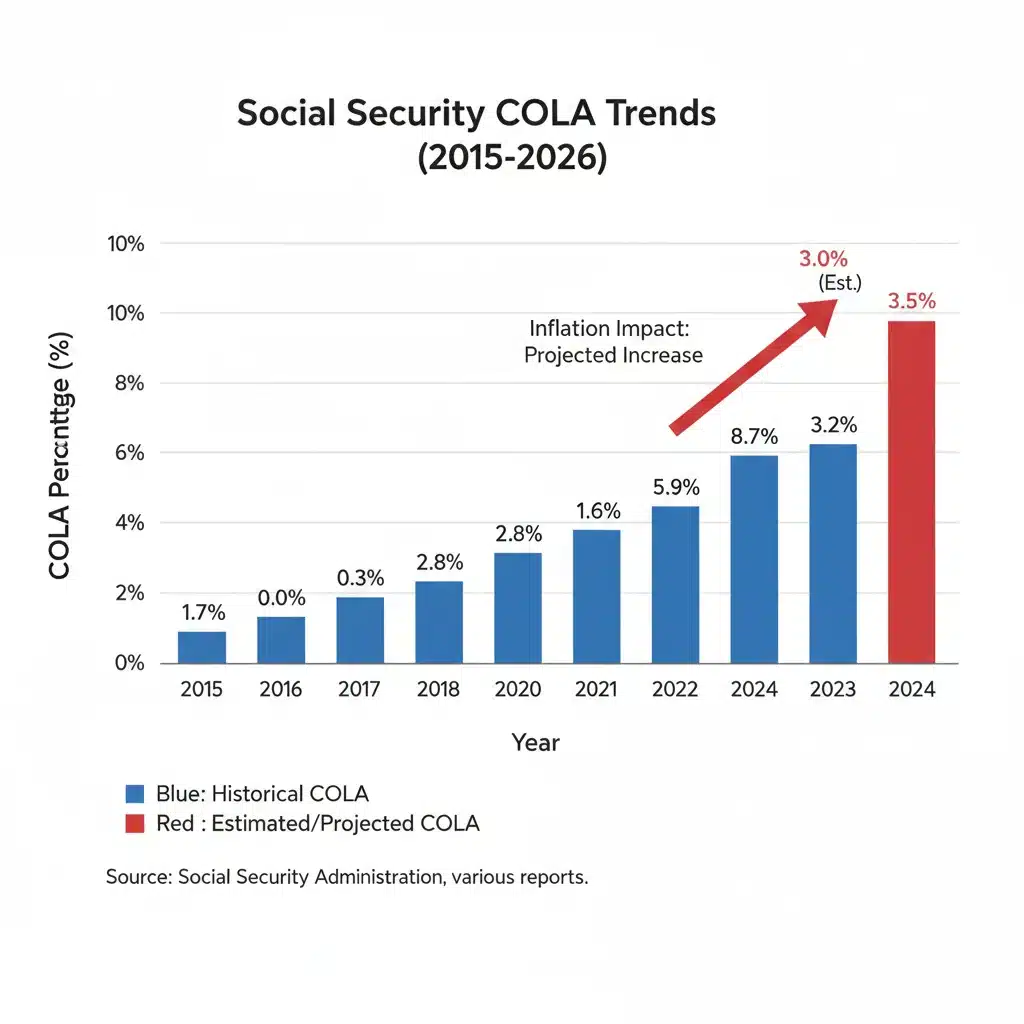
Understanding the history of COLA provides valuable context for the projected Social Security COLA 2026. Before 1975, COLAs were ad-hoc, requiring congressional approval. However, since 1975, they have been automatic, tied directly to the CPI-W. This automatic adjustment ensures that benefits keep pace with inflation without political intervention. Over the decades, COLA percentages have varied significantly, reflecting different economic climates. For instance, the early 1980s saw very high COLAs due to rampant inflation, while some years have seen zero increases. More recently, we’ve experienced a range of adjustments, from modest increases to the substantial 5.9% in 2022 and 8.7% in 2023, driven by a surge in inflation following the pandemic.
These historical fluctuations underscore the importance of staying informed about economic trends and their potential impact on future COLAs. The projected 3.5% for 2026, while lower than the recent peaks, still represents a significant adjustment that will affect millions of beneficiaries. Analyzing past trends helps in forecasting and understanding the rationale behind current projections. It also highlights the dynamic nature of Social Security benefits and the constant need for beneficiaries to adapt their financial planning strategies. The mechanism of COLA is a testament to the program’s commitment to providing a stable income floor for its recipients.
Projected 3.5% COLA for 2026: What it Means
The projection of a 3.5% Social Security COLA 2026 is a key piece of information for anyone currently receiving or soon to receive Social Security benefits. While it’s an estimate and the final figure will be announced later, it provides a strong indication of the financial adjustments to expect. A 3.5% increase, while not as dramatic as some recent adjustments, is still a substantial boost that will impact the monthly income of millions. This increase is designed to help maintain purchasing power, ensuring that beneficiaries can continue to meet their living expenses in an environment of ongoing inflation.
Impact on Average Monthly Benefits
To illustrate the impact, let’s consider hypothetical scenarios based on the average Social Security benefit. As of recent data, the average monthly benefit for retired workers is approximately $1,827. A 3.5% increase on this amount would translate to an additional $63.95 per month, bringing the new average to approximately $1,890.95. For couples receiving benefits, the increase would be even more significant. For example, a couple receiving $3,000 per month would see their benefits rise by $105, reaching $3,105. These seemingly modest increases can add up significantly over the course of a year, providing an important buffer against rising costs of living.
It’s important to remember that these are averages. Individual benefit increases will vary based on your specific benefit amount. Those with higher pre-COLA benefits will see a larger dollar increase, while those with lower benefits will see a smaller dollar increase, though the percentage increase remains consistent across the board. The Social Security COLA 2026 will apply to all types of Social Security benefits, including retirement, disability (SSDI), and survivor benefits. This broad application ensures that all beneficiaries receive the necessary adjustment to combat inflation.
Medicare Premiums and COLA: The Hold Harmless Provision
One of the most critical aspects of the Social Security COLA 2026 is its interplay with Medicare Part B premiums. For many beneficiaries, Medicare Part B premiums are deducted directly from their Social Security checks. This connection often leads to concerns about whether a COLA increase will be entirely absorbed by a rise in Medicare costs. This is where the ‘hold harmless’ provision comes into play. The hold harmless provision prevents the increase in a beneficiary’s Part B premium from exceeding the dollar amount of their Social Security COLA. In simpler terms, if you are protected by this provision, your net Social Security benefit (after Medicare deduction) will not decrease from one year to the next due to a Part B premium increase.
However, it’s crucial to understand that not everyone is protected by the hold harmless provision. It generally applies to beneficiaries who have their Part B premiums deducted from their Social Security benefits and whose benefits are not yet high enough to be subject to the Income-Related Monthly Adjustment Amount (IRMAA). New Medicare enrollees, those who don’t have their premiums deducted from Social Security, or those paying IRMAA surcharges may not be fully protected. Therefore, while the 3.5% Social Security COLA 2026 will increase your gross benefit, the net increase could be partially or fully offset by rising Medicare costs for some individuals. Careful planning and understanding your specific situation are essential.
Navigating the Financial Impact of the 2026 COLA
The projected 3.5% Social Security COLA 2026 will undoubtedly have a significant financial impact on millions of Americans. While the primary goal of COLA is to preserve purchasing power, its effects extend beyond a simple increase in monthly income. Beneficiaries need to consider how this adjustment might influence their overall financial planning, budgeting, and even tax obligations. Proactive planning is key to maximizing the benefits of the COLA and mitigating any potential downsides.
Budgeting and Spending Adjustments
For many, the COLA increase will provide welcome relief, helping to cover the rising costs of groceries, utilities, and other essential expenses. It’s an opportunity to revisit your budget and make necessary adjustments. If you’ve been struggling to make ends meet, the extra funds can provide some breathing room. Consider allocating the increased amount to areas where inflation has hit hardest, such as food or healthcare. Alternatively, if your current budget is stable, you might consider directing the additional funds towards savings, debt reduction, or even discretionary spending that enhances your quality of life. The Social Security COLA 2026 offers a chance to recalibrate your financial strategy.
However, it’s also important to be realistic. While a 3.5% increase is positive, it may not fully offset all the inflationary pressures you face. It’s wise to assess your actual expenses against the new benefit amount to ensure your budget remains balanced. This is particularly true for those who might see a portion of their COLA absorbed by higher Medicare premiums or other rising costs. Use this opportunity to fine-tune your spending habits and ensure your financial plan aligns with your increased income and ongoing expenses. The goal is to make the Social Security COLA 2026 work most effectively for your personal financial situation.
Tax Implications of Increased Benefits
A frequently overlooked aspect of Social Security benefit increases is their potential tax implications. While many people assume Social Security benefits are tax-free, a portion of them can be taxable depending on your ‘provisional income.’ Provisional income includes your adjusted gross income (AGI), tax-exempt interest, and half of your Social Security benefits. If your provisional income exceeds certain thresholds, a portion of your Social Security benefits becomes taxable.
- For individuals: If your provisional income is between $25,000 and $34,000, up to 50% of your benefits may be taxable. If it’s over $34,000, up to 85% may be taxable.
- For married couples filing jointly: If your provisional income is between $32,000 and $44,000, up to 50% of your benefits may be taxable. If it’s over $44,000, up to 85% may be taxable.
A 3.5% Social Security COLA 2026 could push some beneficiaries over these thresholds, or increase the amount of their benefits that are subject to taxation. It’s crucial to factor this into your financial planning. You might consider consulting a tax advisor to understand how the increased benefits could affect your overall tax liability and explore strategies to mitigate it, such as qualified charitable distributions (QCDs) or careful management of other income sources. Ignoring the tax implications could lead to an unexpected tax bill come filing season.
Strategies for Maximizing Your COLA
To truly maximize the benefit of the Social Security COLA 2026, consider several proactive strategies. First, review your overall retirement income plan. Does the increased Social Security benefit allow you to draw less from other retirement accounts, potentially preserving those funds for longer? Second, explore ways to reduce expenses. Even a small COLA can be more impactful if your spending is optimized. This might involve refinancing debts, reviewing insurance policies, or cutting back on unnecessary subscriptions.
Third, for those not yet claiming Social Security, consider the timing of your claim. Delaying Social Security benefits can significantly increase your monthly payment, and these larger payments will, in turn, receive larger dollar increases from future COLAs. Fourth, stay informed about Medicare Part B premium changes and how they specifically apply to your situation, especially regarding the ‘hold harmless’ provision. Understanding these dynamics can help you anticipate your net income. Finally, consider diversifying your income streams in retirement, if possible, to reduce reliance solely on Social Security and its annual adjustments. The more robust your overall financial plan, the better equipped you will be to leverage the Social Security COLA 2026 and future adjustments.

The Broader Economic Context and Future COLAs
The projected 3.5% Social Security COLA 2026 doesn’t exist in a vacuum; it’s a reflection of broader economic conditions. Understanding these conditions can help beneficiaries anticipate future adjustments and make more informed financial decisions. Inflation, interest rates, and overall economic growth all play a role in the calculation and impact of COLA.
Inflationary Pressures and the CPI-W
The primary driver of COLA is inflation, as measured by the CPI-W. The 3.5% projection for 2026 suggests that economists anticipate continued, albeit potentially moderating, inflationary pressures. Factors contributing to inflation can include supply chain disruptions, energy price fluctuations, wage growth, and consumer demand. While the Federal Reserve often aims for a 2% inflation target, real-world conditions can deviate significantly. A higher-than-expected inflation rate in 2025 could push the actual Social Security COLA 2026 higher, while a sharp decline in inflation could result in a lower adjustment.
It’s important for beneficiaries to monitor inflation reports and economic forecasts, as these can provide early clues about the direction of future COLAs. While the CPI-W is specifically designed for urban wage earners and clerical workers, it generally reflects broader inflationary trends. Keeping an eye on these indicators can help you adjust your expectations and financial plans accordingly. The ongoing debate about whether the CPI-W accurately reflects the spending patterns of seniors (who often spend more on healthcare) is also relevant, as it could influence future policy discussions regarding COLA calculation methods.
Potential Legislative Changes and Social Security Reform
Beyond the annual COLA, the long-term solvency of Social Security is a perennial topic of discussion in Washington. While the Social Security COLA 2026 is an automatic adjustment, the broader framework of Social Security benefits could be subject to legislative changes. Proposals often include adjustments to the full retirement age, changes to how benefits are calculated, or modifications to the COLA formula itself (e.g., using the CPI-E, which focuses on elderly consumer spending).
While such reforms are complex and often politically contentious, they are worth monitoring for any long-term financial planning. Any significant legislative changes could impact not only future COLA amounts but also the overall structure and generosity of Social Security benefits. Staying informed through reputable news sources and government publications is crucial for understanding these potential shifts and their implications for your retirement security. The stability of Social Security is paramount for millions, and ongoing discussions about its future are an important part of the broader financial landscape.
Preparing for Future Financial Adjustments
The Social Security COLA 2026 serves as a reminder that financial planning is an ongoing process. To effectively prepare for future adjustments, both anticipated and unforeseen, consider these steps:
- Diversify Income Streams: Relying solely on Social Security can be risky. Explore other income sources such as pensions, investments, part-time work, or annuities.
- Build an Emergency Fund: Having a robust emergency fund can help you weather unexpected expenses or periods of lower-than-anticipated COLA increases.
- Review Investments: Ensure your investment portfolio aligns with your risk tolerance and retirement goals, providing potential growth that can supplement fixed income.
- Stay Informed: Regularly check official Social Security Administration announcements, economic reports, and financial news to stay abreast of developments that could impact your benefits.
- Consult a Financial Advisor: A qualified financial advisor can help you create a personalized retirement plan that accounts for Social Security COLAs, inflation, and other financial variables.
By taking these proactive steps, you can create a more resilient financial plan that is better equipped to handle the annual adjustments of the Social Security COLA 2026 and beyond, ensuring a more secure and comfortable retirement.
Conclusion: Proactive Planning for Your Social Security Future
The projected 3.5% Social Security COLA 2026 represents a significant and anticipated adjustment for millions of beneficiaries. This increase, driven by inflationary trends and calculated through the CPI-W, is designed to help maintain the purchasing power of your benefits, offering crucial support in an evolving economic environment. While the final figure will be confirmed in late 2025, understanding these early projections empowers you to engage in proactive and strategic financial planning.
We’ve explored how this COLA could impact your average monthly benefits, emphasizing that while the percentage is universal, the dollar amount will vary based on your existing benefit. Crucially, we delved into the complex relationship between COLA and Medicare Part B premiums, highlighting the ‘hold harmless’ provision and its limitations. Understanding these nuances is essential to accurately predict your net increase in income. Furthermore, we examined the potential tax implications of increased benefits, urging beneficiaries to consider how a higher provisional income might affect their tax liability and to seek professional advice if needed.
Beyond the immediate financial boost, the Social Security COLA 2026 serves as a timely reminder of the importance of comprehensive retirement planning. By revisiting your budget, exploring strategies to maximize your COLA, and staying informed about broader economic trends and potential legislative changes, you can better prepare for a financially secure future. Social Security is a cornerstone of retirement for many, and by actively engaging with information about its adjustments, you empower yourself to make the most of your benefits. Plan wisely, stay informed, and secure your financial well-being for 2026 and the years to come.