Federal Student Loan Reforms 2026: Act by October 1

Federal Student Loan Reforms in 2026: What Borrowers Must Do by October 1 (TIME-SENSITIVE)
The landscape of federal student loans is on the cusp of significant transformation. As we approach 2026, a series of pivotal reforms are set to reshape how millions of Americans manage their student debt. These aren’t minor tweaks; they represent a fundamental shift in repayment strategies, eligibility for forgiveness, and the overall borrower experience. For anyone with federal student loans, understanding these changes and, more importantly, acting on them by the critical deadline of October 1 is not just advisable—it’s imperative.
Ignoring these impending reforms could lead to missed opportunities for substantial savings, extended repayment periods, or even the forfeiture of potential loan forgiveness. This comprehensive guide will break down the key aspects of the student loan reforms 2026, highlight the urgent actions required by October 1, and provide a roadmap to navigate this complex financial terrain successfully. Whether you’re a new borrower, deep into repayment, or nearing retirement with outstanding debt, these changes will affect you. Let’s delve into what’s coming and how you can prepare.
Understanding the Impending Student Loan Reforms 2026
The federal government has been steadily working to overhaul the student loan system, aiming to make repayment more manageable and equitable for borrowers. The reforms slated for 2026 are the culmination of several initiatives, including the rollout of the Saving on a Valuable Education (SAVE) Plan, adjustments to Income-Driven Repayment (IDR) plans, and improvements to Public Service Loan Forgiveness (PSLF). These changes are designed to provide more flexible repayment options, reduce monthly burdens, and accelerate paths to loan forgiveness for eligible individuals.
At the heart of these reforms is a recognition of the growing burden of student debt and a commitment to providing clearer, more accessible pathways to financial relief. However, the benefits are not automatic. Borrowers must proactively engage with their loan servicers and the Department of Education to ensure they are enrolled in the most advantageous plans and that their loan history is accurately reflected. The October 1 deadline is a crucial checkpoint in this process, marking a point before which certain actions can unlock significant advantages.
The SAVE Plan: A Game Changer for Many
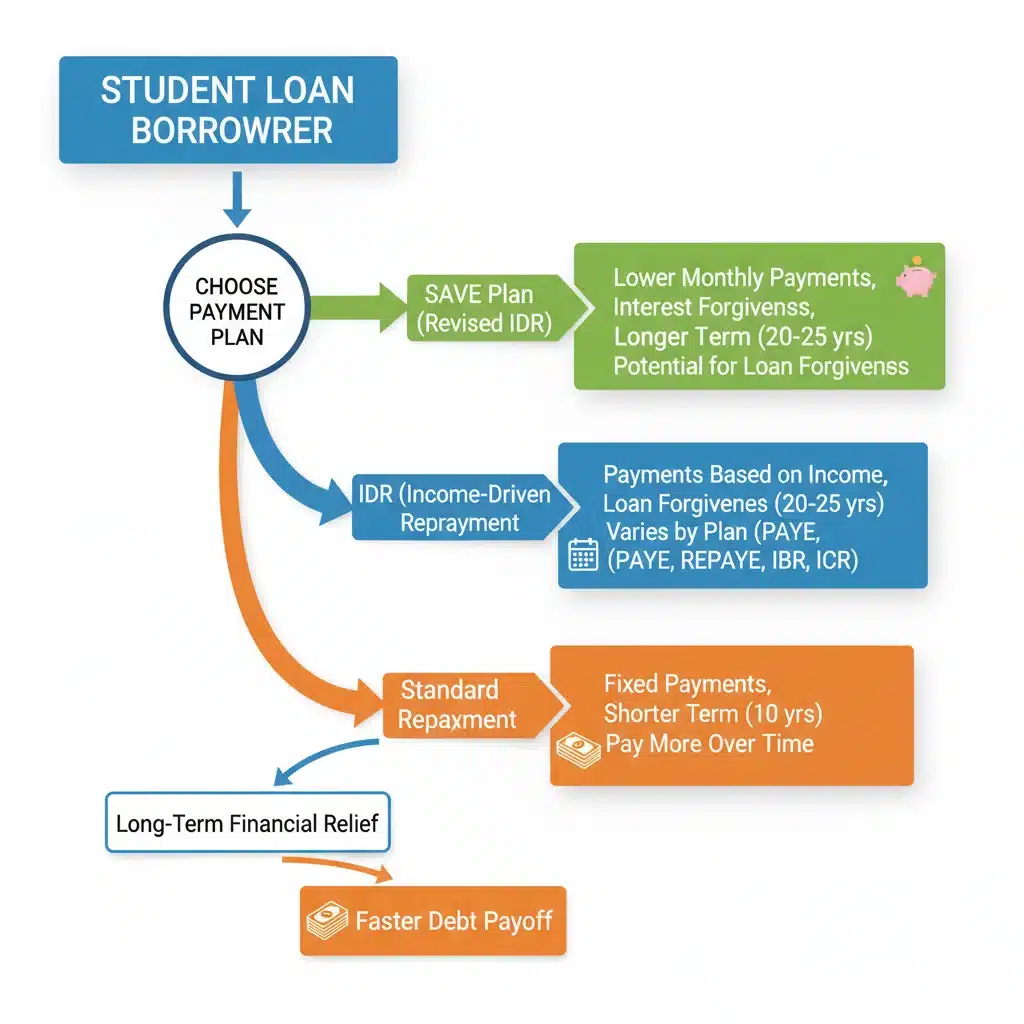
One of the most impactful elements of the student loan reforms 2026 is the full implementation and optimization of the SAVE Plan. While elements of SAVE are already in effect, 2026 will see its full benefits realized, particularly concerning undergraduate loan interest subsidies and reduced discretionary income percentages for payment calculations. The SAVE Plan is an enhanced version of the Revised Pay As You Earn (REPAYE) Plan, offering more generous terms:
- Lower Monthly Payments: For undergraduate loans, monthly payments will be calculated based on 5% of discretionary income, down from 10-15% on other IDR plans. For graduate loans, it remains 10%, or a weighted average for those with both.
- Interest Subsidy: If your calculated payment doesn’t cover the monthly interest, the government covers the remaining interest, preventing your loan balance from growing due to unpaid interest. This is a significant relief for many borrowers.
- Earlier Forgiveness: Borrowers with original principal balances of $12,000 or less could see forgiveness after just 10 years of payments, with an additional year added for every $1,000 borrowed above that, up to a maximum of 20 or 25 years.
The SAVE Plan is designed to be the most affordable IDR plan for the majority of borrowers, especially those with lower incomes relative to their debt. Understanding how to enroll and ensuring your income information is up-to-date will be crucial for leveraging its full potential.
IDR Account Adjustment: Recalibrating Your Path to Forgiveness
Another monumental aspect of the student loan reforms 2026 is the one-time Income-Driven Repayment (IDR) Account Adjustment. This adjustment aims to correct historical inaccuracies in payment tracking that prevented many borrowers from receiving credit for payments that should have counted towards IDR forgiveness. The adjustment will provide credit for:
- Periods of repayment, regardless of the payment plan.
- Months spent in deferment (excluding in-school deferment) prior to 2013.
- Twelve or more consecutive months in forbearance.
- Thirty-six or more cumulative months in forbearance.
- Months spent in economic hardship deferment starting July 1, 1994.
This adjustment is particularly significant because it can retroactively increase the number of qualifying payments for IDR and PSLF forgiveness, potentially pushing many borrowers closer to, or even over, the threshold for loan discharge. However, to fully benefit from this, certain actions must be taken, particularly if you have FFEL Program loans or Perkins Loans.
The October 1 Deadline: Why It’s Crucial
The October 1 deadline is not arbitrary; it marks a critical juncture for several aspects of the student loan reforms 2026, primarily related to the IDR Account Adjustment. For many borrowers, this date determines whether they can consolidate their loans to qualify for the maximum possible credit under the adjustment.

Consolidating FFEL and Perkins Loans
If you have Federal Family Education Loan (FFEL) Program loans, Perkins Loans, or other non-Direct federal loans, these loans are generally not eligible for the IDR Account Adjustment or the SAVE Plan unless they are consolidated into a Direct Consolidation Loan. The Department of Education has set October 1 as the final date by which these loans must be consolidated to receive the full benefits of the IDR Account Adjustment. After this date, these loans will only receive credit for payments made after consolidation, potentially missing out on years of retroactive credit.
What to do:
- Identify Your Loan Types: Log into StudentAid.gov to determine if you have FFEL, Perkins, or other non-Direct loans.
- Apply for Direct Consolidation: If you have eligible loans, apply for a Direct Consolidation Loan through StudentAid.gov. Ensure you complete this process well before October 1, as it can take several weeks to finalize.
- Understand the Implications: Consolidating may change your interest rate (it will be a weighted average of your current rates) and could reset your payment count for PSLF if not done carefully. However, for the IDR Account Adjustment, consolidation by October 1 is key to maximizing past payment credit.
It’s vital to remember that if you have multiple Direct Loans with different payment histories, consolidating them together by October 1 could result in the consolidated loan receiving the highest payment count from all the underlying loans. This ‘look-back’ provision is a significant benefit that will not be available after the deadline for all loan types.
Maximizing IDR and PSLF Credit
The October 1 deadline is also critical for borrowers who believe they might be eligible for Public Service Loan Forgiveness (PSLF) or general IDR forgiveness. The IDR Account Adjustment is designed to automatically apply to Direct Loan borrowers. However, if you have loans that aren’t Direct Loans, or if you want to ensure all your past payment periods are considered, consolidation is your best bet before this date.
For PSLF, the adjustment will also count periods of repayment, deferment, and forbearance towards the 120 qualifying payments needed for forgiveness, even if you weren’t in an eligible repayment plan or working for a qualifying employer during those times. This is a one-time opportunity to rectify past errors and accelerate your path to forgiveness. After October 1, the rules revert to stricter interpretations.
Who Benefits Most from the Student Loan Reforms 2026?
While the student loan reforms 2026 aim to help a broad spectrum of borrowers, certain groups stand to gain significantly more:
- Low-Income Borrowers: The SAVE Plan’s lower discretionary income percentage and interest subsidy make it exceptionally beneficial for those with lower incomes, potentially reducing payments to $0 and preventing balance growth.
- Borrowers with Older Loans (FFEL, Perkins): Those with non-Direct federal loans can unlock eligibility for SAVE and the IDR Account Adjustment by consolidating before October 1.
- Long-Term Borrowers: Individuals who have been in repayment for many years, especially those who experienced periods of deferment or forbearance, are likely to see a substantial increase in their qualifying payment counts due to the IDR Account Adjustment, potentially leading to immediate or much earlier forgiveness.
- Public Service Workers: PSLF-eligible borrowers will find their path to forgiveness significantly shortened by the IDR Account Adjustment’s retroactive credit for past periods.
- Borrowers with Small Balances: The accelerated forgiveness timeline under SAVE for balances of $12,000 or less is a huge boon for these individuals.
It’s important to stress that even if you don’t fall neatly into one of these categories, reviewing your options is crucial. The changes are complex, and a personalized assessment is often necessary.
Step-by-Step Guide to Prepare for 2026 and Act by October 1
Navigating these reforms requires a proactive approach. Here’s a step-by-step guide to ensure you’re prepared:
Step 1: Access and Review Your Loan Information on StudentAid.gov
Your first port of call should always be StudentAid.gov. Log in using your FSA ID. This portal is the authoritative source for your federal student loan information. Review:
- Your Loan Types: Identify whether you have Direct Loans, FFEL Program loans, Perkins Loans, or a mix.
- Your Current Repayment Plan: Are you on a Standard Repayment Plan, an IDR plan (like PAYE, IBR, ICR, or REPAYE/SAVE), or another plan?
- Your Payment History: Though the IDR adjustment will be automatic for Direct Loans, understanding your payment history can help you anticipate benefits.
Step 2: Understand the IDR Account Adjustment and Consolidation Deadline
This is where the October 1 deadline becomes paramount. If you have FFEL Program loans, Perkins Loans, or other non-Direct federal loans, you MUST consolidate them into a Direct Consolidation Loan by October 1 to receive the maximum benefit from the IDR Account Adjustment. This will ensure that all eligible past periods of repayment, deferment, and forbearance are counted towards IDR and PSLF forgiveness.
- Action: If needed, apply for a Direct Consolidation Loan on StudentAid.gov. Do not delay.
- Consideration: If you have multiple Direct Loans with different payment counts, consolidating them together by October 1 might combine their payment histories, giving the new consolidated loan the highest payment count. This specific benefit is also tied to the October 1 deadline.
Step 3: Evaluate the SAVE Plan
For most borrowers, the SAVE Plan will offer the most advantageous terms. Even if you’re currently on another IDR plan, it’s worth comparing it to SAVE.
- Action: Use the Loan Simulator tool on StudentAid.gov to see how your payments would look under the SAVE Plan.
- Action: If SAVE is beneficial, apply to switch to it. This can be done at any time, but doing it sooner means you start benefiting sooner.
Step 4: Update Your Income and Family Size Information
For IDR plans, including SAVE, your monthly payment is based on your income and family size. Keeping this information current is crucial.
- Action: Annually recertify your income and family size with your loan servicer. If your income has decreased or your family size has increased, you can request an earlier recertification to potentially lower your payments.
Step 5: For Public Service Workers: Certify Employment for PSLF
If you work for a qualifying non-profit or government organization, ensure your employment is certified for PSLF. The IDR Account Adjustment will help count past periods, but ongoing certification is necessary.
- Action: Use the PSLF Help Tool on StudentAid.gov to generate and submit your PSLF form annually or whenever you change employers.
Step 6: Stay Informed and Seek Guidance
The rules can be complex and subject to change. It’s essential to stay updated.
- Action: Regularly check StudentAid.gov and official Department of Education communications.
- Action: If you’re unsure, contact your loan servicer. For complex situations, consider consulting a reputable non-profit student loan counselor.
Common Pitfalls to Avoid
As you navigate the student loan reforms 2026, be aware of common mistakes that could cost you:
- Missing the October 1 Consolidation Deadline: This is arguably the biggest pitfall. Failing to consolidate eligible loans by this date means missing out on the full benefits of the IDR Account Adjustment’s retroactive payment credit.
- Assuming Automatic Enrollment: While some adjustments are automatic for Direct Loan holders, many benefits, especially those related to specific repayment plans like SAVE, require active enrollment.
- Ignoring Communications: The Department of Education and loan servicers will send important updates. Read them carefully.
- Falling for Scams: Be wary of companies promising instant loan forgiveness for a fee. Official actions are always free through StudentAid.gov or your servicer.
- Not Recertifying Income: Failing to recertify your income annually for IDR plans can lead to higher payments or capitalization of interest.
Long-Term Impact of the Student Loan Reforms 2026
Beyond the immediate actions required by October 1, the student loan reforms 2026 are expected to have a lasting impact on the financial well-being of millions of Americans. The goal is to create a more sustainable and equitable system where borrowers are not trapped in a cycle of ever-increasing debt. By making payments more affordable and pathways to forgiveness clearer, these reforms could:
- Stimulate Economic Growth: Reducing student debt burdens can free up disposable income for other expenditures, homeownership, and savings.
- Improve Financial Stability: Lower monthly payments and clearer forgiveness paths provide greater financial predictability and reduce stress for borrowers.
- Address Disparities: The reforms are particularly beneficial for low-income borrowers and those from underserved communities, potentially helping to close wealth gaps.
- Encourage Public Service: Enhanced PSLF benefits make careers in public service more financially viable and attractive.
However, the success of these reforms hinges on borrower engagement. The government has provided the tools and frameworks, but individuals must take the necessary steps to utilize them effectively. This means not only acting by the October 1 deadline but also staying informed and proactive throughout their repayment journey.
Final Thoughts and Call to Action
The student loan reforms 2026 represent a historic opportunity for federal student loan borrowers to significantly improve their financial outlook. The upcoming changes, especially the full rollout of the SAVE Plan and the one-time IDR Account Adjustment, offer unprecedented relief and clearer paths to loan forgiveness. However, the clock is ticking, and the critical deadline of October 1 looms large, particularly for those with older FFEL or Perkins Loans who wish to maximize their credit for past payments.
Don’t let this opportunity pass you by. Take the time today to log into StudentAid.gov, understand your specific loan situation, and take decisive action. Consolidate if necessary, explore the SAVE Plan, and ensure your information is up-to-date. The effort you put in now could translate into thousands of dollars saved and years shaved off your repayment timeline. Be informed, be proactive, and secure your financial future in the new era of federal student loan repayment.
Author