
Unlocking Enhanced Medicare Benefits in 2026: A Step-by-Step Guide to Saving Up to $500 Annually
As we look ahead to 2026, understanding your Medicare benefits becomes more crucial than ever. With potential changes and new opportunities for savings, being informed can translate into significant financial relief, possibly up to $500 annually. This comprehensive guide is designed to empower you with the knowledge and strategies needed to navigate the evolving landscape of Medicare benefits 2026. We’ll break down eligibility, enrollment, plan choices, and crucial cost-saving tips, ensuring you make the most informed decisions for your health and financial well-being.
Understanding the Foundation: What is Medicare?
Before diving into the specifics of Medicare benefits 2026, let’s establish a foundational understanding of what Medicare is. Medicare is a federal health insurance program primarily for people aged 65 or older, but also for certain younger people with disabilities and people with End-Stage Renal Disease (permanent kidney failure requiring dialysis or a transplant). It’s designed to help cover healthcare costs, but it’s not a one-size-fits-all solution, and understanding its different parts is key to maximizing its value.
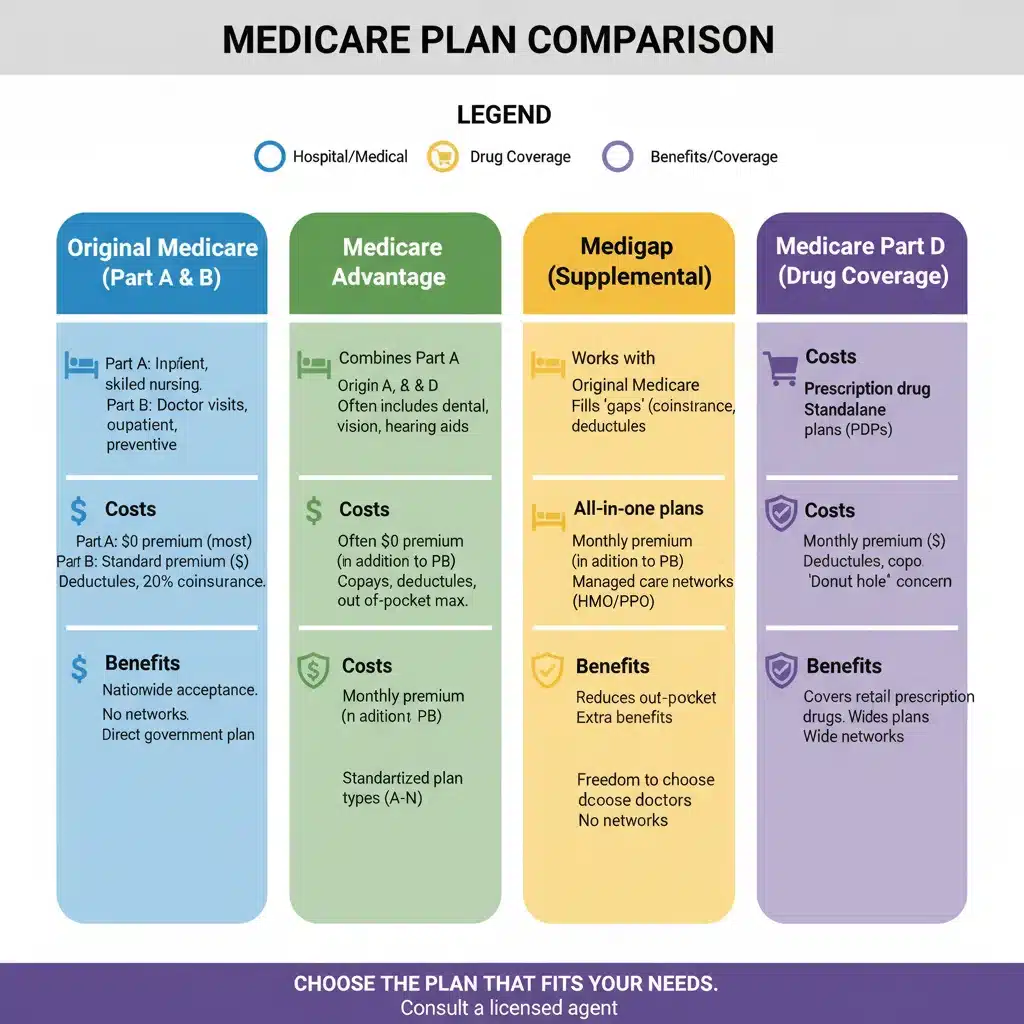
The Four Pillars of Medicare: Parts A, B, C, and D
- Medicare Part A (Hospital Insurance): This covers inpatient hospital stays, care in a skilled nursing facility, hospice care, and some home health care. For most people, Part A is premium-free if they or their spouse paid Medicare taxes for a specified period (typically 10 years or 40 quarters) while working.
- Medicare Part B (Medical Insurance): Part B covers certain doctors’ services, outpatient care, medical supplies, and preventive services. Most people pay a monthly premium for Part B, which can be deducted from their Social Security benefits.
- Medicare Part C (Medicare Advantage): Offered by private companies approved by Medicare, Medicare Advantage plans are an alternative to Original Medicare (Parts A and B). These plans cover all services that Original Medicare covers and often include extra benefits like vision, hearing, dental, and even prescription drug coverage (Part D).
- Medicare Part D (Prescription Drug Coverage): This part adds prescription drug coverage to Original Medicare, some Medicare Cost Plans, some Medicare Private Fee-for-Service Plans, and Medicare Medical Savings Account Plans. These plans are also offered by private companies approved by Medicare.
Eligibility and Enrollment for 2026: What You Need to Know
To access the enhanced Medicare benefits 2026, understanding eligibility and the various enrollment periods is paramount. Missing key deadlines can result in penalties or delayed coverage.
Who is Eligible for Medicare?
Generally, you’re eligible for Medicare if you are:
- A U.S. citizen or a legal resident who has lived in the U.S. for at least 5 years, AND
- Age 65 or older, OR
- Under 65 with certain disabilities (after a 24-month waiting period), OR
- Any age with End-Stage Renal Disease (ESRD) or Amyotrophic Lateral Sclerosis (ALS).
Key Enrollment Periods to Mark on Your Calendar
There are several crucial enrollment periods:
- Initial Enrollment Period (IEP): This is your first chance to sign up for Medicare. It’s a 7-month period that begins 3 months before your 65th birthday, includes the month you turn 65, and ends 3 months after you turn 65. If you don’t sign up for Part B during your IEP, you may have to pay a late enrollment penalty, which could increase your premiums for as long as you have Medicare.
- General Enrollment Period (GEP): If you miss your IEP and don’t qualify for a Special Enrollment Period, you can sign up for Part A and/or Part B during the GEP, which runs from January 1 to March 31 each year. Coverage starts July 1, and you may face late enrollment penalties.
- Special Enrollment Periods (SEPs): These periods allow you to enroll in Medicare outside of the IEP or GEP if you experience certain life events, such as moving to a new area, losing other health coverage, or your plan changing its contract with Medicare.
- Annual Enrollment Period (AEP): From October 15 to December 7 each year, you can make changes to your Medicare coverage for the following year. This is your chance to switch from Original Medicare to a Medicare Advantage Plan, switch from one Medicare Advantage Plan to another, join a Medicare Prescription Drug Plan, or switch plans. This period is critical for optimizing your Medicare benefits 2026.
- Medicare Advantage Open Enrollment Period (MA OEP): From January 1 to March 31 each year, if you’re enrolled in a Medicare Advantage Plan, you can switch to a different Medicare Advantage Plan or switch to Original Medicare (and join a separate Medicare Prescription Drug Plan).
Choosing the Right Plan: Original Medicare vs. Medicare Advantage
One of the most significant decisions you’ll make regarding your Medicare benefits 2026 is whether to stick with Original Medicare or opt for a Medicare Advantage Plan. Each path has its own set of advantages and considerations.
Original Medicare (Parts A & B)
With Original Medicare, you can go to any doctor or hospital in the U.S. that accepts Medicare. However, it doesn’t cover prescription drugs (you’ll need Part D) and has no annual out-of-pocket limit. Many people choose to add a Medicare Supplement Insurance (Medigap) policy to help cover deductibles, copayments, and coinsurance.
Medicare Advantage (Part C)
Medicare Advantage Plans are offered by private companies and often include extra benefits not covered by Original Medicare, such as vision, hearing, dental, and wellness programs. Most also include prescription drug coverage. However, these plans typically have network restrictions, meaning you might have to choose doctors and hospitals within the plan’s network, and you may need referrals to see specialists.
The choice between Original Medicare with supplements and a Medicare Advantage plan often comes down to your healthcare needs, preferred doctors, and budget. It’s vital to compare the total costs, including premiums, deductibles, copayments, and out-of-pocket maximums for both options when considering your Medicare benefits 2026.
Maximizing Your Savings: Strategies for 2026
Achieving those potential annual savings of up to $500 on your Medicare benefits 2026 requires proactive planning and a deep understanding of available resources. Here are actionable strategies:
1. Annual Plan Review During AEP
This is arguably the most critical step. Every year, plans change. Premiums, deductibles, copayments, formularies (lists of covered drugs), and network providers can all shift. What was the best plan for you last year might not be in 2026. During the Annual Enrollment Period (October 15 – December 7), dedicate time to:
- Review Your Current Plan’s Changes: Your plan will send you an Annual Notice of Change (ANOC) and Evidence of Coverage (EOC) in the fall. Read these documents carefully to understand how your current plan will change for 2026.
- Compare All Available Plans: Use the official Medicare Plan Finder tool on Medicare.gov. This tool allows you to input your specific prescription drugs and preferred pharmacies to find the most cost-effective Part D and Medicare Advantage plans in your area. Look beyond just premiums; consider the total estimated annual cost, including deductibles, copays, and coinsurance.
- Assess Your Healthcare Needs: Have your medical needs changed? Do you anticipate needing new specialists or prescriptions in 2026? Ensure the plan you choose will cover these needs efficiently.
2. Understanding and Utilizing Preventive Services
Medicare emphasizes preventive care, and many services are covered at no additional cost. Utilizing these services can prevent more serious, and expensive, health issues down the line. Make sure to take advantage of:
- Annual Wellness Visits: These visits are distinct from a full physical exam but are crucial for developing or updating a personalized prevention plan.
- Screenings: Regular screenings for conditions like cancer, diabetes, and cardiovascular disease are often covered.
- Vaccinations: Flu shots, pneumonia shots, and other recommended vaccines are typically covered.
By staying on top of your preventive care, you can maintain better health and avoid costly treatments for conditions caught too late.
3. Exploring Financial Assistance Programs
Many individuals may qualify for programs that help reduce Medicare costs, significantly impacting your annual savings on Medicare benefits 2026:
- Medicare Savings Programs (MSPs): These state-run programs help pay for Medicare Part A and/or Part B premiums, deductibles, copayments, and coinsurance for people with limited income and resources. There are different types of MSPs, each with different eligibility requirements.
- Extra Help (Low-Income Subsidy – LIS): This program helps people with limited income and resources pay for their Medicare prescription drug costs, including monthly premiums, annual deductibles, and prescription copayments.
- State Pharmaceutical Assistance Programs (SPAPs): Some states offer additional help with prescription drug costs.
Don’t hesitate to check if you qualify for these programs. Even a small amount of assistance can add up to substantial savings.
4. Strategically Choosing Your Prescription Drug Plan (Part D)
Prescription drug costs can be a major expense. When choosing a Part D plan or a Medicare Advantage Plan with drug coverage, consider:
- Formulary: Does the plan cover all your current medications? Are there any restrictions or prior authorizations required?
- Tiers: Drugs are often grouped into tiers, with different copayments for each tier. Generic drugs are typically in lower, less expensive tiers.
- Pharmacy Network: Does your preferred pharmacy participate in the plan’s network? Are there preferred pharmacies that offer lower costs?
- Coverage Gap (Donut Hole): Understand how the coverage gap works and what your costs might be once you reach it. The Affordable Care Act has gradually closed the coverage gap, but understanding your out-of-pocket responsibility is still important.
The Medicare Plan Finder tool is indispensable here, allowing you to enter your specific medications and see estimated costs for various plans.
5. Considering Medigap Policies with Original Medicare
If you choose Original Medicare, a Medigap policy can be a powerful tool for cost control. These policies help pay for out-of-pocket costs like deductibles, copayments, and coinsurance that Original Medicare doesn’t cover. While Medigap policies have premiums, they can provide predictable costs and peace of mind, especially for those with significant healthcare needs.
It’s crucial to enroll in Medigap during your Medigap Open Enrollment Period (the 6-month period that starts the first month you are 65 or older and enrolled in Part B). During this time, insurers cannot deny you coverage or charge you more due to pre-existing conditions.
New Developments and Potential Changes for Medicare in 2026
While specific details for 2026 are still evolving, Medicare is constantly adapting. Staying informed about potential legislative changes, new benefit offerings, and program adjustments is key to optimizing your Medicare benefits 2026. Historically, updates have focused on areas like:
- Prescription Drug Costs: The Inflation Reduction Act (IRA) has already begun to lower prescription drug costs for Medicare beneficiaries, and more changes are expected to roll out in the coming years, potentially impacting 2026. These include caps on out-of-pocket costs and drug price negotiations.
- Telehealth Services: The expansion of telehealth coverage, accelerated during the pandemic, may continue to be a significant component of Medicare benefits, offering convenient and cost-effective care.
- Preventive Care Enhancements: Ongoing efforts to expand access to and coverage for preventive services are likely to continue, further contributing to long-term health and savings.
- Medicare Advantage Innovations: Private plans often introduce new supplemental benefits, such as healthy food allowances, transportation to appointments, or in-home support services. Keep an eye out for these value-added benefits that could significantly improve your quality of life and reduce other out-of-pocket expenses.
Always refer to official sources like Medicare.gov or trusted Medicare counseling services for the most up-to-date information regarding any changes that might affect your Medicare benefits 2026.

Common Pitfalls to Avoid When Managing Your Medicare Benefits
While striving to maximize your Medicare benefits 2026, it’s equally important to be aware of common mistakes that can lead to higher costs or gaps in coverage:
- Missing Enrollment Deadlines: As mentioned, late enrollment can lead to permanent penalties on your premiums. Mark your calendar and understand your specific enrollment periods.
- Not Reviewing Plans Annually: Assuming your current plan will remain the best option year after year is a costly mistake. Plans change, and so do your needs. The AEP is your annual opportunity to reassess.
- Ignoring Prescription Drug Costs: Failing to compare Part D plans based on your specific medications can result in hundreds, or even thousands, of dollars in unnecessary drug expenses.
- Not Understanding Network Restrictions: If you choose a Medicare Advantage Plan, ensure your preferred doctors and hospitals are in-network to avoid higher out-of-network costs.
- Falling for Scams: Be wary of unsolicited calls or emails promising enhanced benefits or asking for personal Medicare information. Medicare will never call you to sell you a plan.
- Not Seeking Assistance: There are free resources available to help you understand Medicare, such as State Health Insurance Assistance Programs (SHIPs) and Medicare.gov. Don’t try to navigate the complexities alone if you feel overwhelmed.
Case Study: How Sarah Saved $450 in 2026
Let’s consider Sarah, a 68-year-old living in Florida. For years, she had been on Original Medicare with a basic Part D plan and no Medigap. She paid a Part B premium, a Part D premium, and regularly faced high copayments for her specialist visits and a significant deductible for her prescription drugs. In 2025, her total out-of-pocket expenses for healthcare, excluding premiums, were close to $1,800.
For her Medicare benefits 2026 review, a friend encouraged her to use the Medicare Plan Finder during AEP. Sarah entered all her medications and compared various Medicare Advantage plans available in her county. She discovered a highly-rated Medicare Advantage PPO plan with:
- A $0 monthly premium (she still paid her Part B premium).
- Lower copayments for specialist visits ($20 instead of $40).
- A $0 deductible for preferred generic drugs and significantly reduced costs for her brand-name medications.
- Included dental and vision benefits, which she previously paid for separately.
- An annual out-of-pocket maximum of $3,500, offering her greater financial protection.
By switching to this Medicare Advantage plan, Sarah estimated her annual out-of-pocket costs for prescriptions and doctor visits would drop by approximately $350. Additionally, the included dental and vision benefits saved her another $100 she would have spent on separate plans. In total, Sarah projected savings of $450 for her Medicare benefits 2026, simply by taking the time to compare her options. This example highlights the tangible benefits of proactive plan review.
Resources for Further Assistance
Navigating Medicare can be complex, but you don’t have to do it alone. Numerous resources are available to help you understand your Medicare benefits 2026 and make informed decisions:
- Medicare.gov: The official U.S. government site for Medicare. It offers comprehensive information, the Plan Finder tool, and details on all aspects of Medicare.
- State Health Insurance Assistance Programs (SHIPs): These programs offer free, unbiased counseling to Medicare beneficiaries and their families. They can help you understand your options, compare plans, and apply for financial assistance programs.
- Social Security Administration (SSA): Handles Medicare enrollment for most individuals and can assist with questions regarding premiums and eligibility.
- Centers for Medicare & Medicaid Services (CMS): The federal agency that administers Medicare.
- Trusted Insurance Brokers: Licensed insurance agents who specialize in Medicare plans can provide personalized guidance and help you compare options from various carriers. Ensure they are independent and represent multiple plans to get unbiased advice.
Conclusion: Take Control of Your Medicare Benefits 2026
The prospect of saving up to $500 annually on your healthcare costs through optimized Medicare benefits 2026 is within reach. It requires diligence, a willingness to compare options, and an understanding of the resources available to you. By taking the time to review your current coverage, explore new plans, and leverage financial assistance programs, you can significantly improve your financial health while maintaining access to quality medical care.
Don’t wait until the last minute. Start researching and planning now to ensure you are well-prepared for the Annual Enrollment Period and can confidently choose the Medicare plan that best suits your needs and budget for 2026. Your health and your wallet will thank you.