New Federal Cybersecurity Regulations Q3 2026: What US Businesses Need to Know
The digital landscape is constantly evolving, and with it, the threats that businesses face. In a significant move to bolster national security and protect sensitive data, the United States government is rolling out a new set of federal cybersecurity regulations. These regulations are poised to impact an estimated 1.5 million US businesses by Q3 2026, marking a pivotal moment in the nation’s approach to digital defense. This comprehensive guide will delve into the intricacies of these new rules, helping businesses understand what’s coming, why it matters, and how to prepare for the impending changes.
The announcement of these new federal cybersecurity regulations underscores a growing recognition at the highest levels of government that robust cybersecurity is not merely an IT concern but a fundamental aspect of economic stability and national security. The scope of these regulations is broad, targeting a wide array of sectors and business sizes, ensuring that the collective digital infrastructure of the United States is fortified against an ever-increasing barrage of sophisticated cyber threats. For many businesses, particularly small and medium-sized enterprises (SMEs), this will represent a significant shift in operational priorities and investment.
Understanding the Mandate: What Do the New Federal Cybersecurity Regulations Entail?
At its core, the new mandate aims to establish a baseline of cybersecurity practices that all covered US businesses must adhere to. While the full details are still being finalized and will be released in subsequent guidance documents, early indications suggest several key areas of focus. These include enhanced incident reporting requirements, mandatory implementation of specific security controls, regular risk assessments, and comprehensive employee training programs. The goal is to move beyond reactive measures to a proactive stance, where organizations are continuously assessing, mitigating, and responding to cyber risks.
Key Pillars of the Upcoming Federal Cybersecurity Regulations:
- Enhanced Incident Reporting: Businesses will likely face stricter deadlines and more detailed requirements for reporting cyber incidents to relevant federal agencies. This aims to create a more unified picture of the threat landscape, allowing for faster intelligence sharing and coordinated response efforts.
- Mandatory Security Controls: Expect specific technical and organizational controls to become mandatory. These could range from multi-factor authentication (MFA) and encryption standards to secure configuration management and vulnerability patching protocols. The intent is to standardize foundational security practices across the regulated entities.
- Regular Risk Assessments: A continuous and systematic approach to identifying, analyzing, and evaluating cybersecurity risks will be paramount. Businesses will need to demonstrate that they are actively understanding their threat landscape and implementing appropriate safeguards.
- Employee Training and Awareness: Human error remains a significant vulnerability. The new regulations are expected to mandate regular, comprehensive cybersecurity training for all employees, ensuring that the human element is a strong link in the security chain, not a weak one.
- Supply Chain Security: Recognizing that a chain is only as strong as its weakest link, the regulations will likely extend to third-party vendors and supply chain partners. Businesses will be responsible for ensuring that their critical suppliers also adhere to adequate cybersecurity standards.
- Data Governance and Privacy: While not solely focused on privacy, the regulations will inherently strengthen data governance practices, aligning with broader trends in data protection and ensuring responsible handling of sensitive information.
The phased rollout, with Q3 2026 as the target for widespread impact, provides businesses with a critical window to understand these requirements, assess their current capabilities, and implement necessary changes. Ignoring these upcoming federal cybersecurity regulations is not an option, as non-compliance could lead to significant penalties, reputational damage, and increased operational risk.
Who Will Be Impacted? The Scope of the New Regulations
The figure of 1.5 million US businesses is substantial, indicating a broad reach that extends far beyond traditionally regulated sectors like critical infrastructure or finance. While specific criteria for inclusion will be detailed in the official guidance, it’s anticipated that businesses handling sensitive customer data, operating in sectors deemed vital to national security or economic stability, or those receiving federal contracts will be among the primary targets. However, the ripple effect will likely touch many more.
Sectors and Business Types Likely to Be Affected:
- Critical Infrastructure: Energy, water, communications, transportation, and healthcare sectors have always been under scrutiny, and these regulations will likely tighten existing mandates.
- Defense Industrial Base (DIB): Contractors and subcontractors working with the Department of Defense will see continued emphasis on robust cybersecurity, building upon frameworks like CMMC.
- Financial Services: Banks, credit unions, and other financial institutions, already heavily regulated, will likely face updated or expanded requirements.
- Healthcare Providers: Hospitals, clinics, and other entities handling Protected Health Information (PHI) will need to ensure compliance with both HIPAA and these new federal mandates.
- Small and Medium-Sized Businesses (SMBs): This is perhaps the most significant expansion. Many SMBs, often seen as easier targets by cybercriminals, will now be required to elevate their security posture significantly. This could include businesses in manufacturing, retail, professional services, and technology.
- Companies with Federal Contracts: Any business that engages with the federal government through contracts will likely be subject to these regulations, regardless of their primary industry.
The impact will not be uniform. Larger enterprises with existing cybersecurity programs may find it easier to adapt, albeit with necessary adjustments. For smaller organizations, however, the new federal cybersecurity regulations could necessitate a complete overhaul of their digital security strategy, requiring substantial investment in technology, training, and personnel. Understanding your business’s specific exposure and obligations will be the first critical step.
The ‘Why’ Behind the Mandate: Protecting National Security and Economic Stability
The impetus for these sweeping regulations stems from a confluence of factors: the escalating frequency and sophistication of cyberattacks, the growing geopolitical tensions in cyberspace, and the recognition that a fragmented approach to cybersecurity leaves the nation vulnerable. High-profile data breaches, ransomware attacks paralyzing critical services, and state-sponsored espionage have all highlighted the urgent need for a unified and robust defense.
Driving Factors for the New Federal Cybersecurity Regulations:
- Rising Cyber Threat Landscape: The volume and complexity of cyberattacks continue to grow exponentially. From nation-state actors to organized criminal groups, the adversaries are becoming more sophisticated, targeting both large corporations and smaller entities.
- Economic Impact of Cyberattacks: Data breaches and ransomware attacks can cost businesses millions, disrupt supply chains, and erode consumer trust, posing a significant threat to the US economy.
- National Security Imperative: Critical infrastructure, government agencies, and defense contractors are constant targets. Strengthening the cybersecurity posture across a wider range of businesses indirectly contributes to national security.
- Supply Chain Vulnerabilities: Many significant cyber incidents exploit vulnerabilities in the supply chain, compromising smaller, less secure partners to gain access to larger targets. The new regulations aim to address this systemic weakness.
- Data Protection and Privacy: While not solely a privacy regulation, enhanced cybersecurity measures inherently improve the protection of sensitive personal and corporate data, aligning with public demand for greater data privacy.
- Standardization and Harmonization: A patchwork of state and industry-specific regulations can create confusion and gaps. These federal regulations aim to provide a more consistent and comprehensive framework.
By establishing a common baseline, the government seeks to create a more resilient digital ecosystem, where every participating business contributes to the overall security posture. This collective defense strategy is essential in an era where cyber threats transcend geographical and sectoral boundaries. The federal cybersecurity regulations are not just about compliance; they are about building a more secure and trustworthy digital future for all US businesses and citizens.
Preparing for Q3 2026: A Roadmap for Compliance
The good news is that Q3 2026 still offers a window for preparation. Businesses should not wait for the final rule to be published before beginning their assessment and planning. Proactive measures taken now can significantly ease the transition and reduce the burden of compliance later. A structured approach, focusing on assessment, planning, implementation, and continuous monitoring, will be crucial.
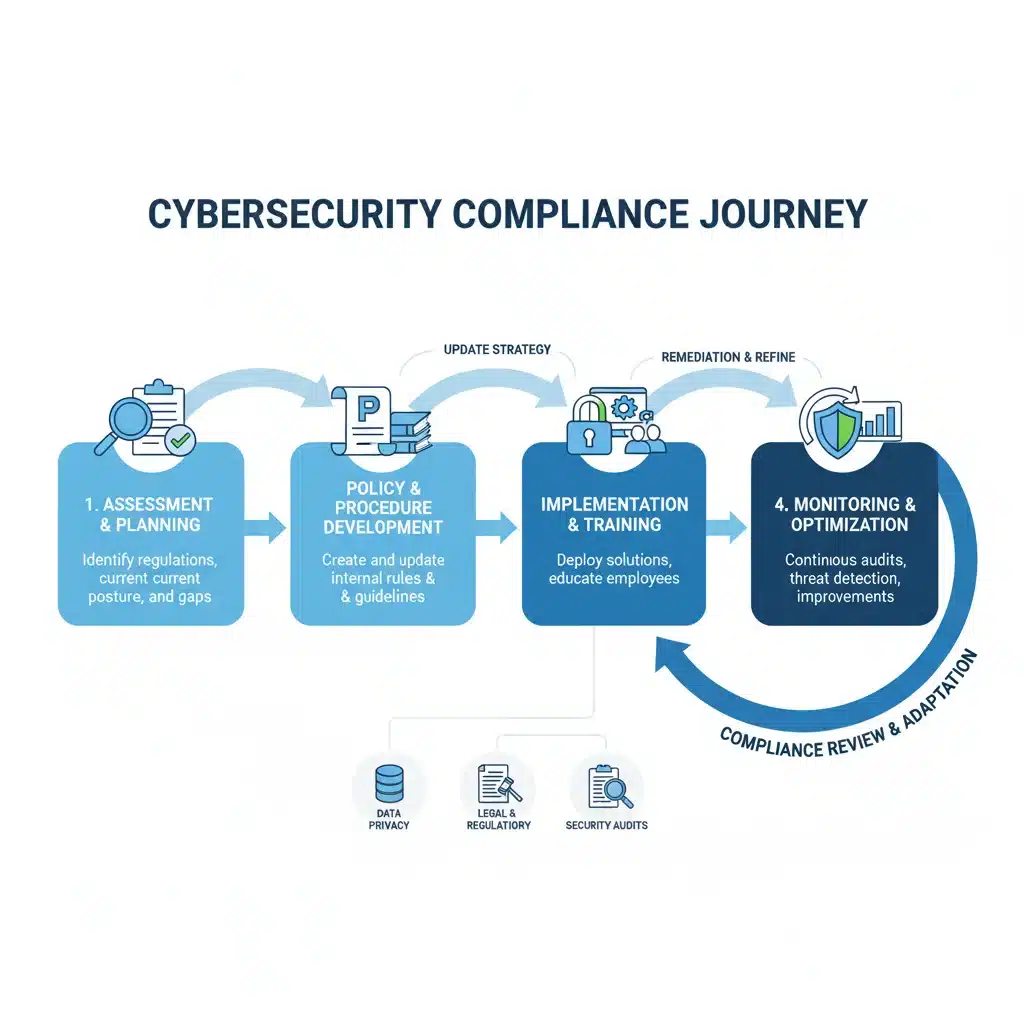
Actionable Steps for Businesses:
- Stay Informed: Regularly monitor official government sources (e.g., CISA, NIST, OMB) for updates and final guidance on the federal cybersecurity regulations. Consider subscribing to relevant newsletters and attending webinars.
- Conduct a Gap Analysis: Assess your current cybersecurity posture against anticipated requirements. Identify areas where your existing controls, policies, and procedures fall short. This should cover technical controls, administrative policies, and physical security.
- Develop a Compliance Roadmap: Based on your gap analysis, create a detailed plan outlining the steps needed to achieve compliance. Assign responsibilities, set timelines, and allocate resources. This roadmap should be a living document, updated as more information becomes available.
- Invest in Technology and Tools: Evaluate your existing security stack. Do you have robust endpoint detection and response (EDR), Security Information and Event Management (SIEM), vulnerability management, and data loss prevention (DLP) solutions? Upgrade or acquire new tools as needed to meet the anticipated mandates.
- Strengthen Access Controls: Implement strong access control policies, including multi-factor authentication (MFA) for all critical systems and data. Adopt the principle of least privilege, ensuring users only have access to what they need.
- Enhance Incident Response Planning: Develop or refine your incident response plan. Conduct tabletop exercises to simulate cyberattacks and test your team’s ability to detect, respond to, and recover from incidents. Ensure your reporting mechanisms are clear and efficient.
- Prioritize Employee Training: Implement a continuous cybersecurity awareness training program for all employees, from new hires to senior leadership. Cover topics like phishing, social engineering, password hygiene, and data handling best practices.
- Secure Your Supply Chain: Review your contracts and security practices with third-party vendors. Ensure they meet your security standards and are prepared to comply with the new federal cybersecurity regulations. Consider adding cybersecurity clauses to all vendor agreements.
- Allocate Budget and Resources: Cybersecurity is an investment, not an expense. Budget adequately for technology, personnel, training, and potentially external consulting services to navigate complex compliance requirements.
- Seek Expert Guidance: If your internal resources are limited, consider engaging cybersecurity consultants or legal experts specializing in federal regulations. They can provide invaluable assistance in interpreting the rules and developing a tailored compliance strategy.
Proactive engagement with these steps will not only help businesses meet the upcoming compliance deadlines but also significantly improve their overall security posture, making them more resilient against future cyber threats. The goal is to integrate cybersecurity into the fabric of business operations, rather than treating it as a separate, isolated function.
The Role of Government Agencies and Industry Standards
Several government agencies and industry standards bodies will play crucial roles in the implementation and enforcement of these new federal cybersecurity regulations. Understanding their functions and how they interrelate will be vital for businesses seeking compliance.
Key Entities and Frameworks:
- Cybersecurity and Infrastructure Security Agency (CISA): CISA is likely to be a primary source of guidance and resources, helping businesses understand and implement the new regulations. They will likely offer tools, best practices, and potentially even direct assistance.
- National Institute of Standards and Technology (NIST): The NIST Cybersecurity Framework (CSF) is already widely adopted and respected. It is highly probable that the new regulations will either directly reference or be heavily aligned with NIST’s established standards and guidelines. Businesses familiar with NIST CSF will have a head start.
- Office of Management and Budget (OMB): The OMB often plays a role in federal policy implementation, particularly concerning government contractors and federal agencies. They may issue specific directives or circulars related to the new regulations.
- Sector-Specific Agencies: Depending on the industry, existing regulatory bodies (e.g., Department of Energy for energy sector, HHS for healthcare) may issue sector-specific guidance to complement the overarching federal rules.
Leveraging existing frameworks like NIST CSF can provide a structured approach to compliance. These frameworks offer a common language and a set of best practices that can be adapted to various organizational contexts, making the journey towards compliance with new federal cybersecurity regulations more manageable and effective.
Challenges and Opportunities for US Businesses
While the new federal cybersecurity regulations present significant challenges, they also open up new opportunities for businesses. The initial investment in compliance might seem daunting, but the long-term benefits of enhanced security, improved trust, and a stronger competitive edge are substantial.
Potential Challenges:
- Cost of Compliance: Implementing new technologies, hiring cybersecurity professionals, and conducting extensive training can be expensive, especially for SMBs.
- Resource Constraints: Many businesses, particularly smaller ones, lack the in-house expertise or personnel to manage complex cybersecurity programs.
- Complexity of Regulations: Interpreting and implementing detailed federal mandates can be challenging, requiring specialized knowledge.
- Operational Disruption: Changes to IT systems and business processes for compliance might cause temporary disruptions.
- Talent Gap: The existing shortage of cybersecurity professionals could be exacerbated by increased demand, making it difficult for businesses to find and retain qualified staff.
Emerging Opportunities:
- Enhanced Security Posture: Compliance will lead to a more robust defense against cyber threats, reducing the risk of costly breaches and operational downtime.
- Increased Customer Trust: Businesses that demonstrate strong cybersecurity practices can build greater trust with their customers, leading to a competitive advantage.
- Improved Business Continuity: Better security means better resilience, ensuring business operations can continue even in the face of cyber incidents.
- Access to New Markets: Compliance might become a prerequisite for certain federal contracts or partnerships, opening up new business opportunities.
- Innovation in Cybersecurity: The increased demand will drive innovation in cybersecurity solutions and services, leading to more effective and efficient tools.
- Standardization and Efficiency: A unified approach to cybersecurity can streamline processes and reduce the complexity of managing disparate security requirements.

The transition period leading up to Q3 2026 is an opportunity for businesses to not just meet a requirement but to fundamentally strengthen their digital foundations. Those who embrace these changes proactively will be better positioned to thrive in an increasingly interconnected and threat-filled world.
The Future of Cybersecurity in the US
These new federal cybersecurity regulations are not an endpoint but rather a significant step in an ongoing evolution of cybersecurity policy in the United States. As technology advances and threats become more sophisticated, further updates and expansions to these regulations are inevitable. The trend is clear: cybersecurity is moving from a niche IT concern to a core business function and a matter of national strategic importance.
Businesses that embed a culture of cybersecurity into their operations – where security is considered at every stage of development, deployment, and daily activity – will be the most resilient. This involves continuous learning, adaptation, and investment. The government’s push for these regulations signals a long-term commitment to enhancing the nation’s collective digital defense, and businesses are now integral partners in this endeavor.
Long-Term Implications:
- Increased Accountability: Businesses will face greater accountability for their cybersecurity practices and the protection of data.
- Evolution of Cybersecurity Services: Expect a boom in cybersecurity consulting, managed security services, and specialized training programs to help businesses comply.
- Talent Development: The demand for cybersecurity professionals will continue to grow, prompting more investment in education and workforce development.
- Technological Advancements: Regulations often spur innovation. We can anticipate new security technologies emerging to address compliance challenges more effectively.
- Global Influence: US federal cybersecurity regulations can often set precedents and influence international standards and practices.
By understanding the spirit and intent behind these new rules, and by taking deliberate, strategic steps towards compliance, US businesses can not only meet their obligations but also transform their cybersecurity posture into a source of strength and competitive differentiation. The clock is ticking towards Q3 2026, and preparation is key to navigating this significant regulatory shift successfully.
Conclusion: A Call to Action for US Businesses
The impending federal cybersecurity regulations set to impact 1.5 million US businesses by Q3 2026 represent a monumental shift in the national cybersecurity landscape. This is a clear call to action for every organization, regardless of size or sector, to re-evaluate and strengthen its digital defenses. The stakes are incredibly high, encompassing not just individual business continuity but also national security and economic stability.
While the journey to full compliance may present its challenges, the benefits of a robust cybersecurity framework far outweigh the costs. Enhanced protection against sophisticated threats, increased trust among customers and partners, and a more resilient operational environment are invaluable assets in today’s digital economy. Businesses that act now, staying informed, conducting thorough assessments, and implementing strategic improvements, will be well-prepared to meet the demands of Q3 2026 and thrive in the future.
Do not view these regulations as merely another hurdle, but rather as an essential investment in the future of your business and a contribution to a more secure digital nation. The time to begin your preparation for the new federal cybersecurity regulations is now.