Unlocking Federal Grants: A Step-by-Step Guide for Adult Learners in the US Seeking Education in 2026

Unlocking Federal Grants: A Step-by-Step Guide for Adult Learners in the US Seeking Education in 2026
Embarking on a new educational journey as an adult learner can be both exhilarating and daunting. The prospect of returning to school, whether for career advancement, a complete change of pace, or simply personal enrichment, often comes with a significant question: how will I afford it? Fortunately, the United States government offers a robust system of financial aid designed to support students of all ages, including a wealth of federal grants specifically for adult learners. In 2026, these federal grants remain a cornerstone of accessible education, providing crucial financial assistance that doesn’t need to be repaid. This comprehensive guide will illuminate the path to securing these vital funds, ensuring that your educational dreams are not hindered by financial constraints.
Many adult learners mistakenly believe that federal financial aid is primarily for recent high school graduates. This couldn’t be further from the truth. The federal government recognizes the immense value of lifelong learning and invests heavily in programs that support adult learners returning to college or vocational training. Understanding the landscape of federal grants for adult learners in 2026 is your first critical step. This article will break down everything you need to know, from eligibility requirements and the application process to maximizing your grant opportunities and avoiding common pitfalls. By the end of this guide, you will be well-equipped to navigate the complexities of federal funding and confidently pursue your educational goals.
Understanding Federal Grants: What Are They and Why Are They Important for Adult Learners?
Before diving into the application process, it’s essential to grasp what federal grants are and how they differ from other forms of financial aid. Federal grants are funds disbursed by the U.S. government to students to help pay for higher education. The key differentiator is that, unlike loans, grants do not have to be repaid (unless, in rare circumstances, you withdraw from school early or fail to meet certain conditions). This makes federal grants an incredibly attractive option for adult learners who may already have existing financial responsibilities or are wary of accumulating debt.
For adult learners, federal grants can be a game-changer. They can cover tuition, fees, books, supplies, and even living expenses, significantly reducing the financial burden of returning to school. This financial relief allows adult students to focus more on their studies and less on managing debt, leading to better academic outcomes and a smoother transition back into an academic environment. The availability of federal grants for adult learners ensures that age or prior educational history does not become an insurmountable barrier to achieving educational aspirations.
The federal government’s commitment to supporting adult education is evident in the variety of grant programs available. These programs are designed to address different needs and circumstances, ensuring a broad reach. Understanding these options is crucial for maximizing your potential funding. We will delve deeper into specific grant types shortly, but first, let’s explore the foundational step for all federal financial aid: the FAFSA.
The Cornerstone: Completing the Free Application for Federal Student Aid (FAFSA) for 2026
The Free Application for Federal Student Aid (FAFSA) is the gateway to virtually all federal financial aid, including federal grants for adult learners. It’s a comprehensive form that collects information about your financial situation to determine your eligibility for various federal, state, and institutional aid programs. For the 2026 academic year, the FAFSA will be available, and it’s imperative to complete it as soon as possible after it opens, typically in October of the preceding year (e.g., October 2025 for the 2026-2027 academic year).
Key Information Needed for FAFSA:
- Social Security Number: You’ll need your Social Security number, and if you’re married, your spouse’s.
- Federal Tax Information or Returns: For the 2026-2027 FAFSA, you’ll generally use your 2024 tax information. The IRS Data Retrieval Tool (DRT) can simplify this process by directly transferring your tax data into the FAFSA.
- Records of Untaxed Income: This includes child support received, interest income, and veterans non-education benefits.
- Information on Cash, Savings, and Checking Accounts: You’ll need to report the balances of these accounts.
- Investments: Details on investments such as real estate (excluding your primary residence), stocks, bonds, and other investment vehicles.
Completing the FAFSA can seem daunting, but resources are available to help. The official Federal Student Aid website (studentaid.gov) provides detailed instructions, FAQs, and even live chat support. Many colleges and universities also offer FAFSA workshops or one-on-one assistance to help students navigate the application. Remember, accuracy is critical. Any errors or omissions could delay your application or affect your eligibility for federal grants.

Tips for Adult Learners Completing the FAFSA:
- File Early: Many federal grants are awarded on a first-come, first-served basis, or until funds are depleted. Filing close to the opening date maximizes your chances.
- Understand Dependency Status: Most adult learners are considered independent students, which means you won’t need to provide parental financial information. This can sometimes simplify the process and potentially increase your eligibility for aid, as only your income and assets are considered.
- Use the IRS Data Retrieval Tool (DRT): This tool makes transferring tax information accurate and efficient, reducing the likelihood of errors.
- List All Schools of Interest: Even if you’re undecided, list all schools you’re considering. Each school will receive your FAFSA information and can then offer you a financial aid package.
Exploring Key Federal Grants for Adult Learners in 2026
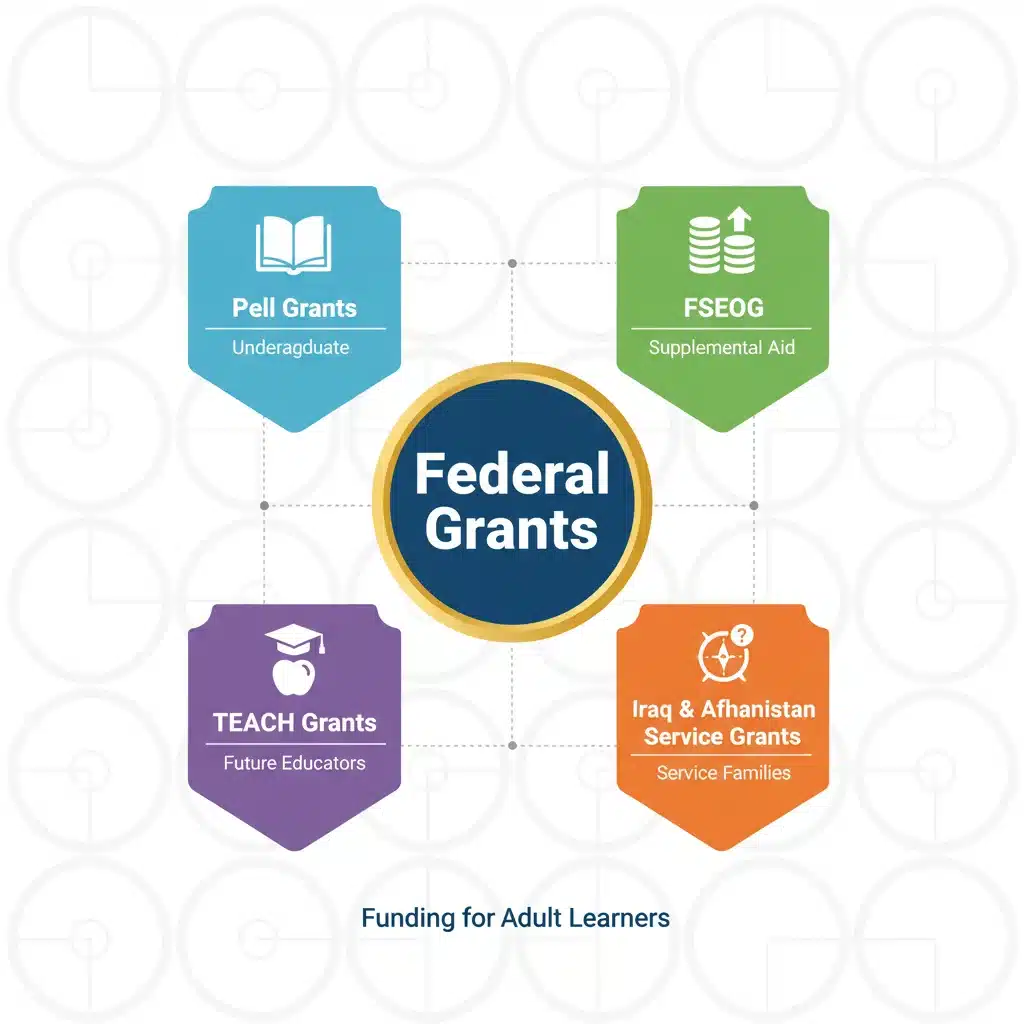
Once your FAFSA is submitted and processed, the Department of Education uses the information to calculate your Expected Family Contribution (EFC) – soon to be replaced by the Student Aid Index (SAI) – which determines your eligibility for various federal aid programs, including federal grants. Here are some of the most prominent federal grants available to adult learners:
1. Pell Grants: The Foundation of Federal Grants for Adult Learners
The Federal Pell Grant is the largest and most well-known federal grant program. It provides need-based aid to undergraduate students who have not yet earned a bachelor’s or professional degree. The amount you can receive depends on your financial need, the cost of attendance at your chosen institution, and your enrollment status (full-time or part-time). For adult learners, Pell Grants can be a significant source of funding, often covering a substantial portion of tuition and fees. The maximum Pell Grant award amount is adjusted annually, so it’s important to check the latest figures for 2026.
2. Federal Supplemental Educational Opportunity Grant (FSEOG): For Exceptional Need
FSEOG is another federal grant for undergraduate students with exceptional financial need. Unlike Pell Grants, which are guaranteed if you meet eligibility, FSEOG funds are limited and distributed directly by participating schools. This means that even if you qualify, your school might not have enough FSEOG funds to offer you one. This underscores the importance of filing your FAFSA early, as schools often award these funds on a first-come, first-served basis.
3. Teacher Education Assistance for College and Higher Education (TEACH) Grants: For Future Educators
If you’re an adult learner aspiring to become a teacher in a high-need field, the TEACH Grant program could be an excellent option. This grant provides up to $4,000 per year to students who are completing coursework to begin a career in teaching. However, it comes with a critical service obligation: you must teach for at least four years within eight years of completing your program at a low-income school in a high-need field. If you fail to meet this obligation, the TEACH Grant converts into a Direct Unsubsidized Loan, which you will then have to repay with interest.
4. Iraq and Afghanistan Service Grants: For Service Members and Their Families
This grant is for students who are not Pell Grant eligible but whose parent or guardian died as a result of military service in Iraq or Afghanistan after September 11, 2001. The student must have been under 24 years old or enrolled in college at least part-time at the time of the parent’s or guardian’s death. This provides crucial support for those who have sacrificed so much.
Eligibility Requirements for Federal Grants: What Adult Learners Need to Know
While specific criteria vary slightly between grant programs, several general eligibility requirements apply to all federal grants for adult learners:
- Financial Need: Most federal grants are need-based, meaning your financial situation (as determined by your FAFSA) plays a significant role.
- U.S. Citizenship or Eligible Non-Citizen Status: You must be a U.S. citizen or an eligible non-citizen with a valid Social Security number.
- High School Diploma or GED: You must have a high school diploma or its recognized equivalent (such as a GED certificate).
- Enrollment in an Eligible Program: You must be enrolled or accepted for enrollment as a regular student in an eligible degree or certificate program at an eligible institution.
- Satisfactory Academic Progress (SAP): Once enrolled, you must maintain satisfactory academic progress as defined by your school. Failing to meet SAP can lead to the loss of federal financial aid eligibility.
- Not in Default on a Federal Student Loan: You cannot be in default on any federal student loan or owe a refund on a federal student grant.
- Selective Service Registration: If you are a male between the ages of 18 and 25, you must be registered with the Selective Service System.
Adult learners should pay particular attention to the Satisfactory Academic Progress (SAP) requirement. Many schools have specific GPA requirements and completion rates that students must meet to continue receiving federal aid. Understanding and adhering to these policies is crucial for sustained funding.
Beyond Federal Grants: Exploring Additional Financial Aid for Adult Learners
While federal grants are a fantastic starting point, adult learners should explore all available avenues for financial assistance. Combining different types of aid can significantly reduce out-of-pocket costs and make your education more affordable.
State Grants:
Many states offer their own grant programs for residents. These often have similar eligibility criteria to federal grants but may have additional residency or academic requirements. When you complete your FAFSA, your information is often shared with your state’s financial aid agency, which can then notify you of state-specific opportunities. It’s always a good idea to check your state’s education department website for more information on state grants for adult learners in 2026.
Institutional Grants and Scholarships:
Colleges and universities often have their own grant and scholarship programs. These can be based on need, merit, specific academic programs, or even unique demographic factors (e.g., scholarships for returning adult students, single parents, or those in particular career fields). Don’t overlook these opportunities! Many institutional scholarships go unclaimed because students don’t know to apply for them. Check your prospective school’s financial aid office website for details.
Private Scholarships:
Thousands of private organizations, foundations, and businesses offer scholarships. These can range from small awards to full tuition coverage. While finding them can require more effort, the payoff can be substantial. Look for scholarships tailored to adult learners, specific majors, community involvement, or even niche interests. Scholarship search engines (like Fastweb, Scholarship.com, and College Board’s BigFuture) can be valuable tools. Remember to be wary of scholarship scams that require payment for applications or guarantee awards.
Employer Tuition Assistance:
If you are currently employed, inquire about tuition assistance or reimbursement programs your employer might offer. Many companies invest in their employees’ education, especially if the degree or certificate aligns with career development within the organization. This can be a fantastic, often overlooked, benefit.
Community and Professional Organizations:
Local community groups, professional associations, and even religious organizations often have scholarship funds available. These can be particularly relevant for adult learners who are active in their communities or pursuing specific career paths.
Common Pitfalls and How to Avoid Them
Navigating financial aid can be complex, and adult learners, in particular, may face unique challenges. Being aware of common pitfalls can help you avoid them:
- Missing Deadlines: This is perhaps the biggest mistake. Federal, state, and institutional aid programs all have deadlines. Missing them, especially for the FAFSA, can mean missing out on crucial funding like federal grants for adult learners. Keep a calendar of all relevant deadlines.
- Not Filing FAFSA Annually: Your financial situation can change, and so can aid eligibility. You must file a new FAFSA each academic year you wish to receive federal aid.
- Assuming You Won’t Qualify: Many adult learners assume their income is too high to qualify for federal grants. However, the FAFSA considers many factors, including family size, cost of attendance, and other expenses. Always apply; you might be surprised by what you’re eligible for.
- Not Understanding Satisfactory Academic Progress (SAP): As mentioned, failing to meet your school’s SAP policy can lead to the loss of federal aid. Understand these rules from the outset and monitor your academic performance.
- Ignoring Your Financial Aid Offer: Once you receive a financial aid offer from a school, review it carefully. Understand what’s a grant (free money), what’s a loan (must be repaid), and what’s work-study (earned money). Accept only what you need and understand the implications of each type of aid.
- Not Seeking Help: If you’re confused, don’t hesitate to reach out. Financial aid offices at schools are there to assist you. Federal Student Aid also offers extensive online resources and customer support.
Strategic Planning for Adult Learners: Maximizing Your Federal Grant Opportunities in 2026
Beyond simply applying, adult learners can employ several strategies to maximize their chances of receiving federal grants and other financial aid:
1. Choose Your Program and School Wisely:
The cost of attendance varies significantly between institutions and programs. Research schools that offer your desired program at a reasonable cost and have a good track record of supporting adult learners with financial aid. Community colleges, for example, often have lower tuition rates and can be an excellent starting point for earning credits before transferring to a four-year institution.
2. Understand Cost of Attendance (COA):
The COA is not just tuition and fees; it includes estimates for living expenses, books, transportation, and personal expenses. Your financial aid eligibility, including federal grants, is determined by subtracting your expected contribution from the COA. A higher COA can sometimes lead to greater demonstrated need, potentially increasing your grant eligibility.
3. Consider Part-Time vs. Full-Time Enrollment:
While many federal grants require at least half-time enrollment, the amount you receive can be prorated based on your enrollment status. If you can only manage part-time studies due to work or family commitments, understand how this impacts your grant award. Some grants, like Pell, can still provide significant support even for part-time students.
4. Explore Work-Study Programs:
Federal Work-Study (FWS) is another form of federal aid that allows you to earn money to help pay for educational expenses. These are often flexible jobs, often on campus, that can accommodate an adult learner’s schedule. While not a grant, it’s a valuable way to offset costs without taking out loans.
5. Be Proactive in Your Search:
Don’t wait for information to come to you. Actively seek out scholarship opportunities, attend financial aid workshops, and regularly check the websites of the Department of Education, your state’s financial aid office, and your prospective schools. The more proactive you are, the more opportunities you’re likely to uncover.
6. Maintain Good Academic Standing:
As emphasized, maintaining Satisfactory Academic Progress (SAP) is critical. Not only does it ensure continued eligibility for federal grants, but strong academic performance can also open doors to merit-based scholarships and other awards.
The Future of Federal Grants for Adult Learners: What to Expect in 2026
The landscape of federal financial aid is dynamic, with potential legislative changes and adjustments to programs like the FAFSA and grant amounts. For 2026, adult learners can generally expect the core federal grant programs, such as Pell Grants, to remain available. However, staying informed about any updates is crucial.
The FAFSA Simplification Act, which began implementation in previous cycles, aims to streamline the application process and potentially expand eligibility for federal student aid. Adult learners should pay close attention to any further changes that simplify the application or broaden the criteria for federal grants. The Student Aid Index (SAI), replacing the EFC, is designed to be a more equitable measure of a student’s ability to pay, which could positively impact many adult learners.
The Department of Education continuously updates its guidance and resources. Regularly checking studentaid.gov will ensure you have the most current information regarding deadlines, grant amounts, and any new programs or policy changes for federal grants for adult learners in 2026.
Conclusion: Empowering Your Educational Journey with Federal Grants
Returning to education as an adult learner is a commendable and often transformative decision. The financial aspect, while a significant consideration, does not have to be an insurmountable barrier. Federal grants for adult learners in 2026 stand as a powerful testament to the nation’s commitment to accessible education for all ages. By diligently completing your FAFSA, understanding the various grant programs, meeting eligibility requirements, and exploring all available avenues of financial assistance, you can significantly reduce the cost of your education.
Remember, the journey begins with information and proactive steps. Don’t let misconceptions or fears about the application process deter you. Utilize the resources available, ask questions, and apply early. With careful planning and perseverance, you can unlock the federal grants necessary to achieve your academic and career aspirations. Your educational future is within reach, and federal grants are here to help you seize it.
Author