Future of Manufacturing: 4 Advanced Roles in U.S. Factories Requiring New Skill Sets by Early 2027
The Future of Manufacturing: 4 Advanced Roles in U.S. Factories Requiring New Skill Sets by Early 2027
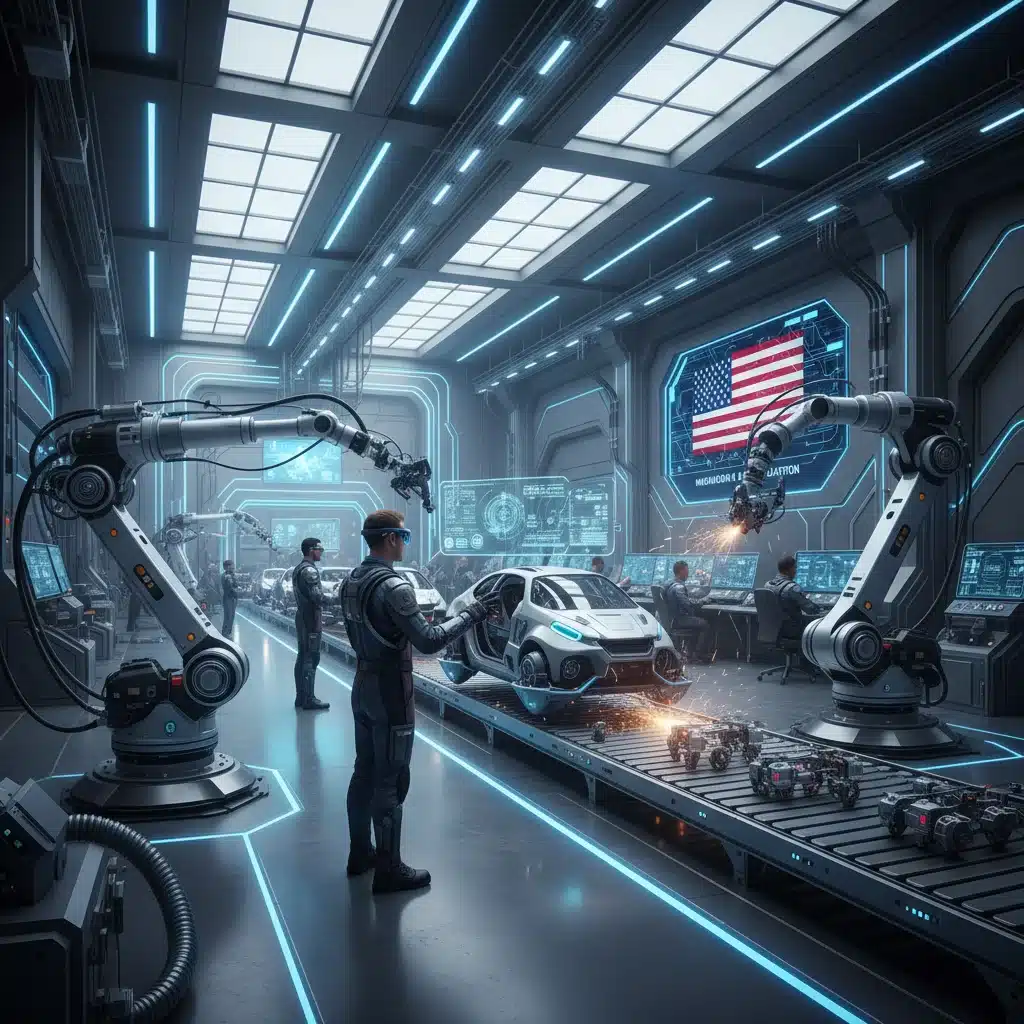
The landscape of U.S. manufacturing is undergoing a profound and rapid transformation, driven by the relentless march of technological innovation. What was once characterized by repetitive manual labor is now evolving into a sophisticated ecosystem where automation, artificial intelligence, and data analytics play pivotal roles. This paradigm shift, often referred to as Industry 4.0, is not just about replacing human workers with machines; it’s about augmenting human capabilities, creating entirely new roles, and demanding a fresh set of skills from the workforce. By early 2027, U.S. factories will be actively seeking professionals equipped for these advanced manufacturing roles, making it crucial for individuals and educational institutions to understand and adapt to these impending changes.
This article delves into four critical advanced manufacturing roles that are poised to become indispensable in U.S. factories within the next few years. We will explore the responsibilities associated with each role, the specific new skill sets required, and how aspiring professionals can prepare themselves for these exciting opportunities. Understanding these emerging positions is key to navigating the future of work in the manufacturing sector and ensuring a resilient, innovative, and competitive industrial base in the United States.
1. Robotics and Automation Integration Specialist
As factories increasingly adopt advanced robotics and automation systems, the need for specialists who can seamlessly integrate, program, and maintain these complex technologies is skyrocketing. The Robotics and Automation Integration Specialist is at the forefront of this revolution, bridging the gap between traditional manufacturing processes and cutting-edge automated solutions. This advanced manufacturing role is not merely about operating a robot; it encompasses a holistic understanding of robotic ecosystems, from initial deployment to continuous optimization.
Key Responsibilities:
- System Design and Implementation: Collaborating with engineers to design and implement robotic work cells, automated assembly lines, and material handling systems. This involves selecting appropriate robotic arms, end-effectors, sensors, and control systems.
- Programming and Calibration: Developing and refining robot programs (e.g., using teach pendants, offline programming software) for specific tasks such as welding, assembly, painting, and inspection. Calibrating robots for precision and repeatability.
- Troubleshooting and Maintenance: Diagnosing and resolving complex issues in robotic systems, including mechanical failures, electrical malfunctions, and software glitches. Performing preventive maintenance to ensure optimal performance and minimize downtime.
- Safety Protocol Development: Ensuring that all automated systems comply with safety standards and regulations (e.g., OSHA, ANSI/RIA R15.06). Implementing safety interlocks, light curtains, and emergency stop systems.
- Integration with PLCs and SCADA: Connecting robotic systems with Programmable Logic Controllers (PLCs) and Supervisory Control and Data Acquisition (SCADA) systems for centralized control and data exchange across the factory floor.
New Skill Sets Required:
- Advanced Robotics Programming: Proficiency in languages like C++, Python, and specialized robot programming languages (e.g., RAPID for ABB, KRL for KUKA, URScript for Universal Robots).
- Mechatronics Engineering: A strong understanding of mechanical, electrical, and computer engineering principles, as robotic systems are inherently interdisciplinary.
- Industrial Control Systems: Expertise in PLCs, human-machine interfaces (HMIs), and SCADA systems for controlling and monitoring automated processes.
- Sensor Technology: Knowledge of various industrial sensors (vision systems, force sensors, proximity sensors) and their application in automation for quality control and process feedback.
- System Integration: The ability to integrate diverse hardware and software components into a cohesive and functional automated system.
- Troubleshooting and Diagnostics: Strong analytical skills to quickly identify and resolve complex technical issues in automated environments.
- Safety Standards: In-depth knowledge of industrial safety protocols and best practices for robotic installations.
Preparing for this advanced manufacturing role involves a combination of formal education in robotics, automation, or mechatronics, coupled with practical experience through apprenticeships, certifications, and hands-on projects. The demand for Robotics and Automation Integration Specialists will continue to grow as U.S. factories strive for greater efficiency and productivity.
2. Industrial Data Scientist / AI & Machine Learning Engineer
The modern factory generates an unprecedented volume of data from sensors, machines, production lines, and supply chains. The Industrial Data Scientist, or AI & Machine Learning Engineer, is the professional responsible for transforming this raw data into actionable insights, driving predictive maintenance, process optimization, and intelligent decision-making. This advanced manufacturing role is crucial for leveraging the full potential of Industry 4.0 by applying advanced analytical techniques to enhance efficiency, quality, and profitability.
Key Responsibilities:
- Data Collection and Preprocessing: Working with operational technology (OT) and information technology (IT) teams to collect, clean, and prepare large datasets from various factory sources (e.g., SCADA, MES, ERP systems).
- Predictive Analytics: Developing and deploying machine learning models to predict equipment failures, identify potential bottlenecks, and forecast demand, enabling proactive interventions.
- Process Optimization: Using statistical analysis and AI algorithms to optimize manufacturing parameters, reduce waste, improve energy efficiency, and enhance product quality.
- Anomaly Detection: Implementing algorithms to detect unusual patterns or deviations in production data that might indicate defects, inefficiencies, or security breaches.
- Dashboard and Visualization: Creating interactive dashboards and reports to communicate complex data insights to stakeholders, enabling data-driven decision-making across all levels of the organization.
- AI Model Deployment: Deploying and managing AI/ML models in production environments, ensuring their scalability, reliability, and continuous improvement.
New Skill Sets Required:
- Statistical Analysis and Modeling: Strong foundation in statistics, probability, and hypothesis testing.
- Machine Learning Algorithms: Expertise in supervised, unsupervised, and reinforcement learning techniques (e.g., regression, classification, clustering, neural networks).
- Programming Languages: Proficiency in Python and R for data analysis, model development, and scripting.
- Big Data Technologies: Familiarity with big data platforms and tools such as Hadoop, Spark, and cloud-based data services (AWS, Azure, Google Cloud).
- Database Management: Knowledge of SQL and NoSQL databases for data storage and retrieval.
- Domain Knowledge: A solid understanding of manufacturing processes, equipment, and operational challenges to contextualize data insights.
- Data Visualization: Ability to use tools like Tableau, Power BI, or Matplotlib/Seaborn to create compelling and informative visualizations.
- Communication Skills: The ability to translate complex technical findings into understandable insights for non-technical audiences.
This advanced manufacturing role requires a blend of strong analytical capabilities, programming expertise, and an understanding of the industrial environment. Universities and online platforms are increasingly offering specialized programs in industrial data science, preparing individuals for these high-demand positions in U.S. factories.
3. Advanced Manufacturing Cybersecurity Analyst
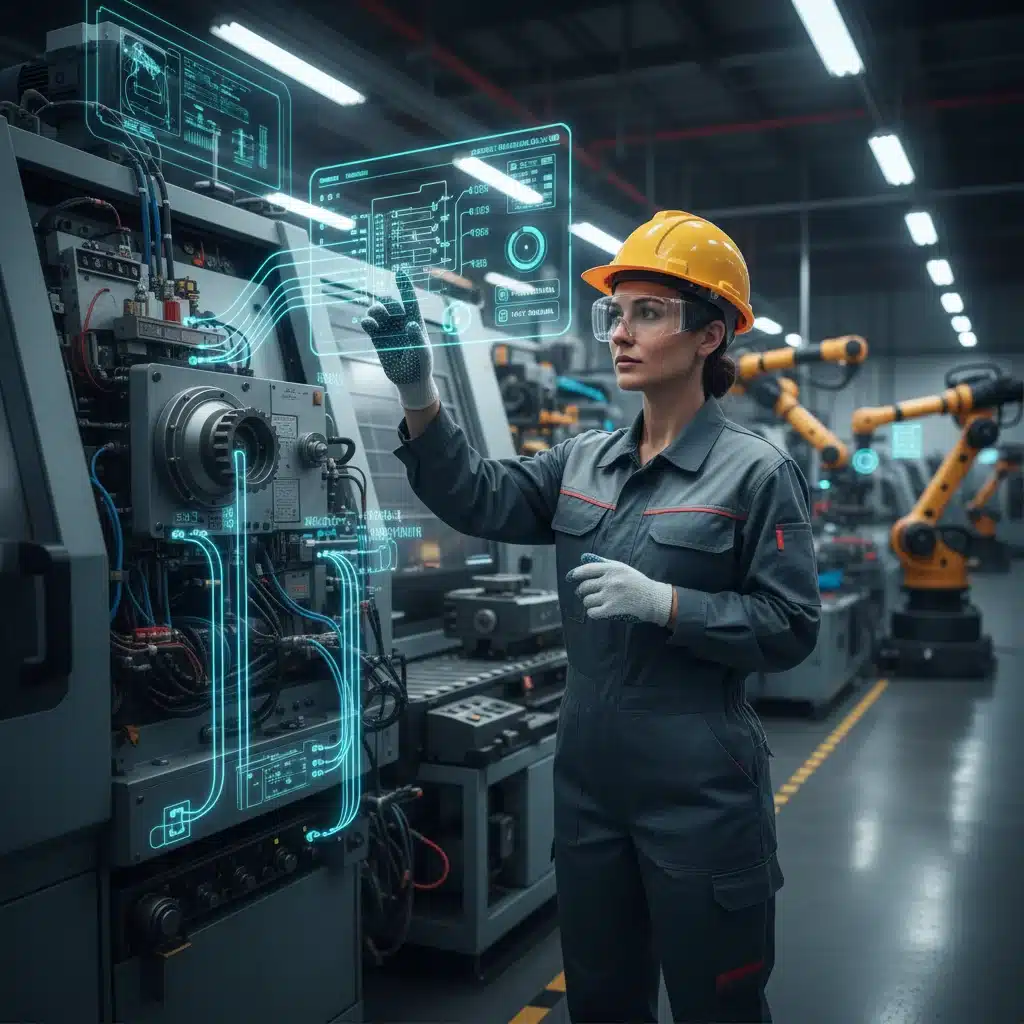
As U.S. factories become more interconnected and reliant on digital technologies, they also become more vulnerable to cyber threats. The Advanced Manufacturing Cybersecurity Analyst is a critical advanced manufacturing role responsible for protecting industrial control systems (ICS), operational technology (OT) networks, and intellectual property from cyberattacks. Unlike traditional IT cybersecurity, this role requires a deep understanding of unique industrial protocols, legacy systems, and the potential physical consequences of a cyber breach on a factory floor.
Key Responsibilities:
- Threat Detection and Prevention: Monitoring industrial networks for suspicious activities, identifying vulnerabilities, and implementing measures to prevent cyberattacks on PLCs, SCADA systems, and other OT devices.
- Incident Response: Developing and executing incident response plans for cyberattacks targeting manufacturing operations, minimizing downtime, and ensuring rapid recovery.
- Security Architecture Design: Designing and implementing robust cybersecurity architectures for new and existing factory systems, including network segmentation, firewalls, and intrusion detection systems tailored for OT environments.
- Compliance and Auditing: Ensuring compliance with industry-specific cybersecurity standards and regulations (e.g., NIST, IEC 62443) and conducting regular security audits.
- Vulnerability Management: Performing penetration testing and vulnerability assessments on industrial systems to identify weaknesses before they can be exploited.
- Employee Training: Educating factory personnel on cybersecurity best practices and promoting a culture of security awareness.
New Skill Sets Required:
- Industrial Control Systems (ICS) Security: Specialized knowledge of securing PLCs, DCS, SCADA, and other OT components.
- Network Security: Expertise in network protocols (TCP/IP, Ethernet/IP, Modbus TCP), firewalls, VPNs, and intrusion detection/prevention systems in an industrial context.
- Risk Management: Ability to assess and mitigate cybersecurity risks specific to manufacturing environments, understanding the potential impact on production and safety.
- Digital Forensics: Skills in investigating cyber incidents, collecting evidence, and analyzing attack vectors in OT systems.
- Security Frameworks: Familiarity with cybersecurity frameworks like NIST Cybersecurity Framework and IEC 62443.
- Programming/Scripting: Basic scripting skills (Python, PowerShell) for automation of security tasks and analysis.
- Operational Technology (OT) Knowledge: Understanding of manufacturing processes and the critical nature of uptime in a production environment.
The demand for this advanced manufacturing role is escalating rapidly as manufacturers recognize the severe financial and reputational damage that cyberattacks can inflict. Professionals with a blend of IT cybersecurity expertise and OT domain knowledge will be highly sought after in U.S. factories.
4. Additive Manufacturing / 3D Printing Engineer
Additive manufacturing, commonly known as 3D printing, is revolutionizing product design, prototyping, and even end-part production in U.S. factories. The Additive Manufacturing / 3D Printing Engineer is a specialized advanced manufacturing role focused on leveraging these technologies to create complex geometries, customize products, and optimize supply chains. This role transcends traditional manufacturing methods, requiring innovative thinking and a deep understanding of materials science and digital design.
Key Responsibilities:
- Design for Additive Manufacturing (DfAM): Redesigning components and products specifically for 3D printing to take advantage of its unique capabilities (e.g., lightweighting, part consolidation, intricate internal structures).
- Material Selection and Development: Researching, selecting, and sometimes developing new materials (polymers, metals, ceramics) suitable for various additive manufacturing processes.
- Process Optimization: Calibrating and optimizing 3D printers and related equipment to achieve desired part properties, surface finish, and dimensional accuracy.
- Post-Processing: Overseeing and developing post-processing techniques such as heat treatment, surface finishing, and support removal for 3D printed parts.
- Quality Assurance: Implementing quality control measures and testing protocols for additively manufactured components to ensure they meet performance specifications.
- Prototyping and Production: Managing the entire workflow from CAD model to final printed part, whether for rapid prototyping or small-batch production.
New Skill Sets Required:
- CAD/CAM Software Proficiency: Advanced skills in CAD software (e.g., SolidWorks, AutoCAD, CATIA) and CAM software for preparing models for 3D printing.
- Generative Design: Understanding and applying generative design principles to create optimized, often organic, structures that are difficult or impossible to produce with traditional methods.
- Materials Science: In-depth knowledge of polymers, metals, and composites, and how they behave under different additive manufacturing processes.
- Additive Manufacturing Processes: Expertise in various 3D printing technologies (e.g., FDM, SLA, SLS, DMLS, Binder Jetting) and their applications.
- Topology Optimization: The ability to optimize part geometry for performance, weight, and material usage.
- Quality Control and Metrology: Knowledge of inspection techniques for 3D printed parts, including scanning and non-destructive testing.
- Problem-Solving: Analytical skills to troubleshoot printing issues and refine processes for consistent results.
This advanced manufacturing role demands a blend of engineering principles, material science, and digital design expertise. As additive manufacturing moves from niche applications to mainstream production, the need for skilled Additive Manufacturing Engineers in U.S. factories will only intensify, opening up a new frontier for innovation and customization.

Preparing for the Future: Education and Training
The emergence of these advanced manufacturing roles by early 2027 highlights a critical need for evolving educational paradigms and continuous workforce development. Traditional vocational training and engineering degrees must adapt to incorporate the interdisciplinary skills demanded by Industry 4.0. Here’s how individuals and institutions can prepare:
For Individuals:
- Embrace Lifelong Learning: The pace of technological change necessitates continuous skill acquisition. Online courses (Coursera, edX, Udacity), certifications (e.g., in robotics programming, cybersecurity, data science), and workshops are invaluable.
- Interdisciplinary Studies: Seek out educational programs that combine engineering disciplines with computer science, data analytics, and even business acumen.
- Hands-on Experience: Practical experience through internships, co-op programs, and personal projects is crucial. Building a portfolio of practical applications will set candidates apart.
- Soft Skills Development: While technical skills are paramount, soft skills such as problem-solving, critical thinking, adaptability, communication, and teamwork remain essential for collaborating in complex, automated environments.
- Networking: Engage with industry professionals, attend conferences, and join professional organizations to stay abreast of trends and opportunities in advanced manufacturing.
For Educational Institutions:
- Curriculum Modernization: Update engineering, computer science, and vocational training curricula to include modules on AI, machine learning, robotics, industrial cybersecurity, and additive manufacturing.
- Industry Partnerships: Collaborate closely with manufacturing companies to understand their evolving needs and tailor programs to produce job-ready graduates. This can also facilitate internship and apprenticeship opportunities.
- Investment in Labs and Equipment: Provide students with access to state-of-the-art robotic cells, 3D printers, industrial control systems, and cybersecurity simulation environments.
- Faculty Development: Ensure that educators are up-to-date with the latest industrial technologies and can effectively teach these advanced concepts.
- Promote STEM Education: Encourage younger generations to pursue careers in Science, Technology, Engineering, and Mathematics, fostering a pipeline of talent for future manufacturing roles.
The Broader Impact on U.S. Manufacturing
The rise of these advanced manufacturing roles is not just about individual career opportunities; it signifies a broader resurgence and strengthening of the U.S. manufacturing sector. By embracing these technologies and cultivating a skilled workforce, U.S. factories can achieve:
- Increased Competitiveness: Higher efficiency, reduced costs, and superior product quality will enable U.S. manufacturers to compete more effectively on a global scale.
- Innovation and Product Development: Advanced capabilities like additive manufacturing and AI-driven design will accelerate the development of innovative products and customized solutions.
- Supply Chain Resilience: Greater automation and data visibility can lead to more robust and responsive supply chains, reducing vulnerabilities experienced in recent years.
- Job Creation: While some traditional roles may change, the creation of new, high-skilled, and higher-paying advanced manufacturing roles will contribute to economic growth and a more dynamic workforce.
- Enhanced Safety: Robotics can take over dangerous tasks, and AI can predict safety hazards, leading to safer working environments for human operators.
- Sustainability: Optimized processes and resource management, driven by data analytics, can lead to more environmentally friendly manufacturing practices.
The transformation is profound, and the opportunity is immense. U.S. factories are not just becoming smarter; they are becoming more human-centric in their demand for specialized, intelligent labor. The emphasis on advanced manufacturing roles signifies a shift towards a knowledge-based industrial economy where human ingenuity, augmented by technology, will be the ultimate driver of progress.
Conclusion
By early 2027, the U.S. manufacturing sector will be a vastly different landscape, characterized by intelligent automation, pervasive data, and sophisticated digital processes. The four advanced manufacturing roles discussed – Robotics and Automation Integration Specialist, Industrial Data Scientist / AI & Machine Learning Engineer, Advanced Manufacturing Cybersecurity Analyst, and Additive Manufacturing / 3D Printing Engineer – represent the vanguard of this transformation. These positions are not merely incremental changes; they are foundational to the future competitiveness and innovation capacity of American industry.
For individuals, proactively acquiring the new skill sets associated with these roles is paramount for career resilience and growth. For educational institutions, adapting curricula and fostering industry collaboration will be crucial to preparing the next generation of manufacturing professionals. And for U.S. factories, investing in both technology and human capital will be the key to unlocking unprecedented levels of productivity, efficiency, and innovation. The future of manufacturing is not just automated; it is intelligently human, and the time to prepare for these advanced manufacturing roles is now.
Author