The landscape of corporate training is undergoing a seismic shift. What was once a one-size-fits-all approach is rapidly evolving into something far more dynamic and effective: personalized corporate training. By 2027, this tailored approach to learning and development (L&D) is not just predicted to be a trend; it’s poised to become the cornerstone of U.S. corporate strategy, fundamentally redefining how businesses cultivate talent and drive innovation. As organizations grapple with an ever-accelerating pace of change, the ability to rapidly upskill and reskill their workforce becomes paramount. Generic training programs, often disconnected from individual needs and career trajectories, are increasingly proving insufficient.
The demand for personalized learning stems from a clear recognition that every employee brings a unique set of skills, experiences, and learning preferences to the table. A cookie-cutter approach not only disengages learners but also fails to address specific skill gaps efficiently. The future, therefore, belongs to systems that can adapt, respond, and cater to the individual, ensuring that every learning minute is optimized for maximum impact. This article delves into why personalized corporate training is becoming the next big thing, exploring its benefits, the technologies enabling its rise, and the strategic implications for U.S. businesses aiming for sustained growth and competitive advantage.
The Evolution of Corporate Training: From Generic to Tailored
For decades, corporate training largely consisted of standardized workshops, lengthy manuals, and broad e-learning modules. While these methods served their purpose, they often fell short in addressing the diverse needs of a modern workforce. Employees, particularly younger generations, expect more relevant, engaging, and flexible learning experiences. The digital revolution, coupled with advancements in data analytics and artificial intelligence, has paved the way for a more sophisticated approach: personalized corporate training.
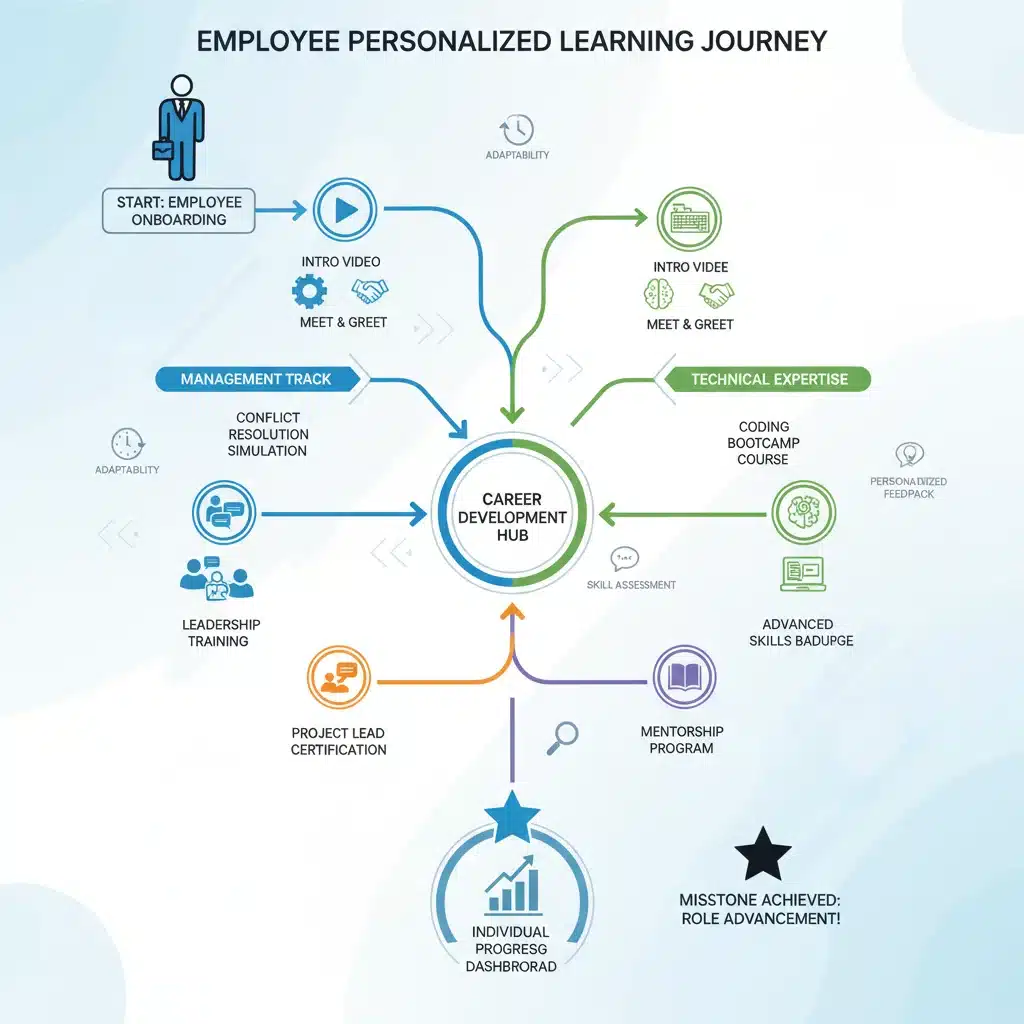
This evolution isn’t merely about offering choices; it’s about intelligently curating learning journeys based on individual roles, existing competencies, career aspirations, and even learning styles. Imagine a sales professional receiving training modules specifically designed to enhance their negotiation skills, rather than a broad course on general communication. Or a software engineer being guided through advanced coding challenges relevant to their current project, rather than a beginner’s introduction to a language they already master. This level of granularity is what defines personalized learning and what makes it so powerful.
The shift is also driven by the understanding that employee engagement is directly linked to learning relevance. When training feels pertinent and directly contributes to an individual’s growth and daily tasks, motivation soars. Conversely, irrelevant training can lead to disengagement, wasted time, and a perception that L&D is a chore rather than an opportunity. As businesses compete for top talent, offering superior development opportunities, particularly those that are personalized, becomes a significant differentiator.
Why Personalized Corporate Training is Gaining Traction
The benefits of personalized corporate training are manifold, impacting individuals, teams, and the organization as a whole. Here are some of the key drivers behind its increasing adoption:
1. Increased Engagement and Motivation
When learning is tailored to an individual’s needs and interests, they are far more likely to be engaged. Employees feel valued when their unique development path is recognized and supported. This intrinsic motivation leads to higher participation rates, better knowledge retention, and a more positive attitude towards continuous learning.
2. Improved Skill Acquisition and Retention
Generic training often covers material that some employees already know, while others might struggle with foundational concepts. Personalized learning addresses these discrepancies by focusing on specific skill gaps. Adaptive learning platforms can identify areas where an employee needs more support and provide targeted resources, leading to faster and more effective skill acquisition. Furthermore, learning in a context that is directly relevant to their role improves the likelihood of applying new knowledge, thereby enhancing retention.
3. Enhanced Performance and Productivity
By equipping employees with precisely the skills they need to excel in their roles, personalized corporate training directly contributes to improved performance. Whether it’s mastering a new software tool, refining leadership qualities, or understanding complex industry regulations, targeted training translates into greater efficiency and higher quality output. This, in turn, boosts overall team and organizational productivity.
4. Better Employee Retention and Talent Development
Investing in an employee’s personalized development signals that the company cares about their career growth. This fosters loyalty and significantly reduces turnover rates, which can be costly for businesses. Organizations that offer robust, personalized L&D programs are more attractive to top talent and are better positioned to develop their existing workforce into future leaders.
5. Agility and Adaptability in a Changing World
The business world is in a constant state of flux. New technologies emerge, market demands shift, and competitive landscapes evolve. Personalized corporate training allows organizations to respond more agilely to these changes. Instead of rolling out company-wide training for every new development, targeted modules can be deployed to specific groups or individuals who need them most, ensuring the workforce remains relevant and competitive.
6. Optimized Training ROI
While the initial investment in personalized learning technologies might seem higher, the long-term return on investment (ROI) is often superior. By eliminating irrelevant content and focusing resources on impactful learning, companies can achieve better outcomes with their training budget. Reduced time away from work for generic training, faster skill development, and improved performance all contribute to a healthier bottom line.
The Technologies Powering Personalized Learning by 2027
The vision of widespread personalized corporate training by 2027 is not mere speculation; it’s a realistic projection based on the rapid advancements in educational technology. Several key technologies are converging to make this a reality:
1. Artificial Intelligence (AI) and Machine Learning (ML)
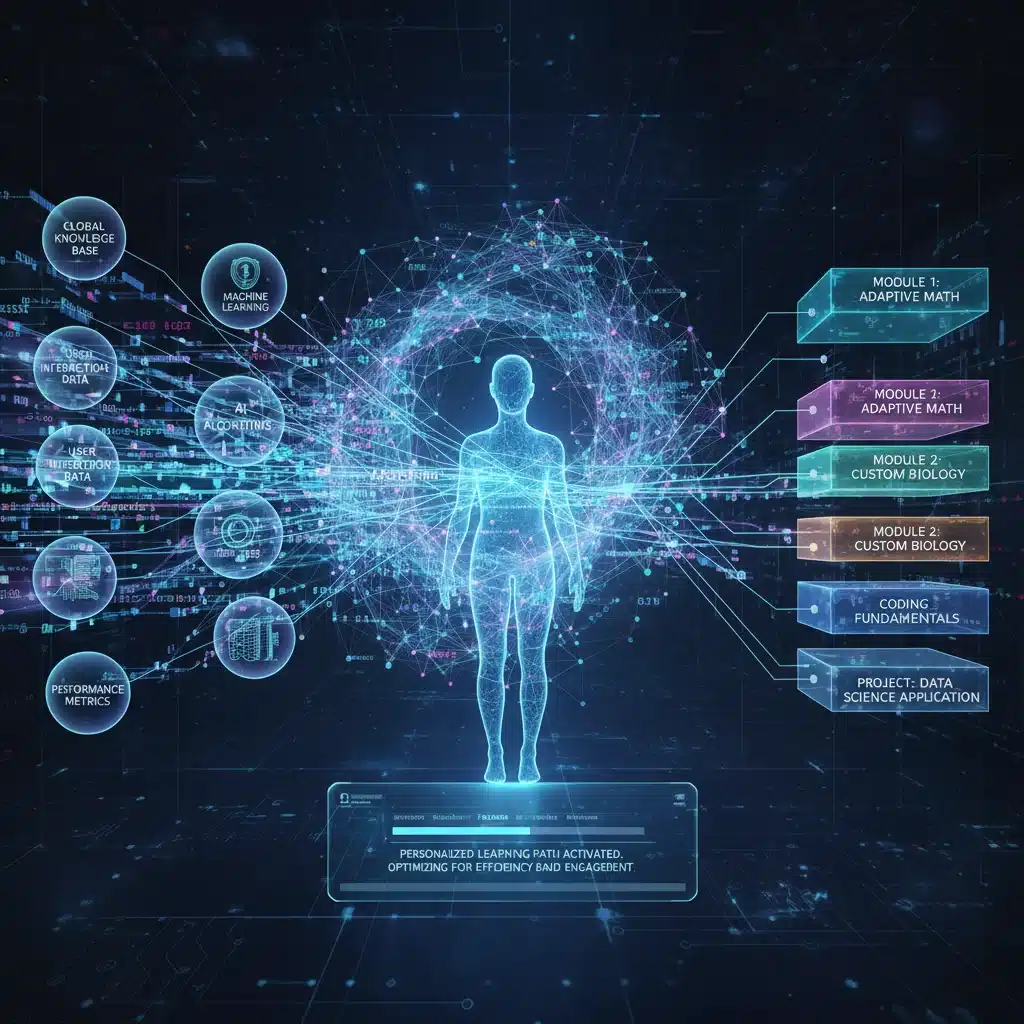
AI and ML are at the heart of personalized learning. These technologies can analyze vast amounts of data – including an employee’s past performance, learning styles, job role, career aspirations, and even sentiment – to recommend relevant content, adjust the pace of learning, and identify skill gaps. AI-powered algorithms can create adaptive learning paths that change in real-time based on a learner’s progress and responses, ensuring that the content is always challenging but never overwhelming. This is the bedrock of truly personalized corporate training.
2. Learning Experience Platforms (LXPs)
Moving beyond traditional Learning Management Systems (LMSs), LXPs are designed to provide a more engaging and user-centric learning experience. They aggregate content from various sources, including internal courses, external platforms, articles, videos, and even peer-generated content. LXPs leverage AI to offer personalized recommendations, social learning features, and intuitive interfaces, making learning feel more like a curated Netflix experience than a mandatory corporate portal.
3. Data Analytics and Big Data
The ability to collect, analyze, and interpret large datasets is crucial for personalization. L&D departments can use data analytics to understand which training methods are most effective, identify common skill gaps across departments, and measure the impact of training on business outcomes. This data-driven approach allows for continuous improvement and refinement of personalized learning strategies.
4. Virtual Reality (VR) and Augmented Reality (AR)
While still emerging, VR and AR hold immense potential for personalized experiential learning. Imagine a technician learning to repair complex machinery in a simulated environment, with the VR system adapting scenarios based on their proficiency. Or a surgeon practicing a new procedure with AR overlays providing real-time guidance. These immersive technologies can create highly realistic and personalized training simulations that would be impossible or too costly in the real world.
5. Microlearning and Gamification
The modern workforce often prefers learning in bite-sized chunks that can be easily integrated into their busy schedules. Microlearning, delivered through personalized platforms, offers short, focused modules that address specific learning objectives. Gamification, incorporating elements like points, badges, leaderboards, and challenges, can significantly boost engagement and motivation within personalized learning paths, making the process more enjoyable and competitive.
Implementing Personalized Corporate Training: Challenges and Best Practices
While the benefits are clear, transitioning to a fully personalized corporate training model by 2027 presents its own set of challenges. However, with careful planning and strategic implementation, these can be overcome.
Challenges:
- Data Privacy and Security: Collecting detailed employee data for personalization requires robust privacy protocols and transparent communication.
- Content Creation and Curation: Developing or sourcing a vast library of diverse, high-quality, and modular content is a significant undertaking.
- Technology Integration: Integrating new LXPs and AI tools with existing HR and learning systems can be complex.
- Resistance to Change: Employees and management may be accustomed to traditional training methods and require clear communication on the benefits of personalized approaches.
- Measuring Effectiveness: Developing new metrics to accurately assess the ROI of personalized learning requires thoughtful planning.
Best Practices for Implementation:
- Start Small, Scale Up: Begin with pilot programs in specific departments or for particular skill sets to gather feedback and refine the approach.
- Invest in Robust Technology: Choose LXPs and AI tools that are scalable, user-friendly, and offer strong analytics capabilities.
- Focus on Content Strategy: Develop a strategy for creating, curating, and updating a diverse library of modular learning content. Consider partnerships with external content providers.
- Foster a Learning Culture: Promote a culture where continuous learning is valued and personalized development is seen as an opportunity for growth, not a burden.
- Train the Trainers: Equip L&D professionals with the skills to leverage new technologies, analyze data, and act as facilitators in a personalized learning environment.
- Gather Feedback Continuously: Regularly solicit feedback from learners to iterate and improve the personalized learning experience.
- Measure and Communicate ROI: Clearly define success metrics and regularly report on the impact of personalized training on individual and organizational performance.
The Strategic Advantage of Personalized Learning
In a competitive global economy, U.S. corporations are constantly seeking an edge. Personalized corporate training offers a significant strategic advantage by creating a highly skilled, adaptable, and engaged workforce. Companies that embrace this approach will be better equipped to:
- Innovate Faster: By fostering continuous learning and skill development, employees are better prepared to adopt new technologies and drive innovation.
- Attract and Retain Top Talent: A commitment to personalized development is a powerful incentive for prospective and current employees.
- Improve Customer Satisfaction: A well-trained and knowledgeable workforce directly translates to better customer service and higher satisfaction levels.
- Navigate Disruptions: Organizations with an adaptable learning culture can more effectively reskill their workforce to meet new challenges and opportunities.
- Build a Stronger Employer Brand: Companies known for investing in their employees’ growth through personalized learning gain a reputation as desirable places to work.
By 2027, the gap between companies that have adopted personalized corporate training and those that haven’t will likely be substantial. The former will boast more agile, productive, and satisfied employees, while the latter may struggle with skill gaps, high turnover, and reduced competitiveness. The investment in personalized learning today is an investment in the future resilience and success of the organization.
Case Studies and Early Adopters
While 2027 marks a significant projection, many forward-thinking U.S. corporations are already making strides in personalized corporate training. Companies in tech, finance, and healthcare, for example, are leveraging AI-powered platforms to deliver highly specific compliance training, technical skill development, and leadership programs. These early adopters are reporting higher completion rates, improved performance metrics, and greater employee satisfaction.
One notable example involves a large technology firm that implemented an AI-driven LXP to personalize onboarding for new engineers. Instead of a generic two-week program, new hires were presented with learning paths tailored to their specific role, prior experience, and project assignments. The result was a 30% reduction in time-to-proficiency and a significant boost in early-career engagement. Another financial institution used personalized learning to address compliance training, adapting modules based on an employee’s department and previous assessment scores, leading to a 20% improvement in compliance audit results.
These success stories underscore the tangible benefits and lay the groundwork for wider adoption across industries. The insights gained from these pioneers will be invaluable as more organizations embark on their journey towards fully personalized corporate training by 2027.
The Future is Now: Preparing for 2027
The trajectory towards personalized corporate training as the dominant L&D model in the U.S. is undeniable. Businesses that proactively embrace this shift will not only enhance their human capital but also solidify their position as industry leaders. The transition requires a strategic mindset, a willingness to invest in innovative technologies, and a commitment to fostering a culture of continuous, individualized learning.
L&D departments will evolve from content providers to learning architects, leveraging data and technology to design dynamic, responsive, and deeply relevant learning experiences. Employees will become active participants in their own development, empowered by tools that cater to their unique needs and aspirations. This symbiotic relationship between technology, L&D professionals, and learners will unlock unprecedented levels of potential within the workforce.
The journey to 2027 is not just about implementing new software; it’s about fundamentally rethinking how talent is developed and nurtured within an organization. It’s about recognizing that the most valuable asset a company possesses is its people, and that investing in their personalized growth is the most strategic investment of all. The era of personalized corporate training is here, and its impact will resonate across every facet of the U.S. corporate landscape.
Conclusion: Personalized Learning, The Competitive Edge
By 2027, personalized corporate training will no longer be a niche concept but a mainstream expectation and a critical component of any successful U.S. business strategy. Its ability to foster engagement, accelerate skill acquisition, improve retention, and drive overall performance makes it an indispensable tool in a rapidly changing world. Organizations that prioritize this evolution in their L&D efforts will not only build a more skilled and adaptable workforce but also cultivate a culture of continuous learning that fuels innovation and sustains competitive advantage. The future of corporate training is personal, and the time to embrace it is now.