Remote Work Trends 2026: Reshaping US Companies for Global Talent
Anúncios
Remote Work Trends 2026: How 60% of US Companies Are Restructuring Teams for Global Talent Pools
Anúncios
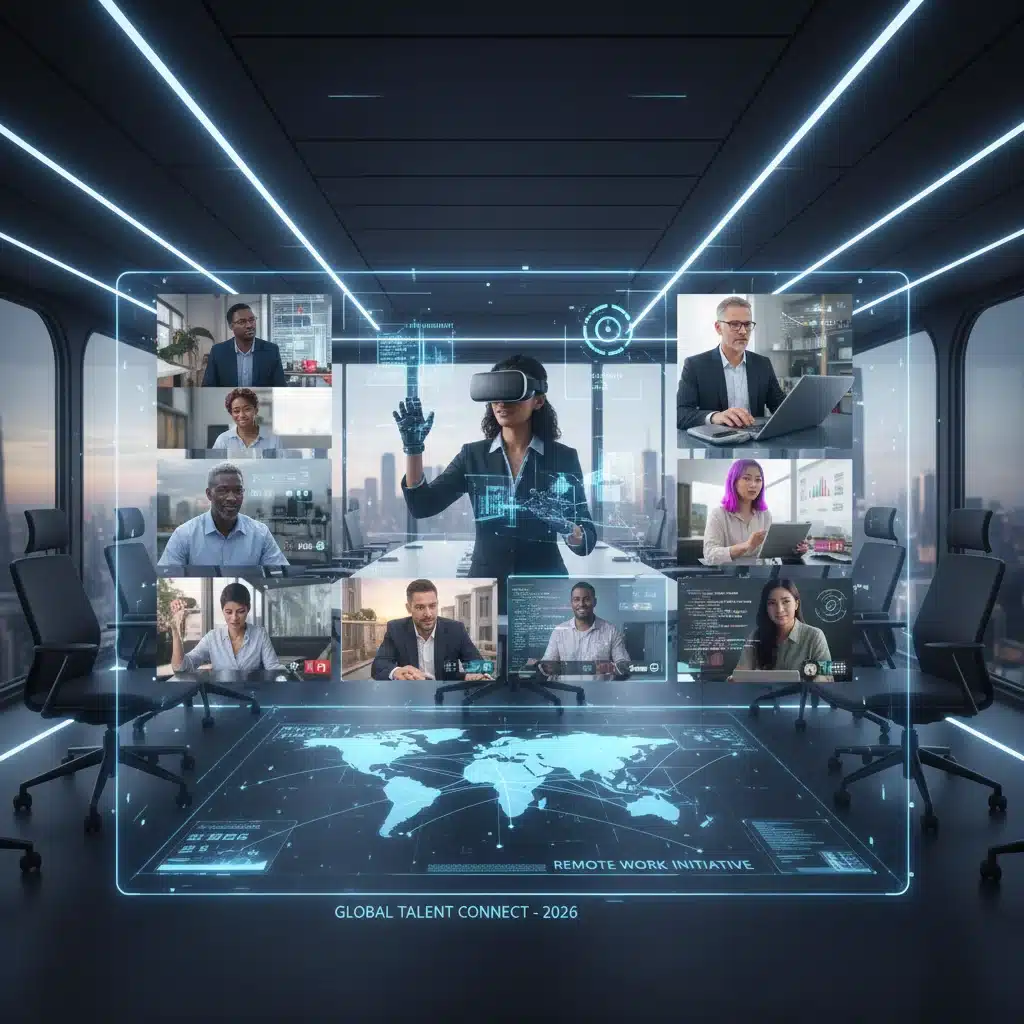
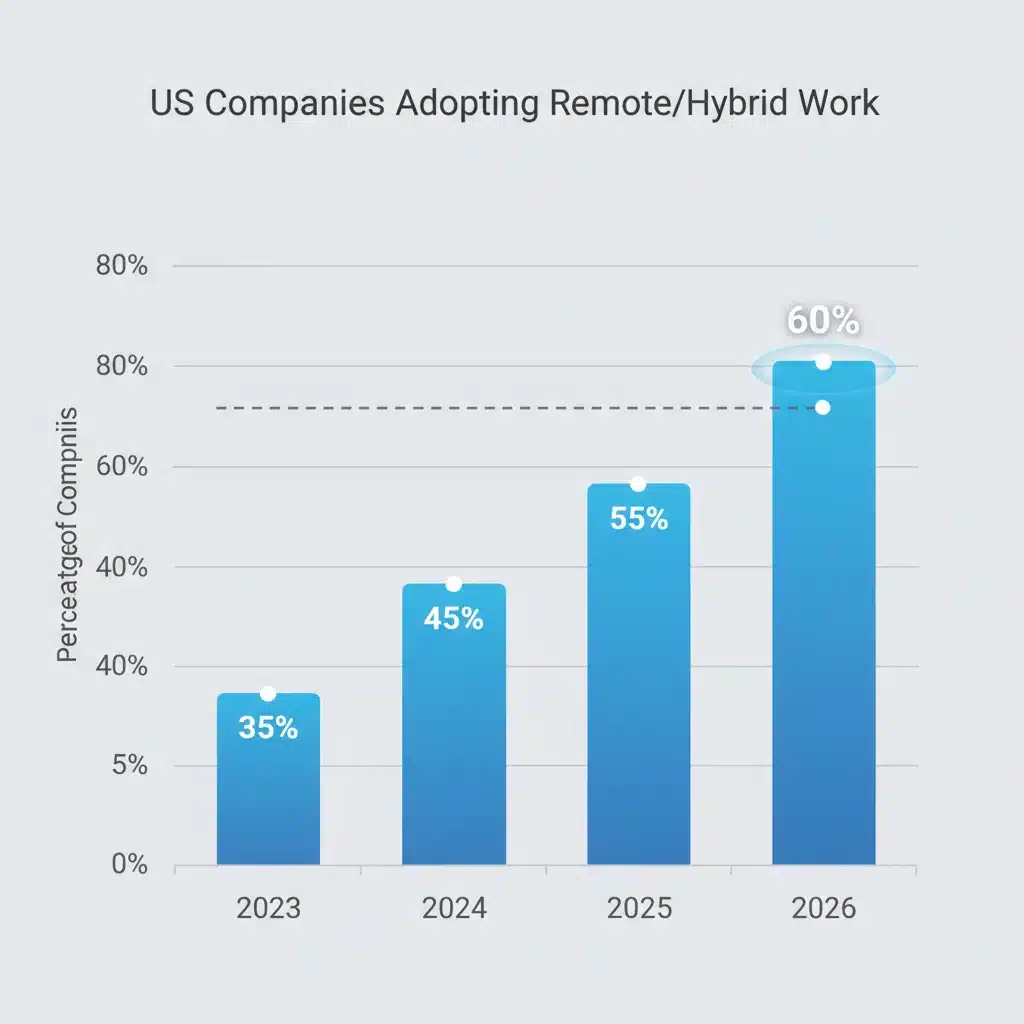
The landscape of work is undergoing a profound transformation, and as we look ahead to Remote Work Trends 2026, it’s clear that the shifts initiated by the pandemic are not just temporary adaptations but fundamental changes to how businesses operate. A staggering prediction suggests that by 2026, approximately 60% of US companies will have significantly restructured their teams to embrace remote and hybrid models, specifically targeting global talent pools. This isn’t merely about offering flexibility; it’s a strategic imperative driven by the pursuit of innovation, cost-efficiency, and access to a wider, more diverse skill set. Understanding these evolving Remote Work Trends 2026 is crucial for any organization aiming to remain competitive and agile in the coming years.
The acceleration of digital transformation, coupled with a renewed focus on employee well-being and productivity, has paved the way for a truly borderless workforce. Companies are no longer confined by geographical limitations when seeking the best talent. Instead, they are actively dismantling traditional office-centric structures to build resilient, distributed teams. This article will delve into the core aspects of these changes, exploring the drivers behind the surge in remote restructuring, the benefits and challenges it presents, and the technological and cultural shifts necessary to thrive in this new era of work. We will examine how Remote Work Trends 2026 are redefining recruitment, management, and the very essence of corporate culture.
The Paradigm Shift: From Local to Global Talent Pools
For decades, the standard operating model for most US companies involved hiring talent primarily from local or regional markets. This approach, while convenient for in-person collaboration, inherently limited the talent pool, often leading to fierce competition for specialized skills and inflated salary expectations in high-cost-of-living areas. The advent of widespread remote work capabilities has shattered these geographical barriers, ushering in an era where the world is truly an organization’s oyster when it comes to talent acquisition. This is a cornerstone of Remote Work Trends 2026.
Anúncios
By 2026, the shift towards global talent pools will be a dominant characteristic of the US corporate landscape. Companies are realizing that the ideal candidate for a specific role might reside thousands of miles away, offering not only specialized expertise but also fresh perspectives and cultural diversity that can significantly enhance innovation and problem-solving. This strategic pivot is not without its complexities, involving intricate legal, tax, and cultural considerations, but the long-term benefits in terms of talent quality and operational efficiency are proving irresistible. The ability to tap into diverse skill sets, often at more competitive compensation rates, allows companies to allocate resources more effectively and accelerate their growth trajectories. This global outlook is a key differentiator among the Remote Work Trends 2026.
Drivers Behind the Global Talent Migration
- Access to Specialized Skills: Niche skills are often concentrated in specific regions globally. Remote hiring allows companies to access these experts without requiring relocation.
- Cost Efficiency: Hiring talent from regions with lower costs of living can significantly reduce operational expenses, including salaries and benefits, without compromising quality.
- Increased Diversity and Inclusion: A global workforce naturally brings a wider range of backgrounds, experiences, and perspectives, fostering a more inclusive and innovative environment.
- Enhanced Resilience: Distributed teams can offer greater operational resilience, as localized disruptions (natural disasters, pandemics) are less likely to impact the entire workforce.
- Competitive Advantage: Companies that proactively embrace global remote hiring can gain a significant edge in talent acquisition over those still confined to local markets.
Restructuring for Remote: The Operational Overhaul
The move to leverage global talent pools isn’t just about changing recruitment strategies; it necessitates a comprehensive restructuring of internal operations. This involves everything from organizational charts and communication protocols to technology infrastructure and leadership training. The 60% of US companies anticipated to be restructured by 2026 are undertaking fundamental changes to adapt to a remote-first or hybrid-first mentality. This means rethinking traditional hierarchies, empowering distributed teams, and investing in robust digital tools that facilitate seamless collaboration across time zones and cultures. The success of Remote Work Trends 2026 hinges on effective operational restructuring.
One of the primary areas of restructuring focuses on redefining roles and responsibilities. Traditional management styles, often reliant on in-person oversight, are giving way to performance-based management, emphasizing trust, autonomy, and clear objectives. Project management methodologies are evolving to support asynchronous work, ensuring that progress continues even when team members are in different parts of the world. Furthermore, the legal and compliance aspects of managing a global workforce are becoming increasingly complex, requiring specialized expertise in international labor laws, tax regulations, and data privacy. Companies are investing in HR information systems (HRIS) capable of handling multi-country payrolls and compliance requirements, which is a significant part of adapting to Remote Work Trends 2026.
Key Areas of Operational Restructuring:
- Organizational Design: Shifting from hierarchical to flatter, more agile structures that support distributed decision-making.
- Communication Frameworks: Implementing clear guidelines for asynchronous communication, virtual meetings, and knowledge sharing platforms.
- Performance Management: Adopting outcome-based metrics and regular feedback loops tailored for remote teams.
- Legal and Compliance: Developing expertise in international labor laws, tax implications, and data protection for a global workforce.
- Technology Infrastructure: Investing in secure, scalable, and user-friendly collaboration tools, VPNs, and cloud-based systems.
The Rise of Hybrid Models: The Best of Both Worlds
While fully remote models are gaining traction, a significant portion of the Remote Work Trends 2026 will see the widespread adoption of hybrid work models. This approach attempts to combine the flexibility and global reach of remote work with the benefits of in-person collaboration. Hybrid models can take various forms, from employees coming into the office on specific days to ‘hub-and-spoke’ models where smaller regional offices serve as collaboration centers. The goal is to optimize productivity, foster company culture, and provide employees with a sense of connection without sacrificing the advantages of remote flexibility.
Companies are experimenting with different hybrid configurations to find what works best for their specific needs and culture. Some might mandate a few in-office days per week, while others might allow teams to decide their own schedules or come together for quarterly in-person retreats. The challenge lies in creating an equitable experience for both in-office and remote employees, ensuring that remote workers don’t feel excluded from spontaneous interactions or career advancement opportunities. Technology plays a crucial role here, with advancements in smart meeting rooms and virtual collaboration platforms designed to bridge the physical gap. These nuanced approaches are central to understanding Remote Work Trends 2026.
Benefits of Hybrid Models:
- Flexibility and Employee Satisfaction: Offers employees greater autonomy over their work environment, leading to higher job satisfaction and retention.
- Reduced Overhead: Allows companies to optimize office space, potentially reducing real estate costs.
- Enhanced Collaboration: Provides opportunities for in-person brainstorming, team building, and mentorship that can be challenging to replicate virtually.
- Stronger Culture: Regular in-person interactions can help reinforce company values and foster a stronger sense of community.
- Wider Talent Pool: Still enables access to a broader talent pool compared to fully in-office models, albeit with some geographic limitations.
Technology as the Backbone of Remote Work Trends 2026
The success of the Remote Work Trends 2026, particularly the ability to manage global talent pools, is inextricably linked to technological advancements. The past few years have seen an explosion in collaboration tools, communication platforms, and project management software designed specifically for distributed teams. However, by 2026, the focus will shift beyond mere functionality to integrated ecosystems that offer seamless, secure, and intelligent support for remote operations.
Artificial intelligence (AI) will play an increasingly vital role, from automating routine tasks and facilitating language translation in real-time to providing insights into team productivity and well-being. Cybersecurity will also be paramount, as companies manage sensitive data across various geographies and personal networks. Investment in robust VPNs, endpoint security, and zero-trust architectures will be standard. Furthermore, immersive technologies like virtual reality (VR) and augmented reality (AR) are expected to mature, offering more engaging and realistic virtual meeting experiences that can bridge the physical distance between team members. These technological leaps are fundamental to the scalability and efficiency of Remote Work Trends 2026.
Essential Technologies for Remote Work in 2026:
- Advanced Collaboration Platforms: Integrated suites offering video conferencing, chat, document sharing, and project management (e.g., Microsoft Teams, Slack, Google Workspace).
- AI-Powered Tools: For automation, translation, scheduling, and performance analytics.
- Robust Cybersecurity Solutions: VPNs, multi-factor authentication, endpoint detection and response (EDR), and comprehensive data encryption.
- Cloud-Based Infrastructure: For scalable storage, application hosting, and seamless access from anywhere.
- Immersive Technologies: VR/AR for enhanced virtual meetings, training, and collaborative design sessions.
- Global HRIS & Payroll Systems: Tools capable of handling multi-country compliance, benefits, and compensation.
Challenges and Considerations for US Companies
While the benefits of embracing Remote Work Trends 2026 and global talent pools are substantial, companies must also navigate a complex array of challenges. These include maintaining a cohesive company culture, ensuring equitable treatment for all employees regardless of location, managing legal and tax complexities, and addressing potential issues of digital fatigue and work-life balance.
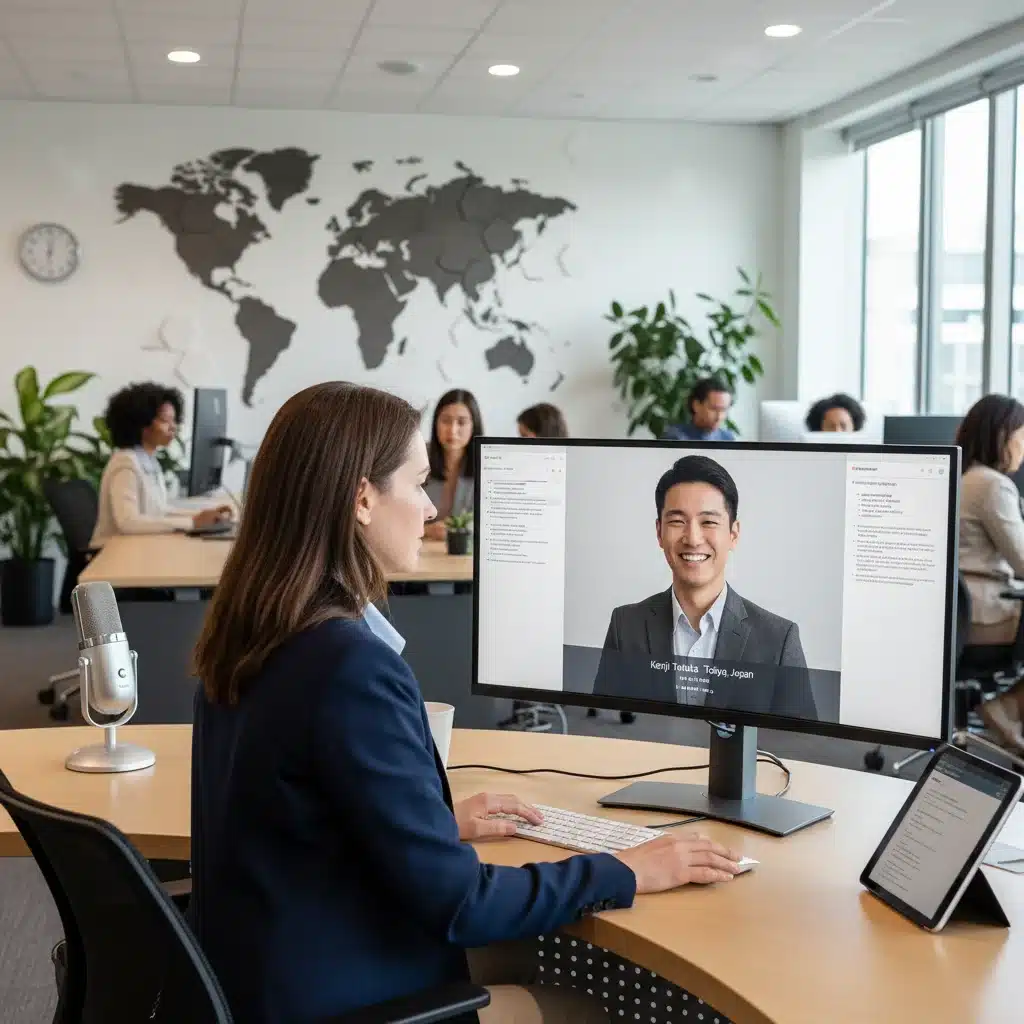
Cultural cohesion can be particularly difficult to foster in a distributed global team. Companies will need to be intentional about creating opportunities for virtual social interaction, celebrating diversity, and clearly articulating company values. Leadership development will also be critical, focusing on skills like empathetic communication, trust-building, and managing performance without direct physical oversight. Furthermore, the legal and tax implications of having employees in various countries can be daunting, requiring expert advice to ensure compliance and avoid unforeseen liabilities. Addressing these challenges effectively will distinguish successful adopters of Remote Work Trends 2026.
Key Challenges:
- Cultural Alignment: Fostering a unified company culture across diverse geographical and cultural backgrounds.
- Communication Breakdowns: Overcoming language barriers and ensuring clear, consistent communication across time zones.
- Legal and Tax Compliance: Navigating complex international labor laws, tax obligations, and immigration regulations.
- Employee Engagement and Well-being: Preventing isolation, digital fatigue, and ensuring work-life balance for remote global teams.
- Cybersecurity Risks: Protecting sensitive company data across a distributed and potentially less secure network.
- Equity and Inclusion: Ensuring fair treatment, equal opportunities, and preventing a two-tier system for in-office vs. remote employees.
The Future of Work: A Strategic Imperative for 2026 and Beyond
The embrace of Remote Work Trends 2026, particularly the restructuring towards global talent pools, is not merely a reactive measure but a proactive strategic imperative for US companies. Those that successfully adapt will unlock unprecedented access to talent, drive innovation, enhance resilience, and achieve greater operational efficiencies. This transformation requires a holistic approach, encompassing not just technological upgrades but also significant cultural shifts, leadership development, and a deep understanding of the global talent landscape.
The companies that thrive in this new era will be those that view their workforce as a dynamic, borderless entity, capable of contributing from anywhere in the world. They will invest in creating inclusive, supportive, and performance-driven remote environments. As we move closer to 2026, the insights gleaned from these emerging Remote Work Trends 2026 will be invaluable for business leaders, HR professionals, and employees alike, shaping the very definition of work for years to come. The journey is complex, but the destination—a more agile, diverse, and globally connected workforce—promises significant rewards for those willing to embrace the change.
Recommendations for Companies Preparing for 2026:
- Develop a Clear Remote/Hybrid Strategy: Define your company’s approach to remote work, including policies, expectations, and support structures.
- Invest in Global HR Expertise: Build or acquire expertise in international labor laws, payroll, and compliance.
- Prioritize Technology Infrastructure: Ensure your tech stack supports seamless, secure, and efficient remote collaboration globally.
- Foster a Culture of Trust and Autonomy: Empower employees and managers with the tools and training to succeed in a remote environment.
- Focus on Communication and Engagement: Implement strategies to maintain strong team bonds and clear communication across distances.
- Embrace Diversity and Inclusion: Actively recruit from diverse global backgrounds and create an inclusive environment where all voices are heard.
- Provide Training and Development: Equip employees and leaders with the skills needed for effective remote collaboration and management.
Conclusion: Navigating the Evolving Remote Landscape
The journey towards 2026 is marked by an undeniable acceleration in the adoption and sophistication of remote work models. The prediction that 60% of US companies will restructure their teams to tap into global talent pools is not just a statistic; it represents a fundamental rethinking of organizational design, talent acquisition, and operational strategy. These Remote Work Trends 2026 are forcing businesses to be more adaptable, innovative, and globally minded than ever before.
Successful navigation of this evolving landscape will require foresight, strategic investment, and a commitment to fostering a truly inclusive and flexible work culture. Companies that embrace these changes, leveraging technology and prioritizing employee well-being, will be well-positioned to attract the best talent, drive sustainable growth, and lead their industries into the future. The era of the borderless workforce is here, and Remote Work Trends 2026 are showing us the path forward.