Student Loan Forgiveness 2026: Navigating Latest US Policy Changes for Maximum Benefit
Student Loan Forgiveness 2026: Navigating Latest US Policy Changes for Maximum Benefit
The landscape of student loan debt in the United States is constantly shifting, and for millions of Americans, the promise of student loan forgiveness offers a beacon of hope. As we look ahead to 2026, understanding the latest policy changes, potential new initiatives, and existing programs is crucial for anyone seeking relief from their educational debt. This comprehensive guide will delve into the intricacies of student loan forgiveness, providing you with the knowledge to navigate the system effectively and maximize your financial benefit.
Student loan debt remains a significant burden for many, impacting everything from homeownership to retirement planning. The federal government, along with various state and private entities, has introduced a range of programs designed to alleviate this pressure. However, these programs are often complex, with strict eligibility requirements and application processes that can be daunting. Our goal is to demystify these options, focusing on what you need to know for 2026 and beyond.
Whether you’re a recent graduate, a long-time borrower, or someone considering higher education, keeping abreast of these developments is paramount. Policy changes can occur rapidly, and what might have been true last year could be different next year. This article is your essential resource for staying informed about the critical updates in student loan forgiveness.
Understanding the Current State of Student Loan Forgiveness
Before we dive into the specifics of 2026, it’s essential to grasp the current framework of student loan forgiveness programs. These programs generally fall into several categories, each with unique criteria and benefits. The most prominent federal programs include:
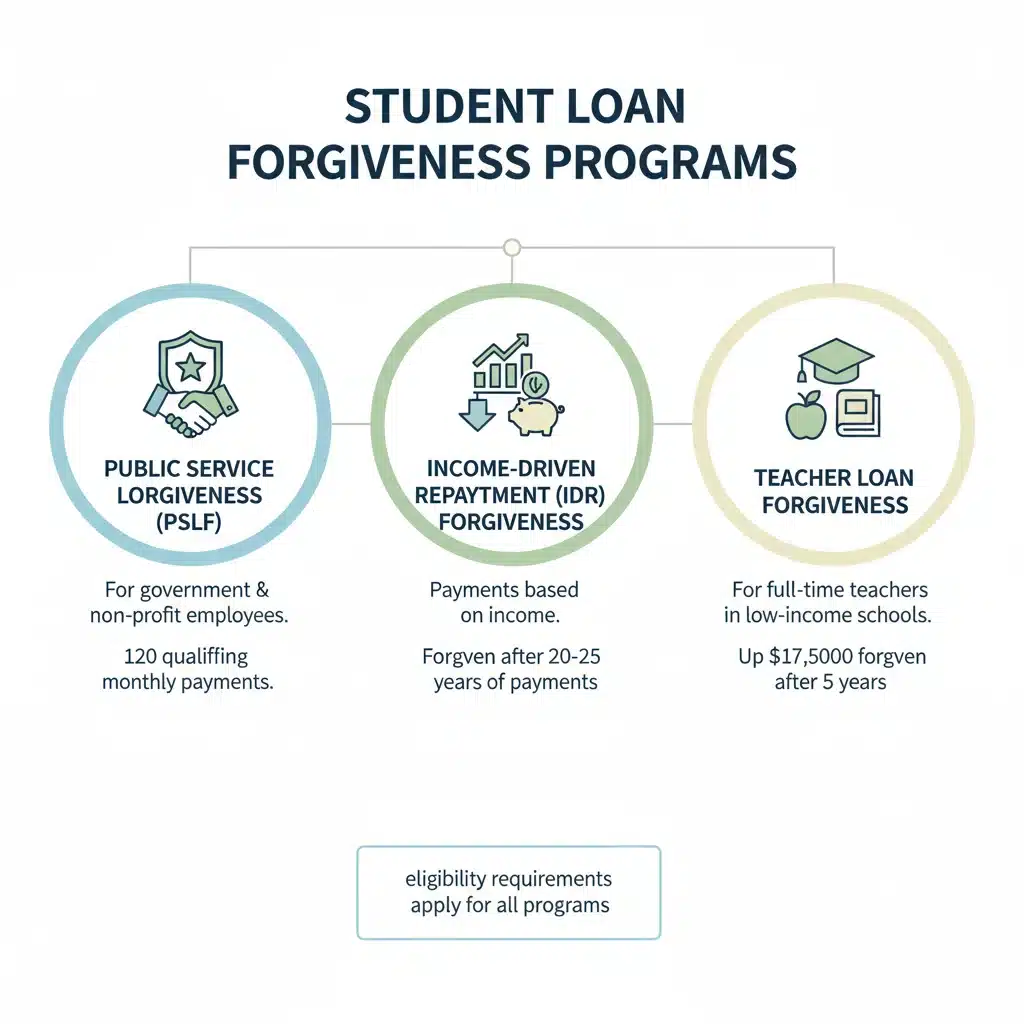
- Public Service Loan Forgiveness (PSLF): Designed for individuals working in public service, including government and non-profit organizations.
- Income-Driven Repayment (IDR) Plan Forgiveness: Offers forgiveness of remaining loan balances after 20 or 25 years of payments, depending on the plan.
- Teacher Loan Forgiveness: A specific program for educators who teach in low-income schools or educational service agencies.
- Perkins Loan Cancellation: Forgiveness for certain professions, often tied to public service roles.
- Total and Permanent Disability (TPD) Discharge: For borrowers who are unable to work due to a total and permanent disability.
- Borrower Defense to Repayment: For students who were defrauded by their schools.
- Closed School Discharge: For students whose schools closed while they were enrolled or shortly after they withdrew.
Each of these programs has specific requirements regarding loan type, employment, payment history, and application procedures. Understanding which program might apply to your situation is the first step toward achieving student loan forgiveness.
The Evolution of Federal Policy and Its Impact
The past few years have seen significant shifts in federal policy regarding student loans. The COVID-19 pandemic brought about a prolonged pause on federal student loan payments and interest, alongside various administrative adjustments to existing forgiveness programs. These changes, while often temporary, have set precedents and highlighted areas where further reform might be considered.
For instance, the Department of Education has made efforts to streamline the PSLF process and conduct account adjustments for IDR plans, ensuring that borrowers receive proper credit for past payments. These administrative actions have already led to billions in student loan forgiveness for eligible borrowers. As we approach 2026, it’s reasonable to anticipate continued efforts to refine these programs and potentially introduce new initiatives aimed at broader debt relief.
Anticipated Policy Changes and New Initiatives for 2026
While predicting the exact legislative landscape for 2026 can be challenging, several trends and ongoing discussions provide clues about potential changes in student loan forgiveness. The Biden administration has shown a consistent interest in addressing student loan debt, and this commitment is likely to shape future policy.
Potential for Broader Forgiveness Programs
Discussions around more widespread student loan forgiveness, beyond existing programs, have been ongoing. While large-scale, across-the-board forgiveness has faced legal and political hurdles, targeted relief remains a strong possibility. This could include:
- Income-Based Forgiveness Expansion: Further enhancements to IDR plans, making them more generous or accelerating forgiveness timelines for certain low-income borrowers. The new SAVE plan (Saving on a Valuable Education) is a prime example of this, offering lower monthly payments and a faster path to forgiveness for many. We can expect to see the full impact and potential further adjustments to SAVE by 2026.
- Targeted Relief for Specific Professions: Beyond teachers and public servants, there could be expanded forgiveness opportunities for individuals in other high-need professions, such as healthcare workers in underserved areas, childcare providers, or social workers.
- Relief for Older Borrowers: A growing segment of the student loan population includes older Americans still carrying debt into retirement. Policies aimed at providing relief for this demographic could emerge.
Administrative Actions and Regulatory Reforms
Even without new legislation, the Department of Education has considerable power to enact regulatory changes and administrative actions that can significantly impact student loan forgiveness. These could include:
- Simplification of Application Processes: Efforts to make applying for forgiveness easier and more accessible, reducing the administrative burden on borrowers.
- Automatic Enrollment/Review: For certain programs, there might be moves towards automatically identifying eligible borrowers or conducting periodic reviews to ensure borrowers are on the correct path to forgiveness.
- Addressing Past Administrative Errors: Continued work to rectify historical errors in loan servicing that may have prevented borrowers from receiving the forgiveness they were due.
- Refinement of Forgiveness Criteria: Adjustments to how eligibility is defined, potentially broadening the scope for certain programs or clarifying ambiguous rules.
Staying updated on these regulatory shifts will be just as important as monitoring legislative changes for anyone pursuing student loan forgiveness.
Eligibility Requirements for 2026: What to Expect
Understanding eligibility is paramount for securing student loan forgiveness. While specific criteria can evolve, several fundamental aspects are likely to remain consistent across most programs.
Loan Types Matter
Generally, only federal student loans are eligible for federal forgiveness programs. Private student loans are almost never included in these initiatives. If you have Federal Family Education Loan (FFEL) Program loans or Perkins Loans that are not held by the Department of Education, you may need to consolidate them into a Direct Consolidation Loan to become eligible for PSLF or IDR forgiveness. This is a critical step many borrowers overlook.
Employment Criteria for Public Service Loan Forgiveness (PSLF)
For PSLF, your employer must be a qualifying organization. This typically includes:
- Government organizations at any level (federal, state, local, or tribal).
- Not-for-profit organizations that are tax-exempt under Section 501(c)(3) of the Internal Revenue Code.
- Other not-for-profit organizations that provide certain public services.
You must also be employed full-time (or meet specific part-time equivalency rules) and make 120 qualifying monthly payments while employed by a qualifying employer. Keeping meticulous records of your employment and payments is vital for PSLF.
Income and Family Size for Income-Driven Repayment (IDR) Forgiveness
IDR plans base your monthly payment on your income and family size. To qualify for forgiveness under an IDR plan, you must remain on an eligible plan for 20 or 25 years (depending on the plan and when you took out your loans) and make payments as required. The remaining balance is then forgiven, though it’s important to note that this forgiven amount may be considered taxable income by the IRS, unless Congress extends current tax-exempt provisions. The SAVE plan, in particular, offers more favorable terms for many borrowers, potentially leading to lower payments and faster forgiveness.
Meeting Specific Professional Requirements
For programs like Teacher Loan Forgiveness, you must teach full-time for five complete and consecutive academic years in a low-income school or educational service agency. There are also limits on the amount of forgiveness available, which vary based on the subject taught. Other profession-specific programs will have their own unique requirements that borrowers must meet.
Strategies to Maximize Your Forgiveness Benefit by 2026
Navigating the complex world of student loan forgiveness requires a strategic approach. Here are key steps and considerations to help you maximize your potential benefit:
1. Understand Your Loan Types
The first and most critical step is to identify all your student loans. Log in to StudentAid.gov to view your federal loan history. If you have FFEL or Perkins loans, consider consolidating them into a Direct Consolidation Loan to make them eligible for more federal forgiveness programs like PSLF and IDR. Do this sooner rather than later, as the consolidation process can take time.
2. Choose the Right Repayment Plan
If you’re aiming for IDR forgiveness or PSLF, you must be on a qualifying repayment plan. For PSLF, this typically means an IDR plan. For IDR forgiveness, selecting the plan that offers the lowest payment while still counting towards forgiveness is key. The SAVE plan is often the most beneficial for many borrowers, offering lower payments and interest benefits. Use the Loan Simulator on StudentAid.gov to compare different repayment options and see how they impact your path to student loan forgiveness.
3. Track Your Payments and Employment Meticulously
For PSLF, keeping track of 120 qualifying payments and certifying your employment annually is non-negotiable. Use the PSLF Help Tool on StudentAid.gov to generate and submit your Employment Certification Form (ECF) regularly. This ensures that your payments are counted correctly and helps catch any errors early. For IDR forgiveness, while less frequent certification is required, keeping records of your income and family size changes is still important.
4. Stay Informed About Policy Changes
As mentioned, policies can change. Regularly check official sources like StudentAid.gov, the Department of Education’s announcements, and reputable financial news outlets. Subscribe to newsletters from student loan advocacy groups or financial aid experts. Being proactive in seeking information will help you adapt to any new opportunities for student loan forgiveness.
5. Consider Professional Guidance
The complexity of student loan forgiveness can be overwhelming. If you have a large loan balance or a complicated financial situation, consider consulting with a non-profit student loan counselor or a financial advisor specializing in student debt. Be wary of companies that charge upfront fees for services you can get for free from the Department of Education. Legitimate help focuses on education and guidance, not guaranteed forgiveness for a fee.
The SAVE Plan: A Game-Changer for Student Loan Forgiveness
The new Saving on a Valuable Education (SAVE) Plan, which fully launched in 2024, is arguably the most significant development in federal student loan forgiveness in recent years. It replaces the Revised Pay As You Earn (REPAYE) Plan and offers substantial benefits:
- Lower Monthly Payments: For undergraduate loans, payments are calculated at 5% of your discretionary income, down from 10% on most other IDR plans. For graduate loans, it’s 10%, and a weighted average for those with both.
- Interest Subsidy: If your calculated monthly payment doesn’t cover the accruing interest, the government covers the unpaid interest. This means your loan balance won’t grow as long as you make your required payments, even if those payments are $0.
- Faster Forgiveness for Smaller Balances: Borrowers with original principal balances of $12,000 or less can receive forgiveness after just 10 years of payments, with an additional year added for every additional $1,000 borrowed (up to 20 or 25 years).
- Increased Income Exemption: The amount of income considered non-discretionary (and thus protected from payment calculation) has increased from 150% to 225% of the federal poverty line, meaning more borrowers will have $0 monthly payments.
For many borrowers, especially those with lower incomes or higher debt-to-income ratios, the SAVE Plan could significantly accelerate their path to student loan forgiveness and reduce their overall financial burden. It’s imperative for all federal student loan borrowers to evaluate if the SAVE Plan is the best option for them.
Common Pitfalls to Avoid on Your Forgiveness Journey
While the promise of student loan forgiveness is appealing, several common mistakes can derail your efforts. Being aware of these pitfalls can help you stay on track:
1. Not Consolidating Ineligible Loans
As mentioned, many older federal loan types (like FFEL or Perkins) are not directly eligible for PSLF or some IDR plans. Failing to consolidate them into a Direct Consolidation Loan means you’re missing out on potential forgiveness. Always check your loan types and consolidate if necessary.
2. Missing Annual Certifications
For IDR plans, you must recertify your income and family size annually. If you miss this deadline, your payments can increase significantly, or you might be placed on a standard repayment plan, potentially losing progress towards forgiveness. For PSLF, annual employment certification is crucial to ensure your payments are counted correctly.
3. Not Understanding Qualifying Payments
Not all payments count towards forgiveness. For PSLF, payments must be made on time, for the full amount, on a qualifying repayment plan, and while working full-time for a qualifying employer. For IDR forgiveness, payments must be made while on an IDR plan. Ensure you understand what constitutes a ‘qualifying payment’ for your specific program.
4. Falling Victim to Scams
Unfortunately, student loan forgiveness scams are prevalent. Be extremely cautious of companies that promise guaranteed forgiveness, charge upfront fees, or ask for your FSA ID password. The Department of Education and its authorized servicers will never ask for payment for forgiveness or your FSA ID. All official applications for federal forgiveness programs are free.
5. Ignoring Tax Implications
While most federal student loan forgiveness is currently tax-free through 2025 due to the American Rescue Plan, this provision is set to expire. Unless extended by Congress, any forgiven amount from IDR plans (after 20 or 25 years) may be considered taxable income by the IRS in 2026 and beyond. It’s crucial to consult with a tax professional to understand potential tax liabilities associated with forgiveness. PSLF is generally tax-free.

The Future of Student Loan Debt and Forgiveness
The conversation around student loan debt and student loan forgiveness is far from over. As we approach 2026, several factors will continue to influence policy decisions:
- Economic Conditions: The broader economic climate, including inflation and employment rates, can impact the political will for further debt relief.
- Political Landscape: Upcoming elections and changes in congressional control can significantly alter the direction of student loan policy.
- Advocacy and Public Pressure: Continued advocacy from student loan borrowers and consumer protection groups will keep the issue of debt relief on the national agenda.
- Higher Education Costs: The underlying issue of rising tuition costs will likely continue to fuel discussions about the necessity of loan forgiveness and systemic reforms to higher education funding.
It’s important for borrowers to remain engaged and informed, as their voices can play a role in shaping future policies. While the journey to student loan forgiveness can be long and complex, the potential financial relief is substantial and life-changing for many.
Actionable Steps for Borrowers in 2026
To ensure you are best positioned for student loan forgiveness in 2026, take these actionable steps:
- Verify Your Loan Types: Access StudentAid.gov to confirm you have eligible federal loans. If not, explore consolidation options.
- Enroll in the Best IDR Plan: For most, this will be the SAVE Plan. Use the Loan Simulator to compare and enroll.
- Certify Employment (PSLF): If pursuing PSLF, submit your Employment Certification Form annually, or whenever you change employers.
- Recertify Income (IDR): Ensure you recertify your income and family size for your IDR plan on time each year.
- Keep Records: Maintain thorough records of all loan documents, payments, and communications with your loan servicer.
- Beware of Scams: Only use official government websites and communicate directly with your loan servicer for assistance.
- Consult a Tax Professional: Understand the potential tax implications of any forgiven debt, especially if the current tax-free status is not extended.
- Stay Updated: Regularly check official Department of Education announcements and reliable news sources for policy changes.
Conclusion: Empowering Your Forgiveness Journey
The path to student loan forgiveness in 2026, while potentially complex, is also filled with opportunities for significant financial relief. By understanding the current programs, anticipating future policy changes, and diligently managing your loans, you can navigate this landscape effectively. The key is proactive engagement, meticulous record-keeping, and a commitment to staying informed.
Don’t let the complexity deter you. Millions of Americans have already benefited from student loan forgiveness, and with the right strategy, you could be next. Take control of your financial future by leveraging the resources and programs available to you. Your journey towards a debt-free life starts with knowledge and action.
Author